




A 2026 Guide by Sellingantiques
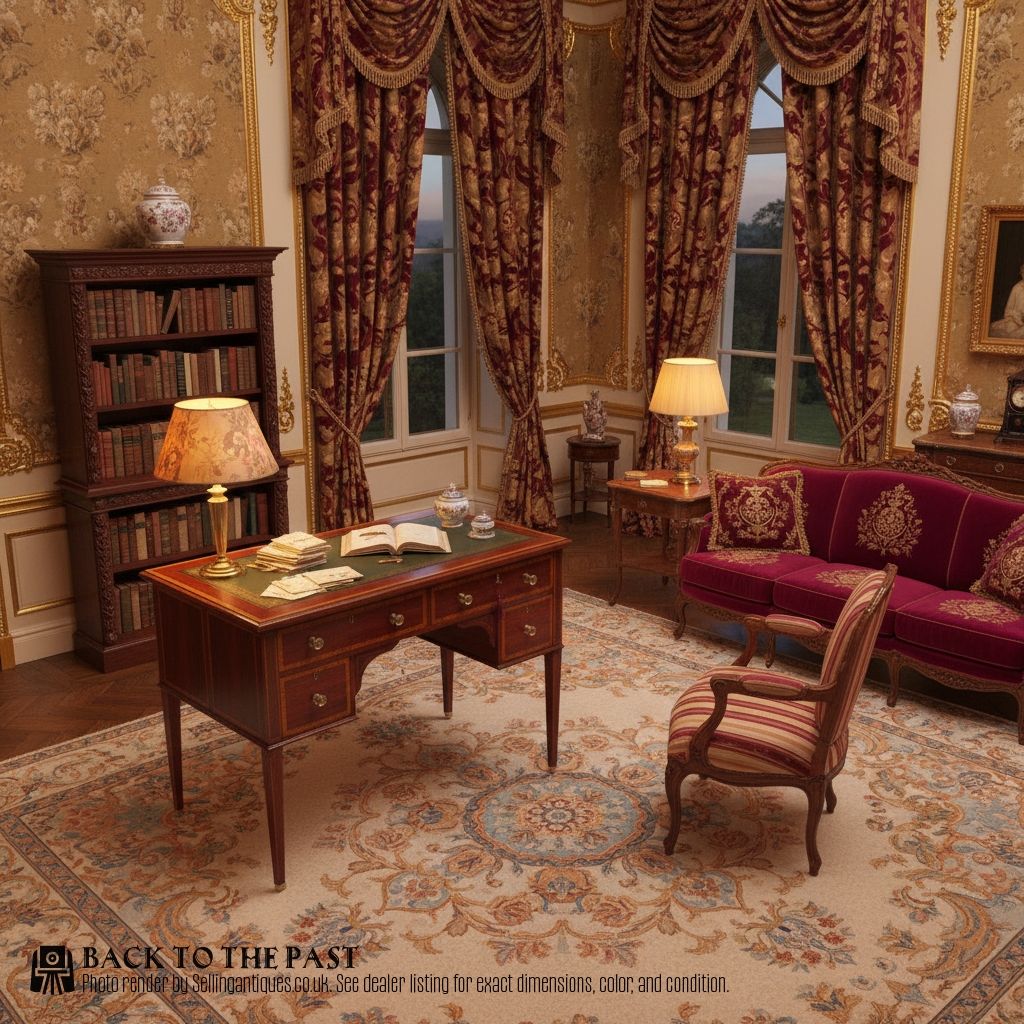
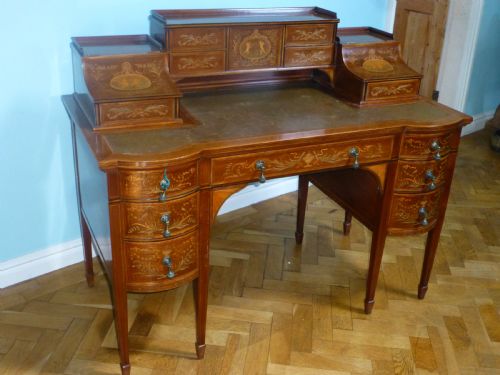
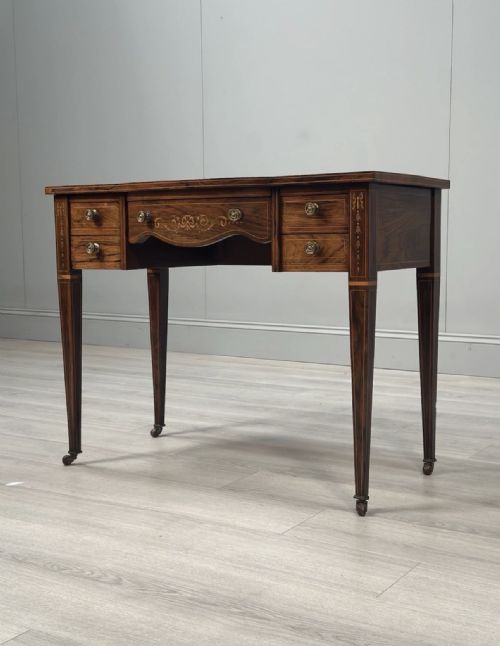
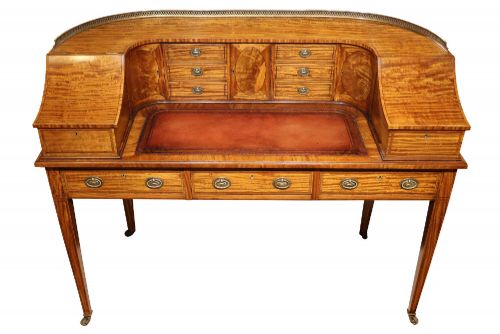
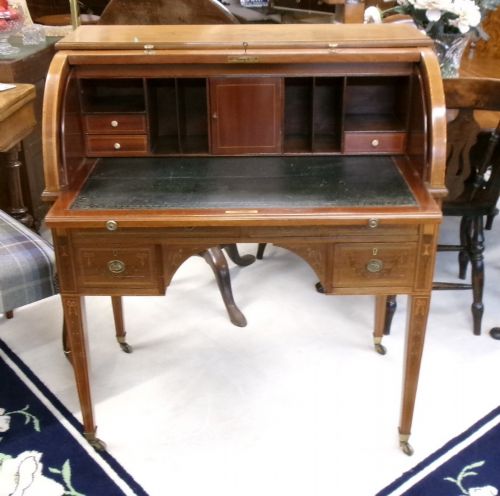
Good Quality Edwardian Inlaid Mahogany Writing Desk, Edwardian
Priced at £790 from Andros Antiques
Marquetry techniques arrived in Britain from the continent during the late seventeenth century.
Early antique inlaid desks often followed the form of a cabinet mounted on a tall stand.
Look at the transition to the bureau form. Sloping falls became the standard workspace as the eighteenth century progressed.
Demand for writing furniture grew as middle class literacy expanded.
Brass inlay gained significant traction during the Regency period, with makers adopting French methods to suit darker imported woods.
Thomas Chippendale produced major inlaid writing furniture. The Harewood House commission includes documented examples.
John McLean specialised in brass-inlaid rosewood pieces during the early nineteenth century.
Regional cabinetmakers built most surviving antique inlaid desks without ever signing their work.
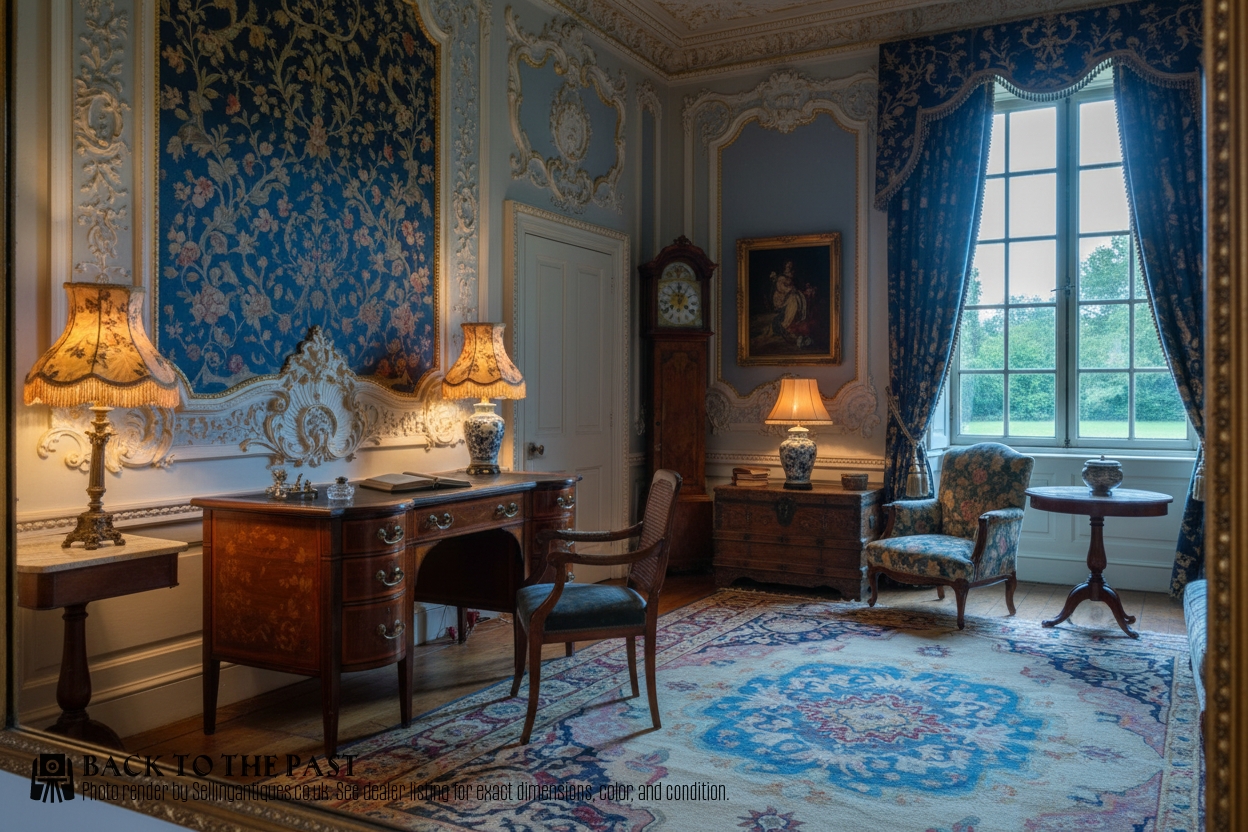
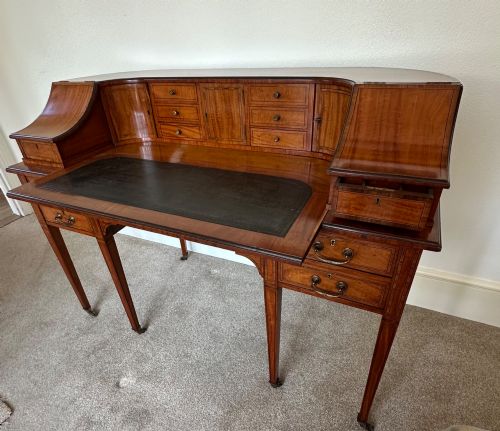
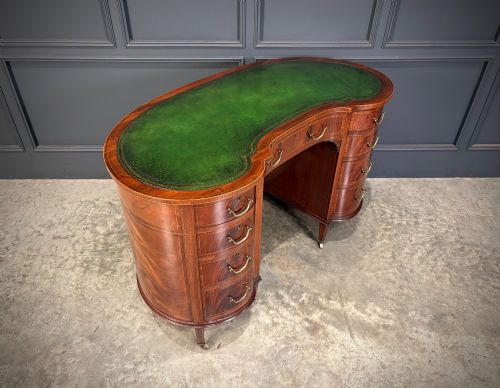
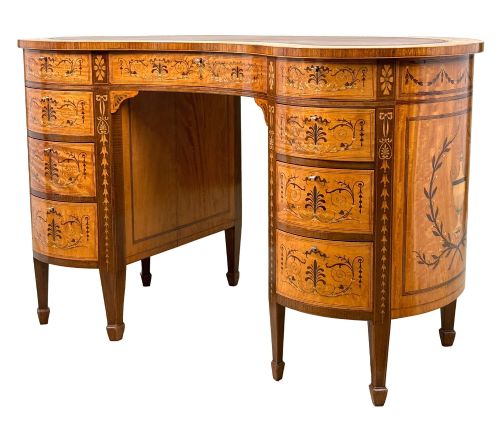
Maple & Co Antique Seven Drawer Twin Pedestal Leather Lined Inlaid Writing Desk, 1910
Priced at £2,250 from Village Vintage
The 2026 retail price guide for Antique Inlaid Desks is drawn from a proprietary archive of over 1.1 million retail prices indexed by Sellingantiques since 2003. This guide relies exclusively on their own internal data; no external sources or auction records are used.
Analysing nearly 25 years of UK antique market history alongside current retail values, the data indicates that typical UK retail prices for Antique Inlaid Desks range between £700 and £4,000. Entry-level prices generally fall under £700 and premium examples upwards of £4,000.
Central decorative motifs dominate the fall. Urns and compass stars turn up frequently on antique inlaid desks.
Crossbanded borders frame the main panels, setting the grain at an angle to the central veneer.
Open the writing section. Small drawers flank central pigeonholes resting above a baize surface.
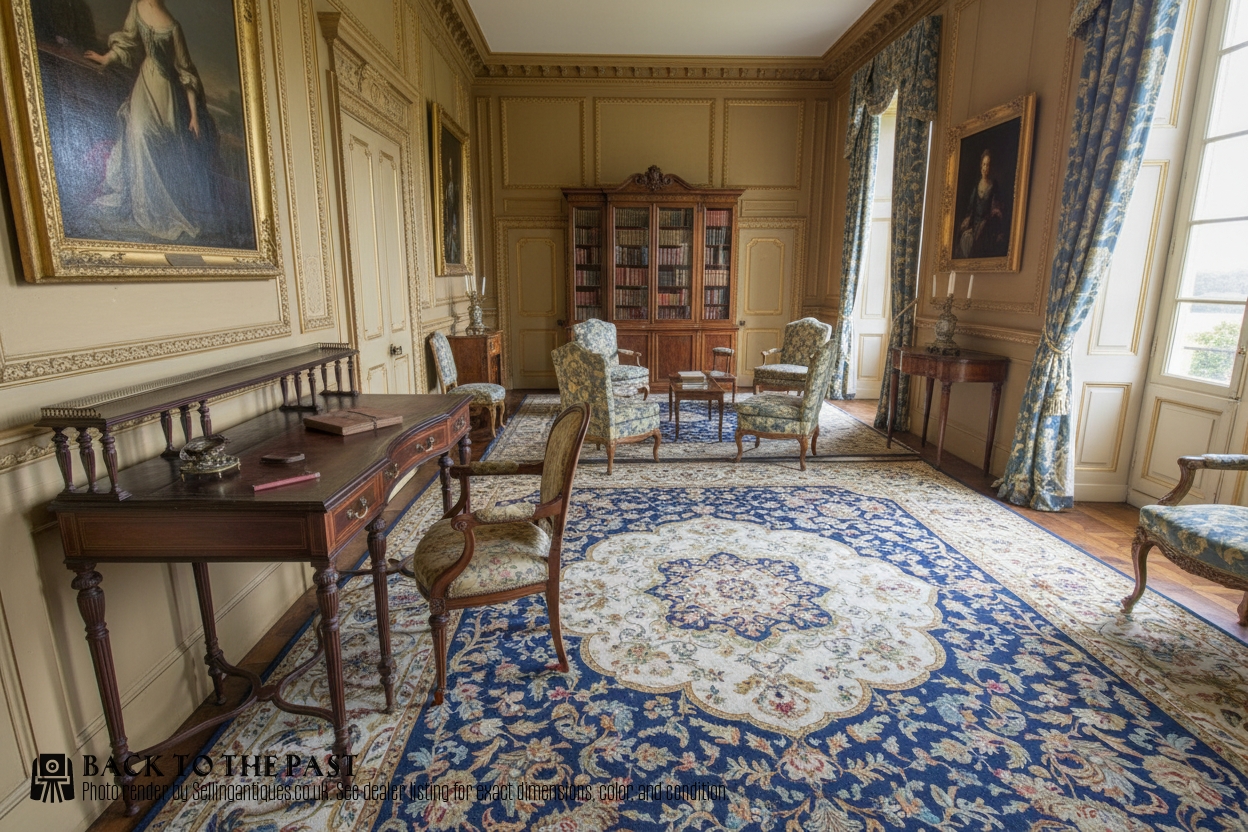
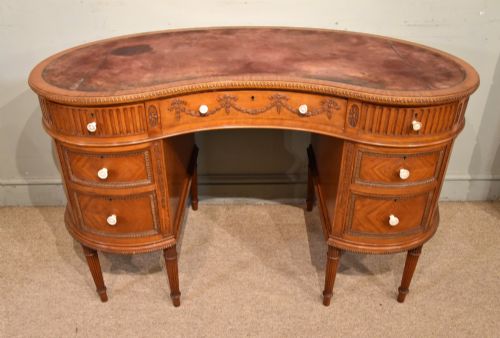
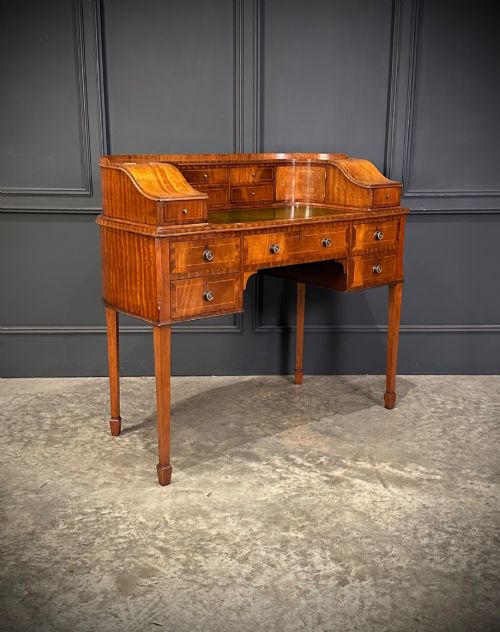
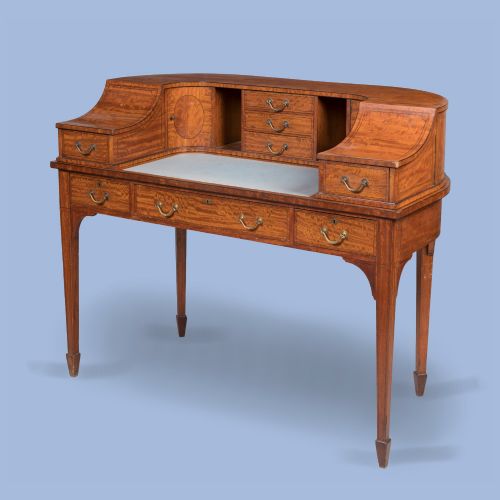
Inlaid Mahogany Writing Desk by Collinson and Lock, 1880
Priced at £1,650 from Camden Antiques
Craftsmen cut multiple layers of veneer simultaneously using a fine saw, ensuring the inlaid pieces fit exactly into the background matrix.
Hot animal glue secures the thin decorative elements to the rough carcase beneath.
Turn a drawer around to inspect the joints. Hand-cut dovetails hold the sides firmly to the front panel.
"The complex floral patterns often acted as botanical records. Craftsmen copied specific flower varieties directly from contemporary printed herbals."
"Hidden compartments sit behind the main interior drawers. Pressing a specific division releases a secret document drawer."
"Sand-shading gave a three-dimensional effect to flat wood. Makers dipped the edges of tiny veneer pieces into hot sand before fixing them down."
Based on almost 25 years of Sellingantiques UK antique market data, Antique Inlaid Desks appeared 3680 times (out of 1,100,000 antiques) which gives it a rarity score of 48/100.
This score measures scarcity within the Sellingantiques archive only and is not a survey of the entire antiques market, so these statistics may not be indicative of the general availability of Antique Inlaid Desks elsewhere.
Keep it simple with a soft dry duster. Metal polishes will stain the surrounding timber and degrade the old finish.
Avoid liquids entirely. Moisture sitting on the surface can loosen the animal glue holding the inlay in place.
Sticking drawers often result from seasonal humidity changes. The solid wood of the drawer sides swells in damp weather and binds against the carcase runners.
Pull the drawer out completely and rub a block of paraffin wax along the bottom edges. This reduces friction without damaging the timber.
If the runner itself is heavily worn, a restorer can glue a new strip of matching wood along the edge. This builds the drawer back up to its original height.
Desk interiors reflect the writing habits of their period. The narrow vertical spaces flanked by drawers held ledgers and bound account books.
The small horizontal drawers kept loose items tidy. They stored wax seals and dry sand for blotting wet ink.
Missing sections of banding or stringing expose the rough carcase wood underneath. Leaving these gaps makes the adjacent veneer vulnerable to catching on clothing and chipping further.
A competent restorer can cut new pieces of timber to match the grain and colour of the original border. They fix these using traditional reversible glue.
Once polished, the repairs blend into the overall surface. Addressing small losses early prevents a larger restoration job later on.
Please note: This Antique Inlaid Desks guide and its associated pricing data are provided for general informational purposes only. It does not constitute formal financial, investment, or appraisal advice and should not be relied upon as the sole basis for any commercial activity, purchasing, or sales decisions. Sellingantiques.co.uk accepts no liability for any actions taken in reliance on this information. Always consult with a qualified professional or independent appraiser.
