


Antique Georgian Desks
Writing furniture in the eighteenth-century English taste: mahogany case desks with a recessed centre for the sitter's knees, or a flat top carried on two banks of drawers, made for letters and ledgers.
Antique Georgian Desks
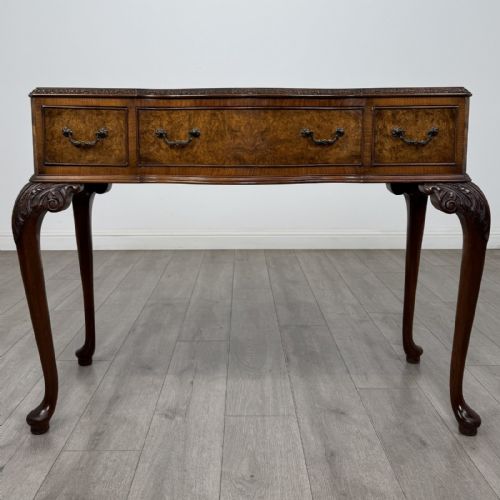
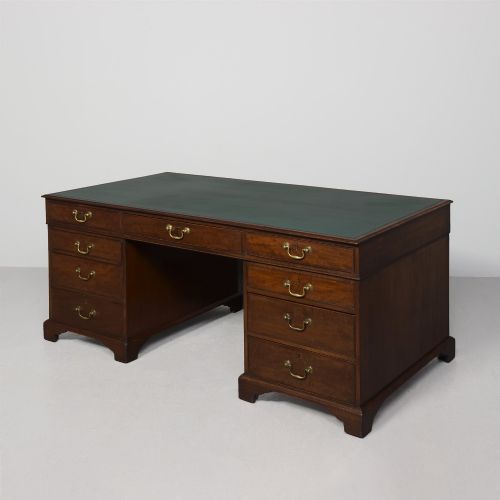
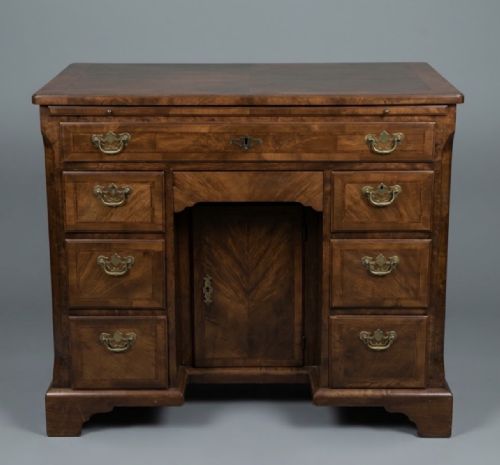
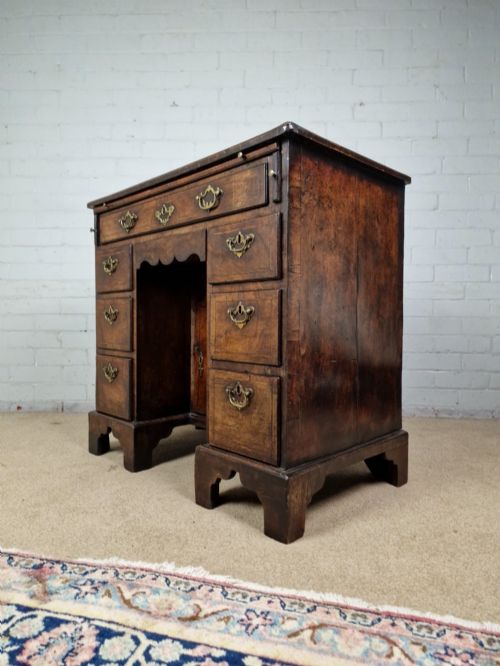
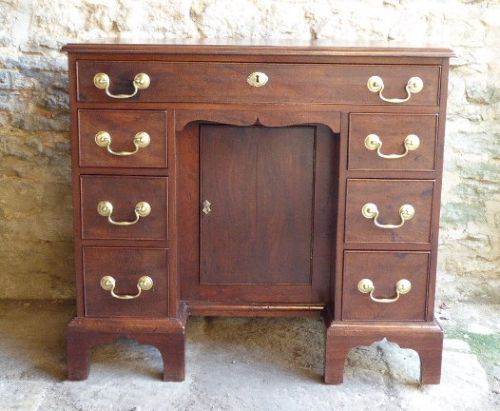
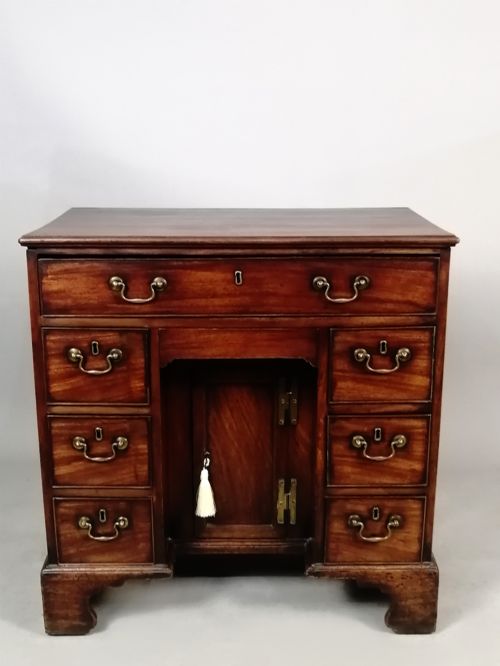
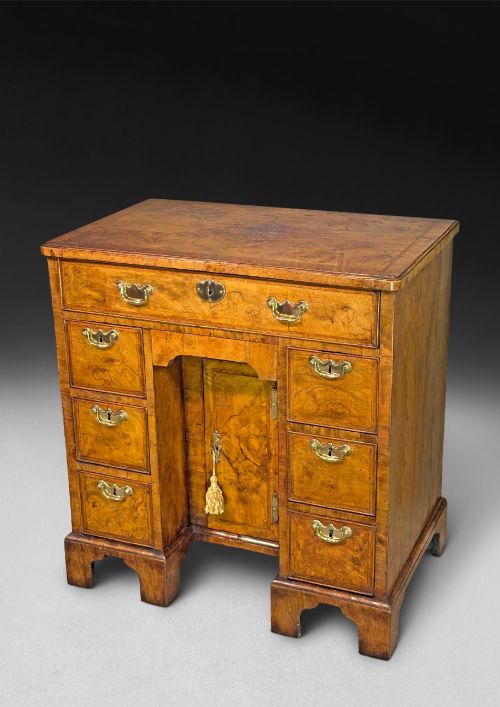
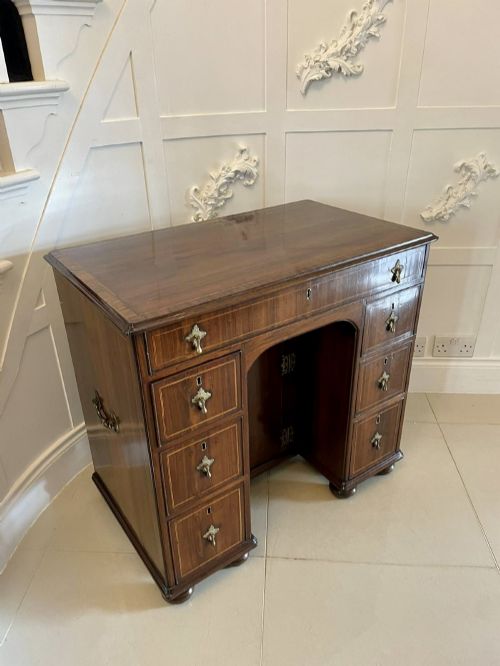
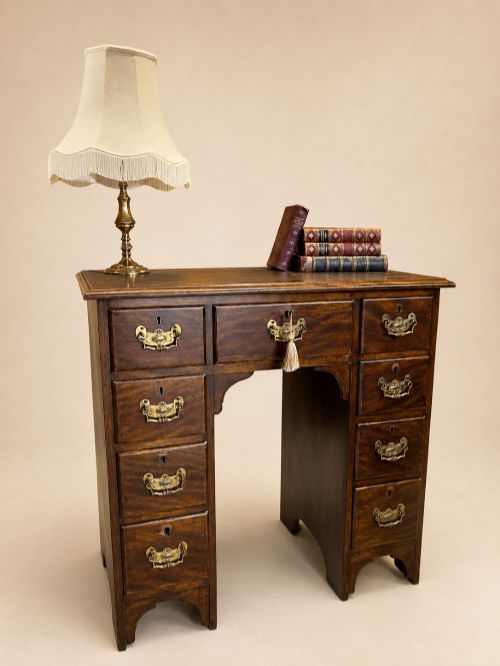
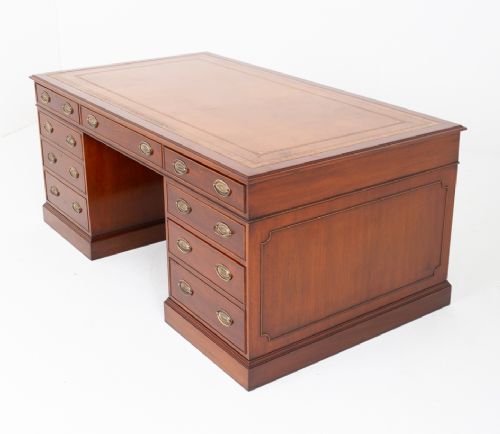
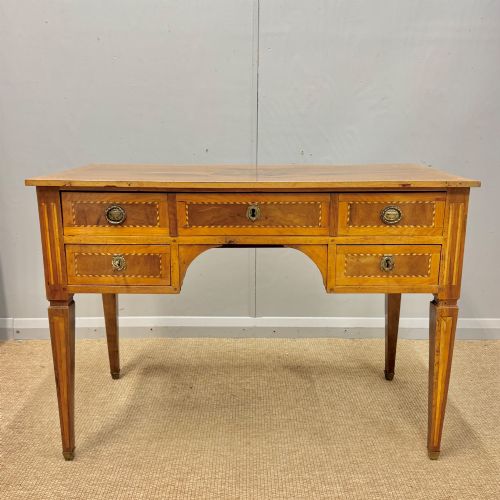
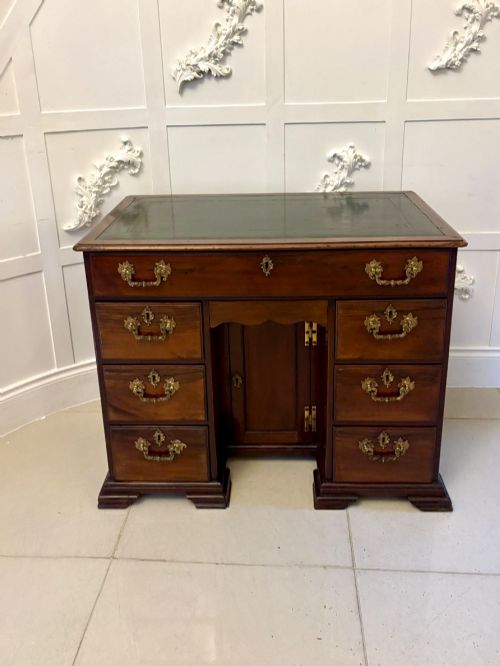
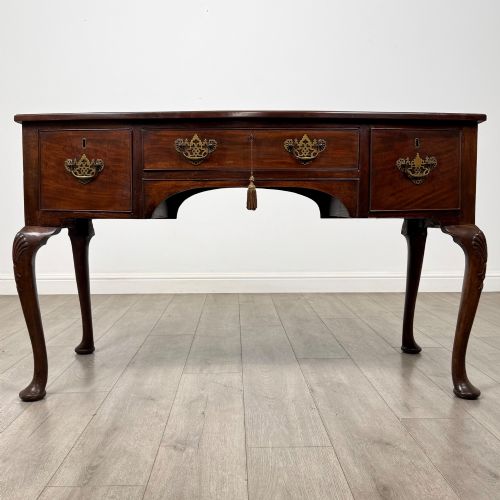
The kneehole desk appeared in Britain early in the eighteenth century, a compact case piece with the centre recessed so a seated writer could draw close. Later Georgian decades added the twin-pedestal form and the double-sided partners desk, which gave more drawer space and, in the partners type, let two people work face to face.
Mahogany is close to a defining condition here rather than one option among many: 281 of 448 titles name it, with walnut a distant second and oak further back again. Kneehole appears in 126 titles, with another 20 written as "knee hole". Pedestal accounts for 78 and partners for 58. So the likeliest encounter on Sellingantiques is a mahogany kneehole of modest size, often with an inset leather writing surface.
A large minority of the category is Georgian-style rather than Georgian. The dated field runs 1700 to 1930, and the 1920s alone account for 37 listings, with the 1910s, 1930s and 1880s adding more. Titles say "Georgian Style", "Georgian Revival" or "with Georgian Influences" to mark furniture made in the taste, not of the period.
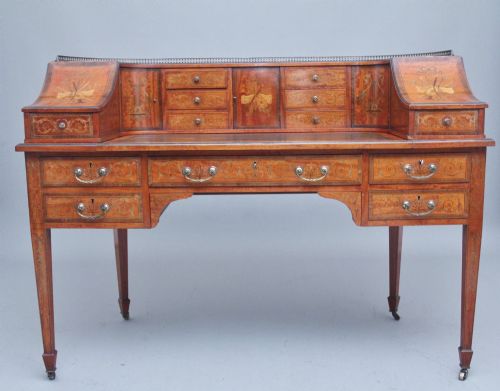
Dating language is often a bracket rather than a year. "Georgian" alone carries 119 listings, "18th Century" 70, "19th Century" 32. Where a reign is given, George III dominates, with George I and George II examples at the older end. Alongside the case desks sit writing and library tables, davenports, architect's and clerk's desks, tambour and cylinder desks and Carlton House desks.
Where The Range Splits
Timber does much of the work. The upper reaches run to walnut, burr walnut, fiddleback walnut, burr elm, yew, satinwood, rosewood and Cuban mahogany, with burr in 17 titles and satinwood in 10. Plain mahogany, oak and pine sit lower down. The oldest dates in the archive, 1700 and 1715, are both walnut kneeholes.
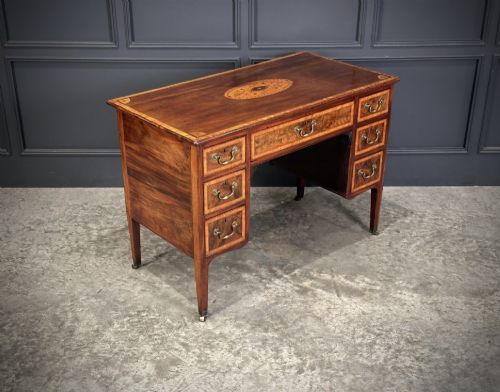
Period against revival separates the range again. The 1920s, 1910s and 1930s dates and the "Georgian Style" phrasing cluster in the middle; George I, George II and early eighteenth-century walnut pieces hold the highest positions. Decoration pushes the same way, with serpentine fronts, inlay, marquetry, featherbanding and crossbanding recurring among the dearer entries.
Size rewards both ends. Full-size and monumental partners desks reach the top, and so do notably small kneeholes: "small" appears in 39 titles, and "diminutive", "miniature" and stated widths of 30 and 31 inches recur high up. Named forms count too, with Carlton House desks turning up only nine times in the whole archive, and architect's desks with adjustable tops and kidney-shaped desks sitting disproportionately in the upper half.
Antique Georgian Desks Retail Price Guide 2026
Typical UK retail prices for georgian desks, calculated from the Sellingantiques database of over a million retail prices indexed since 2003. This retail price guide relies exclusively on Sellingantiques data; no external sources or auction records are used, so the figures do not describe the wider market.
The oldest to pass through Sellingantiques date from 1700 and 1715, both walnut kneehole desks, one in walnut and burr oak.

Gillows
The Antique Georgian Desks Glossary
- Kneehole
- The recessed central opening for the sitter's legs, with a solid block of drawers or a cupboard each side. Titles spell it kneehole, knee hole or knee-hole.
- Pedestal desk
- A flat top carried on two banks of drawers rather than a single solid case. Usually made in three parts, the top lifting off the two pedestals.
- Partners desk
- A double-sided desk with drawers or cupboards on both long sides, so two people can work facing each other. Fifty-eight titles use the term.
- Georgian Revival
- Later furniture made in the eighteenth-century taste, concentrated in the 1880 to 1930 dates and often flagged as "Georgian Style" or "with Georgian Influences".
- Tambour
- A flexible slatted shutter closing the top of a desk. Cylinder and roll top describe a curved or rolling cover over the writing area instead.
- Carlton House desk
- A writing table with a tiered superstructure curving round the back and sides. Nine appear across the archive.
Antique Georgian Desks: Frequently Asked Questions
What wood are Georgian desks usually made from?
Mahogany, and by a wide margin. It is named in 281 of 448 titles, with walnut second at 66 and oak at 23.
Rarer timbers appear once each: yew veneer, partridgewood, pollard oak, burr elm, fiddleback walnut and Virginia walnut. Burr walnut carries 13 titles and satinwood 10.
Are all Georgian desks actually from the Georgian period?
No. A large block of the category is Georgian-style or Georgian Revival work of roughly 1880 to 1930, described as being in the taste rather than of the period.
The dated field bears this out: 37 listings in the 1920s, 11 each in the 1910s, 1930s and 1880s. Titles carry "revival" 11 times.
How is a kneehole desk different from a pedestal desk?
A kneehole desk is a single case with the centre recessed for the sitter's legs. A pedestal desk has a flat top carried on two separate banks of drawers.
Kneehole is the more common of the two on Sellingantiques, appearing in 126 titles plus 20 written as "knee hole". Pedestal accounts for 78.
Why do some listings advertise a desk as small?
Because smallness sells in this category. Thirty-nine titles say "small", and the samples include a "very small", a "diminutive" and a "miniature" oak kneehole.
Some dealers put the width straight into the title, at 30 or 31 inches. Compact kneeholes recur high in the range, alongside the full-size partners desks at the other extreme.
What is a Carlton House desk?
A writing table with a tiered superstructure curving round the back and sides of the top.
It is an uncommon form under this heading, appearing nine times across the whole archive. One of the highest-placed pieces in the samples is a George III mahogany example.
How many Georgian desks come up for sale?
Around 44 a year, and 144 different dealers have listed one. Almost every general furniture dealer touches the category at some point.
The dated listings span 1700 to 1930, a 230-year run under a single heading. Origins outside England are scarce, with one American pedestal desk, one Dutch writing slope and two Irish desks in over four hundred listings.