


A 2026 Guide by Sellingantiques

Antique Large 19th C. Campaign Military Zinc Lined Travel Trunk Chest, 19th Century
Priced at £495 from Pareglio & Ayres Antiques Interiors
Demand peaked during nineteenth-century military campaigns. Officers needed durable storage.
Look at the corners. Heavy brass strapping became common to protect edges from rough handling at sea.
Many earlier examples follow a dome-top shape. This threw off rainwater while strapped to the back of a fast-moving stagecoach during cross-country journeys across Europe.
Railways eventually changed the design rules. Flat tops stacked far easier in luggage vans than the older convex profiles ever could.
Ross of Dublin specialised in this type of campaign gear.
Morgan & Sanders held patents for portable furniture. Their London workshops supplied naval officers with cleverly folding equipment.
Army & Navy Co-operative Society catalogue numbers often appear on later chests. They supplied everything a touring administrator might require for overseas postings across the empire.
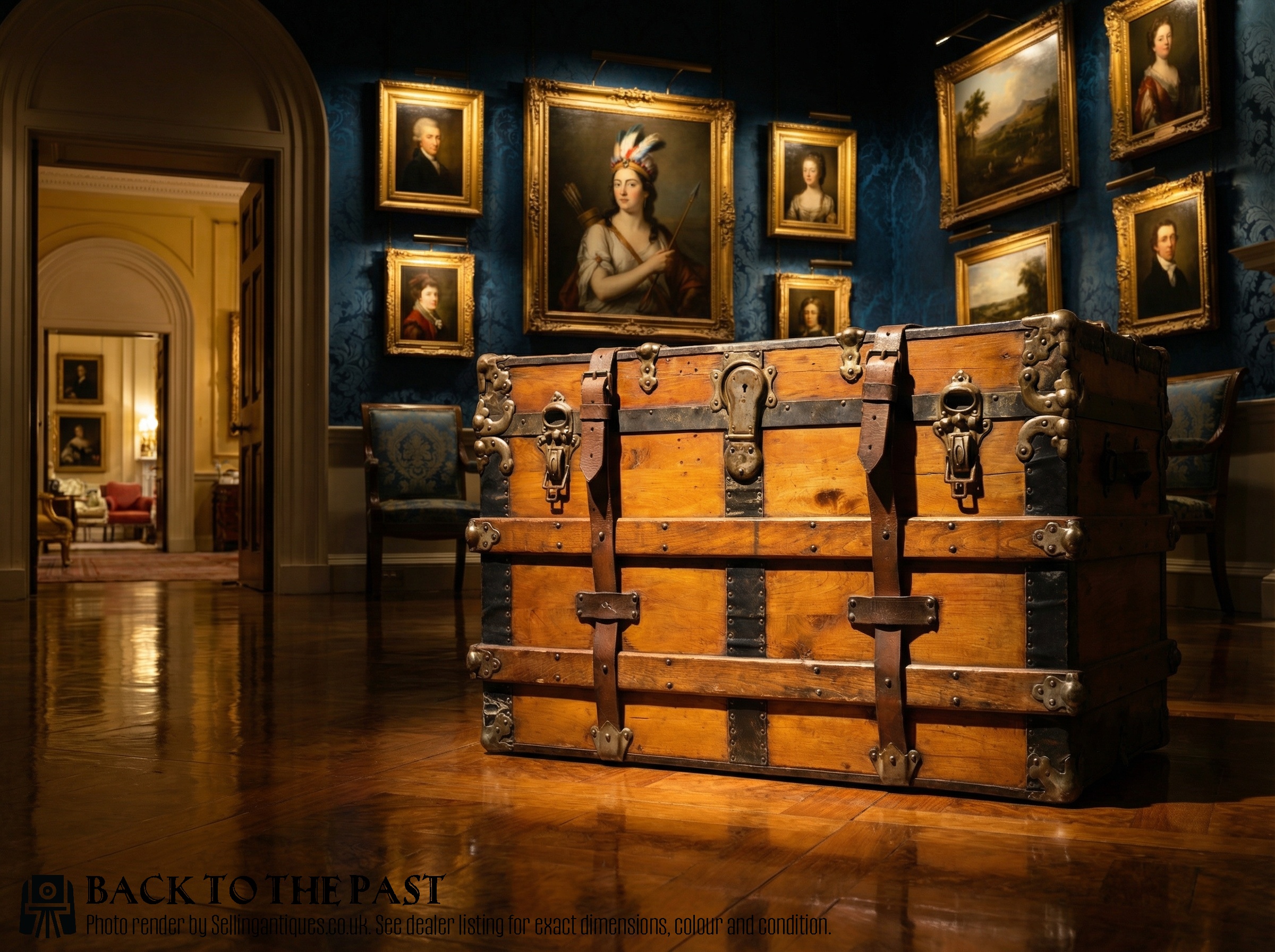
19th Century Victorian Period Pine Travelling Trunk Circa 1870, 1870
Priced at £1,200 from Whites Antiques
The 2026 retail price guide for Antique Travelling Chests is drawn from a proprietary archive of over 1.1 million retail prices indexed by Sellingantiques since 2003. This guide relies exclusively on their own internal data; no external sources or auction records are used.
Analysing nearly 25 years of UK antique market history alongside current retail values, the data indicates that typical UK retail prices for Antique Travelling Chests range between £300 and £1,900. Entry-level prices generally fall under £300 and premium examples upwards of £1,900.
Flush brass handles are a key hallmark. Protruding knobs catch on bulkheads and snap off.
Check the lock escutcheons. They usually sit flush against the timber face for the same practical reasons.
Removable feet often feature. Owners took these turned wooden bun feet off before transport and packed them safely inside the main compartment to prevent transit damage.
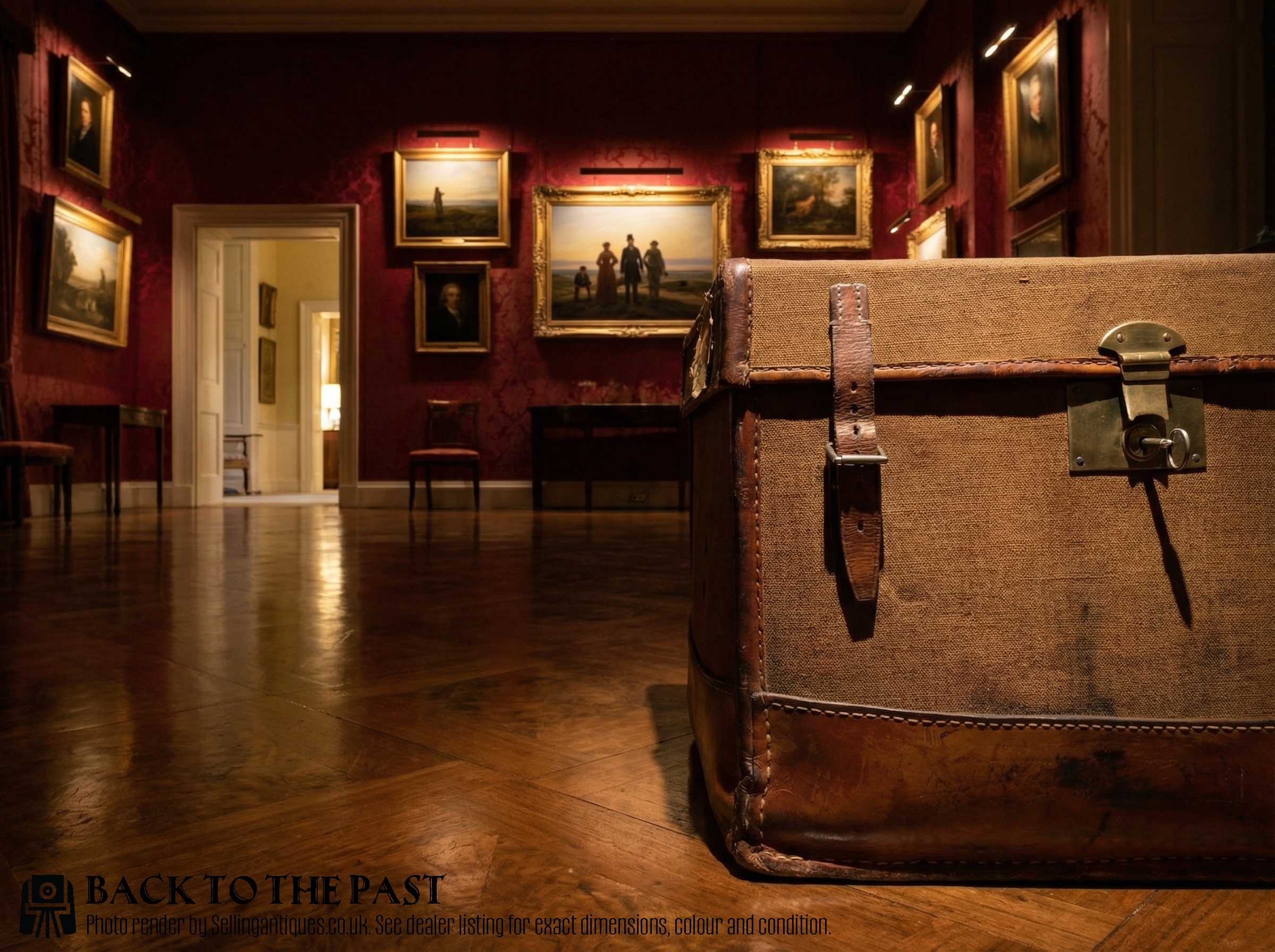
Antique Leather and Canvas Weekend Overnight Picnic Travel Case Trunk, 1920
Priced at £195 from Village Vintage
Solid timber construction dominates the entire category of travelling chests.
Corner joints rely on precise hand cutting. Cabinetmakers prioritised mechanical strength over decoration when pinning the heavy sides together.
Notice the screw heads. Quality examples feature iron screws countersunk flat to secure the brasswork firmly into the wood, ensuring nothing caught on passing ropes.
"Scent remains trapped safely inside the timber for many generations."
"The proportions are strictly practical. Makers designed them specifically to fit tight cabin spaces without wasting a single inch of floor plan."
"Secret compartments turn up occasionally. Craftsmen hid false bottoms under the till to protect gold sovereigns from prying eyes during long stops in foreign ports."
Based on almost 25 years of Sellingantiques UK antique market data, Antique Travelling Chests appeared 3034 times (out of 1,100,000 antiques) which gives it a rarity score of 55/100.
This score measures scarcity within the Sellingantiques archive only and is not a survey of the entire antiques market, so these statistics may not be indicative of the general availability of Antique Travelling Chests elsewhere.
Camphor is a dense timber. When you add the brass strapwork and heavy iron locks, these boxes become difficult for one person to lift easily.
Two people are usually required to move a good sized one. The thick solid planks add considerable mass compared to modern veneered alternatives.
Original leather carrying loops dry out and harden over the decades. They often snap if you try to use them to carry the full weight today.
Most dealers advise leaving stiff handles alone. If they flex easily, someone has either fed the leather heavily with oils or replaced them recently.
It sits entirely flat against the side of the carcase. The maker cuts a shallow recess into the timber and sinks a rectangular brass plate into it.
The handle itself is a hinged loop that drops down into the plate. You have to push your fingers into the recess to pull the loop outward.
Teak is naturally oily and resists drying out better than most cabinet timbers.
A light wax polish once a year helps maintain the surface. You don't need to soak it in wet oils.
Please note: This Antique Travelling Chests guide and its associated pricing data are provided for general informational purposes only. It does not constitute formal financial, investment, or appraisal advice and should not be relied upon as the sole basis for any commercial activity, purchasing, or sales decisions. Sellingantiques.co.uk accepts no liability for any actions taken in reliance on this information. Always consult with a qualified professional or independent appraiser.
