





Antique Tool Chests
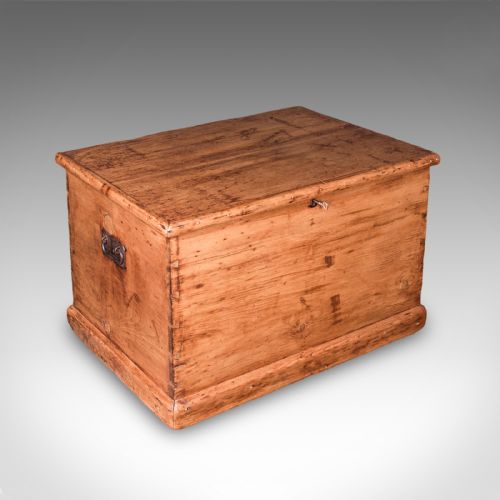
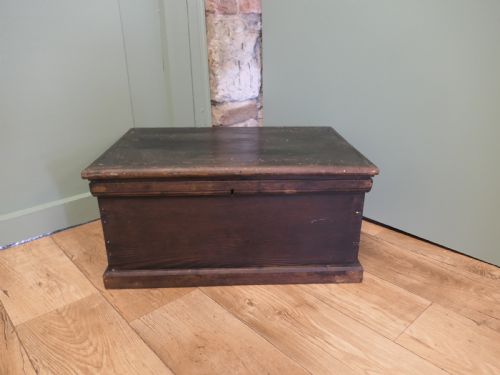
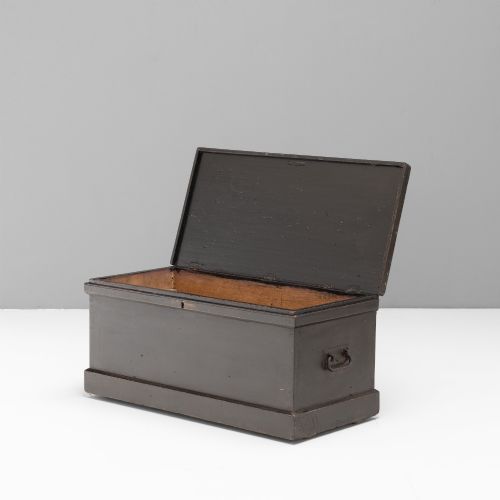
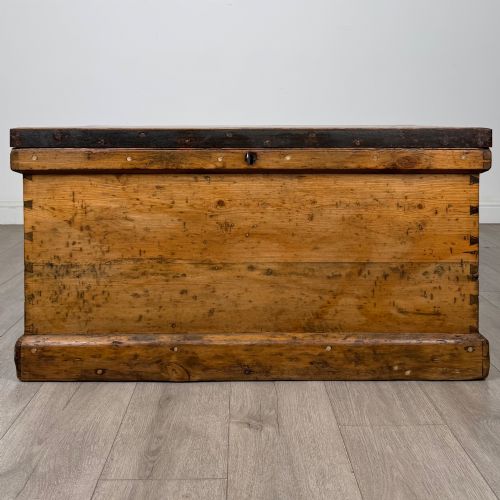
A lidded, handled box built to hold a tradesman's own hand tools, made to be locked and carried between jobs or aboard ship.

Antique Tool Chests
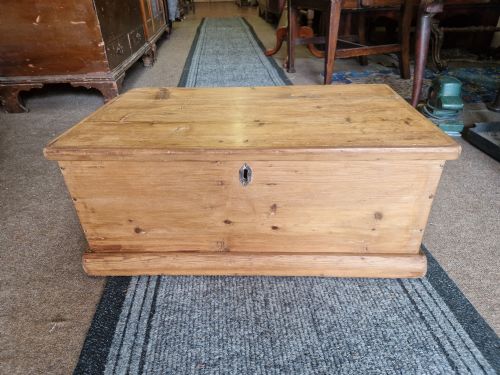
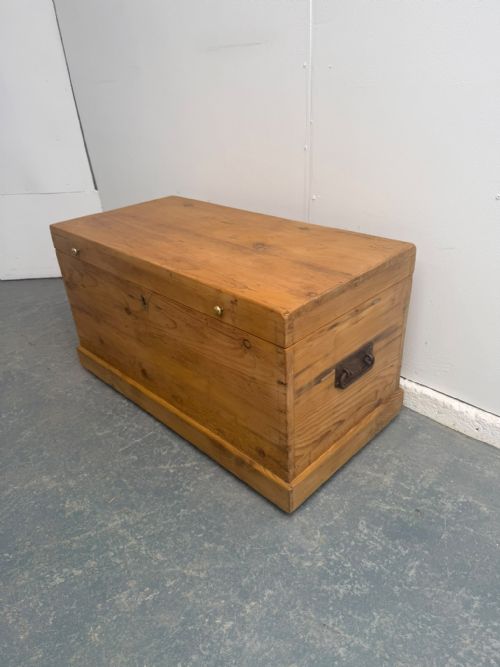
A stout box with a hinged lid, side lifting handles and a lock, sized so one man could shift it or two could carry it. Purpose-made chests of this kind became standard from the 18th century onwards, when an artisan owned his kit and had to move it and secure it. The familiar shape, with interior tills for edge tools, settled through the 19th century alongside the building, cabinet-making and shipbuilding trades.
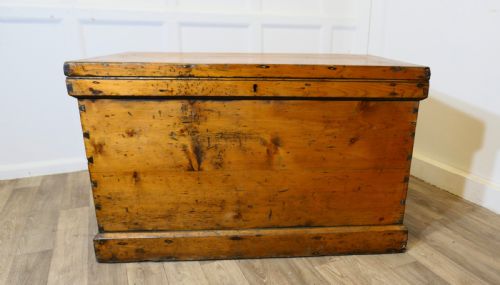
The chest you are most likely to meet is Victorian, English and pine. Pine appears in 38 of 63 titles on Sellingantiques, Victorian in 34. Iron or brass fittings, side handles and a working lock recur throughout. Note that "trunk" is used in nearly half the titles as another word for the same object, so a tool chest is as likely to be advertised as a trunk as a chest.
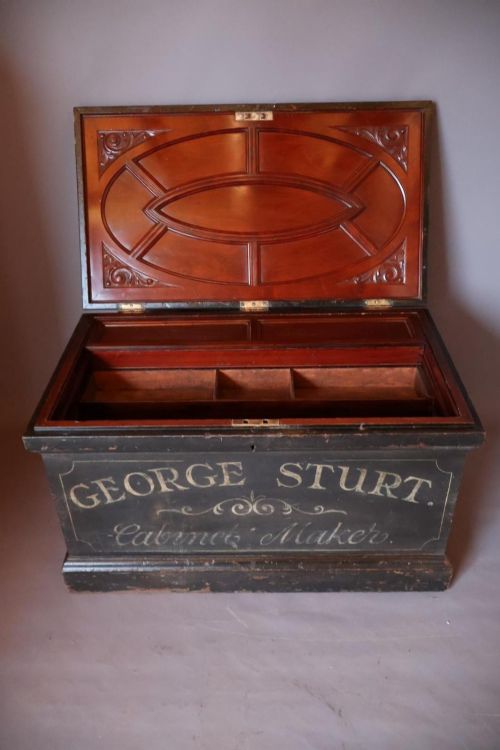
Trades get named in the titles. Carpenter and joiner lead, then the maritime group: shipwright, boat builder, ship's and seaman's chests together make up ten titles. Cabinet makers' chests appear in nine, often described as fitted, with tills, trays or compartments inside. Farrier, railway worker, merchant and Masonic chests turn up once each.
Dating is loose. Victorian and the unhelpful "19th century" cover more than half the archive, and only 17 listings carry a clean year, running 1850 to 1920 with nothing later. A couple of titles claim circa 1840 or early 19th century, but those sit in the dated field as plain 19th century, so read them as the dealer's opinion rather than a fixed date.
Where The Range Splits
Timber does most of the sorting. Plain pine fills the lower half of the range, while mahogany, oak, teak and elm sit above it, and mahogany master shipwright's chests occupy the very top. Pitch pine is named separately from ordinary pine when a dealer wants the distinction to count.
What is inside and what is named on the outside push a chest up. Titles saying fitted interior or well fitted appear from the middle of the range upward, and a specific trade or rank does the same work: master shipwright and cabinet maker at the top, an unqualified pine box at the bottom. One Victorian cabinet maker's chest came with its contents, stated as at least 165 woodworking tools, and sold near the top as a working kit rather than an empty carcase.
Surface and metalwork account for much of the rest. Original painted finish, original green paint, scumble, ebonising and a detailed crest all get called out rather than left unmentioned, and metal-bound or brass-bound corners, brass handles and a working lock recur through the middle and upper range. At the plain end, the carcase is simply painted or waxed, and two chests have been sold as coffee tables, two more as blanket boxes.
Antique Tool Chests Retail Price Guide 2026
Typical UK retail prices for tool chests, calculated from the Sellingantiques database of over a million retail prices indexed since 2003. This retail price guide relies exclusively on Sellingantiques data; no external sources or auction records are used, so the figures do not describe the wider market.
Trunk is the word dealers on Sellingantiques use most in place of chest, in nearly half the titles.

The Antique Tool Chests Glossary
- Tool chest
- A lockable box made to hold and carry a tradesman's own hand tools, usually with handles at the sides.
- Trunk
- Used across the archive as an alternative word for the same object, and not necessarily a travelling trunk.
- Fitted interior
- Internal tills, trays or compartments made to hold specific tools. Stated in several titles and a mark of the better chests.
- Till
- A sliding interior tray, the usual fitting inside a joiner's chest.
- Scumble
- A painted graining finish over softwood, imitating a better timber. One title here is a scumble pine trunk.
- Shipwright
- A ship's carpenter, named in ten titles and the commonest trade after carpenter.
Antique Tool Chests: Frequently Asked Questions
What wood are tool chests usually made from?
Pine dominates. It appears in 38 of 63 titles on Sellingantiques, which makes it close to definitional for the category.
Hardwoods form a smaller group. Mahogany, oak, elm and teak all turn up, along with pitch pine named separately from plain pine, and these sit in the upper half of the range.
Why are so many listed as trunks?
Dealers use chest, trunk and box interchangeably for the same object. Trunk is the single most-used alternative word, appearing in close to half the titles.
So a search for tool chests that skips the word trunk misses a large slice of what has come to market.
How old are these chests?
The dated field is dominated by Victorian and the vague "19th century", so more than half carry no closer date than a reign or a century.
Of the 17 listings with a clean year, the range runs 1850 to 1920. Two sit in the 1920s and nothing later appears. A couple of titles claim circa 1840 or early 19th century, but the dated field puts them in the loose 19th century bracket.
Which trades are named on tool chests?
Carpenter and joiner come first, then the maritime group. Shipwright, boat builder, ship's and seaman's chests together make ten titles, the largest named group after the woodworking trades.
Cabinet makers account for nine titles, often with a fitted interior stated. One-offs include a farrier, a railway worker, a merchant and a Masonic pine chest.
Do tool chests come with their tools?
Rarely. Almost all are sold as empty carcases.
One Victorian mahogany and pine cabinet maker's chest is titled with at least 165 woodworking tools, and it sits near the top of the range. It is the only sampled example offered as a working kit.
What does a fitted interior mean?
It means internal tills, trays or compartments built to hold specific tools, rather than one open void. A till is the sliding tray a joiner kept his edge tools in, and one title names a candlebox, a small lidded compartment inside.
Titles saying fitted interior or well fitted appear from the middle of the range upward, and the top cabinet makers' chests are described that way.