





A 2026 Guide by Sellingantiques

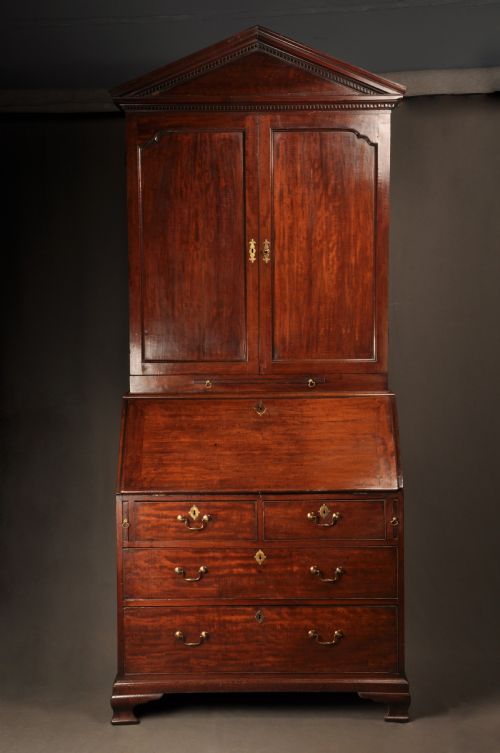
Georgian Mahogany Bureau Bookcase, Georgian
Priced at £1,650 from LTANTIQUES.CO.UK
The form evolved during the late seventeenth century from simple writing boxes placed on chest stands.
Georgian society required dedicated spaces for managing correspondence and household accounts.
By the 1730s, the antique mahogany bureau was an expected fixture in wealthy British homes.
Observe how provincial cabinetmakers adapted London designs to suit local tastes over the following decades.
Thomas Chippendale supplied complex variations of these desks to his aristocratic clients during the mid-eighteenth century.
Gillows of Lancaster produced well-documented plain mahogany bureaus with close timber matching from the 1760s onwards.
Most provincial pieces remain anonymous, built by skilled local tradesmen following published pattern books.
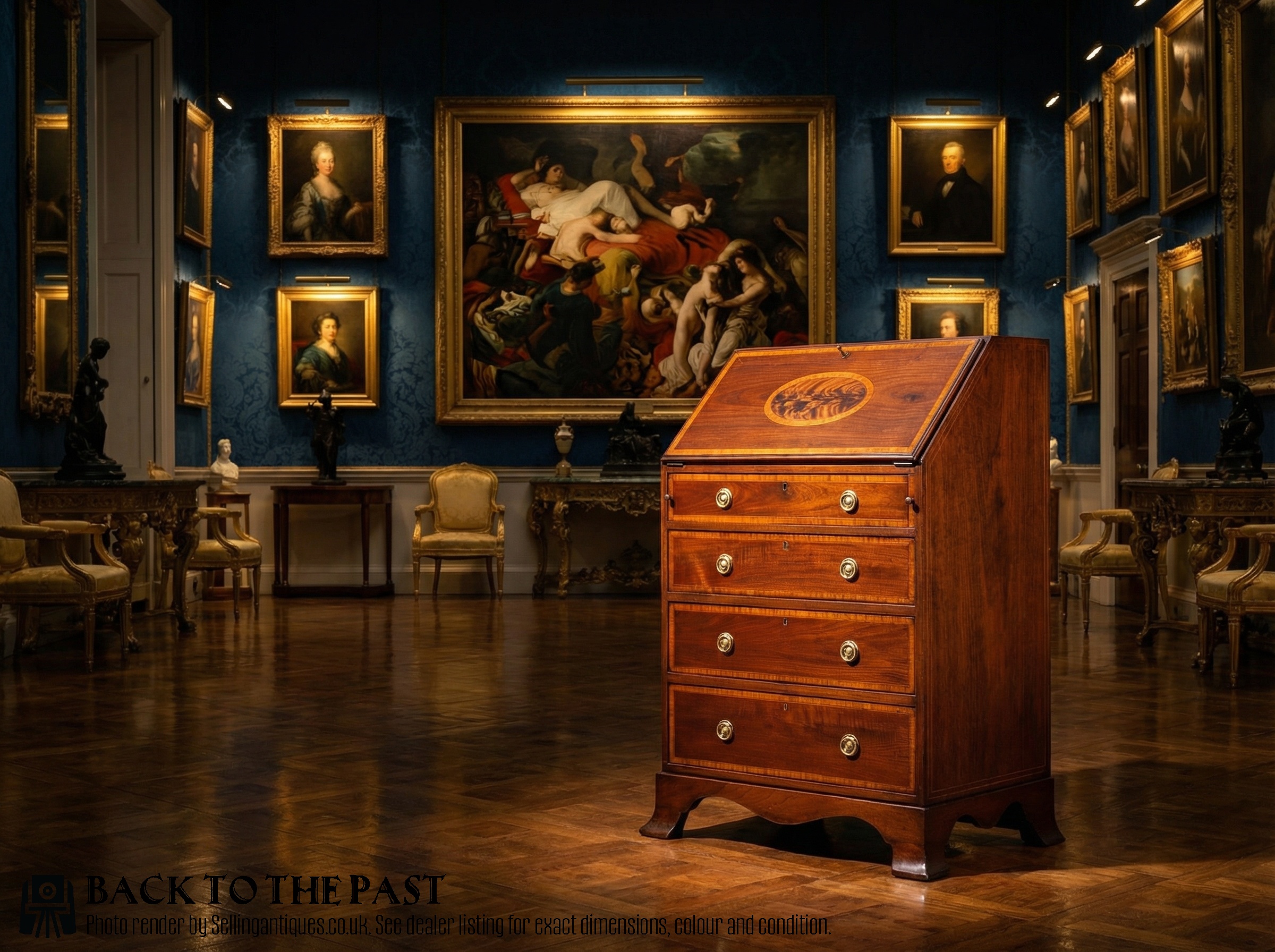
Sheraton Revival Mahogany Ladies Bureau, 1890
Priced at £1,195 from Philip Hunt Antiques
The 2026 retail price guide for Antique Mahogany Bureau is drawn from a proprietary archive of over 1.1 million retail prices indexed by Sellingantiques since 2003. This guide relies exclusively on their own internal data; no external sources or auction records are used.
Analysing nearly 25 years of UK antique market history alongside current retail values, the data indicates that typical UK retail prices for Antique Mahogany Bureau range between £700 and £3,800. Entry-level prices generally fall under £700 and premium examples upwards of £3,800.
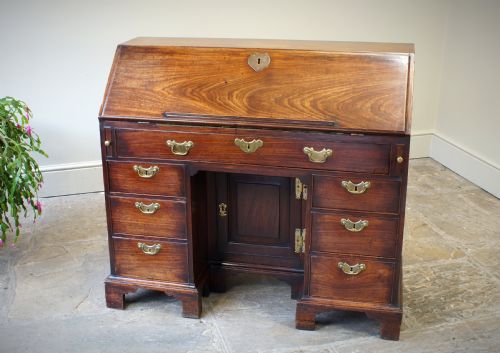
A slanted fall front provides a flat working surface when lowered onto wooden lopers.
The interior contains small drawers, pigeonholes and sometimes a central cupboard for sorting papers.
Graduated long drawers sit beneath the writing section to hold larger domestic items.
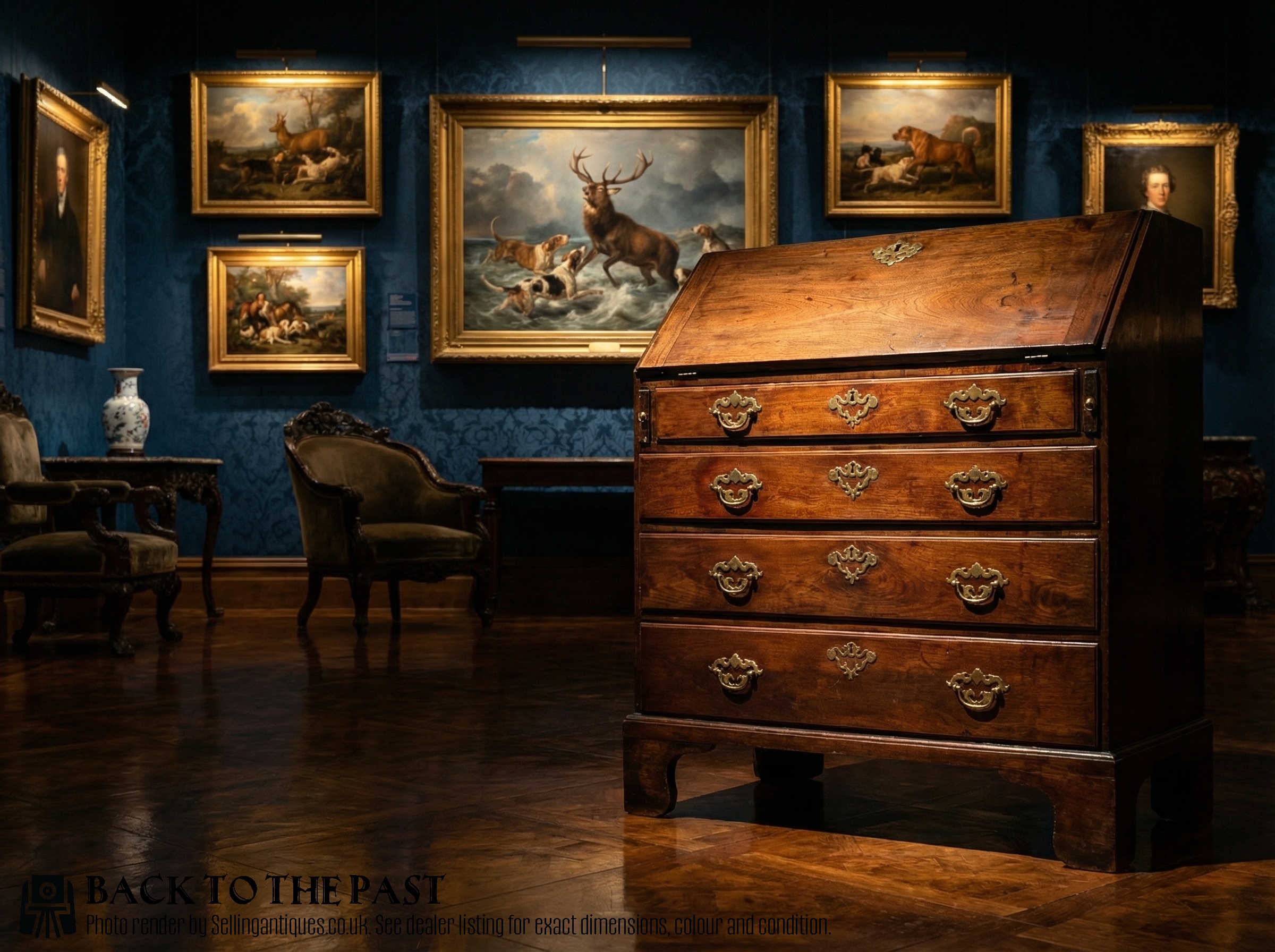
Early Georgian Faded Mahogany Bureau., Georgian
Priced at £575 from The Dorking Desk Shop
Cabinetmakers constructed the main outer carcase using wide, single boards to reduce splitting as the timber aged.
Flame veneers were sometimes applied to the fall front to create a mirrored grain effect.
Drawer bottoms run side-to-side in earlier pieces but often run front-to-back in later Georgian work.
"Some examples feature secret compartments tucked behind the central architectural pigeonholes."
"The locks fitted to the main fall were often the most secure closures in an eighteenth-century house."
"Pulling out the lopers automatically triggered internal wooden latches on certain complex designs."
Based on almost 25 years of Sellingantiques UK antique market data, Antique Mahogany Bureau appeared 4420 times (out of 1,100,000 antiques) which gives it a rarity score of 41/100.
This score measures scarcity within the Sellingantiques archive only and is not a survey of the entire antiques market, so these statistics may not be indicative of the general availability of Antique Mahogany Bureau elsewhere.
Those small compartments held items like sealing wax, nibs and sand used for drying ink. The open pigeonholes above took folded letters and ledgers.
People grouped their paperwork by correspondent or business matter. The layout helped clerks and householders keep daily tasks organised.
A locksmith can pick the brass lock without damaging the surrounding timber. They use simple hand tools to manipulate the original mechanism.
Once open, you can ask them to cut a replacement key. Old locks are robust and usually work fine after a drop of oil.
You can swap the brasses if they are modern replacements. Original handles should stay where they are.
Changing period hardware leaves shadows on the wood. It also requires drilling fresh holes through the drawer fronts.
The drawers slide out easily to reduce the weight. The main carcase itself is one solid structure and does not dismantle.
You should tie the fall shut before lifting. Always carry the main frame from the bottom rather than pulling on the top edge.
Please note: This Antique Mahogany Bureau guide and its associated pricing data are provided for general informational purposes only. It does not constitute formal financial, investment, or appraisal advice and should not be relied upon as the sole basis for any commercial activity, purchasing, or sales decisions. Sellingantiques.co.uk accepts no liability for any actions taken in reliance on this information. Always consult with a qualified professional or independent appraiser.
