





A 2026 Guide by Sellingantiques
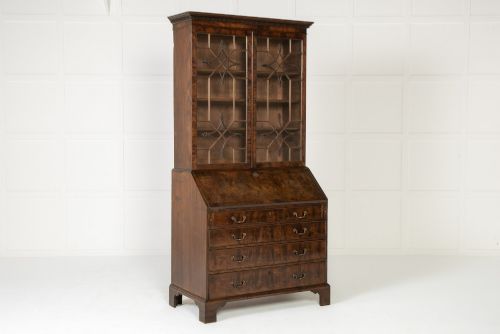
Arts & Crafts Harris Lebus Oak Bureau Bookcase C1880-1900, 1880
Priced at £995 from Mews Antiques
The earliest antique bureau bookcases appeared in the late seventeenth century. They evolved from placing a simple cabinet on top of a standalone desk.
Think about the need for security. Wealthy households kept ledgers and letters locked away behind those upper doors.
By the Georgian period, they became standard fixtures in prosperous merchants' homes. The form spread rapidly across regional trade hubs.
Demand fell away during the Victorian era. Separate writing tables and large library cases eventually took over.
Documented antique bureau bookcases from specific makers rarely turn up. They're mostly the work of anonymous cabinet-makers working in regional towns.
Giles Grendey produced known mahogany pieces during the mid-eighteenth century. His workshop exported heavily, though his stamped output remains scarce.
Some later eighteenth-century pieces follow designs published by Thomas Chippendale. Keep in mind that pattern books were copied by hundreds of provincial tradesmen.
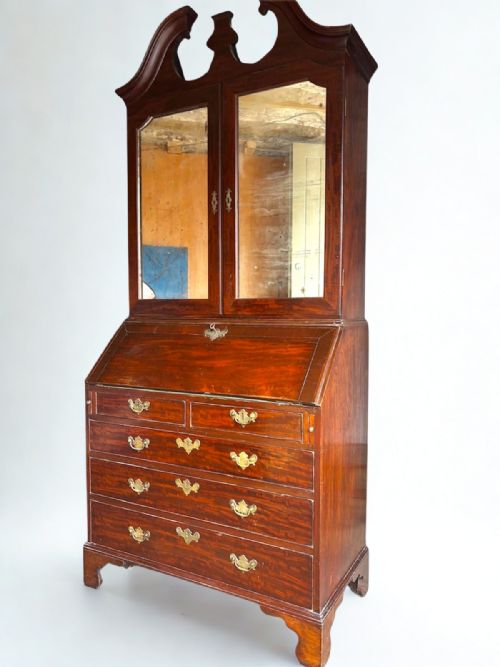
Antique 18th Century Rosewood Bureau Bookcase, 18th Century
Priced at £12,500 from London City Antiques
The 2026 retail price guide for Antique Bureau Bookcases is drawn from a proprietary archive of over 1.1 million retail prices indexed by Sellingantiques since 2003. This guide relies exclusively on their own internal data; no external sources or auction records are used.
Analysing nearly 25 years of UK antique market history alongside current retail values, the data indicates that typical UK retail prices for Antique Bureau Bookcases range between £800 and £8,000. Entry-level prices generally fall under £800 and premium examples upwards of £8,000.
A sloping fall opens to reveal a fitted interior. You'll usually find a central cupboard flanked by pigeonholes and small drawers.
The upper section always sits slightly recessed from the base. This step provides space to rest the fall when open.
Glazed doors up top often feature wooden glazing bars. Earlier solid doors might conceal adjustable shelving or further banks of internal drawers.
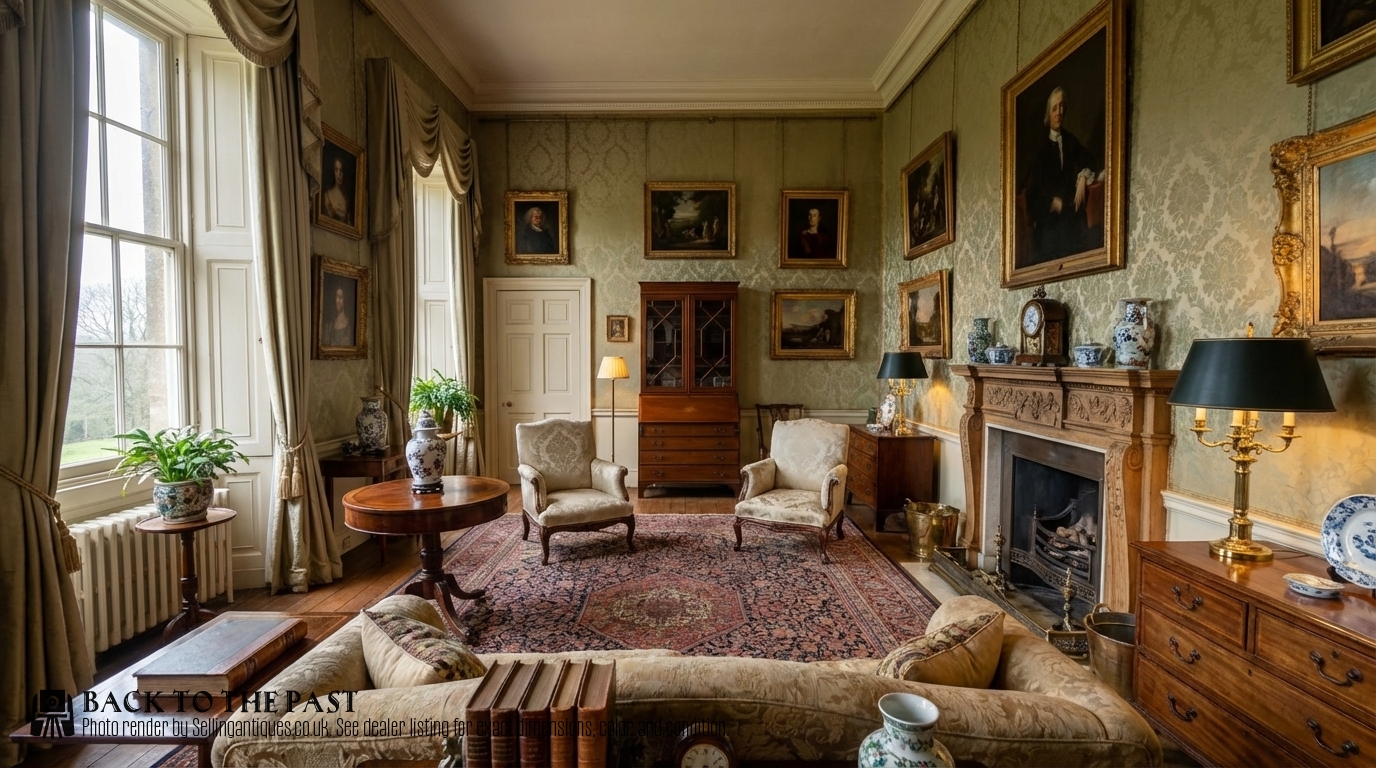
Edwardian Inlaid Mahogany Bureau Bookcase., 1910
Priced at £65 from Rupert Hitchcox Antiques
Craftsmen joined the main carcase using hand-cut dovetails. This interlocking method gave the heavy base enough strength to support the tall upper section.
Veneering required pressing thin sheets of expensive timber onto a stable core using hot animal glue.
Look closely at the backboards. They were usually rough-sawn and held in place with hand-forged iron nails.
"Secret compartments hide in plain sight. Pull out the central interior cupboard, and you might find hidden document drawers concealed behind the architectural columns."
"Many upper sections separate from the base. This original design feature makes moving these heavy items up narrow staircases much easier."
"The internal pigeonholes were sized for folded paper. Before the introduction of modern envelopes, letters were folded flat and wax sealed."
Based on almost 25 years of Sellingantiques UK antique market data, Antique Bureau Bookcases appeared 2727 times (out of 1,100,000 antiques) which gives it a rarity score of 58/100.
This score measures scarcity within the Sellingantiques archive only and is not a survey of the entire antiques market, so these statistics may not be indicative of the general availability of Antique Bureau Bookcases elsewhere.
Always separate the two halves before attempting to move the piece. You'll find that the upper cabinet lifts off the base, often resting on locating pins or a moulded lip.
Take all the drawers out of the base to reduce the weight. Tape the upper doors shut with low-tack tape to prevent them swinging open on the stairs.
The fall offers a generous working area when lowered. A standard laptop fits easily on the writing surface, leaving room for a mouse and paperwork alongside.
Monitors present a challenge due to the fitted interior. The internal pigeonholes restrict the depth, meaning screens rarely sit back far enough to allow the lid to close. Most buyers place the monitor on a stand to the side instead.
Yes, replacing a damaged writing surface is a routine job. A restorer will scrape out the old material and glue a new hide into the recess.
You can choose a colour that suits the timber.
Central heating is a known hazard for period furniture. Radiators cause rapid changes in local humidity, drying out the air and forcing the timber to shrink.
You risk the solid sides of the carcase splitting, and the veneers lifting from their grounds. Keep the piece on a different wall if you can, or turn the radiator valve down.
If it must sit there, placing a small bowl of water underneath helps. The evaporation adds a little moisture back into the local environment.
Please note: This Antique Bureau Bookcases guide and its associated pricing data are provided for general informational purposes only. It does not constitute formal financial, investment, or appraisal advice and should not be relied upon as the sole basis for any commercial activity, purchasing, or sales decisions. Sellingantiques.co.uk accepts no liability for any actions taken in reliance on this information. Always consult with a qualified professional or independent appraiser.
