


A 2026 Guide by Sellingantiques
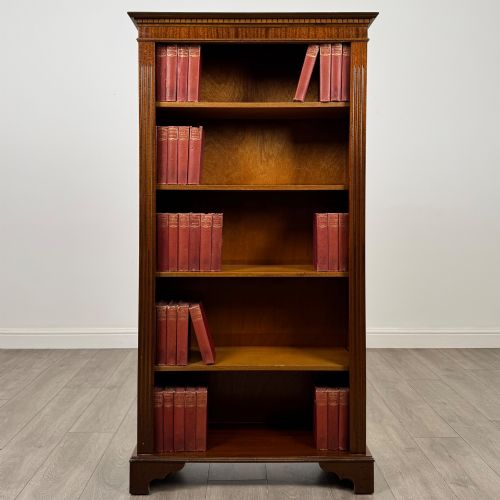
19th-century Rosewood Open Bookcase, 19th Century
Priced at £1,745 from Shackladys Antiques
Before the eighteenth century, most books lived flat in chests. The upright antique open bookcase didn't appear until reading became a broader domestic habit.
Early Georgian examples are often architectural. You see heavy cornices and rigid proportions dominating the room.
The Regency period brought them lower to the ground. Dwarf bookcases allowed space above for pictures and mirrors, altering how walls were decorated.
By the Victorian era, standardisation kicked in. Mass production meant middle-class homes could afford an antique open bookcase of their own.
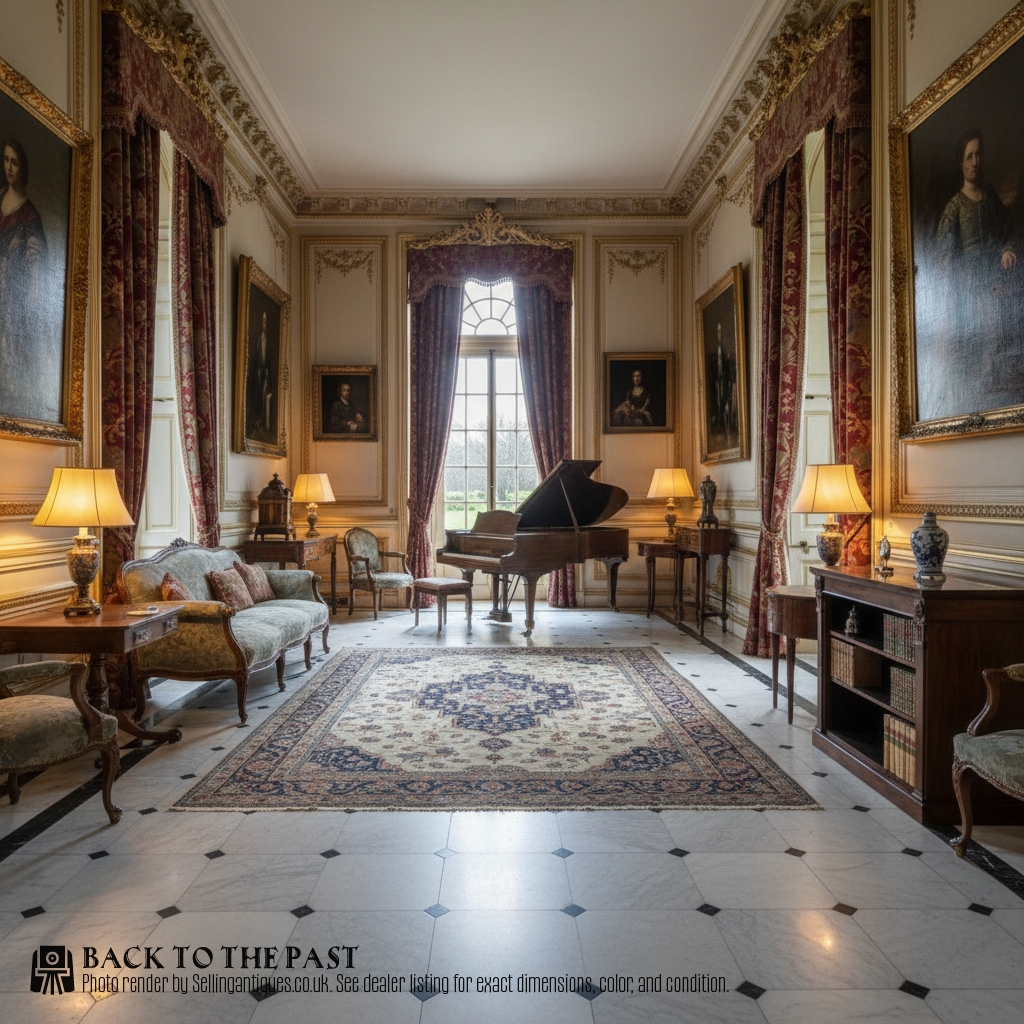
Look at photographs from old country houses. Tall, wall-to-wall open shelving was the standard way to house large aristocratic collections.
Gillows of Lancaster produced hundreds of these. Their late eighteenth-century sketchbooks show dwarf open bookcases with reeded edges.
Thomas Chippendale supplied large architectural open bookcases to country houses. The Director features designs reliant on classical proportions.
Much of the nineteenth-century output is anonymous. The regional trade churned out practical bookcases without ever stamping a maker's mark.
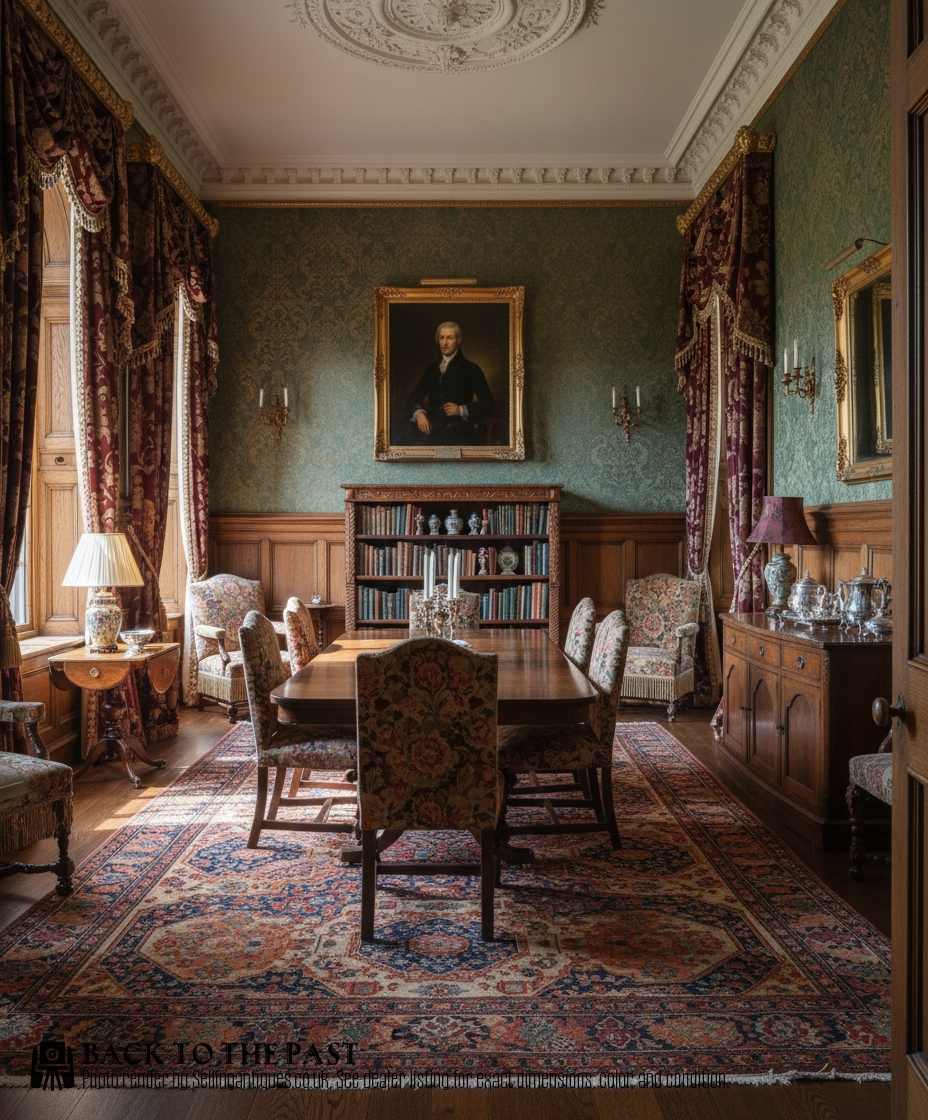
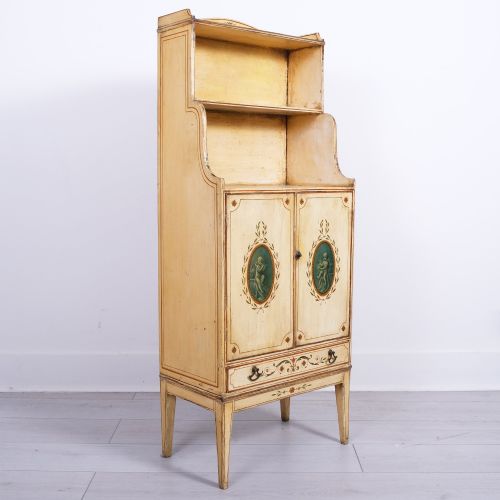
19thc Oak Open Bookcase, 19th Century
Priced at £775 from Piers Pisani Ltd Antiques and Furniture
The 2026 retail price guide for Antique Open Bookcases is drawn from a proprietary archive of over 1.1 million retail prices indexed by Sellingantiques since 2003. This guide relies exclusively on their own internal data; no external sources or auction records are used.
Analysing nearly 25 years of UK antique market history alongside current retail values, the data indicates that typical UK retail prices for Antique Open Bookcases range between £500 and £2,500. Entry-level prices generally fall under £500 and premium examples upwards of £2,500.
Adjustable shelves are common. A system of wooden sawtooth racks or drilled holes with pegs lets owners alter the spacing.
Dust flaps sometimes appear under the shelf edges. They're a simple strip of leather or baize tacked on to protect the books below.
Look at the base. A solid plinth usually anchors the piece to the floor, spreading the heavy weight of the books.
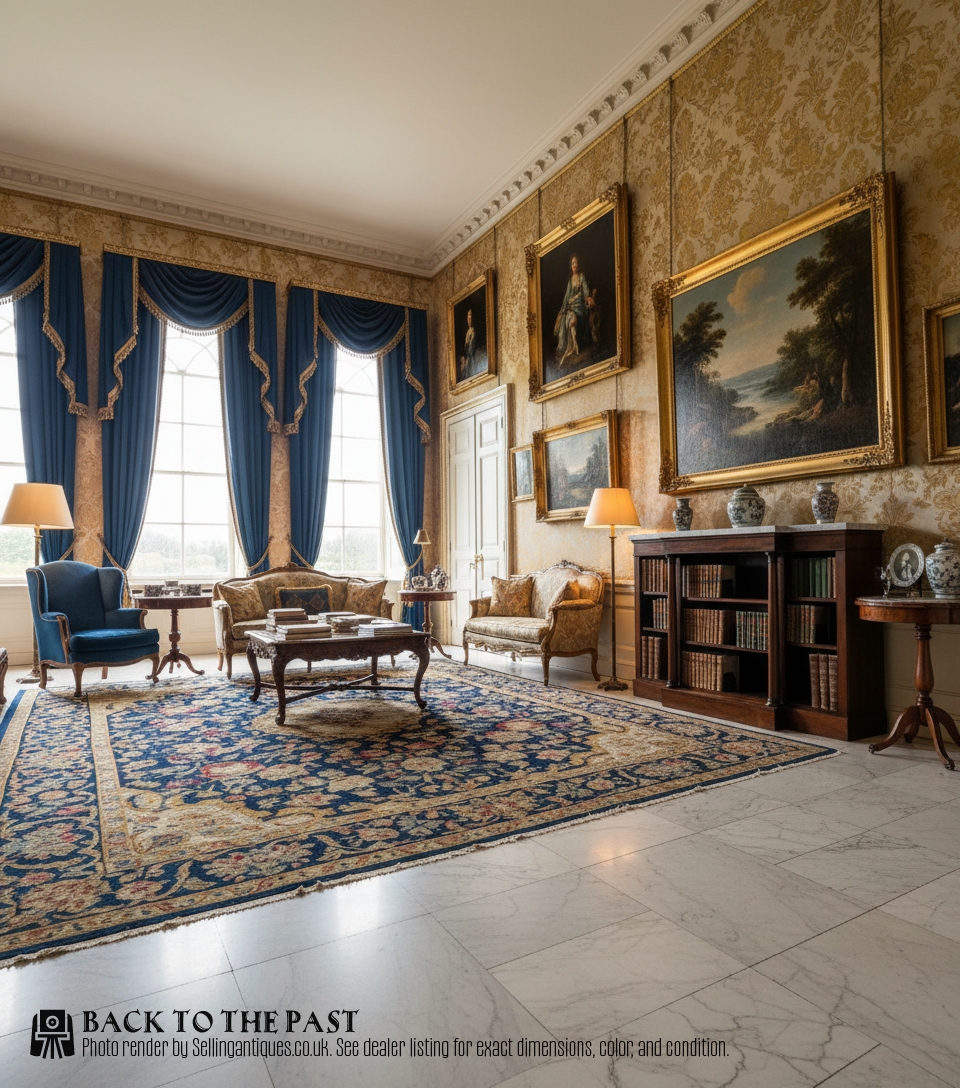
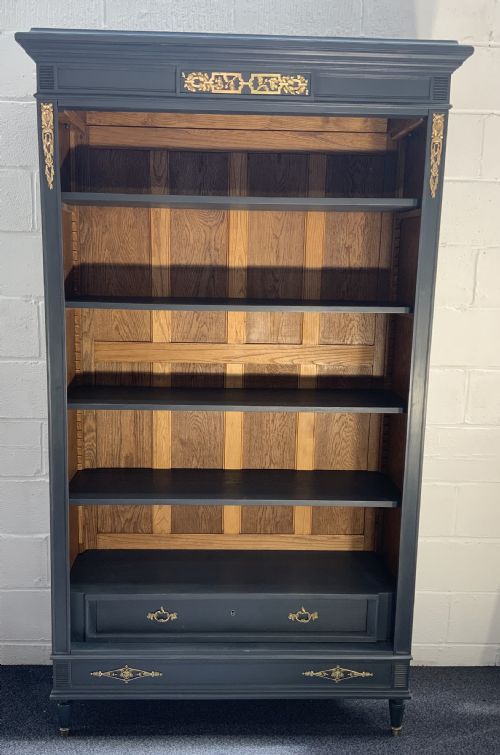
19th Century Rosewood Open Bookcase, 19th Century
Priced at £3,450 from Shackladys Antiques
Early mahogany examples rely on solid timber for the sides. The weight they had to carry demanded structural integrity over veneer.
Pull out a shelf and examine the front edge. Better workshops applied a thin strip of crossbanded veneer to hide the end grain.
Victorian factories started using dowels instead of hand-cut joints. It sped up assembly but sometimes weakened the frame under heavy loads.
"Many dwarf bookcases were built as pairs. They sat symmetrically on either side of a fireplace to balance the room."
"The open design encouraged better airflow around the books. This natural ventilation kept leather bindings in much better condition."
"You'll often find concealed shallow drawers hidden within the base mouldings. They stored maps or prints out of sight."
Based on almost 25 years of Sellingantiques UK antique market data, Antique Open Bookcases appeared 7726 times (out of 1,100,000 antiques) which gives it a rarity score of 21/100.
This score measures scarcity within the Sellingantiques archive only and is not a survey of the entire antiques market, so these statistics may not be indicative of the general availability of Antique Open Bookcases elsewhere.
Most antique open bookcases are shallower than modern equivalents. Georgian and Victorian examples usually measure between eight and ten inches deep.
This depth was designed for standard octavo volumes. If you have oversized modern art books, they'll often overhang the front edge.
You can, but it isn't a good idea. Painting over a period mahogany surface traps the wood and obscures the grain.
Altering the original finish erases its history. You're better off living with the polished surface.
Tall bookcases rarely sit flush on old floors. Plinth bases are rigid and won't flex to accommodate the uneven floorboards beneath them.
You'll have to use shims under the front edge to tilt the carcase back slightly. Pushing small wooden wedges under the plinth stops the piece leaning forward into the room.
Once the books are shelved, gravity holds the entire structure securely against the skirting board.
Solid timber shelves are much stronger than modern chipboard. Mahogany or oak boards from the nineteenth century easily bear the weight of heavy reference books.
You'll only need to check the shelf supports. If the piece uses wooden pegs, ensure they fit tightly into their holes before loading the span.
Please note: This Antique Open Bookcases guide and its associated pricing data are provided for general informational purposes only. It does not constitute formal financial, investment, or appraisal advice and should not be relied upon as the sole basis for any commercial activity, purchasing, or sales decisions. Sellingantiques.co.uk accepts no liability for any actions taken in reliance on this information. Always consult with a qualified professional or independent appraiser.
