
A 2026 Guide by Sellingantiques
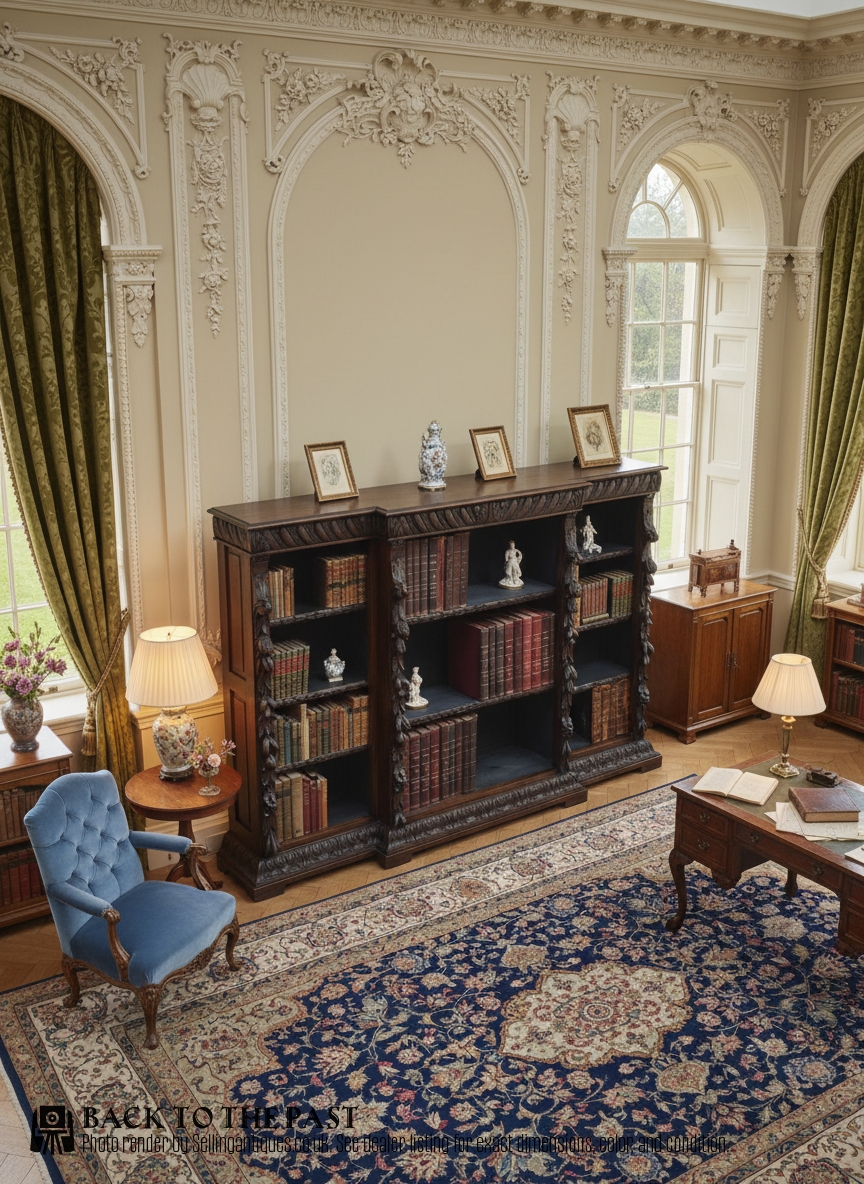
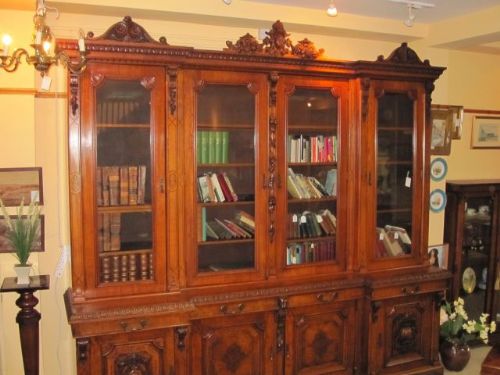
Carved Oak Breakfront Open Bookcase, 19th Century
Priced at £2,450 from Shackladys Antiques
Early examples turn up from the late seventeenth century. Most households kept books in chests before shelves became standard.
Built-in library presses gave way to freestanding furniture as reading habits changed. Antique oak bookcases became common middle-class fixtures.
Regional joiners handled much of the early provincial trade. London workshops preferred walnut or mahogany for high-end commissions.
Gothic Revival designs revived the timber's popularity in the nineteenth century. The Arts and Crafts movement later embraced it heavily.
Gillows of Lancaster produced substantial library furniture in oak throughout the nineteenth century. Their stamped pieces occasionally surface.
Liberty and Co marketed distinctively modern open shelving units. These late nineteenth-century items often lack formal maker marks.
Many provincial joiners left their antique oak bookcases unsigned. Attributing unmarked country pieces to specific names is difficult.
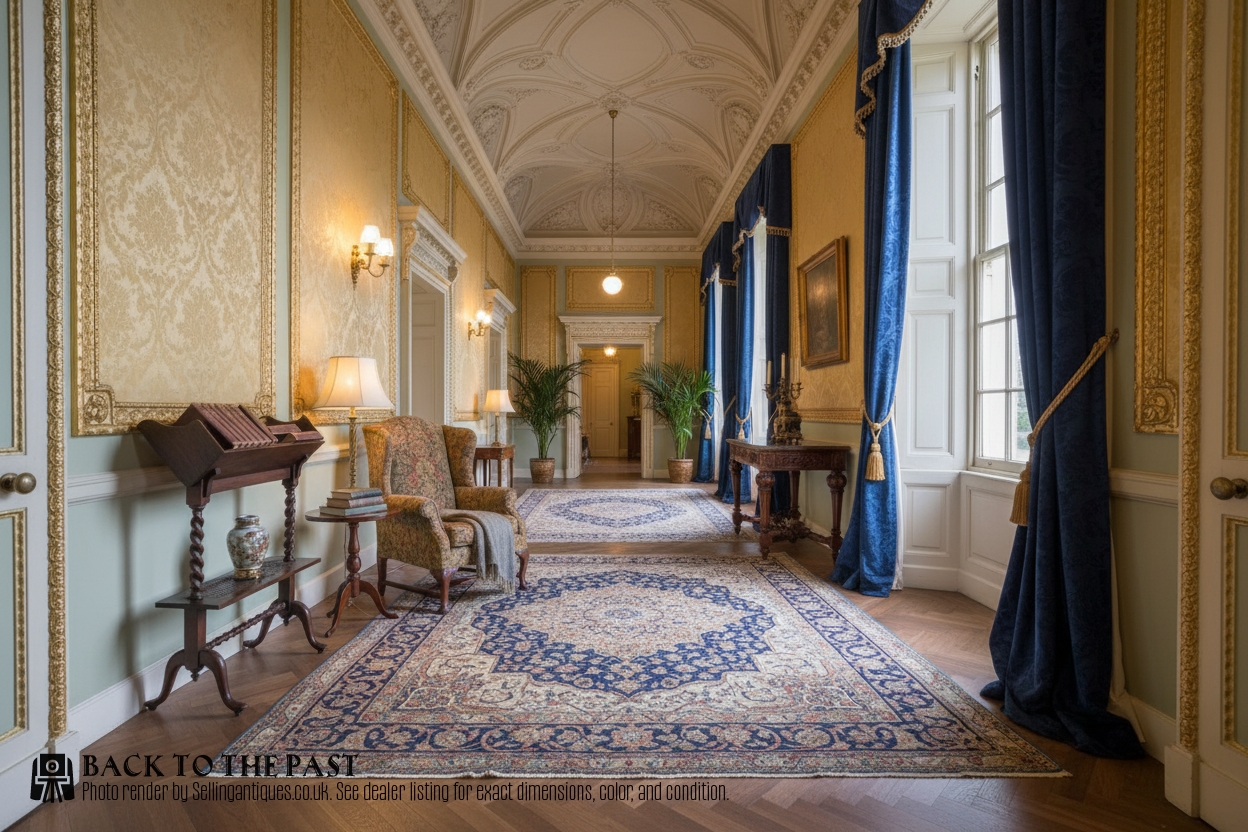
Arts and Crafts Open Front Oak Slope-shelf Bookcase, 1880
Priced at £600 from Elmgarden
The 2026 retail price guide for Antique Oak Bookcases is drawn from a proprietary archive of over 1.1 million retail prices indexed by Sellingantiques since 2003. This guide relies exclusively on their own internal data; no external sources or auction records are used.
Analysing nearly 25 years of UK antique market history alongside current retail values, the data indicates that typical UK retail prices for Antique Oak Bookcases range between £400 and £2,000. Entry-level prices generally fall under £400 and premium examples upwards of £2,000.
Glazed upper sections normally sit above blind cupboards or drawers. The lower half is deeper to hold large folios.
Look at the shelf supports. Saw-tooth racks and wooden pegs were traditional before brass fittings took over.
Astragal glazing bars hold small glass panes in place. These wooden profiles keep dust away from the books.
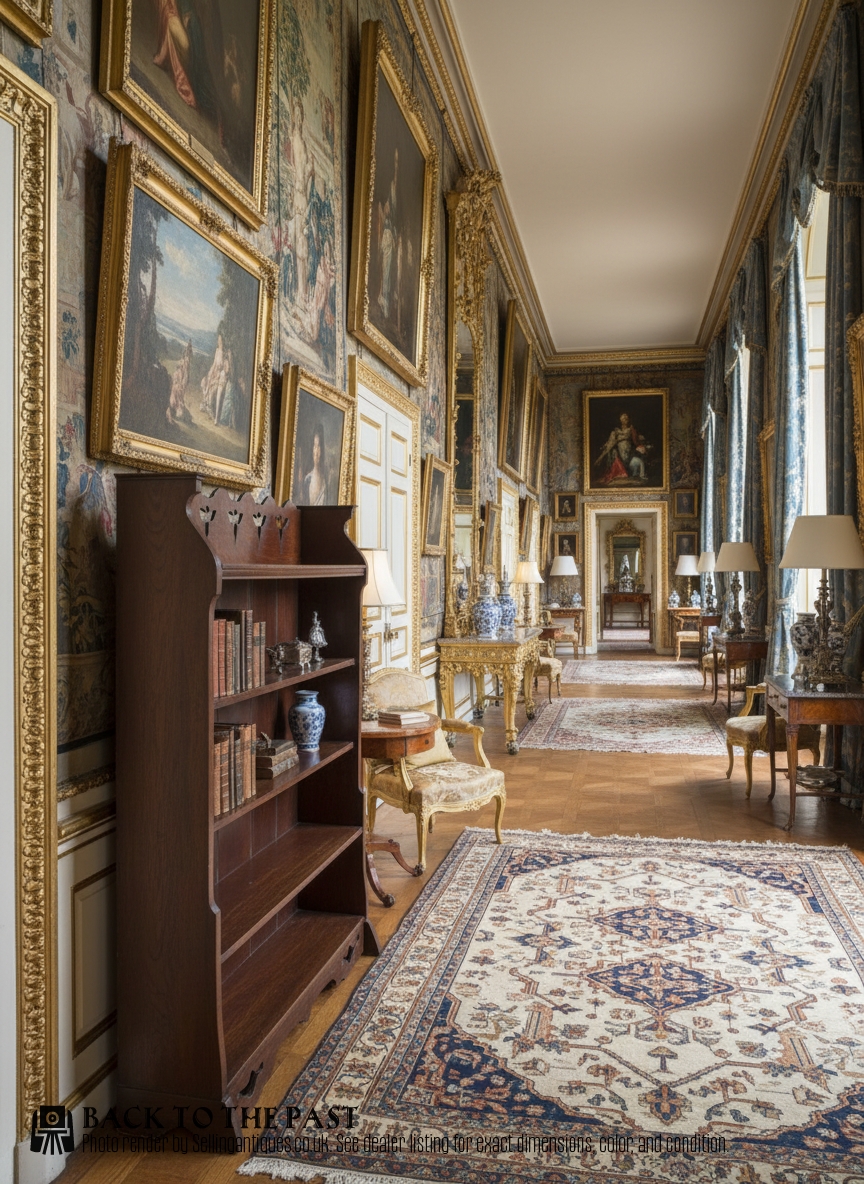
Oak Open Bookcase, 1910
Priced at £295 from James R Millington Antiques
Pegged mortise and tenon joints hold the earliest frames together. Wooden dowels draw the timbers tight as they dry.
Turn a drawer over. Hand-cut dovetails on eighteenth-century oak library furniture are wider and coarser than mahogany equivalents.
Machine-cut joints start appearing in late Victorian production. Circular saw marks on the backboards help identify later manufacturing.
"Dust-proofing was a major priority for early cabinetmakers. Overlapping door lips keep soot from settling on the volumes."
"Transporting large pieces is easier than it looks. Most towering examples break down into upper and lower halves."
"Leather fringes pinned to the shelf edges had a real purpose. They protected the top of the books below from dust."
Based on almost 25 years of Sellingantiques UK antique market data, Antique Oak Bookcases appeared 8269 times (out of 1,100,000 antiques) which gives it a rarity score of 19/100.
This score measures scarcity within the Sellingantiques archive only and is not a survey of the entire antiques market, so these statistics may not be indicative of the general availability of Antique Oak Bookcases elsewhere.
Most eighteenth-century and nineteenth-century examples offer some flexibility. You will usually find vertical saw-tooth racks built into the inner sides.
Wooden cleats slide into these racks to support the shelf ends. You simply lift the shelf and move the cleats up or down to fit taller volumes.
Original crown glass often shows slight ripples or tiny air bubbles trapped inside the pane. Stand to the side and look at the surface reflection to spot these faint distortions.
Flat and flawless glass suggests a later replacement. Cabinetmakers puttied the panes into the glazing bars from the inside, so fresh putty is another sign of recent repairs.
Carved pieces with very dark finishes often date to the late Victorian period. The glass from this era was rolled and usually looks flatter than earlier blown glass.
Oak is a dense and durable timber that resists warping well if cured properly. Antique examples have had centuries to settle into their final shape.
Central heating can still cause old joints to shrink or panels to split. Keep pieces away from direct heat sources like radiators to prevent sudden changes in moisture.
They rarely went up narrow stairs in one piece. Cabinetmakers designed large library furniture to dismantle easily for transport and installation.
A standard large unit breaks down into a separate plinth base, a lower cupboard section, an upper glazed section, and a removable cornice. Some breakfront models divide into even smaller vertical sections.
Please note: This Antique Oak Bookcases guide and its associated pricing data are provided for general informational purposes only. It does not constitute formal financial, investment, or appraisal advice and should not be relied upon as the sole basis for any commercial activity, purchasing, or sales decisions. Sellingantiques.co.uk accepts no liability for any actions taken in reliance on this information. Always consult with a qualified professional or independent appraiser.
