17,648  PAGES BROWSED TODAY PAGES TODAY 89 ANTIQUES UPLOADED TODAYNEW ARRIVALS
89 ITEMS ADDED TODAY
Sort Order
Items Per Page
Browse Categories
Sort order
Items per page
ID #SA998465
SOLD
Email
Save
Mid-seventeenth Century Silver Mounted Mariners Lodestone
Jason Clarke Antiques
sold SA998465
Sorry, but this item has been sold.
Jason Clarke Antiques

Jason Clarke Antiques

Sellingantiques Verified Since Jul 2015
View Dealers Stock Page
Id #SA998465
PDF SHARE
SAVE

Mid-seventeenth Century Silver Mounted Mariners Lodestone

17th century
Description

For sale, a mid-Seventeenth Century silver mounted mariner’s lodestone.

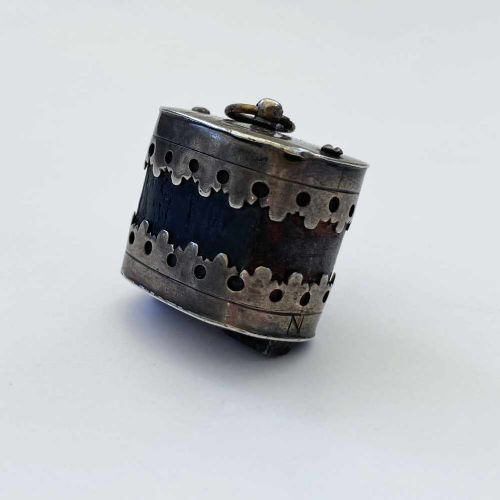
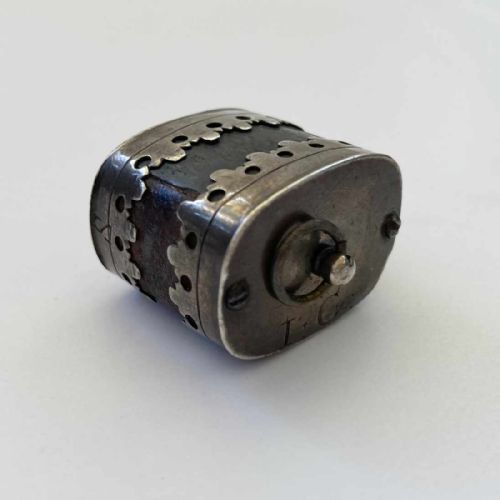
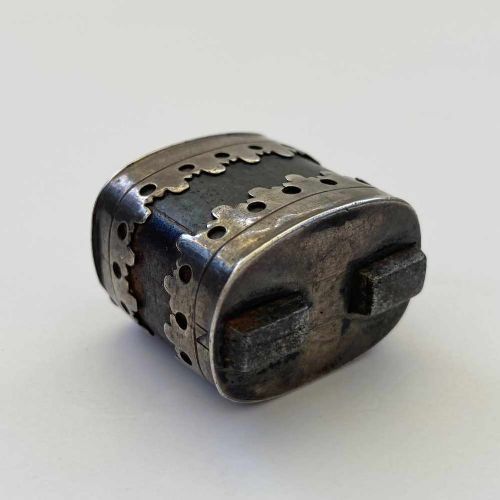
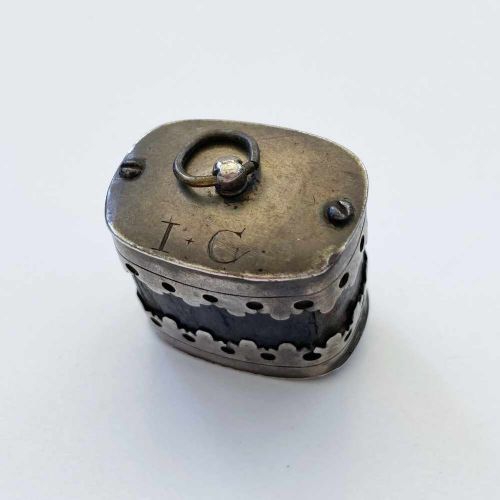
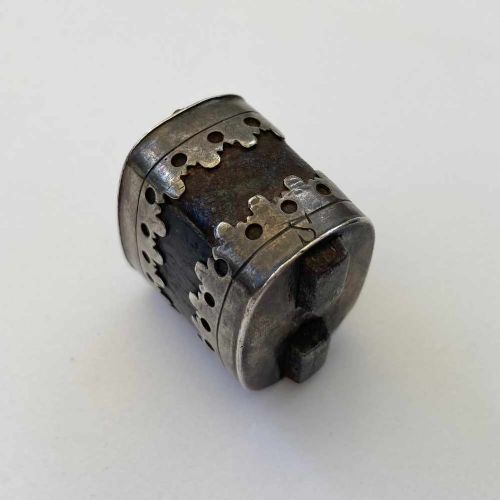
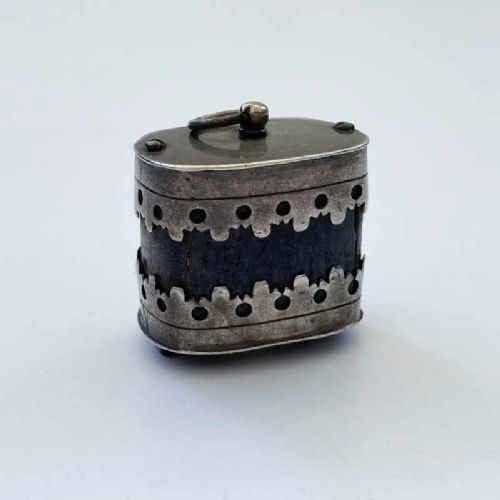
This rare, diminutive pocket example measures just 2.5cms across and 2cms high, and is held between top and bottom silver mounts with beautifully intricate, pierced lappet borders. The lower border providing two projecting iron poles onto which a needle would have been rubbed. The end of each side is engraved for North and South.
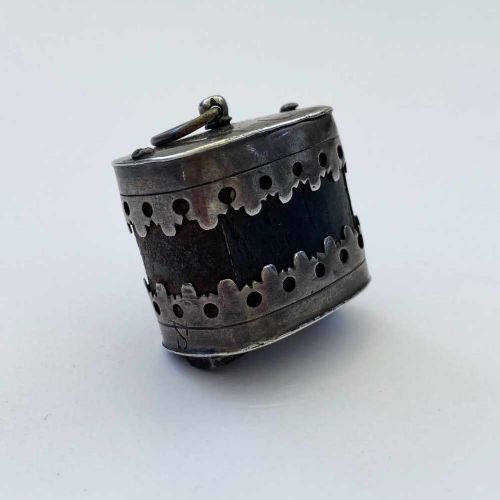
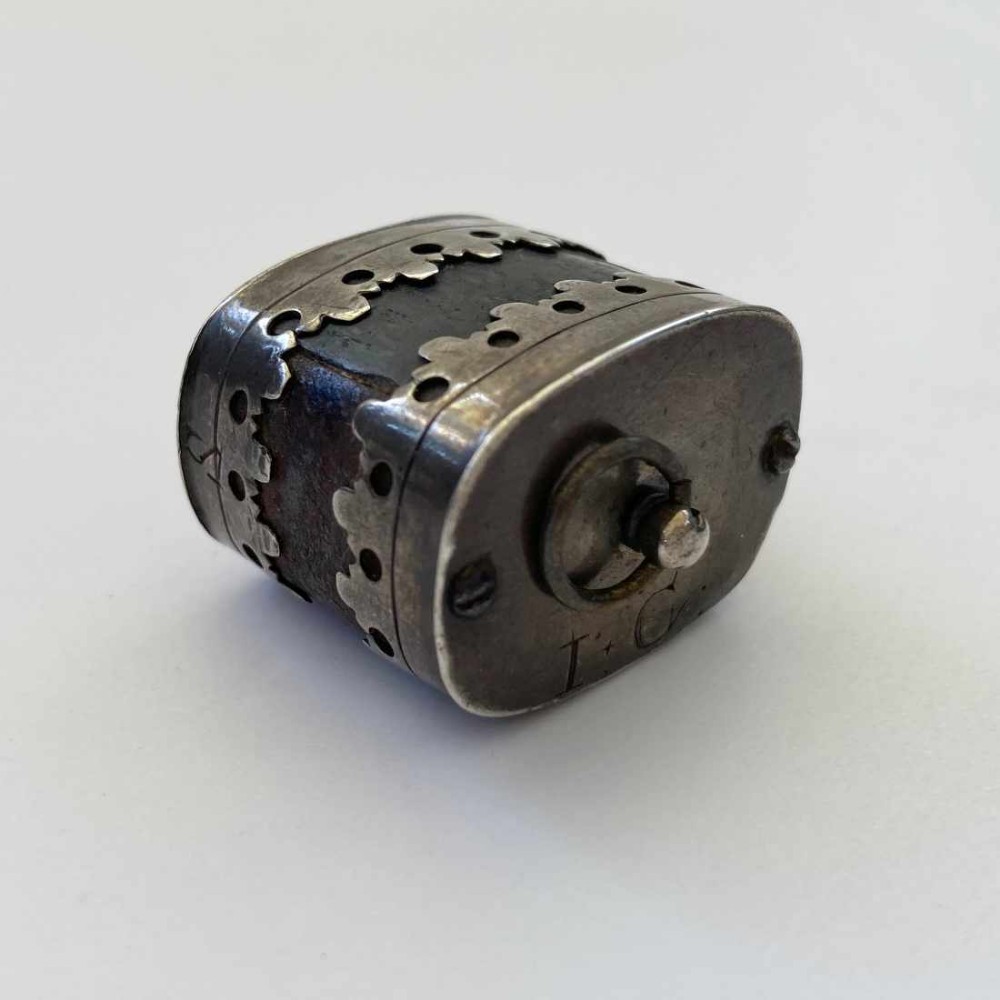
The top mount is similarly designed but with full silver top and suspension loop, the top engraved with the maker’s or owner’s initials of IC. With such little information, it is sadly impossible to be exacting about the country of manufacture but from its design, it is almost certainly of English or German manufacture.
A Lodestone, (lode meaning a journey or way) is a naturally occurring mineral called magnetite which has metal impurities which allow it to remain as a permanent magnet. Since not all magnetite is permanently magnetised, it remains a matter of debate as to how those extant examples came to be in this state. The leading theory is that this situation occurs through the process of lightning hitting the earth where magnetite is present.
The historical use of the lodestone is considered to reach back are far as ancient Chinese civilisations of the 4th Century BC, although the use of its properties to magnetise iron needles for navigational compasses comes somewhat later. European evidence of the use of lodestone and associated early compasses begins around the 12th century with references made in the works of an English monk, Alexander Neckham. In the early Thirteenth Century, a work by the French monk, Guyot de Provins relates that,” sailors touched the needle to the ugly, dark magnet stone, and then put the needle through a straw and floated the gadget in water”. There are also Arab references describing instruments of similar construct at this time.
Whilst references to navigational use of magnetised iron by means of the lodestone remain throughout, it is not until the end of the 14th century that the compass in its now recognisable form seems to have been developed into an instrument with a bowl, a compass rose and attached magnetised iron pointer.
At the end of the 15th century, Christopher Columbus used the lodestone and magnetic compass for his navigation to the Americas and was one of the first to notice the deviation of the compass needle against the North Star. This understanding of the difference between true north and magnetic north and its effect on navigation was still being refined at the time of this lodestone’s manufacture and later much improved in 1701 by the British astronomer Edmund Halley.
Throughout the Eighteenth century, the development of permanent magnets by other methods largely superseded the lodestone’s application but its impact on early human travel, navigation and discovery cannot be underestimated.

A fascinating and beautifully executed example of a rarely encountered, early navigational aid.

Circa 1650.

Physical Dimensions
Height
2cm (0.79")
Width
2.5cm (0.98")
Depth
1.5cm (0.59")
Declaration

Jason Clarke Antiques has dated this piece to the Before 1700 period.

Reference Numbers
Sellingantiques Reference
SA998465
Description
For sale, a mid-Seventeenth Century silver mounted mariner’s lodestone.

This rare, diminutive pocket example measures just 2.

5cms across and 2cms high, and is held between top and bottom silver mounts with beautifully intricate, pierced lappet borders.
Jason Clarke Antiques

The lower border providing two projecting iron poles onto which a needle would have been rubbed. The end of each side is engraved for North and South.

fig 1. Mid-Seventeenth Century Silver Mounted Mariners Lodestone
fig 1. Mid-seventeenth Century Silver Mounted Mariners Lodestone

The top mount is similarly designed but with full silver top and suspension loop, the top engraved with the maker’s or owner’s initials of IC. With such little information, it is sadly impossible to be exacting about the country of manufacture but from its design, it is almost certainly of English or German manufacture.

fig 2. Mid-Seventeenth Century Silver Mounted Mariners Lodestone
fig 2. Mid-seventeenth Century Silver Mounted Mariners Lodestone

A Lodestone, (lode meaning a journey or way) is a naturally occurring mineral called magnetite which has metal impurities which allow it to remain as a permanent magnet. Since not all magnetite is permanently magnetised, it remains a matter of debate as to how those extant examples came to be in this state. The leading theory is that this situation occurs through the process of lightning hitting the earth where magnetite is present.

fig 3. Mid-Seventeenth Century Silver Mounted Mariners Lodestone
fig 3. Mid-seventeenth Century Silver Mounted Mariners Lodestone

The historical use of the lodestone is considered to reach back are far as ancient Chinese civilisations of the 4th Century BC, although the use of its properties to magnetise iron needles for navigational compasses comes somewhat later. European evidence of the use of lodestone and associated early compasses begins around the 12th century with references made in the works of an English monk, Alexander Neckham. In the early Thirteenth Century, a work by the French monk, Guyot de Provins relates that,” sailors touched the needle to the ugly, dark magnet stone, and then put the needle through a straw and floated the gadget in water”. There are also Arab references describing instruments of similar construct at this time.

fig 4. Mid-Seventeenth Century Silver Mounted Mariners Lodestone
fig 4. Mid-seventeenth Century Silver Mounted Mariners Lodestone

Whilst references to navigational use of magnetised iron by means of the lodestone remain throughout, it is not until the end of the 14th century that the compass in its now recognisable form seems to have been developed into an instrument with a bowl, a compass rose and attached magnetised iron pointer.

fig 5. Mid-Seventeenth Century Silver Mounted Mariners Lodestone
fig 5. Mid-seventeenth Century Silver Mounted Mariners Lodestone

At the end of the 15th century, Christopher Columbus used the lodestone and magnetic compass for his navigation to the Americas and was one of the first to notice the deviation of the compass needle against the North Star. This understanding of the difference between true north and magnetic north and its effect on navigation was still being refined at the time of this lodestone’s manufacture and later much improved in 1701 by the British astronomer Edmund Halley.

fig 6. Mid-Seventeenth Century Silver Mounted Mariners Lodestone
fig 6. Mid-seventeenth Century Silver Mounted Mariners Lodestone

Throughout the Eighteenth century, the development of permanent magnets by other methods largely superseded the lodestone’s application but its impact on early human travel, navigation and discovery cannot be underestimated.

A fascinating and beautifully executed example of a rarely encountered, early navigational aid.

Circa 1650.

Height
2cm (0.79")
Width
2.5cm (0.98")
Depth
1.5cm (0.59")
Date of Manufacture

Jason Clarke Antiques has dated this piece to the Before 1700 period.

Reference Numbers
Sellingantiques Ref
SA998465
Jason Clarke Antiques
Sellingantiques verified Since Jul 2015
Dealer Profile

You can view the stock and full dealer information on the Jason Clarke Antiques Profile Page
PDF SHARE
SAVE
Mid-Seventeenth Century Silver Mounted Mariners Lodestone
1 / 10
Archive I Mid-Seventeenth Century Silver Mounted Mariners Lodestone
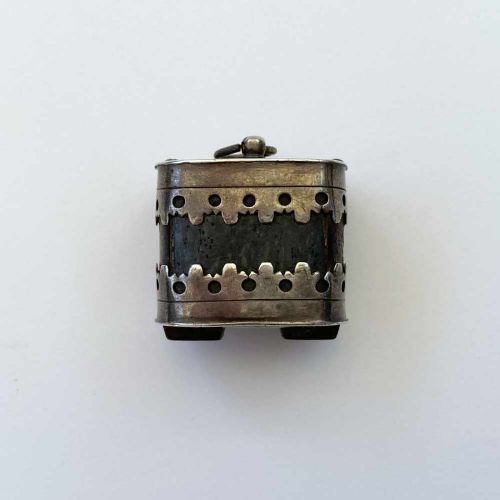
Mid-seventeenth Century Silver Mounted Mariners Lodestone
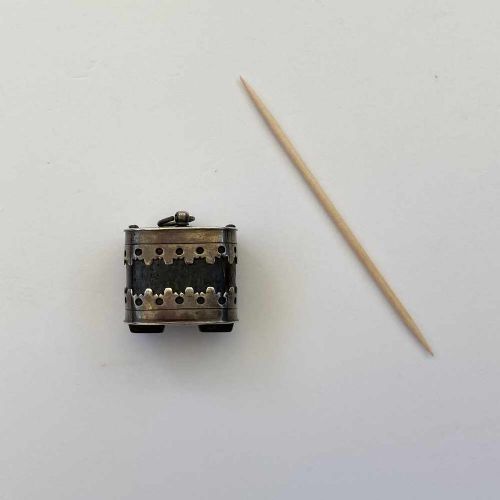
Archive II Mid-Seventeenth Century Silver Mounted Mariners Lodestone View II
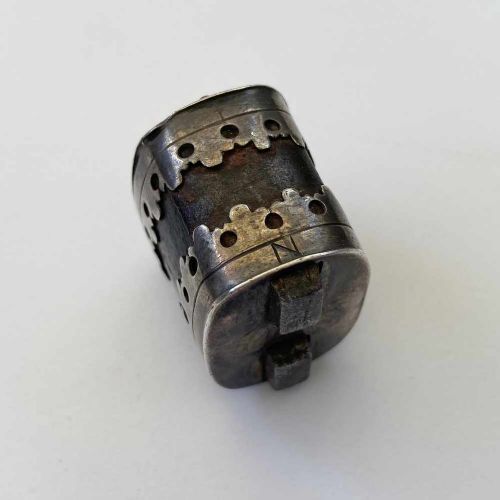
Archive III Mid-Seventeenth Century Silver Mounted Mariners Lodestone View III
Archive IV Mid-Seventeenth Century Silver Mounted Mariners Lodestone View IV
Archive V Mid-Seventeenth Century Silver Mounted Mariners Lodestone View V
Archive VI Mid-Seventeenth Century Silver Mounted Mariners Lodestone View VI
Archive VII Mid-Seventeenth Century Silver Mounted Mariners Lodestone View VII
Archive VIII Mid-Seventeenth Century Silver Mounted Mariners Lodestone View VIII
Archive IX Mid-Seventeenth Century Silver Mounted Mariners Lodestone View IX
Archive X Mid-Seventeenth Century Silver Mounted Mariners Lodestone View X
Enlarged Archival View
Telephone 07815 046645
Location
Newbury
Berkshire
United Kingdom
Verified Since Jul 2015
Items For Sale 81
Items Sold 606
Jason Clarke Antiques
Verified Since Jul 2015
View Dealer Info
Location: Newbury, Berkshire, United Kingdom
Verified
Jul 2015
For Sale
81
Sold
606
Mid-Seventeenth Century Silver Mounted Mariners Lodestone
Ref: SA998465
Mid-Seventeenth Century Silver Mounted Mariners Lodestone
Detail View 1
Detail View 2
Detail View 3
Detail View 4
Detail View 5
Detail View 6
Detail View 7
Detail View 8
Detail View 9
Archival Detail
Every single antique dealer on our platform is individually approved by our internal team. We verify their professional trade history, ethical standards, and photographic quality to ensure a secure, high-standard buying environment. Upon joining, every dealer agrees to a strict 9-point code of conduct. While issues can occasionally arise, our dealers typically resolve them swiftly and directly with the buyer. In fact, since our founding in 2002, Sellingantiques has only had to step in to help resolve an issue on roughly five occasions—a true testament to the quality of our dealers and their dedication to your happiness.
Our dealers are highly experienced in packing and shipping fragile, high-value antiques. Because you are in direct contact with the dealer, you will be able to easily go through all available shipping and insurance options together to ensure your item arrives safely.
Antiques are the ultimate green purchase. By choosing historical pieces over newly manufactured goods, you completely eliminate the carbon footprint of modern mass production while preserving exceptional, timeless craftsmanship.
items
Add keywords to the filter
Price
£100
£250000
Era
Movements
Material
Origin
Stock Location
Freshness
Online Payments
Categories