




Maritime Navigational
A maritime navigational antique is a precision instrument designed for the sea, offering a tangible connection to the historic methods of charting the world's oceans.
Maritime Navigational
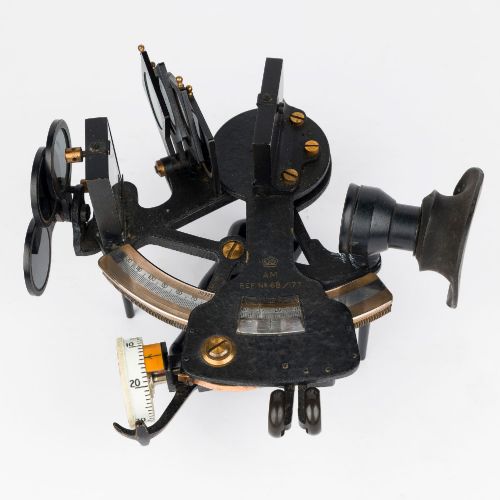
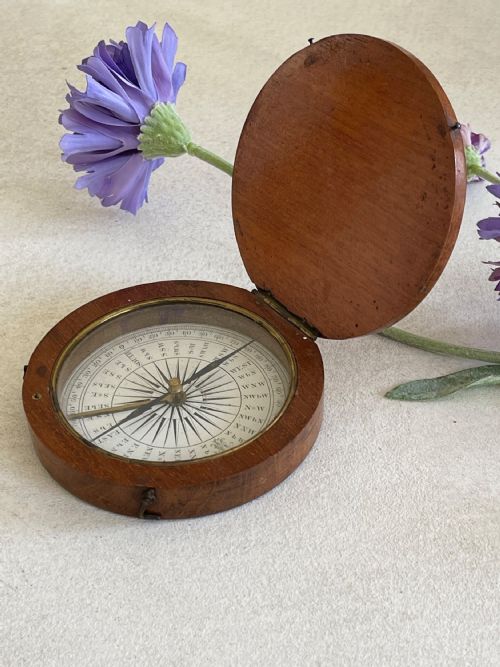
A maritime navigational antique encompasses an array of historical scientific instruments, including marine chronometers, telescopes, compasses, and octants used for orientation and timekeeping at sea. These objects emerge primarily from the Victorian and nineteenth-century periods, alongside Georgian, Regency, and mid-twentieth-century examples.
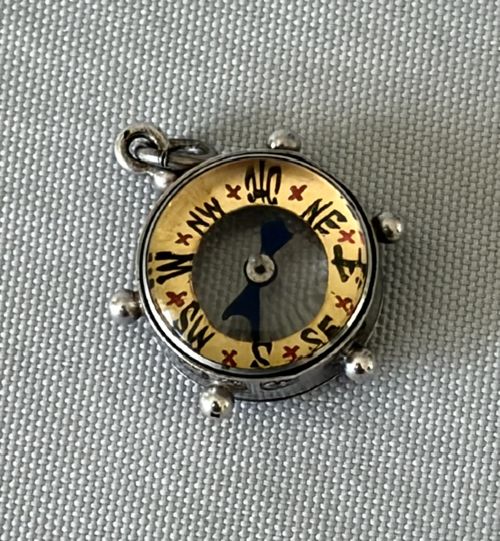
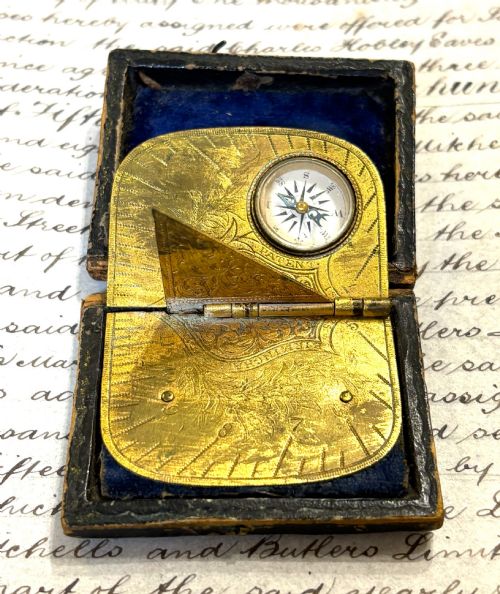
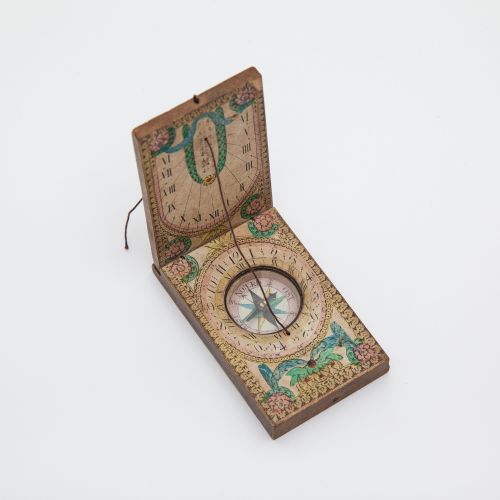
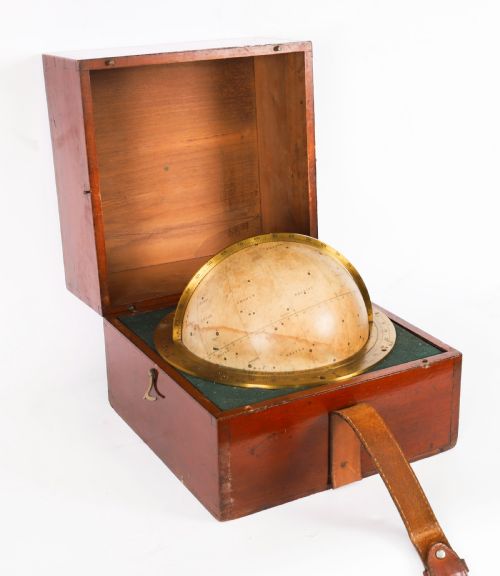
The assortment on this page ranges from pocket-sized personal items such as fob compasses and folding pocket sundials to large desk instruments and cased marine chronometers. Common forms include extending brass telescopes, hourglasses, celestial globes, and specialist devices like artificial horizon sets and barocyclinometers.
Buyers will encounter items originating from prominent British workshops and London makers, as well as international military pieces from the First and Second World Wars. The physical evidence demonstrates a rich variety of utilitarian and decorative instruments spanning two centuries of maritime history.
Materials and Construction
Makers utilised precision machining for metal components, engraving delicate scales for compasses, sextants, and chronometers to ensure high accuracy at sea. Casing construction involved careful carpentry to house delicate optics and chronometer movements securely against the motion of a vessel.
Maritime Navigational Retail Price Guide 2026
Typical asking prices for maritime navigational among the pieces listed under this phrase on Sellingantiques today, from the lower quarter to the upper quarter. They describe what is for sale here now, not the wider market.
The listings span the Victorian period, the nineteenth century, and the early twentieth century, featuring instruments constructed from brass, mahogany, glass, and paper.
Factors of Quality
The hierarchy among these instruments rests upon the precision of the maker's mechanical execution and the clarity of their engraved scales. Signed works by established chronometer and telescope makers display superior metal finishing and tighter tolerances in moving parts.
Completeness dictates much of the standing within this field, particularly the presence of original fitted wooden cases, matching lids, and intact glass or paper components. The visual crispness of the division marks on dials and the preservation of original patination on brass and timber set exceptional examples apart.
Mercer of London·Hughes and Son·Litherland Davies of Liverpool·Samuel Porter·Henri de Magnac·James McCabe·H Hughes·John Lilley and Son
The Maritime Navigational Glossary
- Marine Chronometer
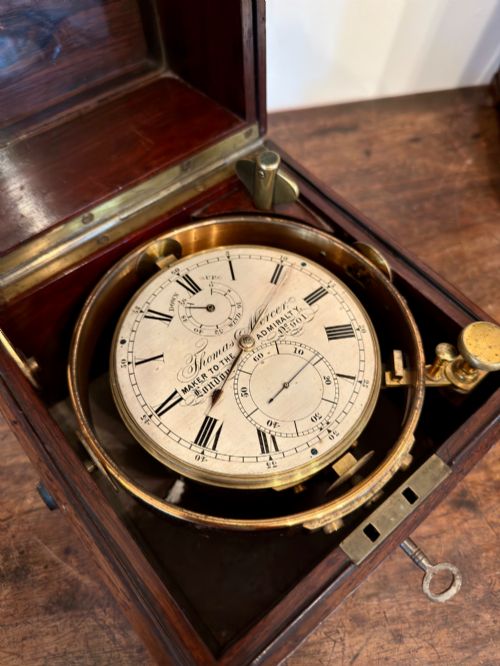
- A highly accurate timekeeper used aboard ship to determine longitude by observing celestial bodies. These spring-detent escapement clocks are typically housed in brass-bound wooden boxes on gimbals.
- Artificial Horizon
- A device used with a sextant to provide a water-level reference when the natural sea horizon is obscured by fog or darkness. The Victorian black glass sets reflect a mirror image to establish the horizontal plane.
- Octant
- A navigational instrument operating on the same reflection principles as a sextant but measuring angles up to ninety degrees. The frame spans an eighth of a circle and frequently appears in eighteenth and nineteenth-century examples.
- Barocyclonometer
- A specialised meteorological instrument used in tropical regions to detect the approach of revolving storms. It combines barometric readings with wind direction indicators to warn of typhoons.
Maritime Navigational: Frequently Asked Questions
What is a marine chronometer?
A marine chronometer is a precision clock engineered to maintain exact time despite the motion and roll of a ship at sea. This accuracy was essential for calculating a vessel's longitude.
These pieces were typically mounted within gimbaled brass bowls inside fitted mahogany boxes to keep the movement level. They represent the pinnacle of nineteenth-century horology and mechanical reliability.
How do pocket sundials and compasses work?
Diptych and folding pocket sundials utilise a hinged gnomon and internal compass to align with magnetic north, casting a shadow that indicates local solar time. They served as portable timekeeping backups before reliable pocket watches.
Users adjusted the instrument according to latitude using folding brass arms and inscribed paper scales. They were carried by travellers and mariners for quick orientation on land and near coastal waters.
How do I care for brass instruments?
Brass navigational instruments require a stable environment away from high humidity and direct moisture to prevent oxidation and tarnishing. Dusting with a soft, dry cloth preserves the aged metal surfaces.
Avoid using harsh metal polishes, as these can remove the historic patination and soften crisp engraved details. Wooden cases benefit from occasional treatment with appropriate wax to nourish the timber.
How are nineteenth-century telescopes dated?
Telescopes from the nineteenth century are commonly dated by examining maker signatures, barrel materials, and the number of draw sections. Early examples often feature engraved maker names near the eyepiece alongside mahogany barrels.
Inscribed trade labels inside fitted cases and the transition from multi-draw brass configurations to single-tube designs provide further chronological clues. Comparing the address of the maker against historical trade directories confirms the production era.