21,165  PAGES BROWSED TODAY PAGES TODAY • 49 ANTIQUES UPLOADED TODAYNEW ARRIVALS
GIFTS
49 ITEMS ADDED TODAY
Sort Order
Items Per Page
Antiques dealer?
Join as a Seller
Browse Categories
Sort order
Relevant Links
Items per page
sold SA1226859
Sorry, but this item has been sold.
Regent Antiques

Regent Antiques

Sellingantiques Verified Since Sep 2016
Browse dealers 639 items
  • About Us
    We specialise in english and continental furniture, silver, porcelain and decorative items.
  • Trade Associations
    Regent Antiques is a registered member of LAPADA  CINOA
Id #SA1226859
SHARE
SAVE

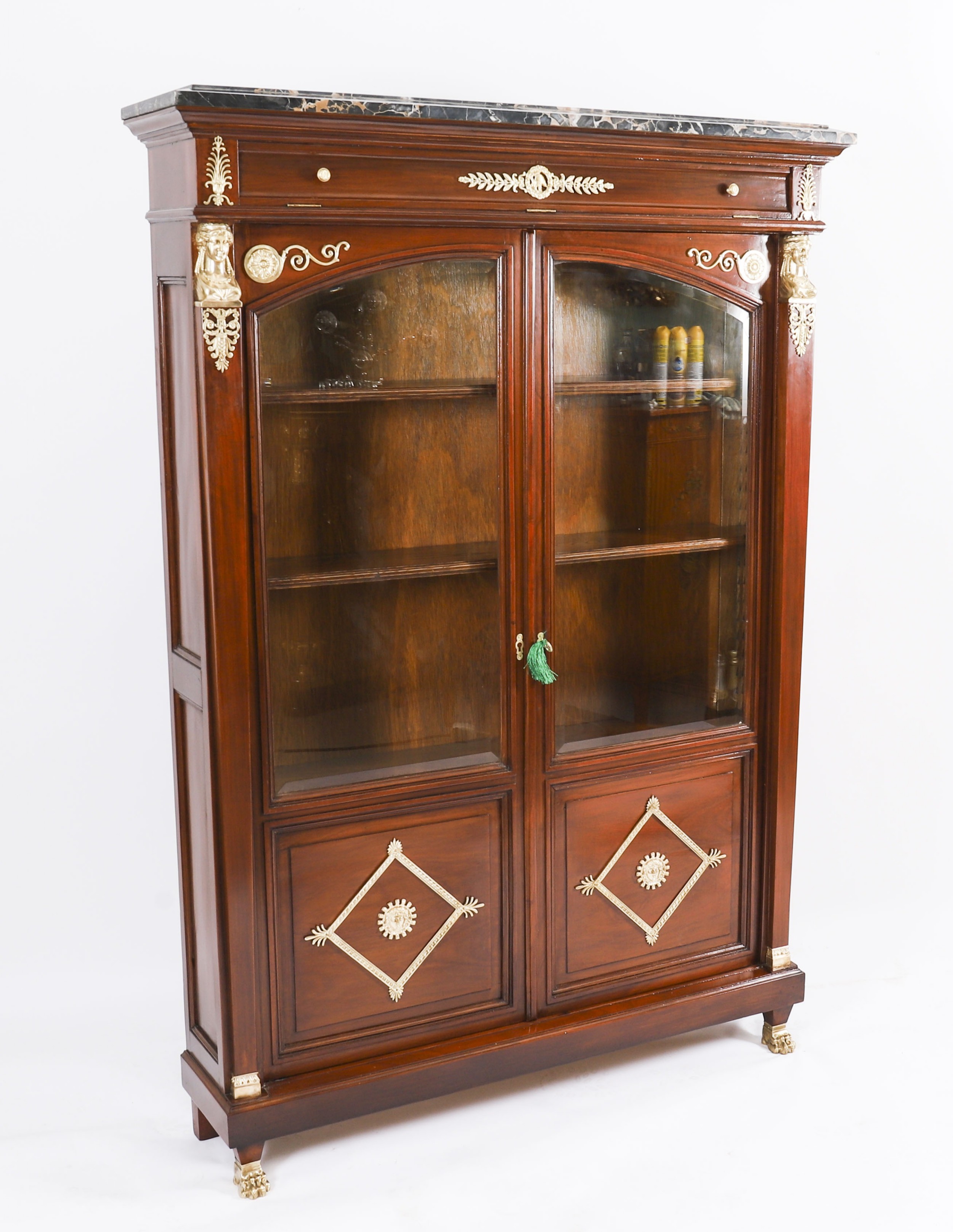
Antique French Empire Revival Mahogany Bookcase Cabinet 19th C

19th century
Sold 3 September 2026 · Regent Antiques
This “Antique French Empire Revival Mahogany Bookcase Cabinet 19th C” found a buyer.

It was listed by Regent Antiques. Sold pieces stay on Sellingantiques as a record of what has passed through, and the next one is rarely far away.

Description

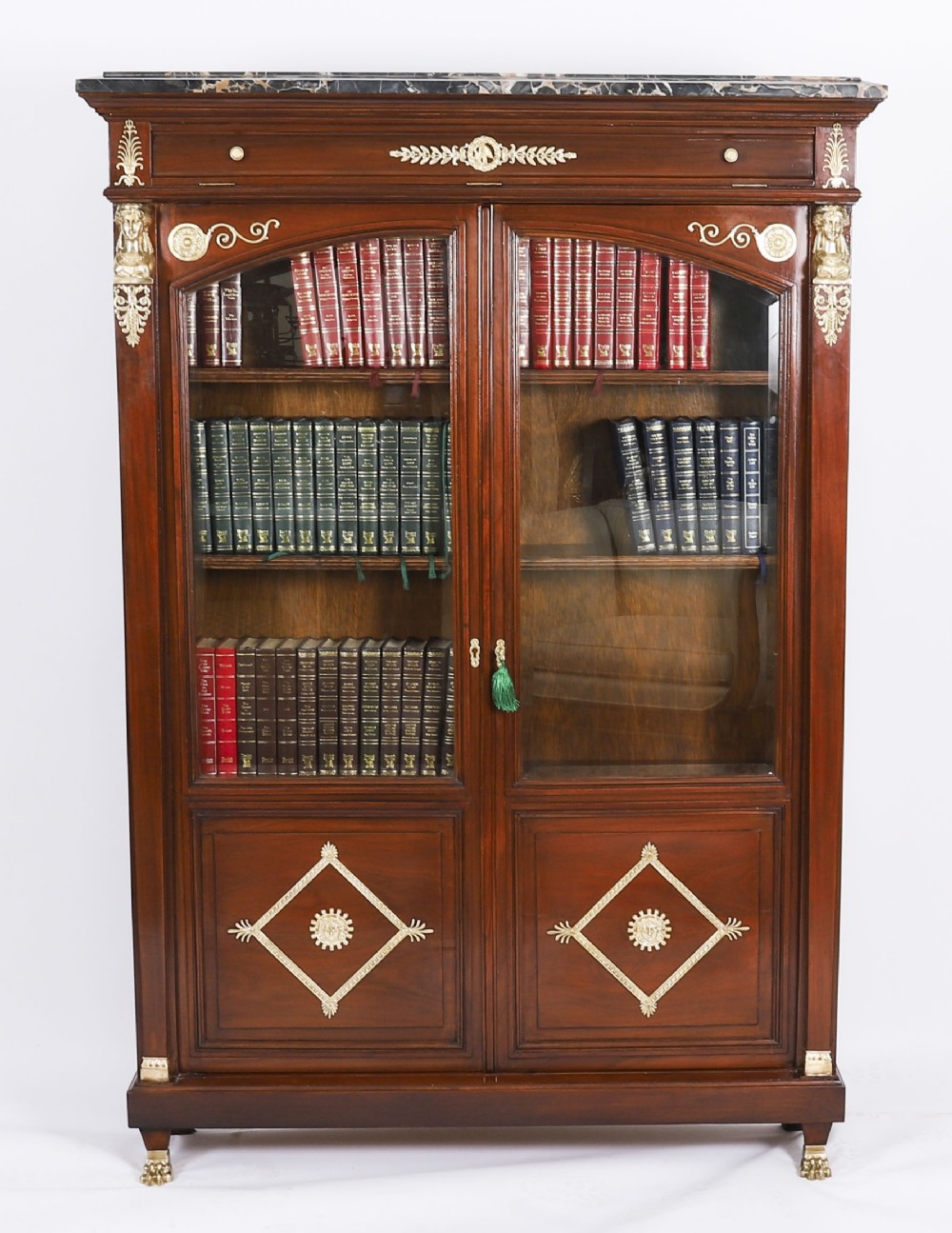
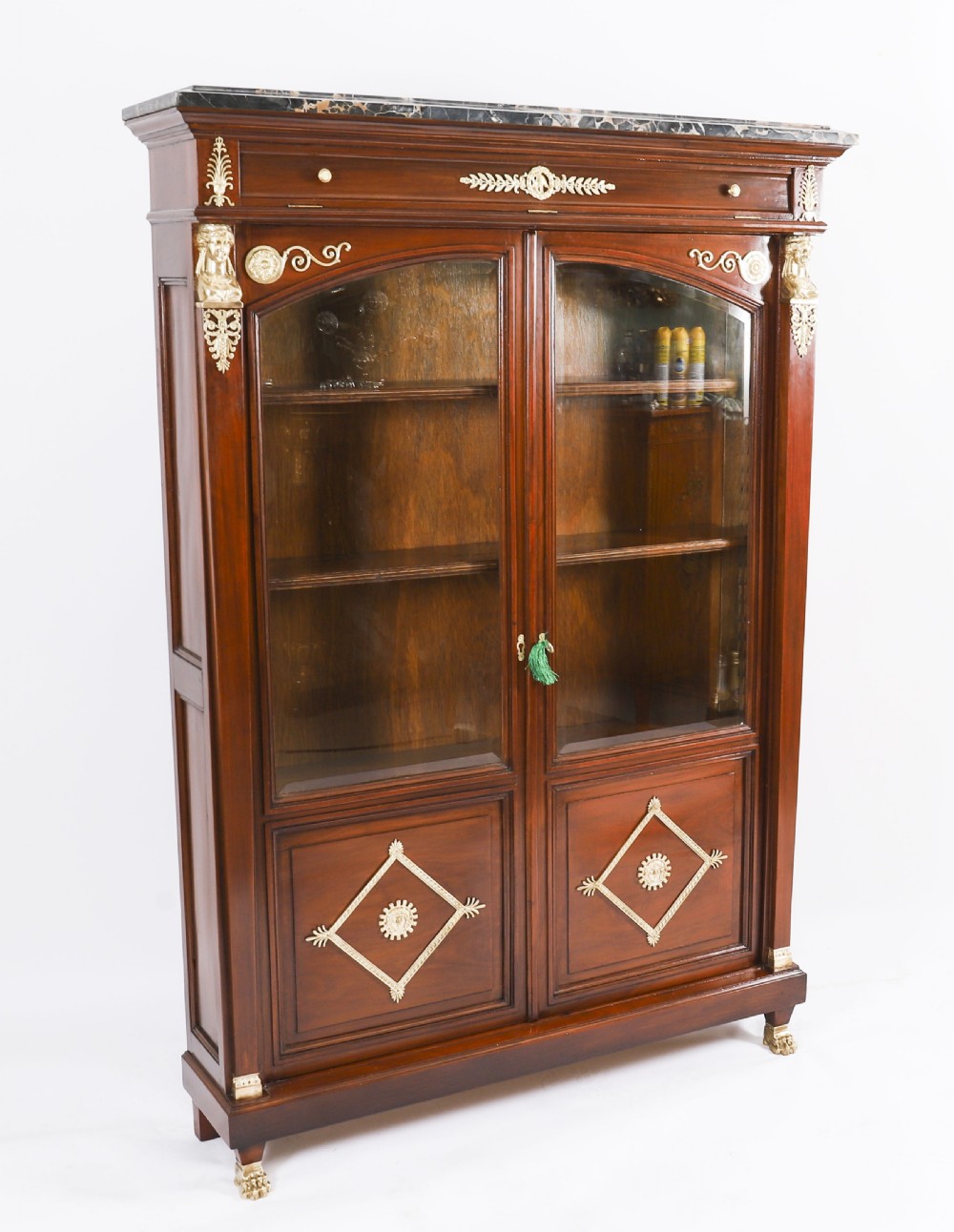
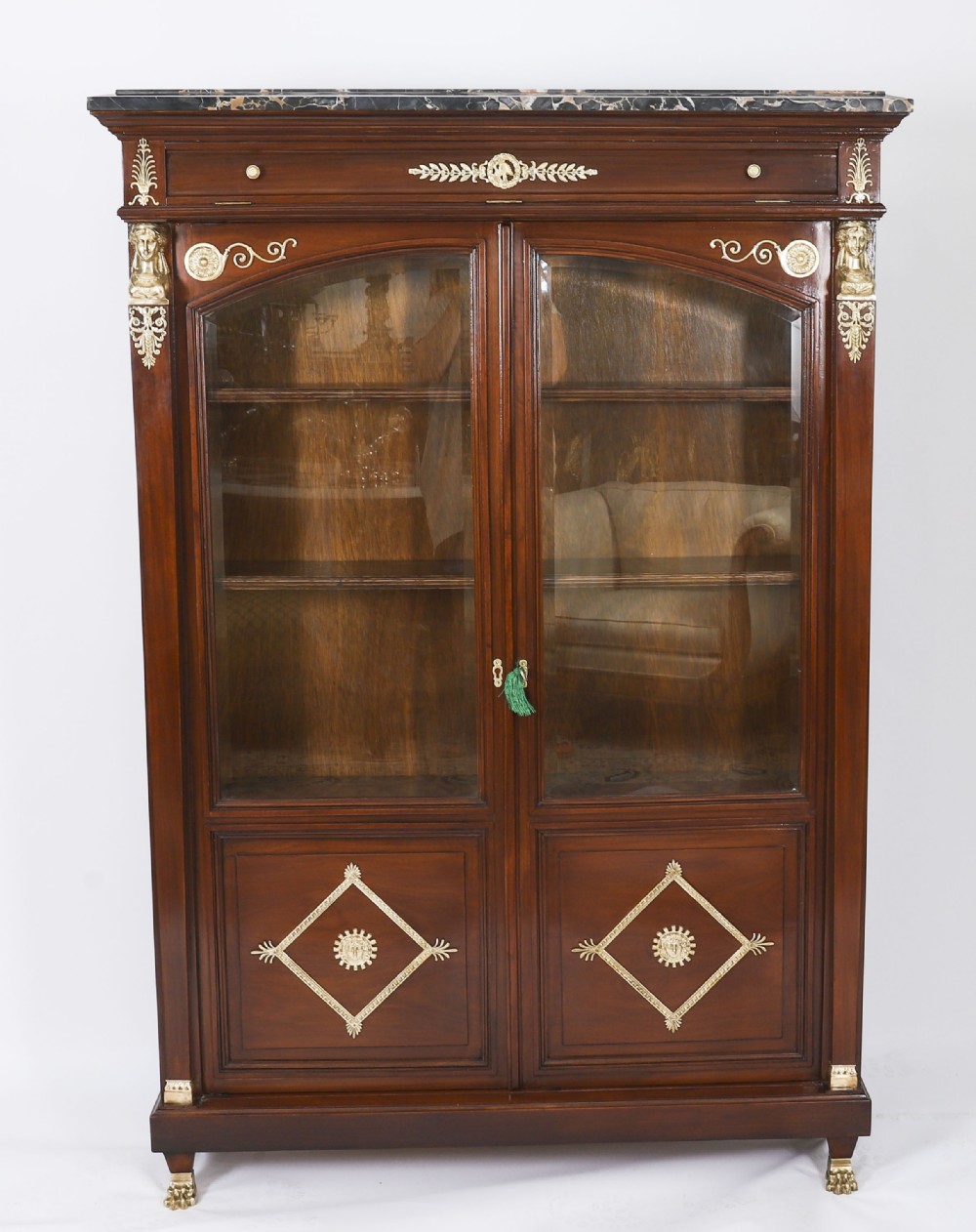
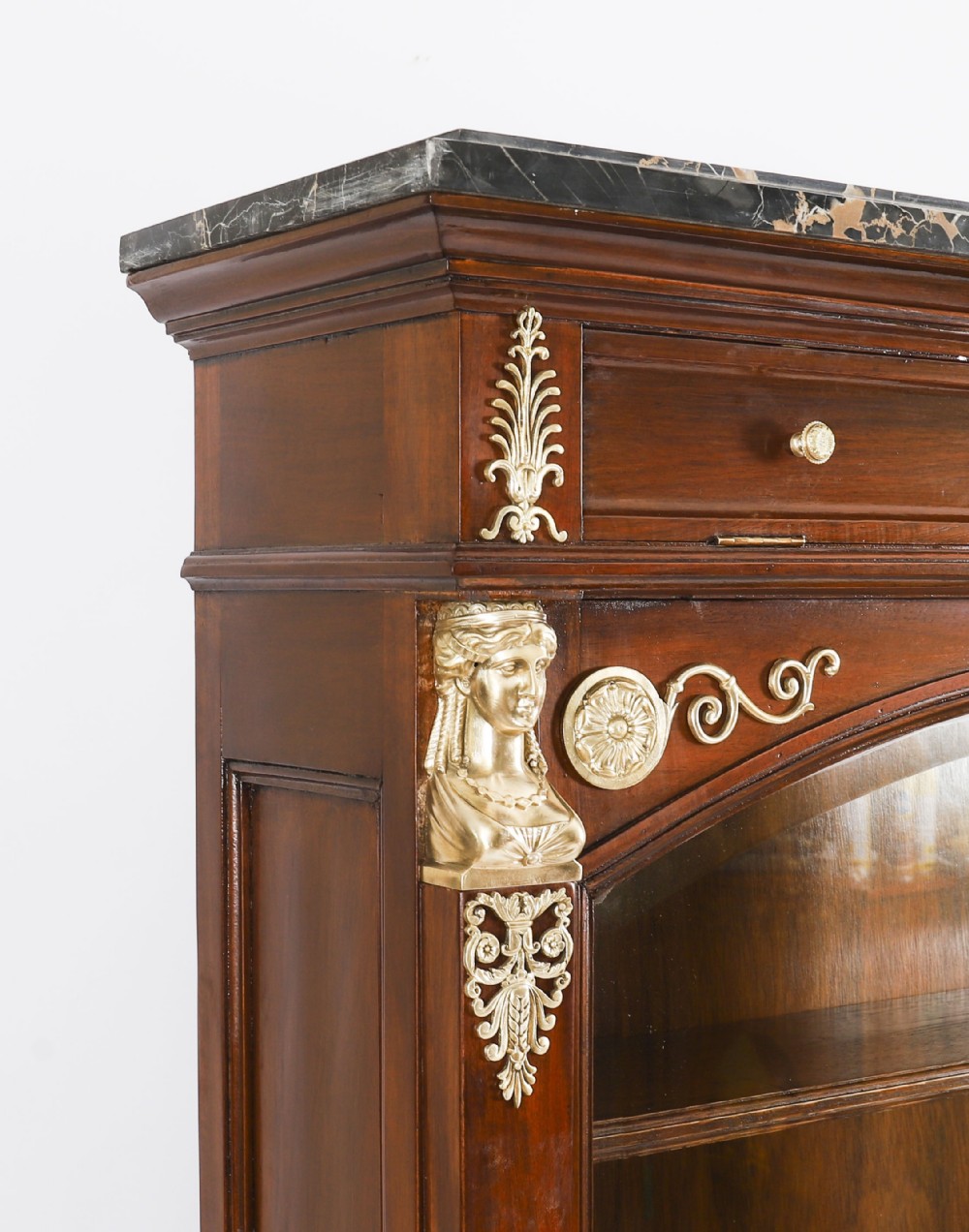
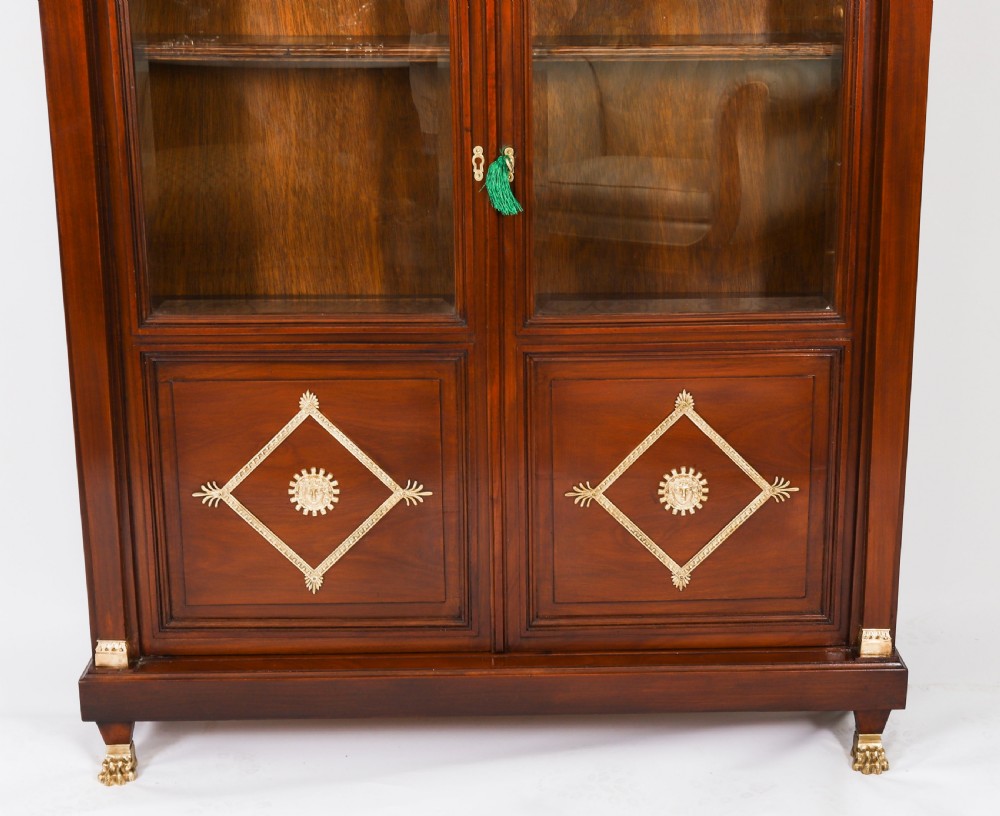
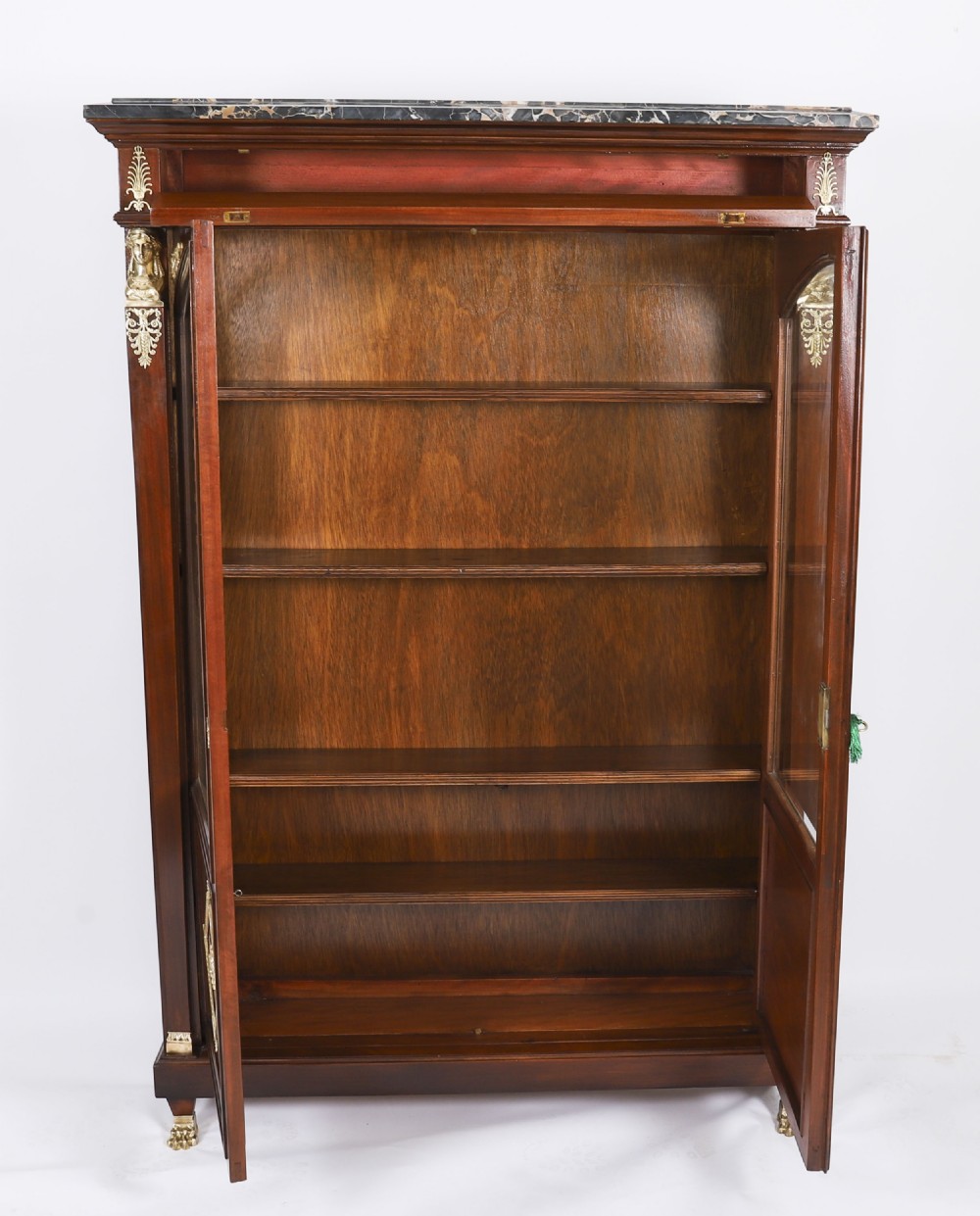
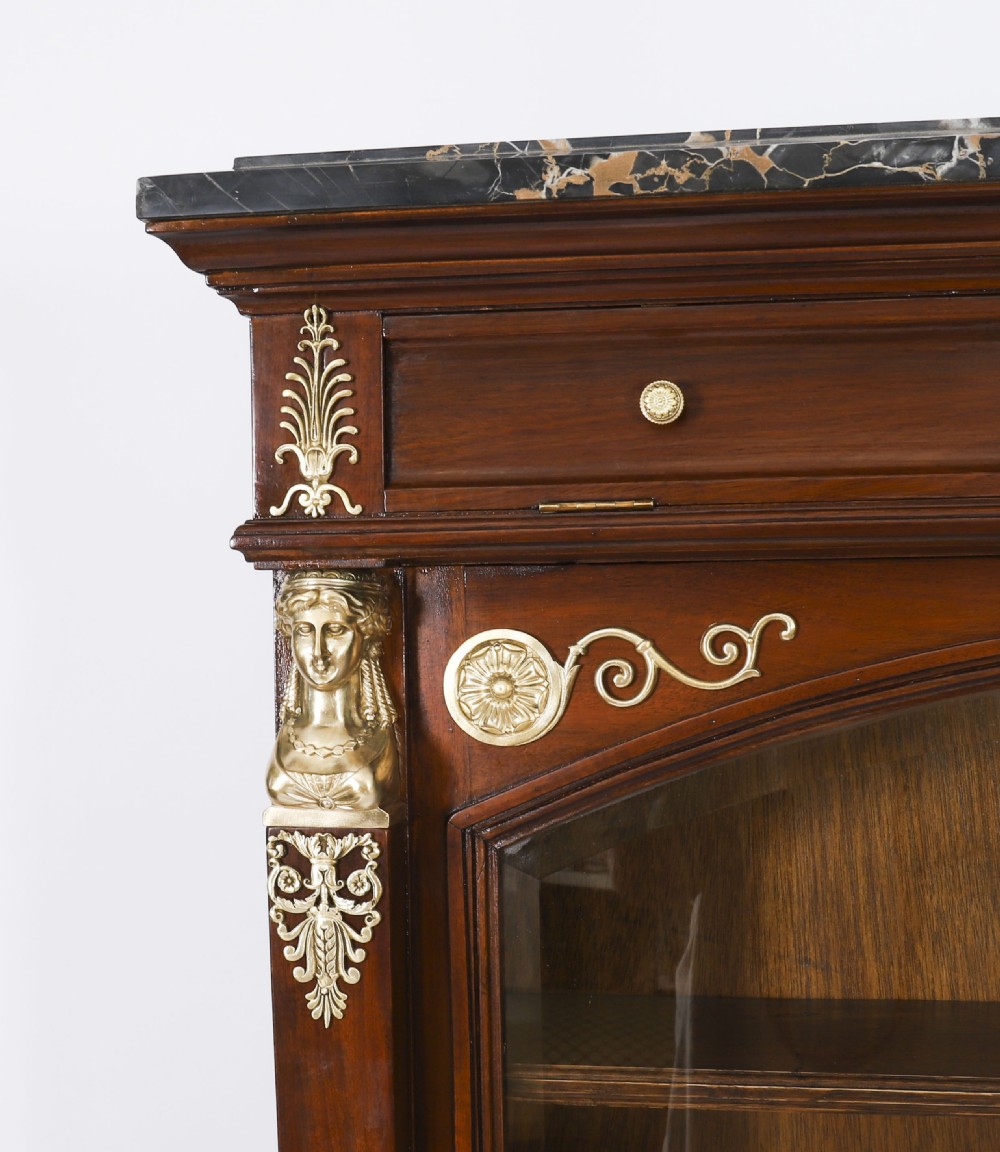
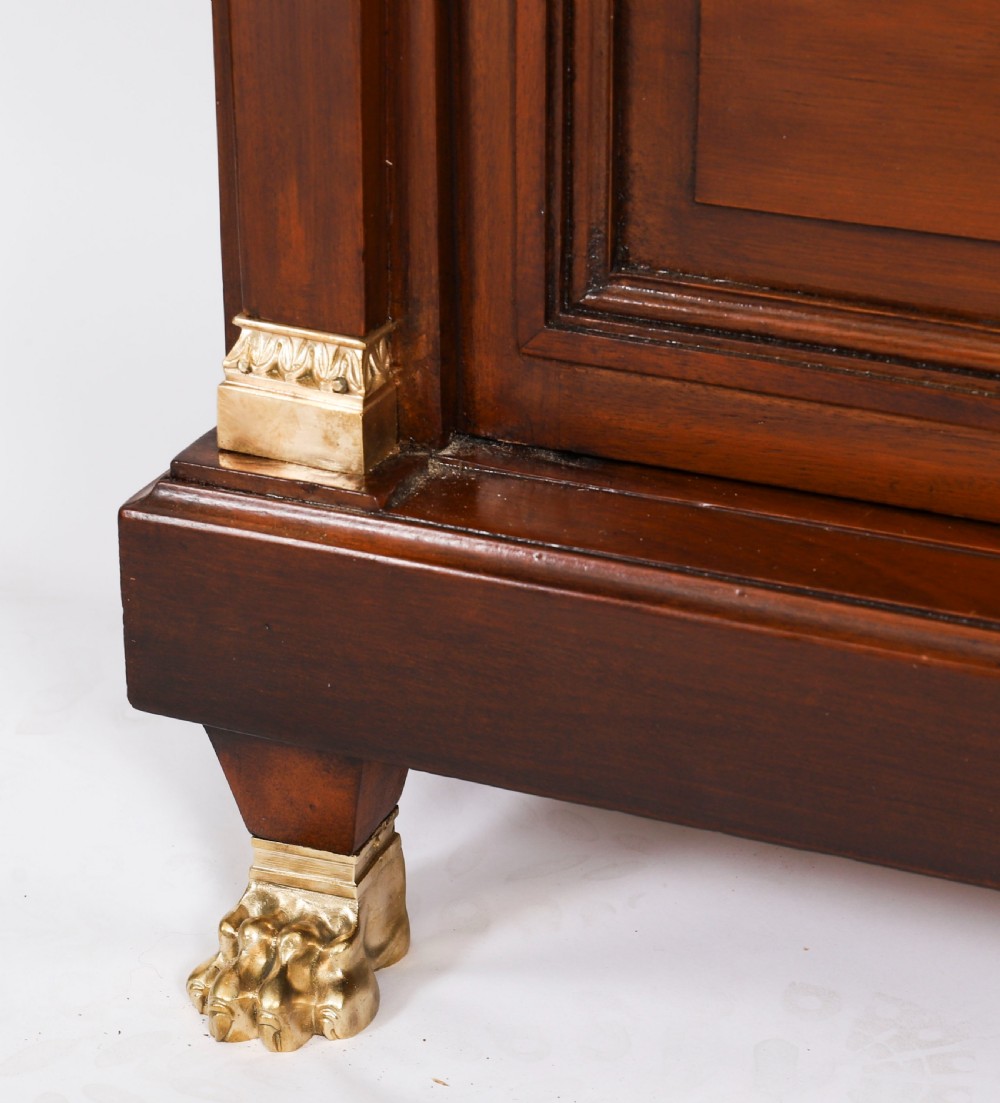
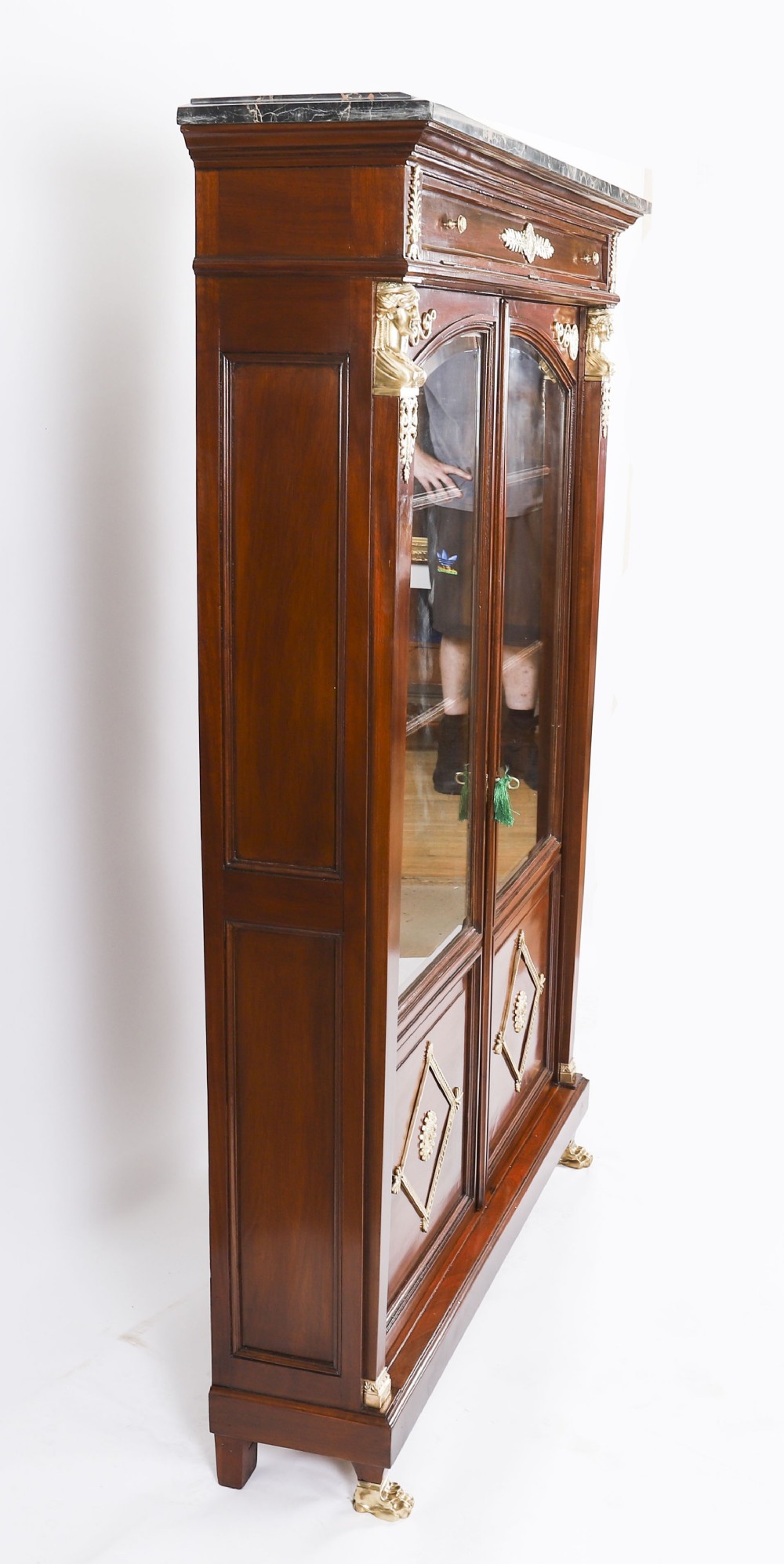
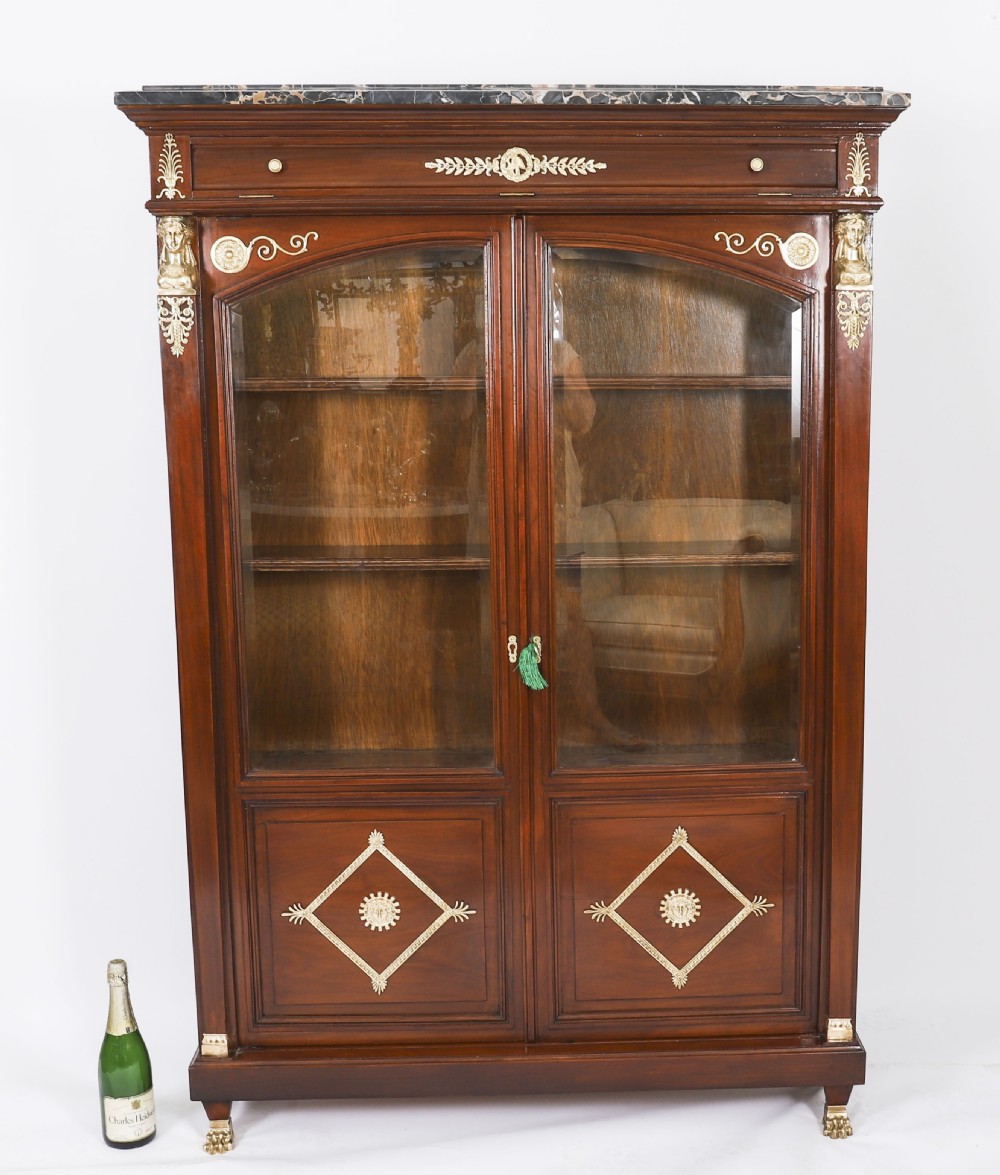
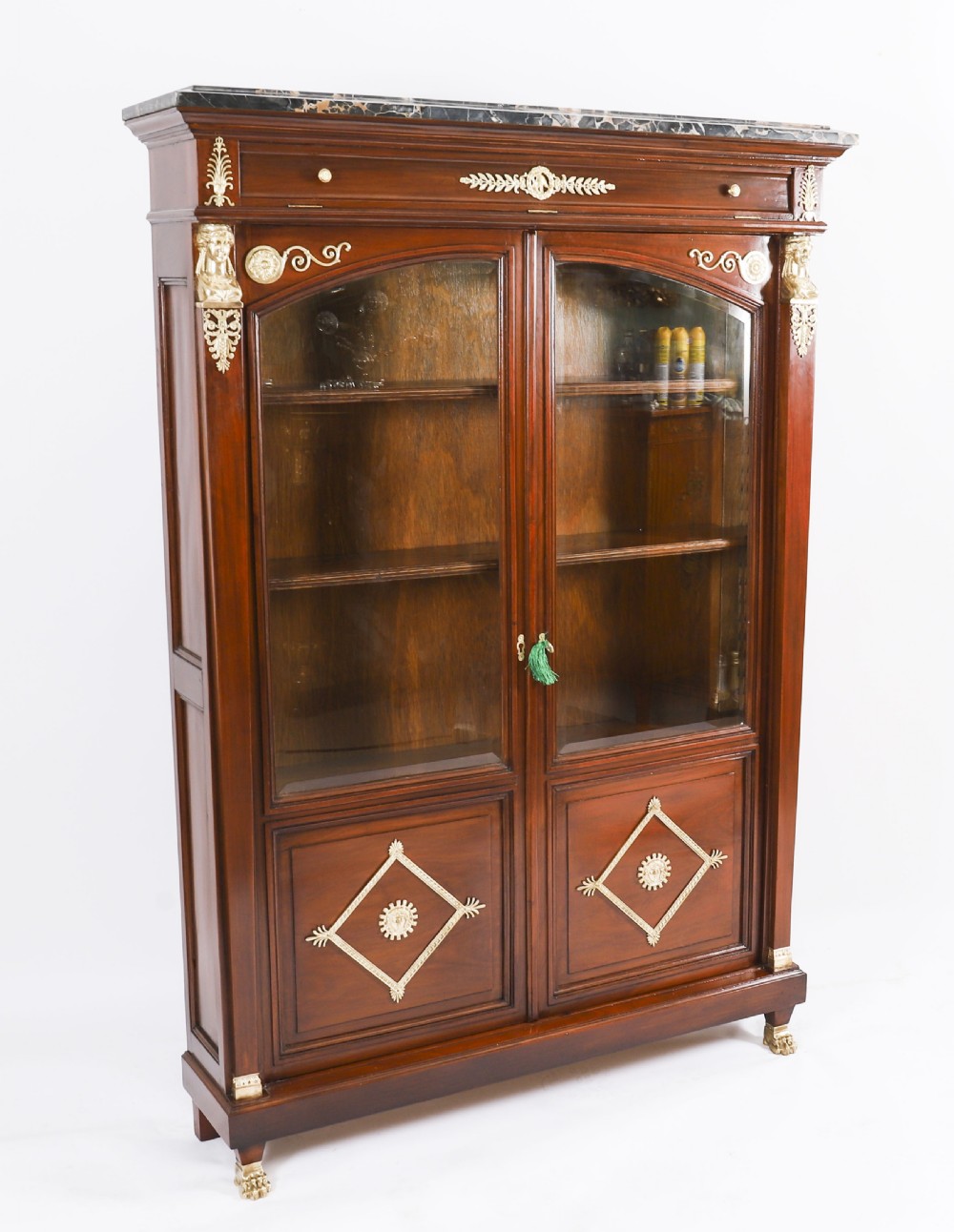
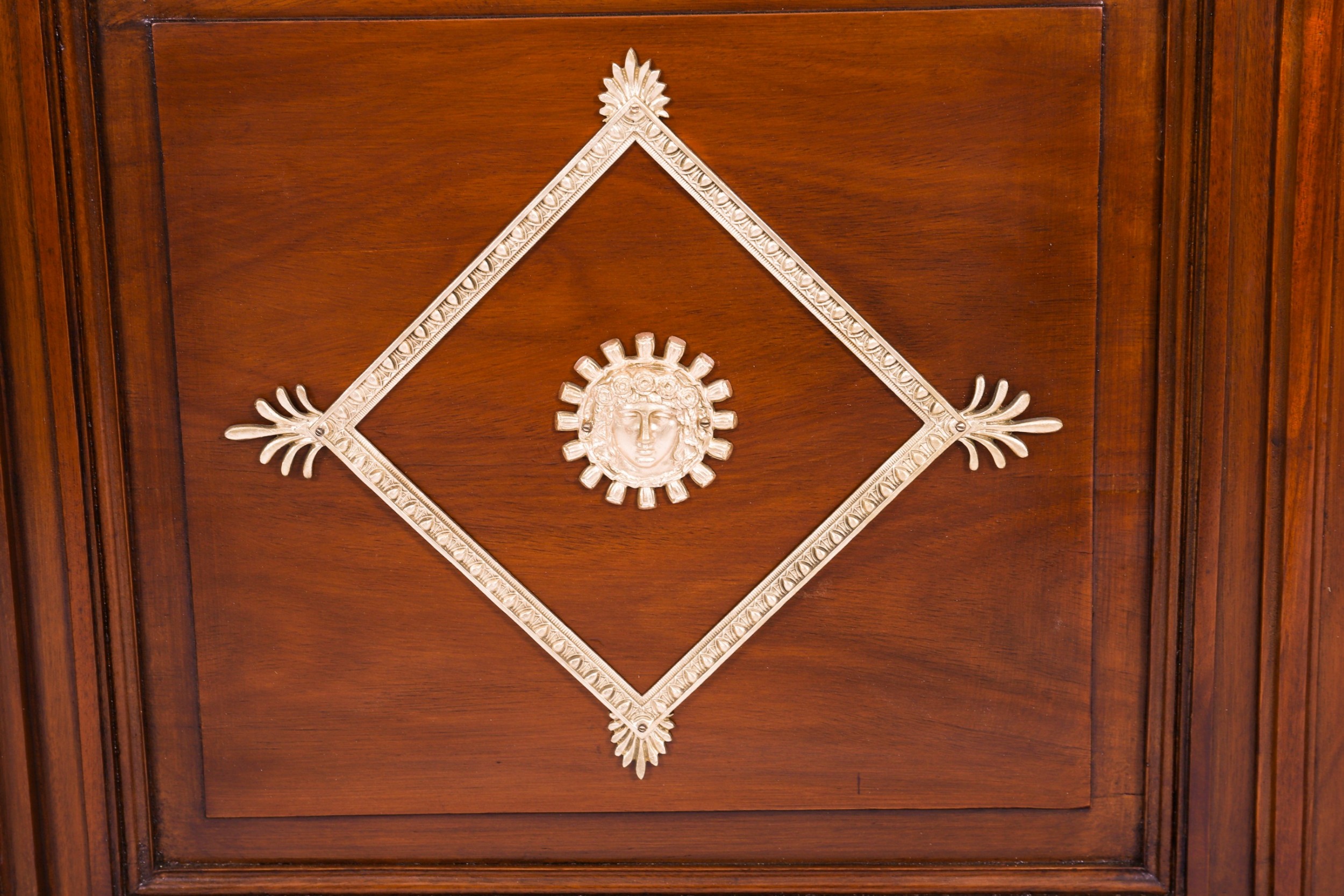
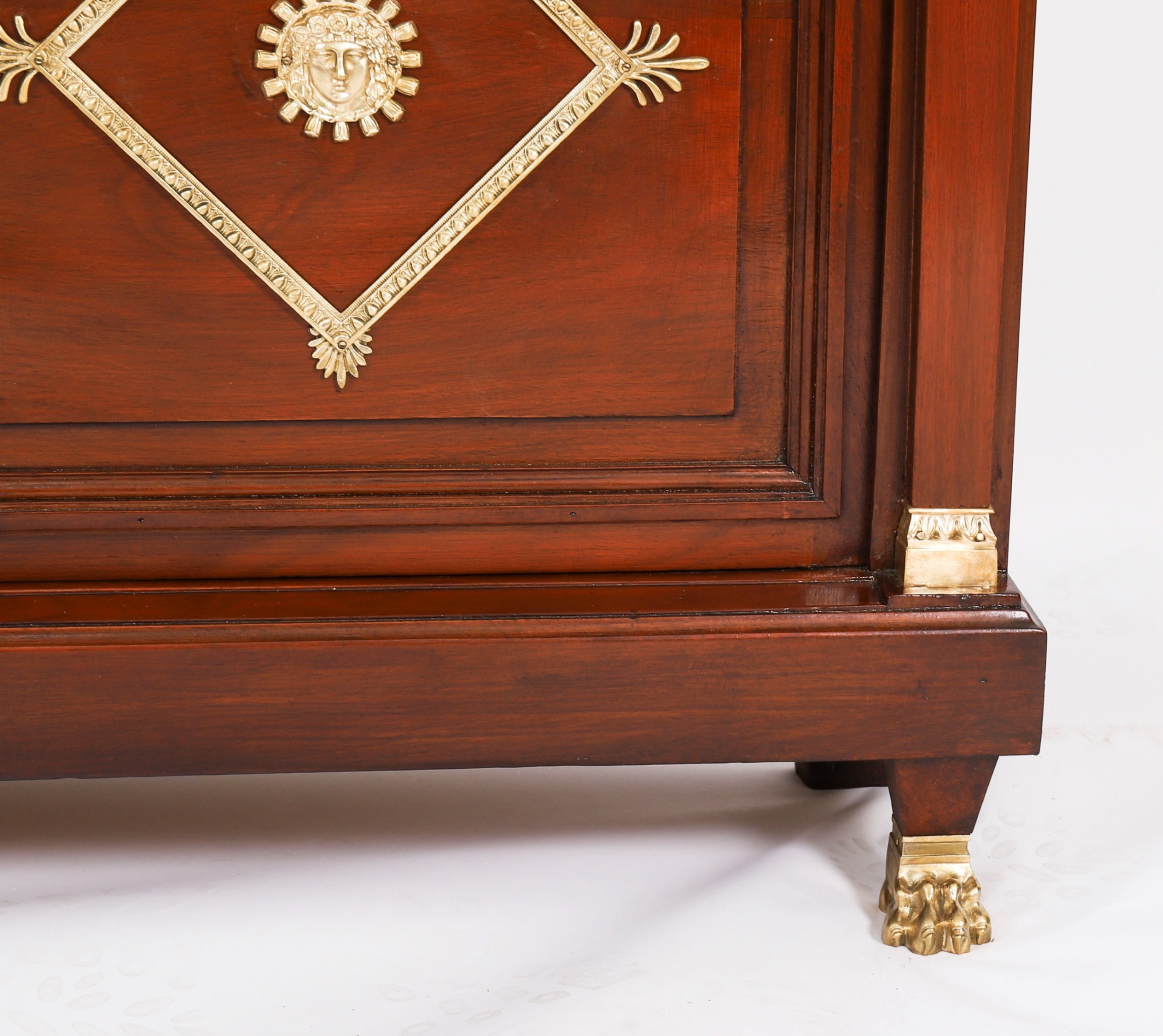
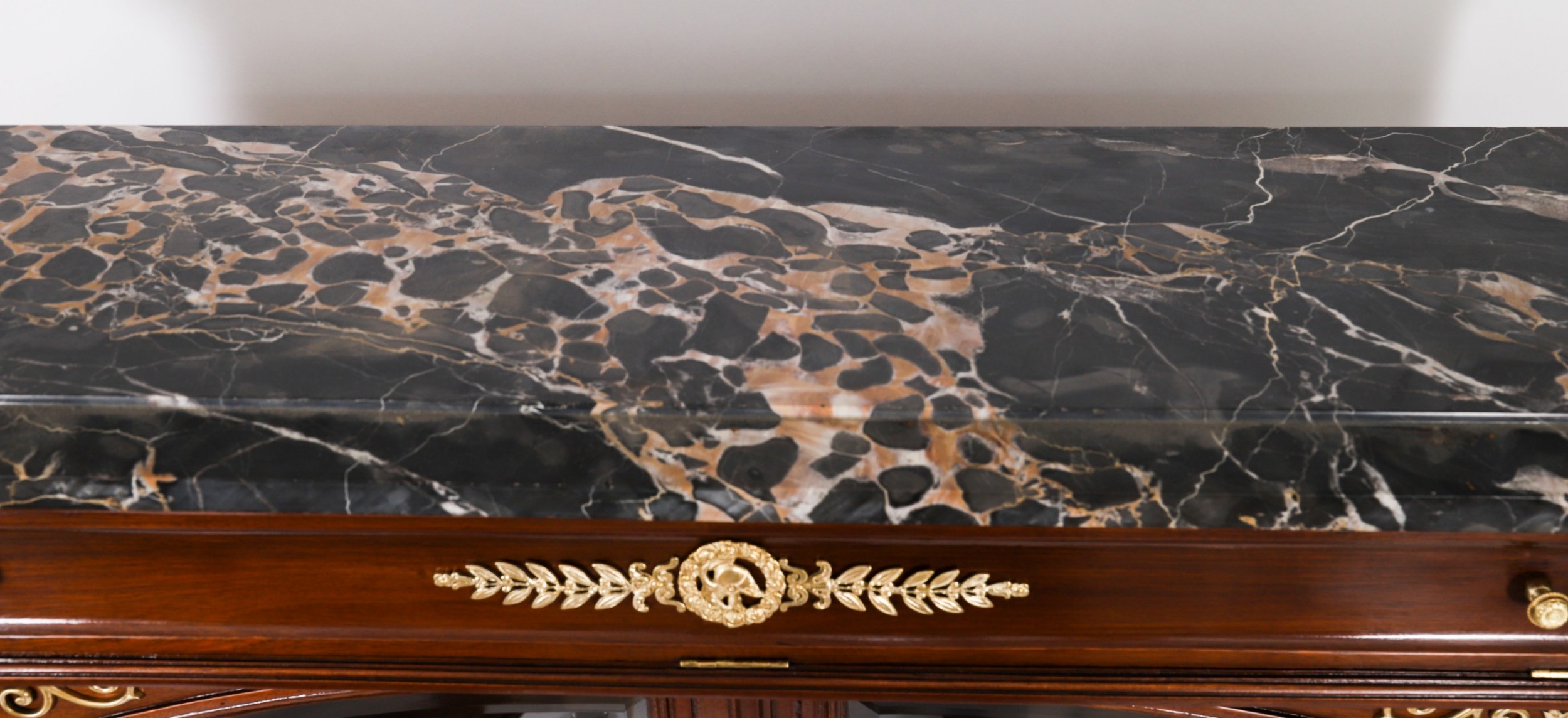
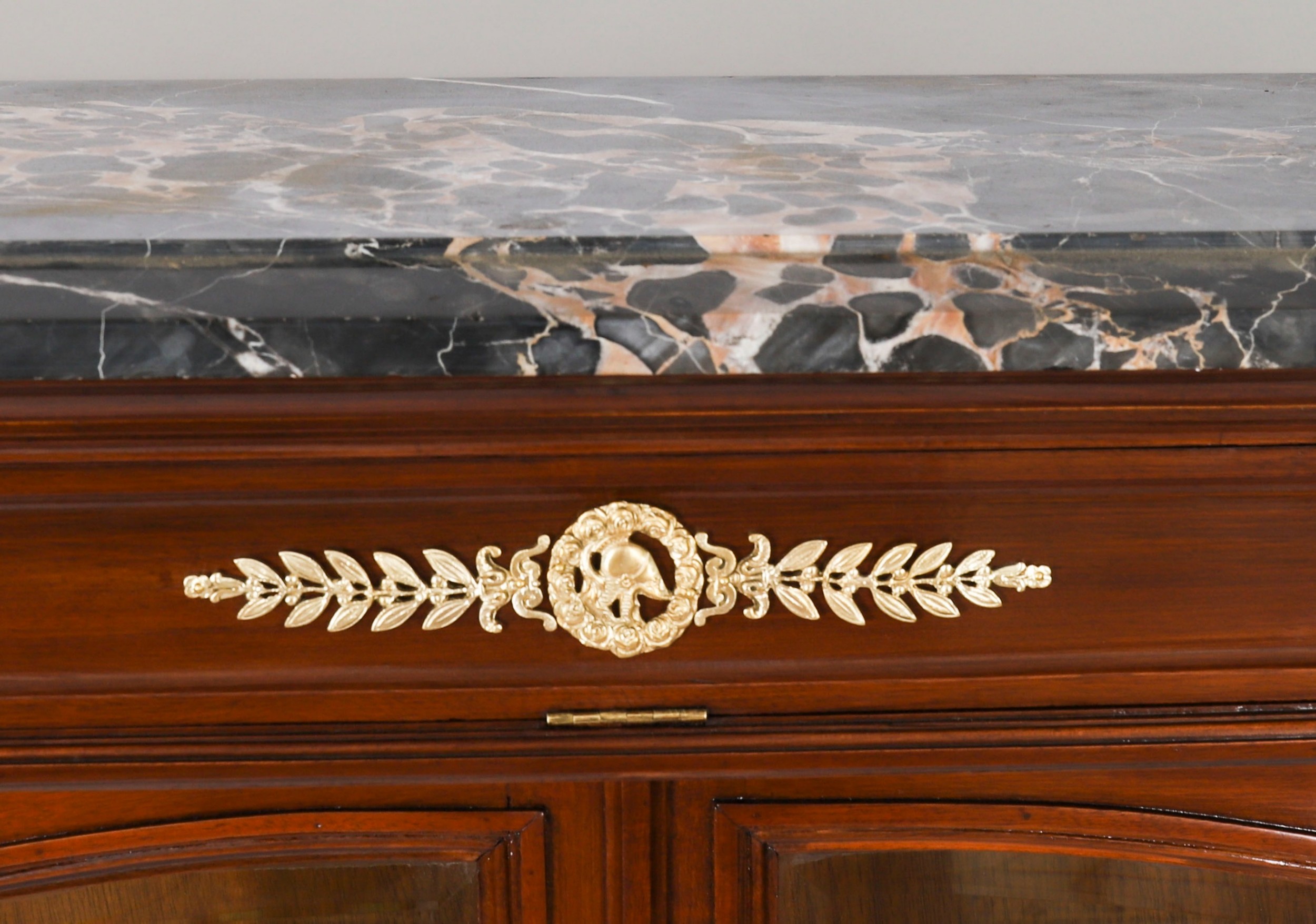
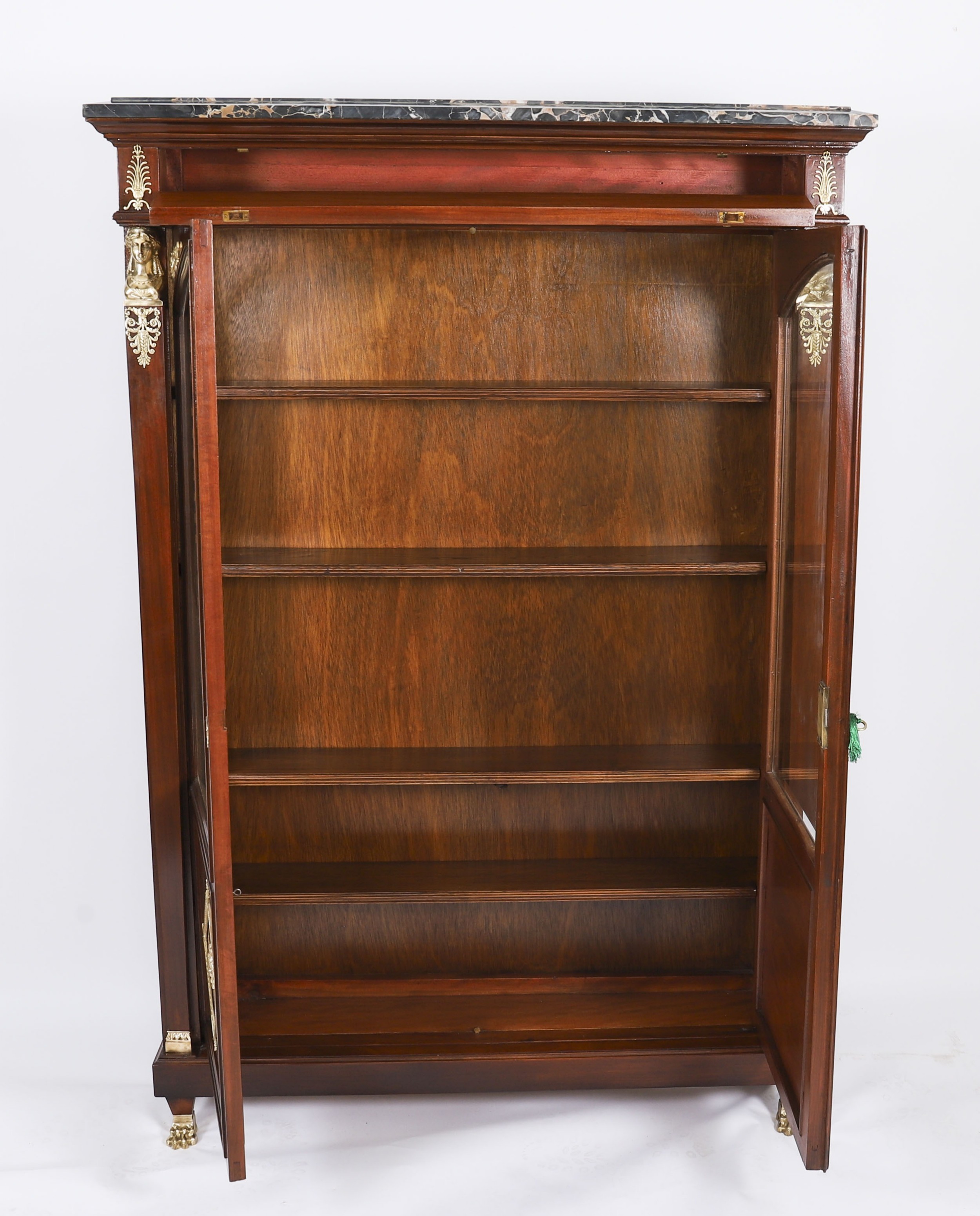
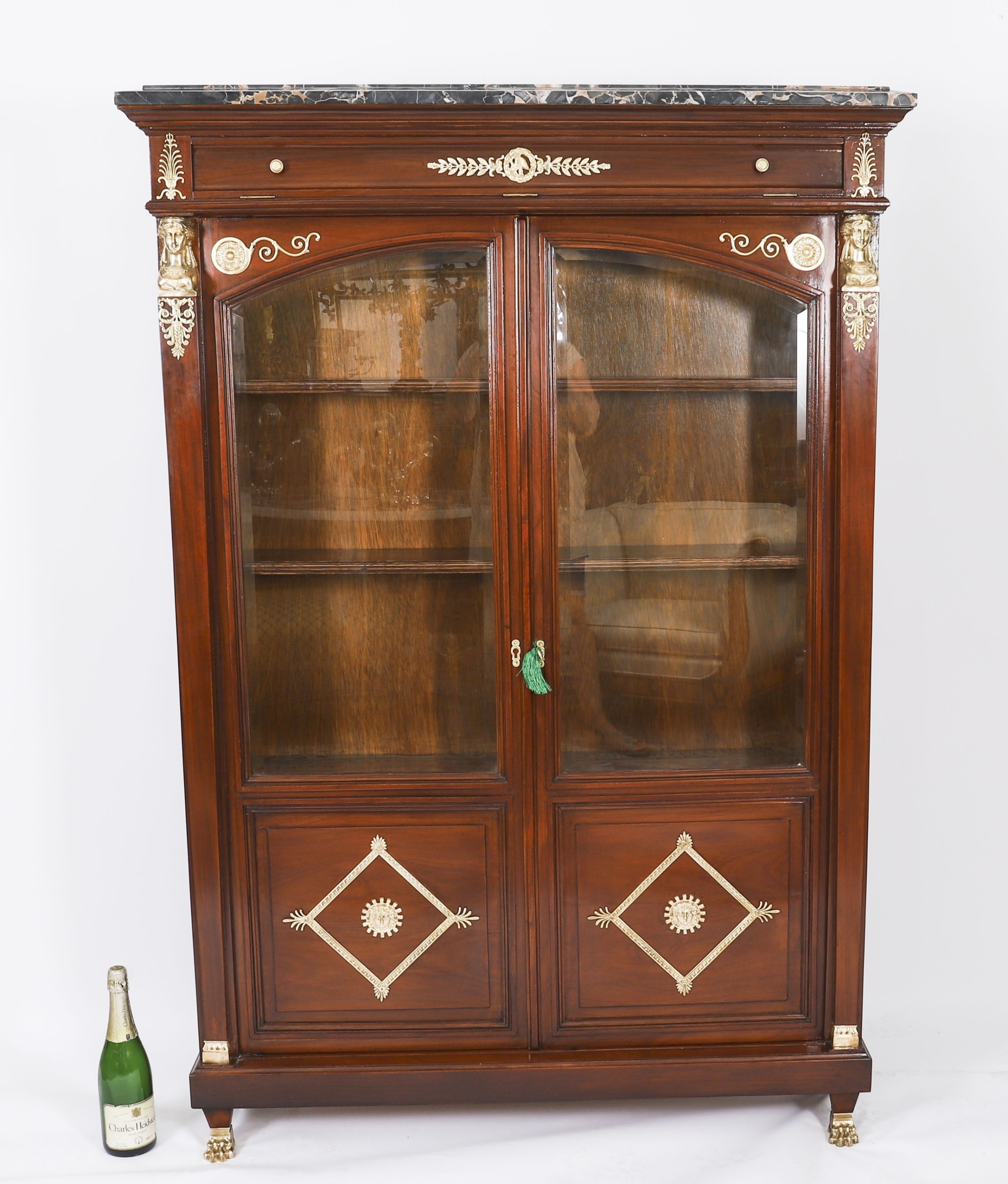
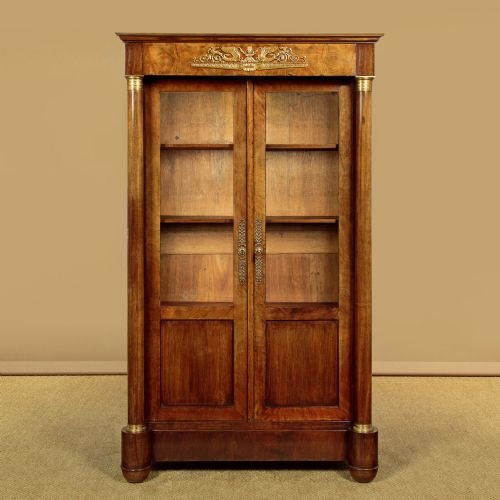
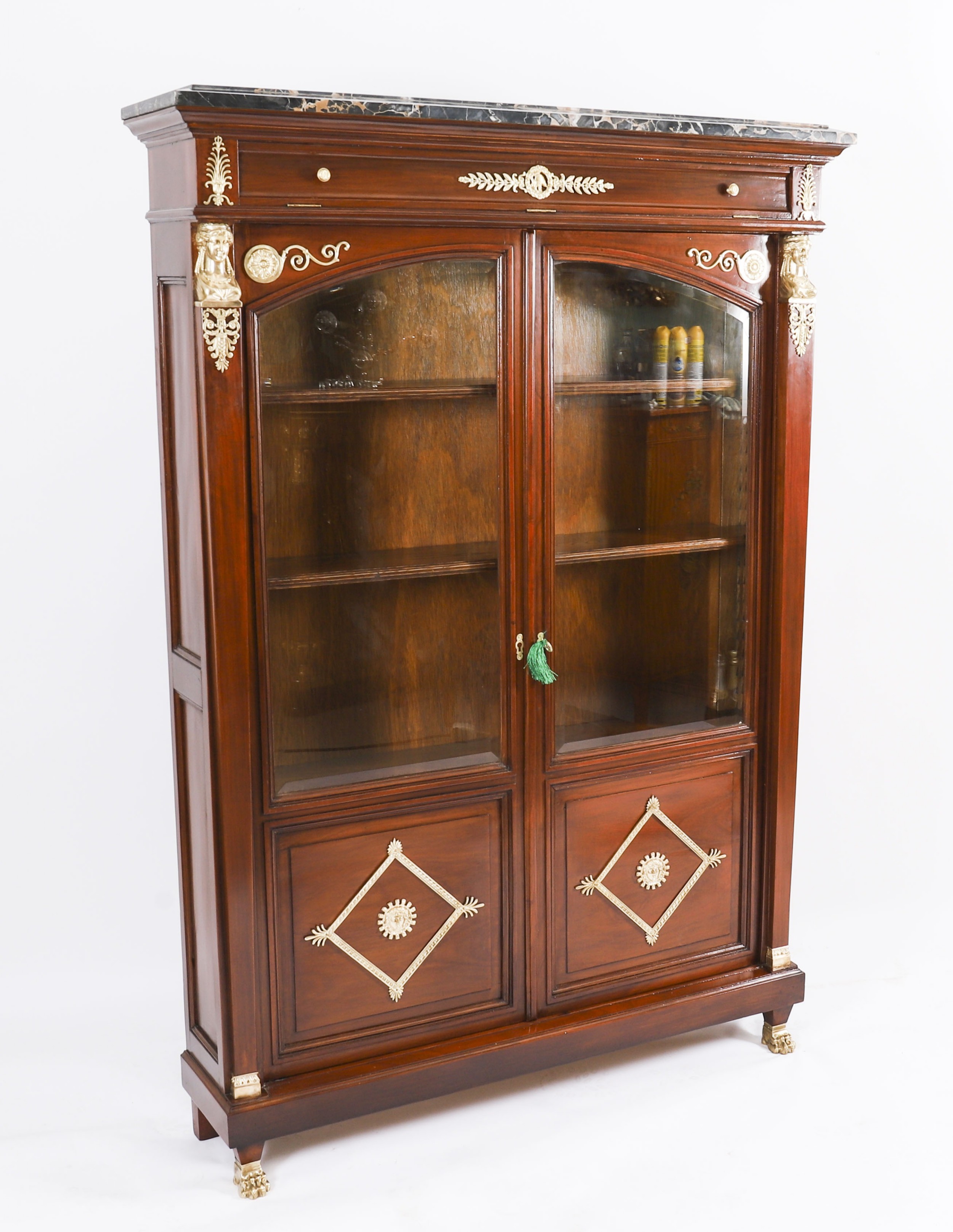
This is a beautiful antique French Empire Flame Mahogany Ormolu mounted bookcase  circa 1880 in date.

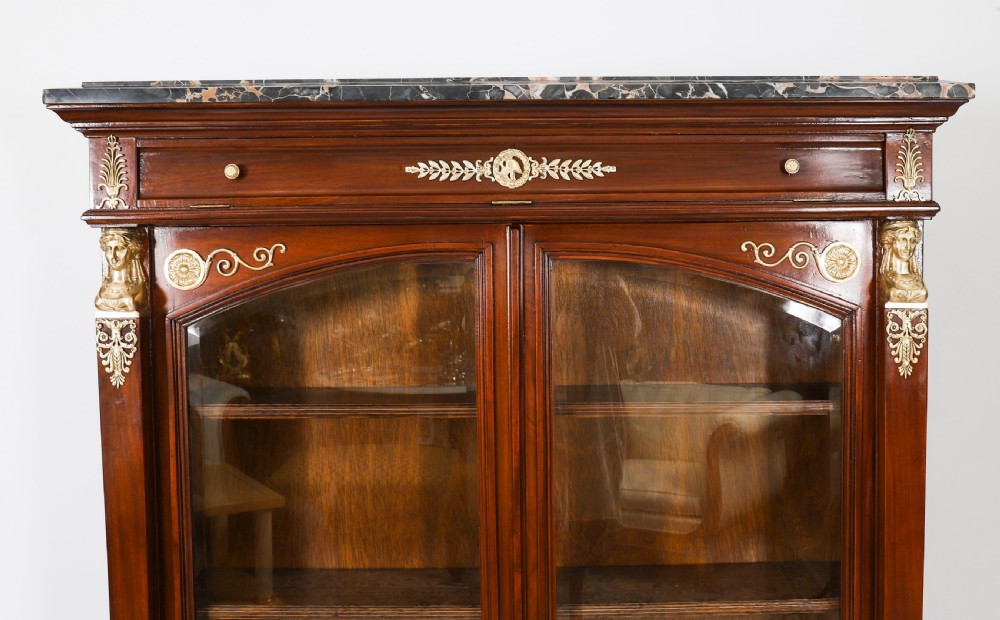
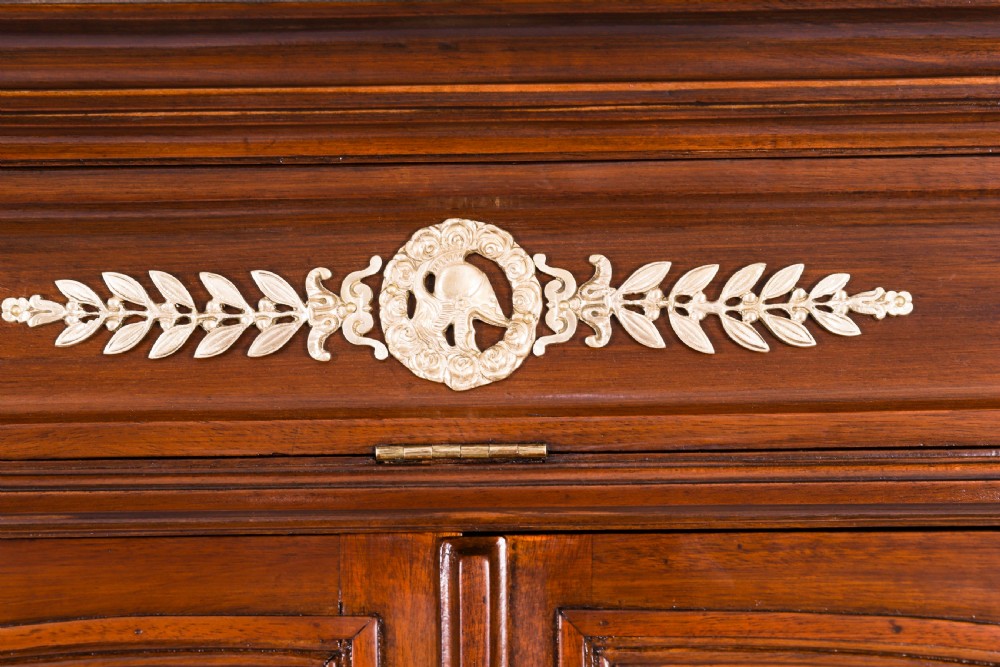
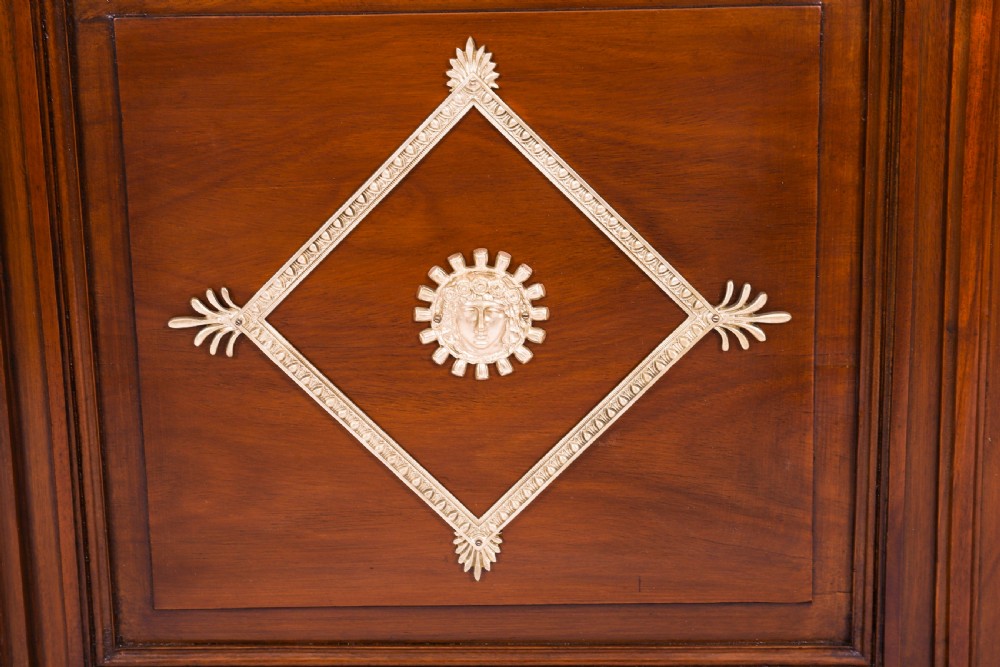
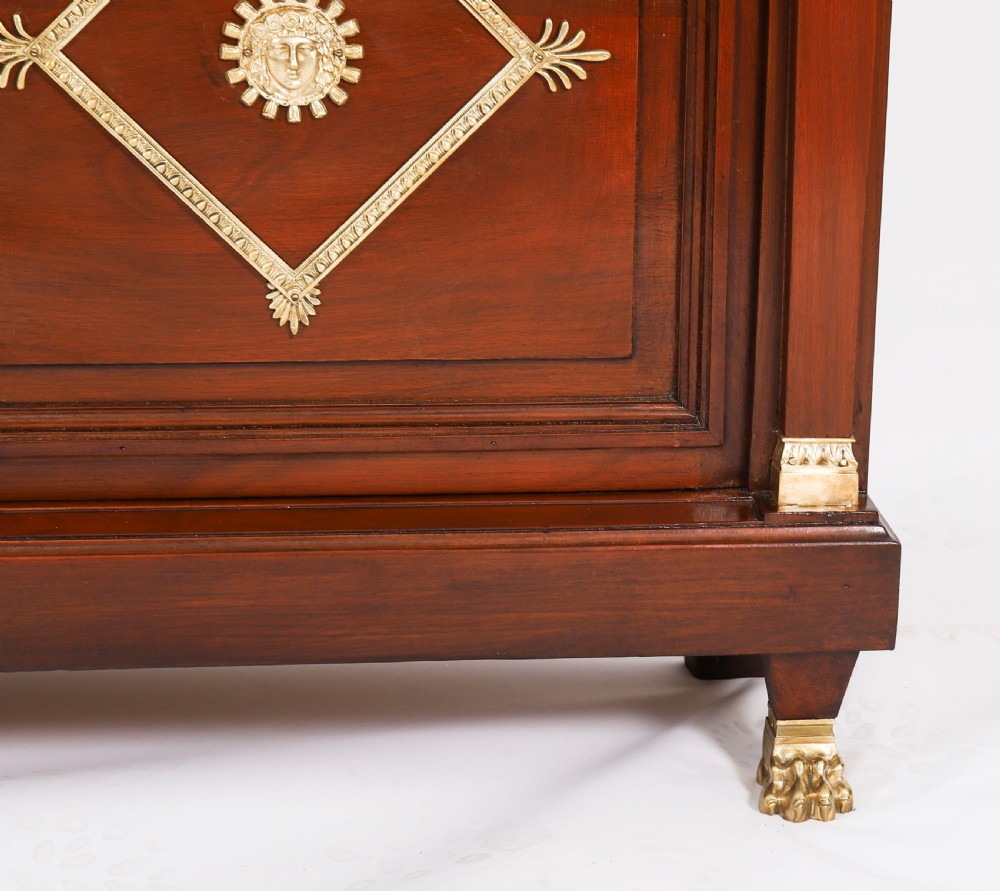
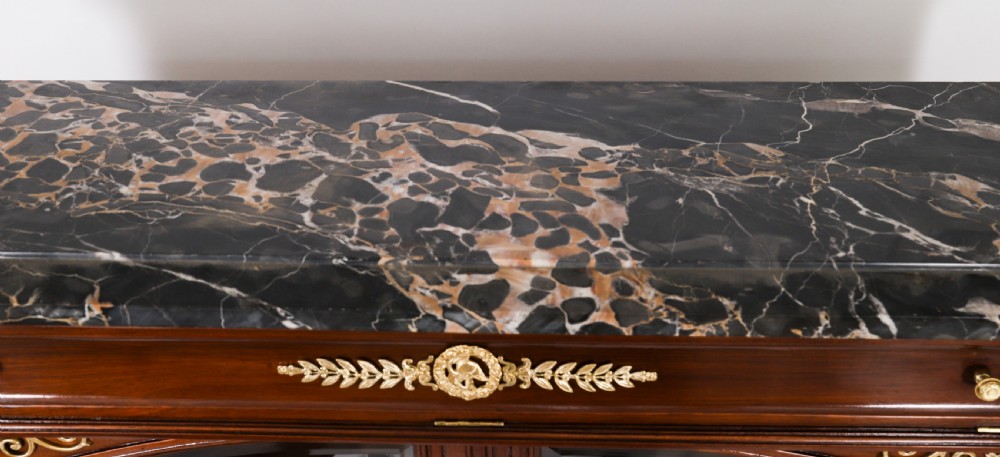
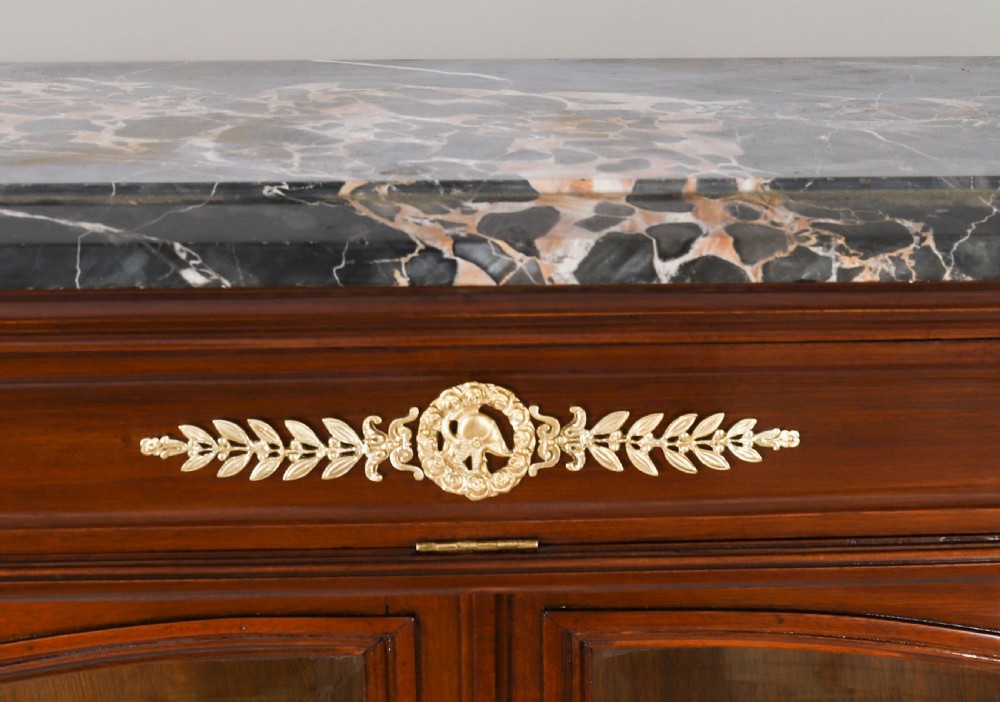
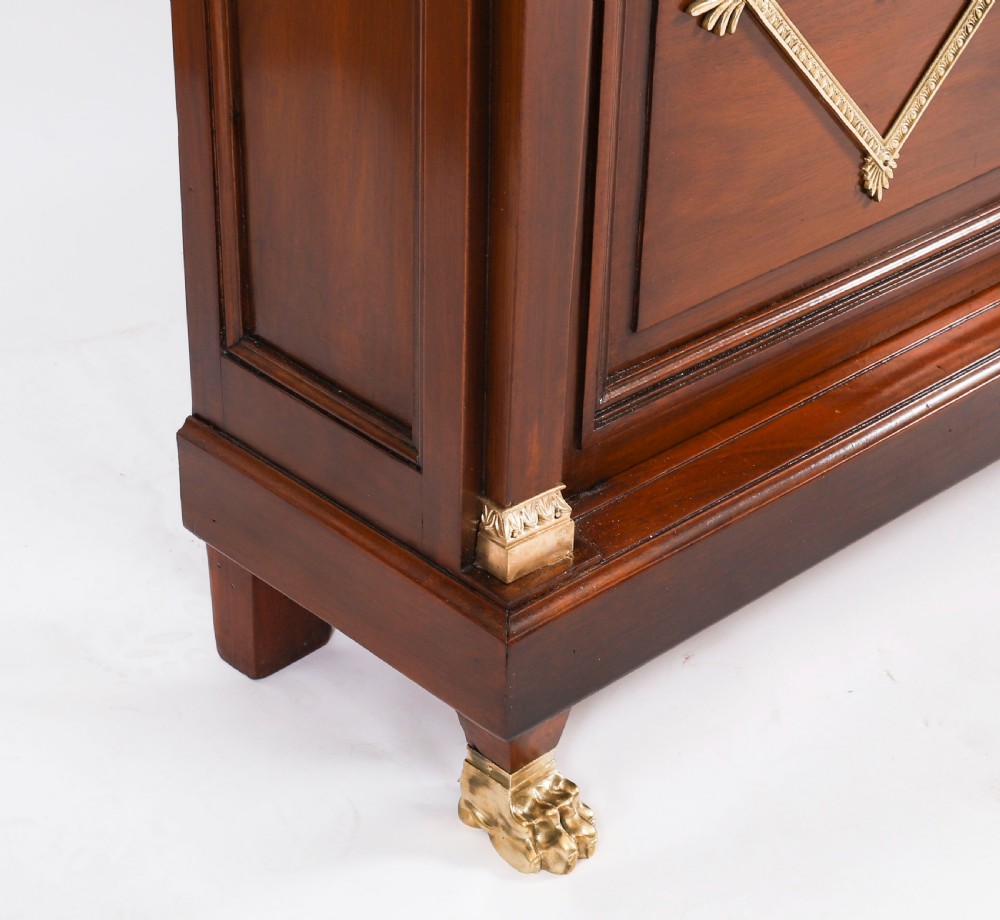
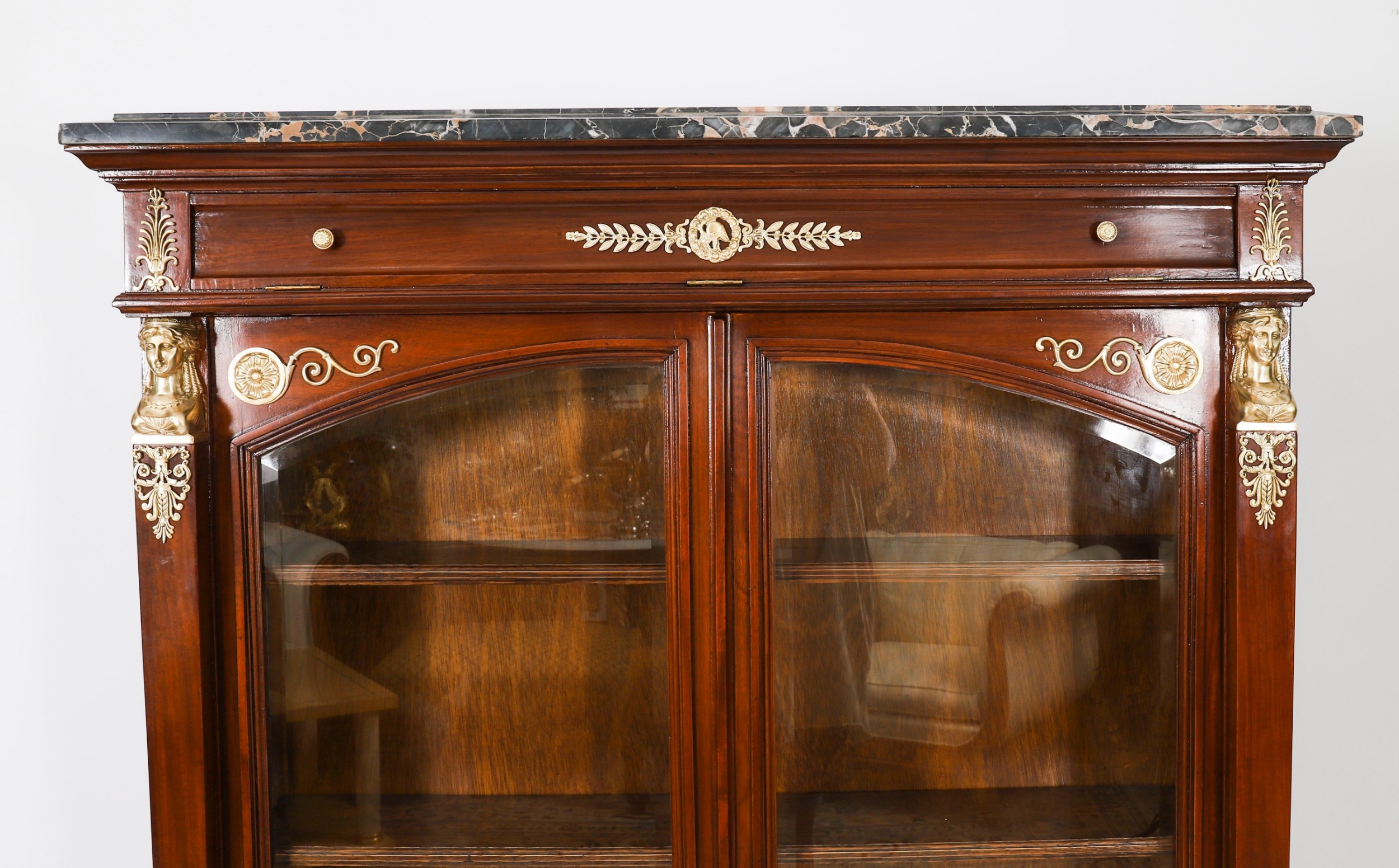
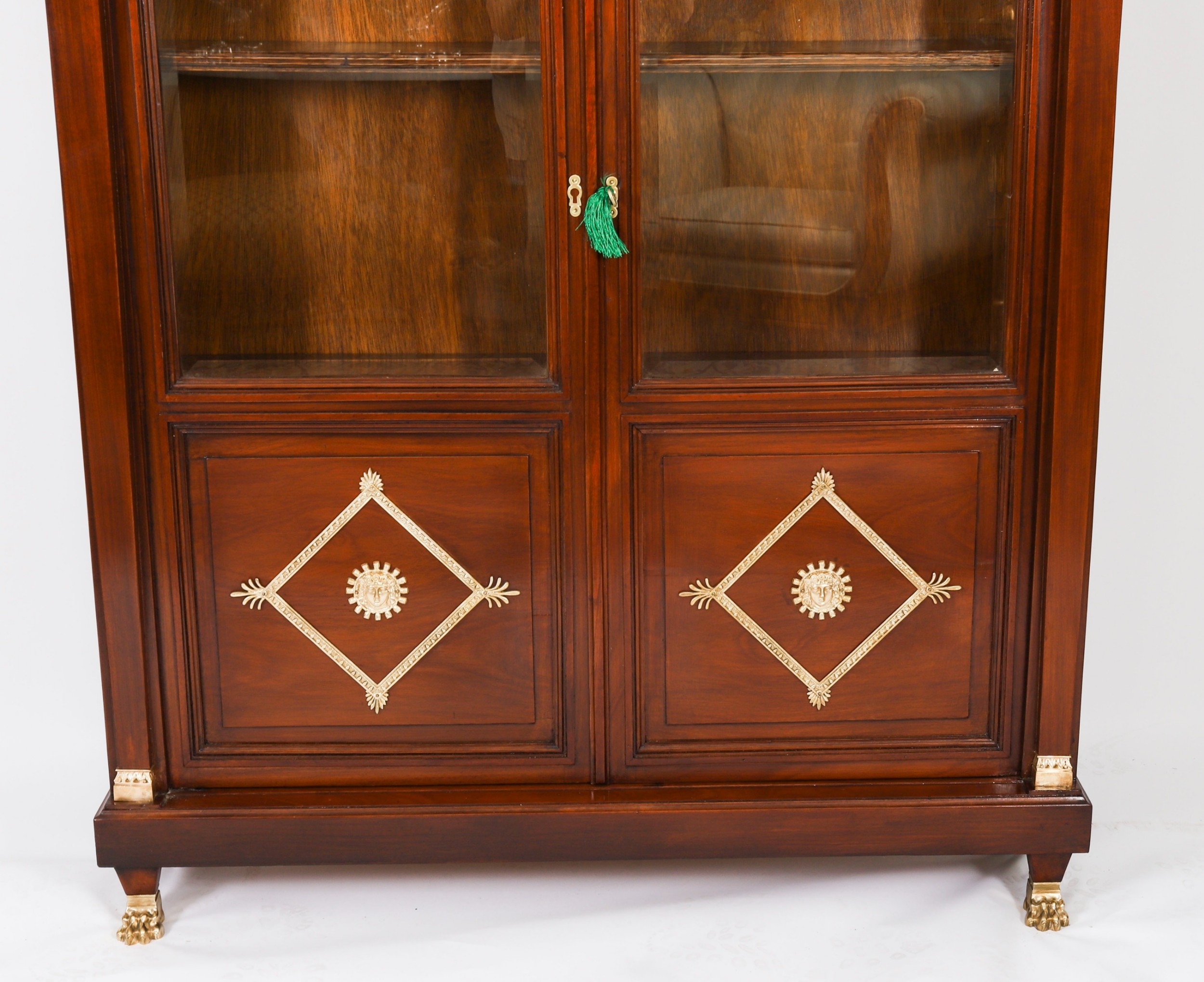
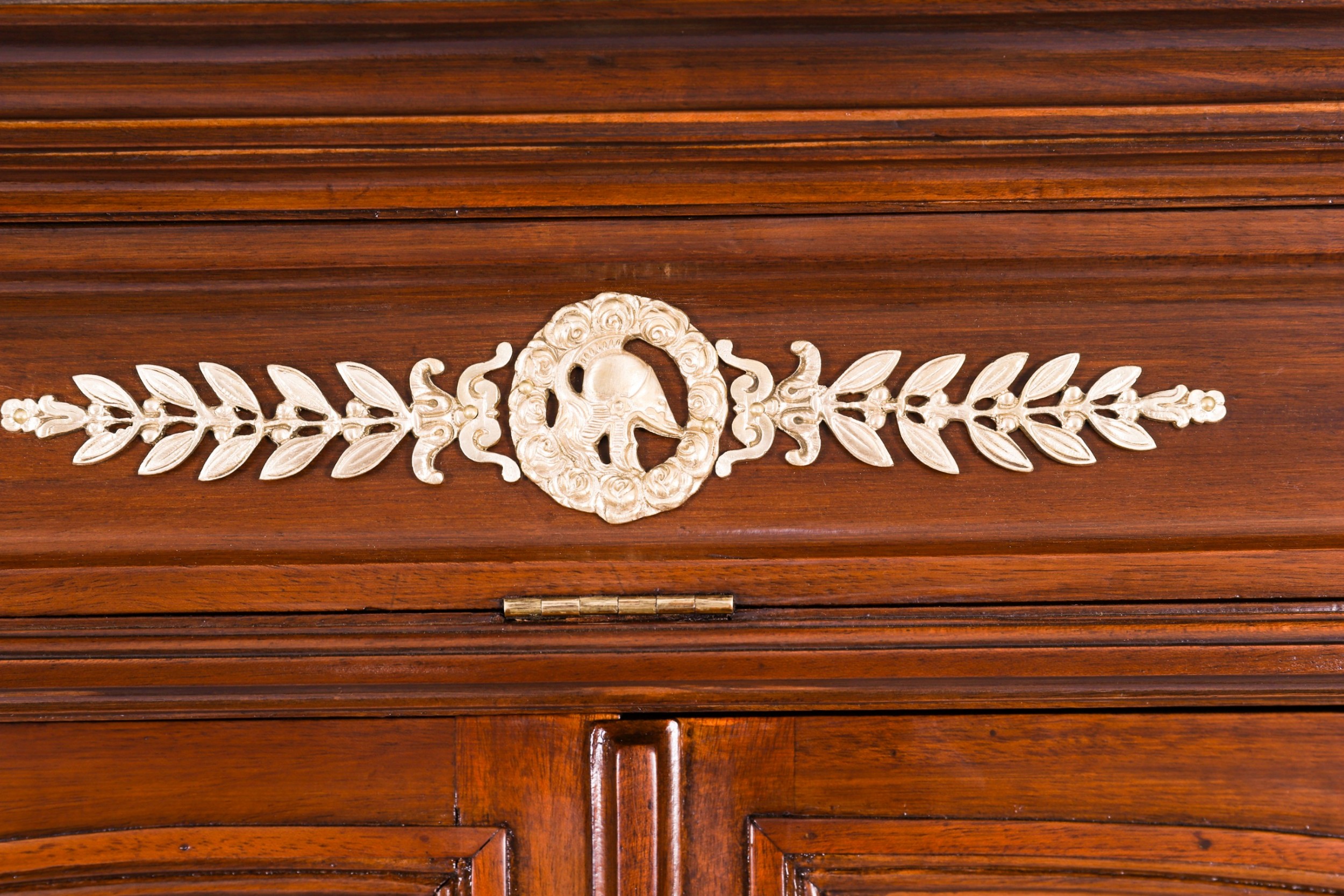
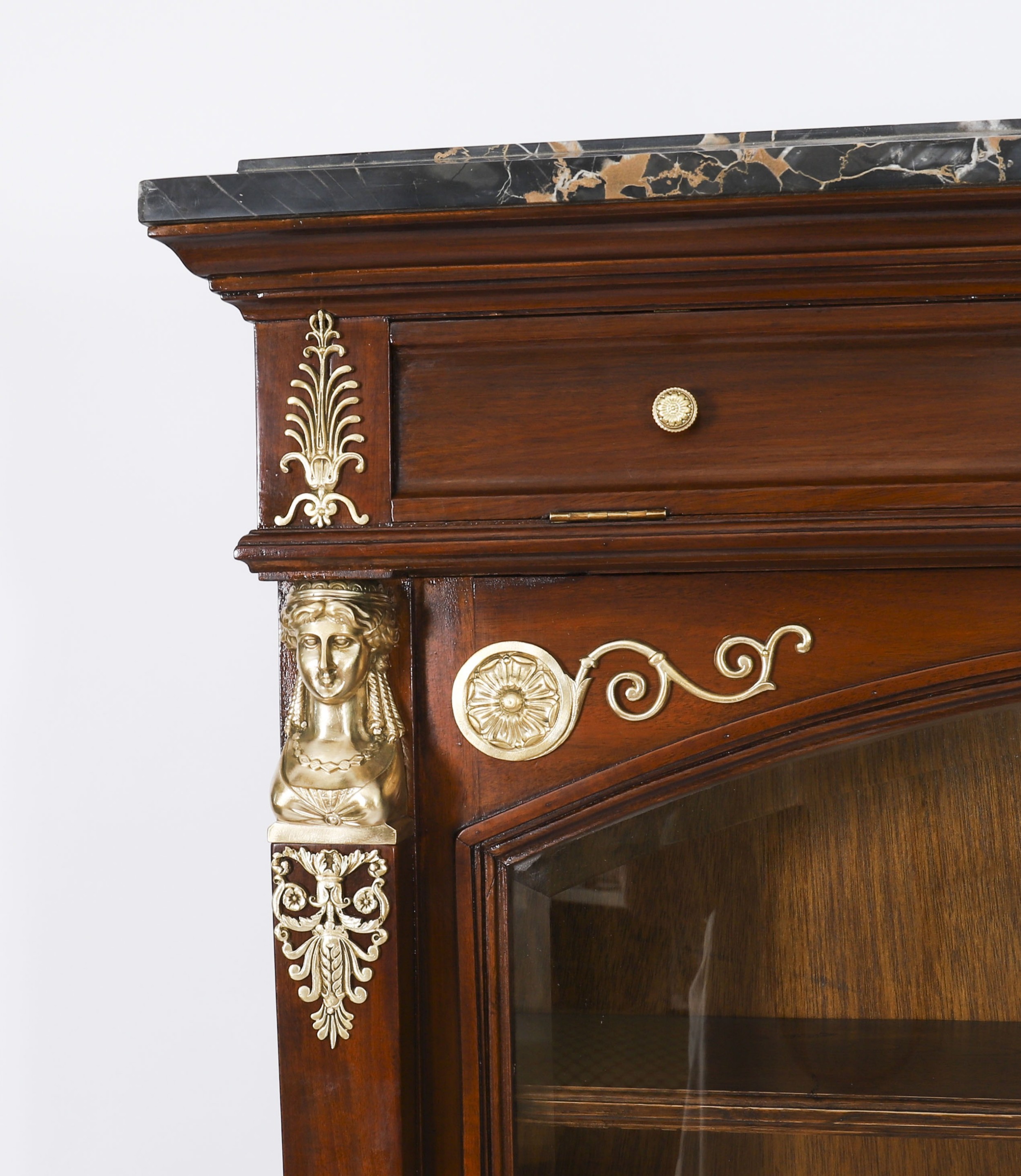
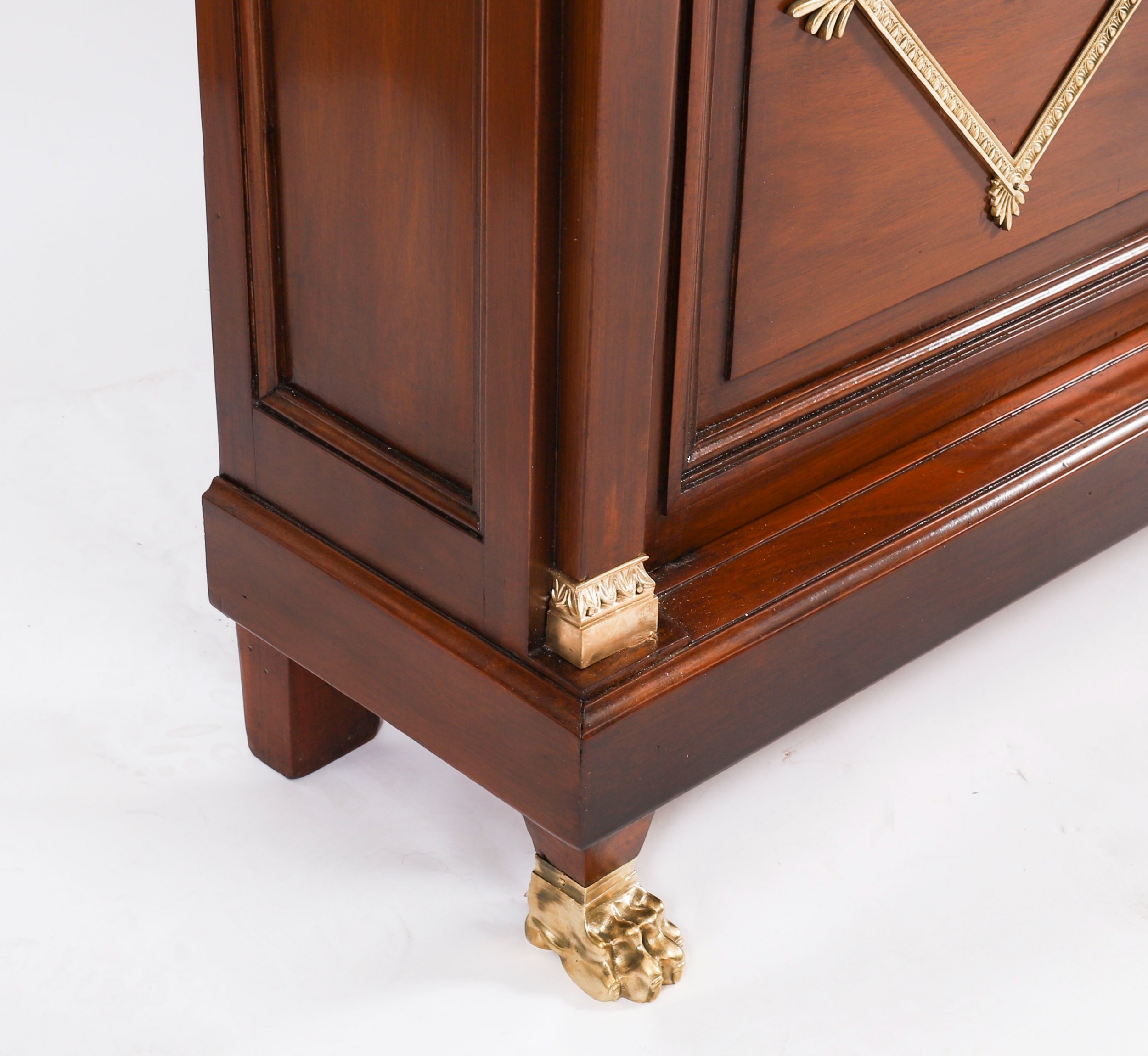
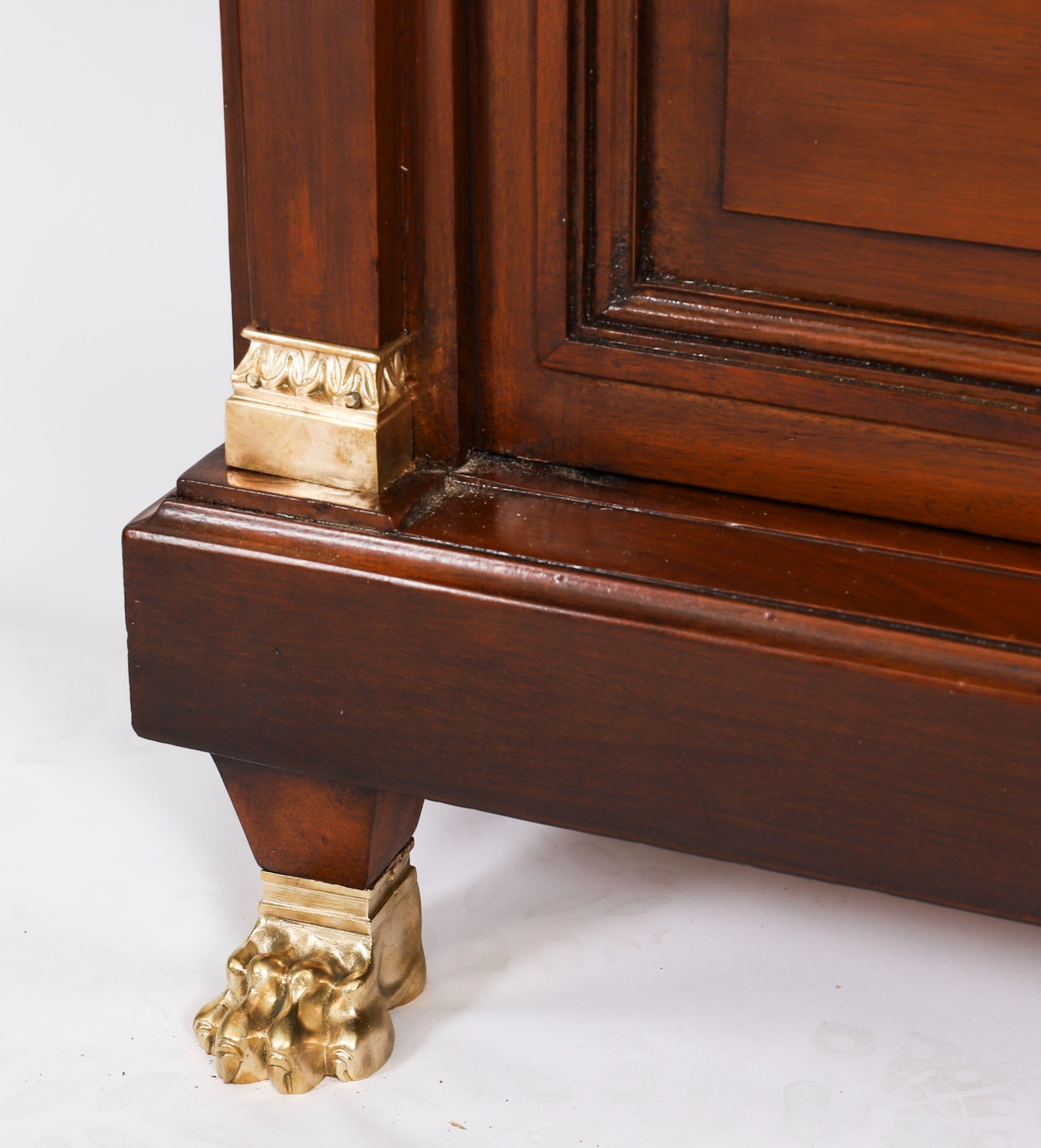
It has been crafted from solid mahogany and is smothered in fabulous ormolu mounts reminiscent of the Empire style with Egyptian motifs such as sphinxes, griffins, urns, laurels and Napoleonic symbols. The gilded bronze mounts show a very high level of craftsmanship.

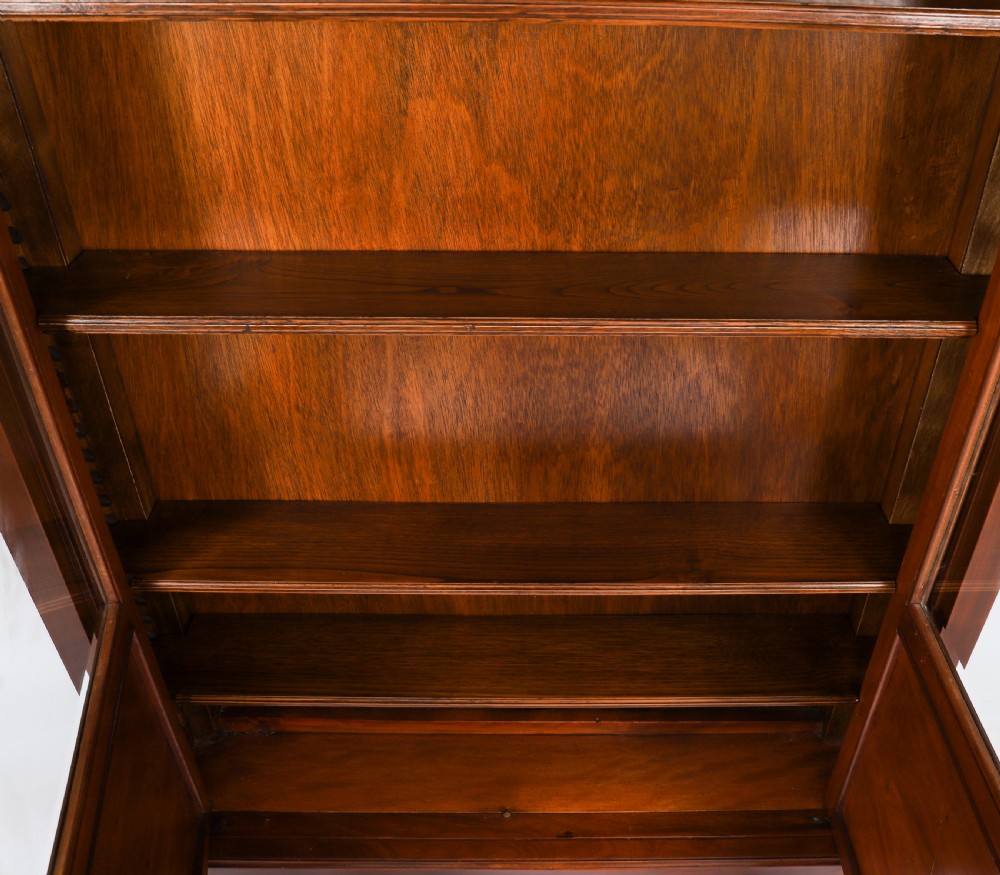
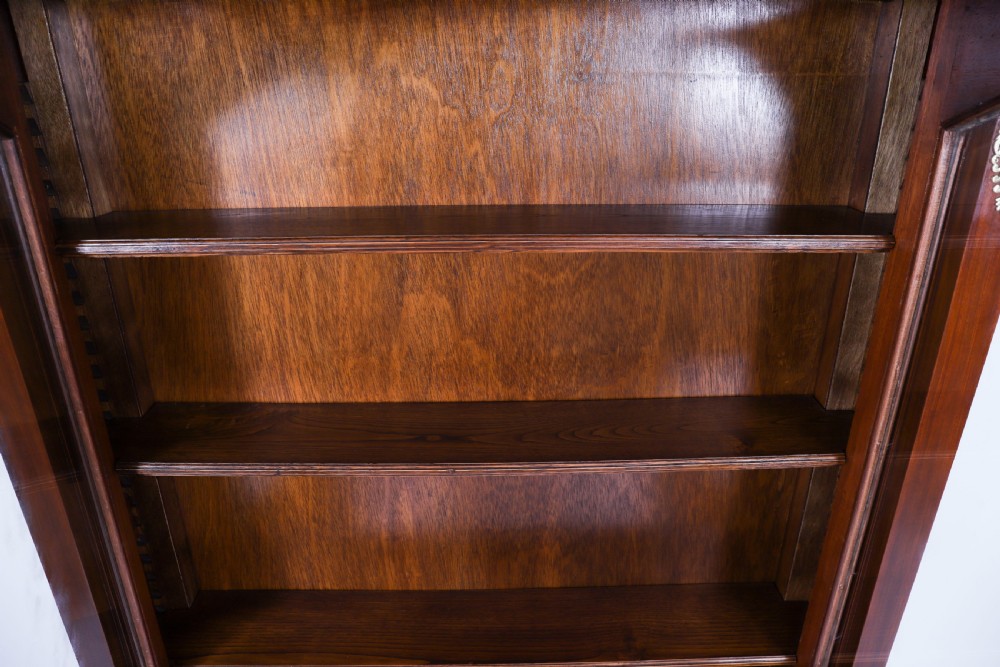
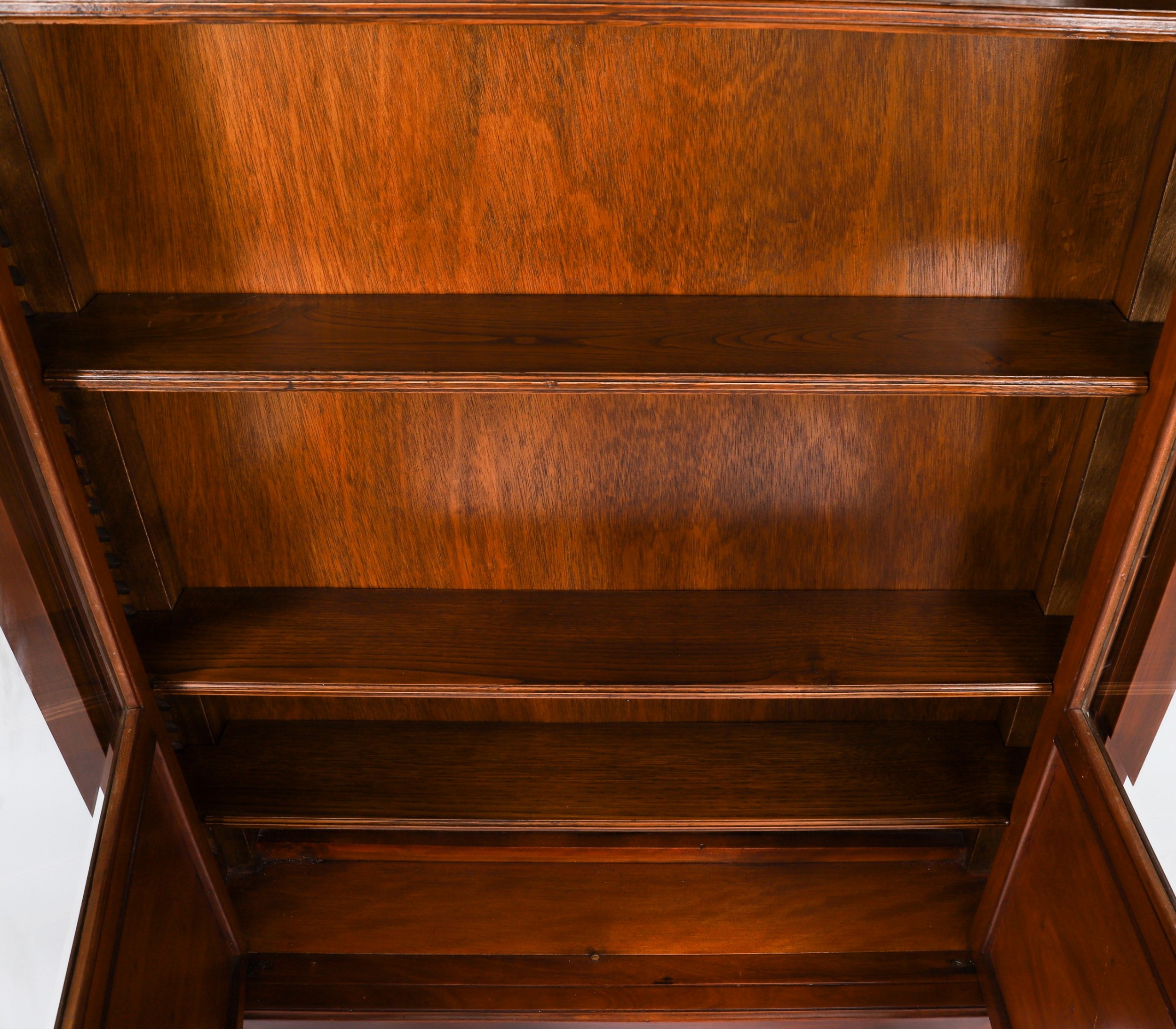
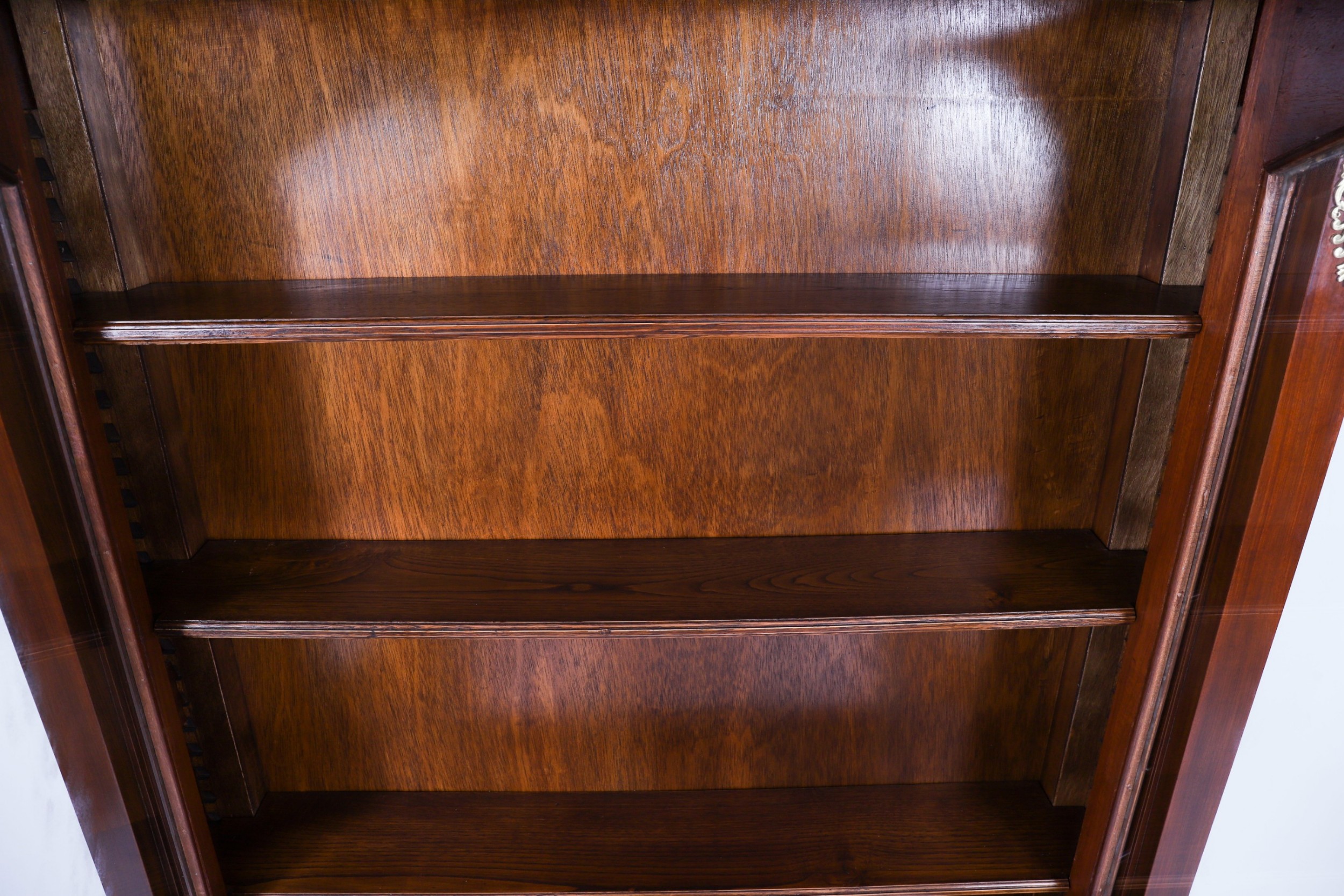
There is a cupboard above the doors with a fall down front and the doors are fitted with bevelled glass and the four shelves are all adjustable.

Complete with working lock and key.

Add a touch of style to your home with this delightful piece.

Condition:

In really excellent condition having been beautifully cleaned, polished and waxed in our workshops, please see photos for confirmation.

Dimensions in cm:

Height 168 cm x Width 117 cm x Depth 28 cm

Dimensions in inches:

Height 5 foot, 6 inches x Width 3 foot, 10 inches x Depth 11 inches

Empire style,

is an early-19th-century design movement in architecture, furniture, other decorative arts, and the visual arts followed in Europe and America until around 1830.

The style originated in and takes its name from the rule of Napoleon I in the First French Empire, where it was intended to idealize Napoleon's leadership and the French state. The style corresponds to the Biedermeier style in the German-speaking lands, Federal style in the United States and to the Regency style in Britain. The previous style was called Louis XVI style, in France.

The Empire style was based on aspects of the Roman Empire. It is the second phase of neoclassicism which is also called "Directoire", after a goverment system.

Furniture typically had symbols and ornaments borrowed from the glorious ancient Greek and Roman empires.

The furniture was made from heavy woods such as mahogany and ebony, imported from the colonies, with dark finishes often with decorative bronze mounts. Marble tops were popular as were Egyptian motifs like sphinxes, griffins, urns and eagles and the Napoleonic symbols, the eagle, the bee, the initials "I" and a large "N."

Gilded bronze (ormolu) details displayed a high level of craftsmanship.

Flame Mahogany

Thomas Sheraton - 18th century furniture designer, once characterized mahogany as "best suited to furniture where strength is demanded as well as a wood that works up easily, has a beautiful figure and polishes so well that it is an ornament to any room in which it may be placed." Matching his words to his work, Sheraton designed much mahogany furniture. The qualities that impressed Sheraton are particularly evident in a distinctive pattern of wood called "flame mahogany."

The flame figure in the wood is revealed by slicing through the face of the branch at the point where it joins another element of the tree.

Ormolu

(from French 'or moulu', signifying ground or pounded gold) is an 18th-century English term for applying finely ground, high-carat gold in a mercury amalgam to an object of bronze.The mercury is driven off in a kiln leaving behind a gold-coloured veneer known as 'gilt bronze'.

The manufacture of true ormolu employs a process known as mercury-gilding or fire-gilding, in which a solution of nitrate of mercury is applied to a piece of copper, brass, or bronze, followed by the application of an amalgam of gold and mercury. The item was then exposed to extreme heat until the mercury burned off and the gold remained, adhered to the metal object.

No true ormolu was produced in France after around 1830 because legislation had outlawed the use of mercury. Therefore, other techniques were used instead but nothing surpasses the original mercury-firing ormolu method for sheer beauty and richness of colour. Electroplating is the most common modern technique. Ormolu techniques are essentially the same as those used on silver, to produce silver-gilt (also kn

Date of Manufacture

Regent Antiques has dated this French Empire Mahogany Bookcase to the 1880s.

Physical Dimensions
Height
168cm (66.14")
Width
117cm (46.06")
Depth
28cm (11.02")
Reference Numbers
Sellingantiques Reference
SA1226859
Dealers Internal Reference
A5306
A nineteenth-century French Empire Revival mahogany bookcase featuring twin glazed doors, gilt bronze mounts, a marble top, and metal paw feet.Detail view 1Detail view 2Detail view 3Detail view 4Detail view 5Detail view 6Detail view 7Detail view 8Detail view 9Detail view 10Detail view 11Detail view 12Detail view 13Detail view 14Detail view 15Detail view 16Detail view 17Detail view 18Detail view 19
SOLD3 SEP 26
1 / 20
1880s · SA1226859
Antique French Empire Revival Mahogany Bookcase Cabinet 19th C
Sorry, but this item has been sold.
Description
This is a beautiful antique French Empire Flame Mahogany Ormolu mounted bookcase  circa 1880 in date.

It has been crafted from solid mahogany and is smothered in fabulous ormolu mounts reminiscent of the Empire style with Egyptian motifs such as sphinxes, griffins, urns, laurels and Napoleonic symbols. The gilded bronze mounts show a very high level of craftsmanship.

There is a cupboard above the doors with a fall down front and the doors are fitted with bevelled glass and the four shelves are all adjustable.

Complete with working lock and key.

Add a touch of style to your home with this delightful piece.

Condition:

In really excellent condition having been beautifully cleaned, polished and waxed in our workshops, please see photos for confirmation.

Dimensions in cm:

Height 168 cm x Width 117 cm x Depth 28 cm

Dimensions in inches:

Height 5 foot, 6 inches x Width 3 foot, 10 inches x Depth 11 inches

Empire style,

is an early-19th-century design movement in architecture, furniture, other decorative arts, and the visual arts followed in Europe and America until around 1830.

The style originated in and takes its name from the rule of Napoleon I in the First French Empire, where it was intended to idealize Napoleon's leadership and the French state. The style corresponds to the Biedermeier style in the German-speaking lands, Federal style in the United States and to the Regency style in Britain. The previous style was called Louis XVI style, in France.

The Empire style was based on aspects of the Roman Empire. It is the second phase of neoclassicism which is also called "Directoire", after a goverment system.

Furniture typically had symbols and ornaments borrowed from the glorious ancient Greek and Roman empires.

The furniture was made from heavy woods such as mahogany and ebony, imported from the colonies, with dark finishes often with decorative bronze mounts. Marble tops were popular as were Egyptian motifs like sphinxes, griffins, urns and eagles and the Napoleonic symbols, the eagle, the bee, the initials "I" and a large "N."

Gilded bronze (ormolu) details displayed a high level of craftsmanship.

Flame Mahogany

Thomas Sheraton - 18th century furniture designer, once characterized mahogany as "best suited to furniture where strength is demanded as well as a wood that works up easily, has a beautiful figure and polishes so well that it is an ornament to any room in which it may be placed." Matching his words to his work, Sheraton designed much mahogany furniture. The qualities that impressed Sheraton are particularly evident in a distinctive pattern of wood called "flame mahogany."

The flame figure in the wood is revealed by slicing through the face of the branch at the point where it joins another element of the tree.

Ormolu

(from French 'or moulu', signifying ground or pounded gold) is an 18th-century English term for applying finely ground, high-carat gold in a mercury amalgam to an object of bronze.The mercury is driven off in a kiln leaving behind a gold-coloured veneer known as 'gilt bronze'.

The manufacture of true ormolu employs a process known as mercury-gilding or fire-gilding, in which a solution of nitrate of mercury is applied to a piece of copper, brass, or bronze, followed by the application of an amalgam of gold and mercury. The item was then exposed to extreme heat until the mercury burned off and the gold remained, adhered to the metal object.

No true ormolu was produced in France after around 1830 because legislation had outlawed the use of mercury. Therefore, other techniques were used instead but nothing surpasses the original mercury-firing ormolu method for sheer beauty and richness of colour. Electroplating is the most common modern technique. Ormolu techniques are essentially the same as those used on silver, to produce silver-gilt (also kn
Date1880s
Height168cm (66.14")
Width117cm (46.06")
Depth28cm (11.02")
ReferenceSA1226859
Dealer's referenceA5306
Regent Antiques
Regent AntiquesSellingantiques verified since Sep 2016

We specialise in english and continental furniture, silver, porcelain and decorative items.
Member of LAPADA CINOA

SHARE
SAVE
Archive I A nineteenth-century French Empire Revival mahogany bookcase featuring twin glazed doors, gilt bronze mounts, a marble top, and metal paw feet. SOLD3 SEP 26

Antique French Empire Revival Mahogany Bookcase Cabinet 19th C

Archive II A nineteenth-century French Empire Revival mahogany bookcase featuring twin glazed doors, gilt bronze mounts, a marble top, and metal paw feet. View II
Archive III A nineteenth-century French Empire Revival mahogany bookcase featuring twin glazed doors, gilt bronze mounts, a marble top, and metal paw feet. View III
Archive IV A nineteenth-century French Empire Revival mahogany bookcase featuring twin glazed doors, gilt bronze mounts, a marble top, and metal paw feet. View IV
Archive V A nineteenth-century French Empire Revival mahogany bookcase featuring twin glazed doors, gilt bronze mounts, a marble top, and metal paw feet. View V
Archive VI A nineteenth-century French Empire Revival mahogany bookcase featuring twin glazed doors, gilt bronze mounts, a marble top, and metal paw feet. View VI
Archive VII A nineteenth-century French Empire Revival mahogany bookcase featuring twin glazed doors, gilt bronze mounts, a marble top, and metal paw feet. View VII
Archive VIII A nineteenth-century French Empire Revival mahogany bookcase featuring twin glazed doors, gilt bronze mounts, a marble top, and metal paw feet. View VIII
Archive IX A nineteenth-century French Empire Revival mahogany bookcase featuring twin glazed doors, gilt bronze mounts, a marble top, and metal paw feet. View IX
Archive X A nineteenth-century French Empire Revival mahogany bookcase featuring twin glazed doors, gilt bronze mounts, a marble top, and metal paw feet. View X
Archive XI A nineteenth-century French Empire Revival mahogany bookcase featuring twin glazed doors, gilt bronze mounts, a marble top, and metal paw feet. View XI
Archive XII A nineteenth-century French Empire Revival mahogany bookcase featuring twin glazed doors, gilt bronze mounts, a marble top, and metal paw feet. View XII
Archive XIII A nineteenth-century French Empire Revival mahogany bookcase featuring twin glazed doors, gilt bronze mounts, a marble top, and metal paw feet. View XIII
Archive XIV A nineteenth-century French Empire Revival mahogany bookcase featuring twin glazed doors, gilt bronze mounts, a marble top, and metal paw feet. View XIV
Archive XV A nineteenth-century French Empire Revival mahogany bookcase featuring twin glazed doors, gilt bronze mounts, a marble top, and metal paw feet. View XV
Archive XVI A nineteenth-century French Empire Revival mahogany bookcase featuring twin glazed doors, gilt bronze mounts, a marble top, and metal paw feet. View XVI
Archive XVII A nineteenth-century French Empire Revival mahogany bookcase featuring twin glazed doors, gilt bronze mounts, a marble top, and metal paw feet. View XVII
Archive XVIII A nineteenth-century French Empire Revival mahogany bookcase featuring twin glazed doors, gilt bronze mounts, a marble top, and metal paw feet. View XVIII
Archive XIX A nineteenth-century French Empire Revival mahogany bookcase featuring twin glazed doors, gilt bronze mounts, a marble top, and metal paw feet. View XIX
Archive XX A nineteenth-century French Empire Revival mahogany bookcase featuring twin glazed doors, gilt bronze mounts, a marble top, and metal paw feet. View XX
FURTHER BROWSING

Visitors also looked at these ⇣

Enlarged Archival View
Location
Manor Warehouse
318 Green Lanes
London
N4 1BX
United Kingdom
Verified Since Sep 2016
Items For Sale 639
Items Sold 2,756
Regent Antiques
Regent Antiques
Verified Since Sep 2016
View Dealer Info
Location: Manor Warehouse, 318 Green Lanes, London, N4 1BX, United Kingdom
Verified
Sep 2016
For Sale
639
Sold
2,756
A nineteenth-century French Empire Revival mahogany bookcase featuring twin glazed doors, gilt bronze mounts, a marble top, and metal paw feet.
Antique French Empire Revival Mahogany Bookcase Cabinet 19th C
Ref: SA1226859
A nineteenth-century French Empire Revival mahogany bookcase featuring twin glazed doors, gilt bronze mounts, a marble top, and metal paw feet.
Detail View 1
Detail View 2
Detail View 3
Detail View 4
Detail View 5
Detail View 6
Detail View 7
Detail View 8
Detail View 9
Detail View 10
Detail View 11
Detail View 12
Detail View 13
Detail View 14
Detail View 15
Detail View 16
Detail View 17
Detail View 18
Detail View 19
Archival Detail
Every single antique dealer on our platform is individually approved by our internal team. We verify their professional trade history, ethical standards, and photographic quality to ensure a secure, high-standard buying environment. Upon joining, every dealer agrees to a strict 9-point code of conduct. While issues can occasionally arise, our dealers typically resolve them swiftly and directly with the buyer. In fact, since our founding in 2002, Sellingantiques has only had to step in to help resolve an issue on roughly five occasions—a true testament to the quality of our dealers and their dedication to your happiness.
Our dealers are highly experienced in packing and shipping fragile, high-value antiques. Because you are in direct contact with the dealer, you will be able to easily go through all available shipping and insurance options together to ensure your item arrives safely.
Antiques are the ultimate green purchase. By choosing historical pieces over newly manufactured goods, you completely eliminate the carbon footprint of modern mass production while preserving exceptional, timeless craftsmanship.
Written by Sellingantiques from the dealer’s photographs and listing
  • ObjectBookcases
  • Period19th century
  • StyleFrench Empire Revival
  • MaterialMahogany, Marble, Ormolu, Glass
  • ColourDark Mahogany Brown
  • MotifsGilt bronze caryatids, Marble top, Glazed doors, Paw feet
  • SizeH 168 cm (66 in) x W 117 cm (46 in) x D 28 cm (11 in)

French Empire Revival furniture, popular in the late nineteenth century, is characterised by architectural symmetry, dark mahogany veneers, and classical motifs derived from Roman and Egyptian antiquities. Items typically feature bold, rigid proportions decorated with detailed gilt bronze ormolu mounts and marble surfaces.

Cabinetmakers primarily used solid mahogany and mahogany veneers over secondary softwoods like oak or pine. Decorative elements often incorporated imported marble slabs for tops, mercury-gilded bronze or brass mounts, and blown glass door panels.

Authentic nineteenth-century pieces feature hand-cut joinery such as dovetails, heavy original glass panels with subtle imperfections, authentic gilding on cast bronze fittings, and age-consistent wear to the timber finish and interior shelf tracks.

These structured cabinets function well as focal points in modern study spaces or formal dining areas. Stylists often contrast the dark timber tone and gilt metalwork with neutral wall shades, filling the shelves with books, ceramics, or sculpture.

Dust mahogany surfaces regularly using a soft microfiber cloth and polish sparingly with beeswax to maintain moisture. Gilt bronze mounts should be cleaned dry with a soft brush, avoiding chemical solvents or metal polishes that can strip the gilding or damage the surrounding wood.
items
Add keywords to the filter
Price
£100
£250000
Era
Period
Style
Material
Origin
Stock Location
Recently Added
Online Payments
Categories