
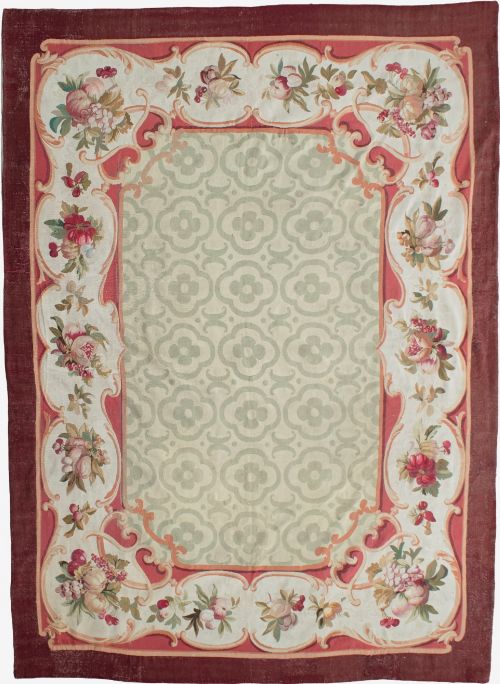
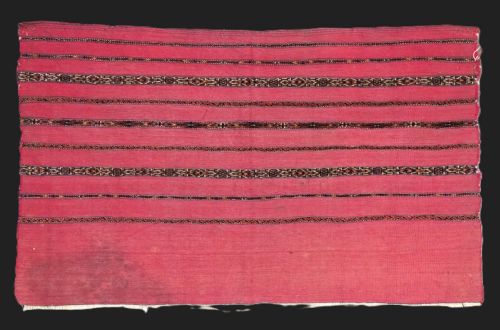


Wool Tapestry Rug
When you search for wool tapestry rug, you encounter hand-woven flatweaves, embroideries, and pile textiles carrying centuries of tribal and regional artistry.
Wool Tapestry Rug
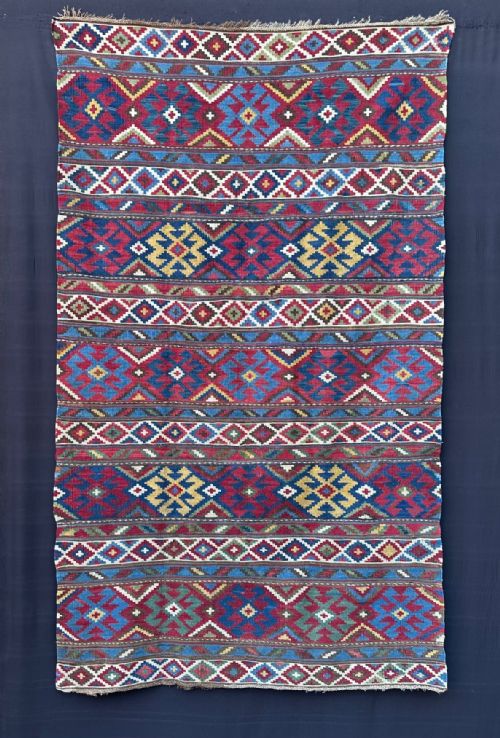
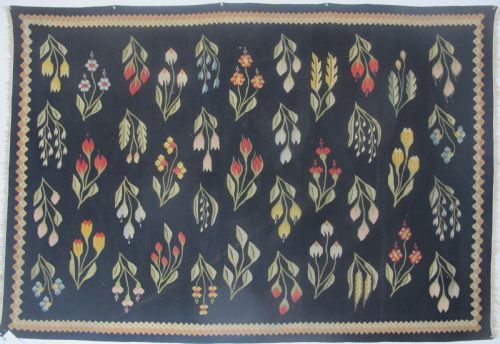
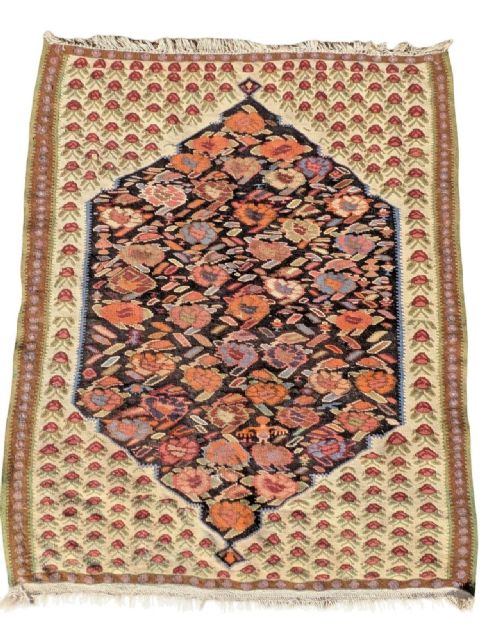
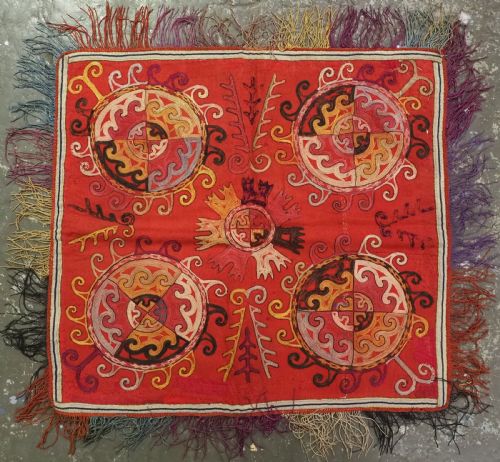
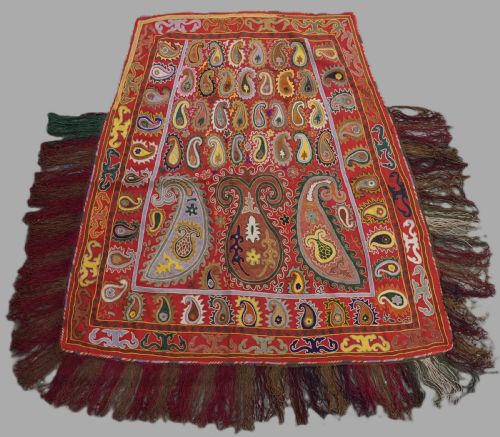
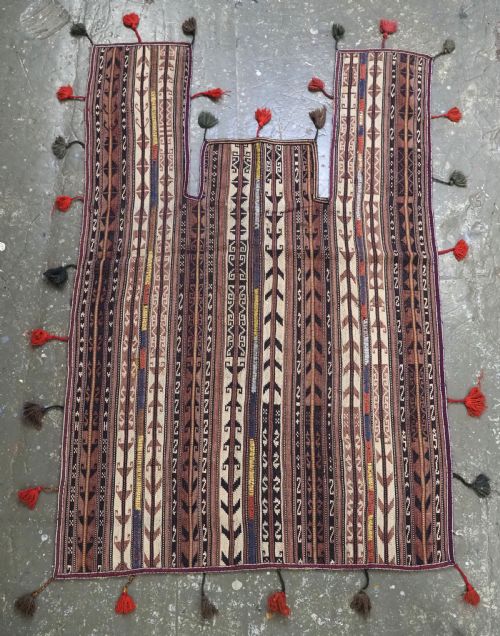
A wool tapestry rug encompasses flatweaves, embroideries, and ceremonial trappings created by nomadic tribes and village weavers across Central Asia, the Caucasus, and Europe. These textiles include kilims, asmalyks, chuvals, and wall hangings originating from periods spanning the nineteenth and early twentieth centuries. Selecting a wool tapestry rug brings diverse regional patterns and practical floor or wall coverings into a domestic space.
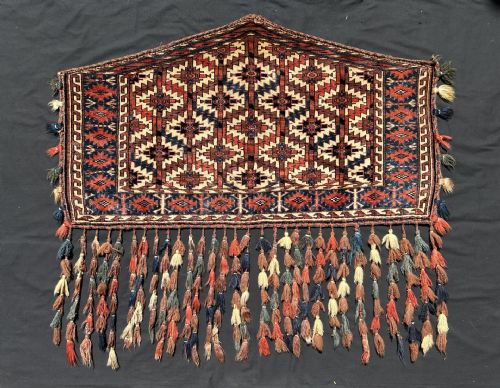
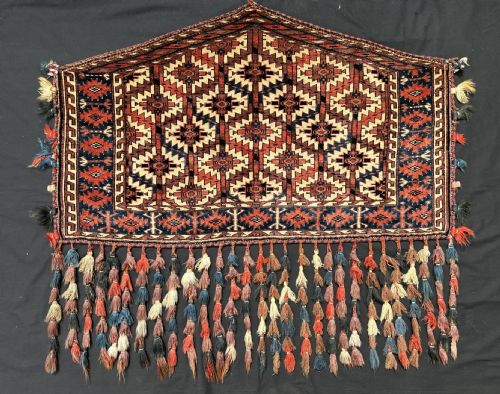
The objects listed under this description range from Persian and Caucasian kelims to Uzbek embroideries and Bessarabian floral flatweaves. Buyers frequently encounter pieces tied to specific cultural groups such as the Yomut, Tekke, Qashqai, and Lakai tribes. Each form reflects the utilitarian or ceremonial needs of its makers, serving as horse blankets, storage bags, dowry pieces, or household floor coverings.
Factors influencing quality
The standard of a textile depends upon the fineness of the weave, the density of the knots or stitches, and the integrity of the structural foundations. Pieces executed with tightly packed wefts and balanced proportions demonstrate superior craftsmanship compared to loose or unevenly tensioned examples. The complexity and precision of the tribal guls or floral arrangements further distinguish finer pieces.
Condition and the retention of original natural dyes dictate desirability among collectors. Examples retaining vibrant, unfaded natural colourways and intact borders or hanging loops command greater attention. The completeness of older storage bags, horse covers, and multi-strip panels preserves their original context and structural wholeness.
Wool Tapestry Rug Retail Price Guide 2026
Typical asking prices for wool tapestry rug among the pieces listed under this phrase on Sellingantiques today, from the lower quarter to the upper quarter. They describe what is for sale here now, not the wider market.
The Wool Tapestry Rug Glossary
- Kilim
- An unglazed flatwoven carpet or rug produced by tightly interweaving warp and weft strands to create a smooth surface without pile. This technique allows weavers to produce sharp geometric patterns.
- Asmalyk
- A pentagonal trapping traditionally used to decorate camel wedding processions among Turkmen tribes, particularly the Yomut. These ceremonial pieces were mounted on the flanks of the animal.
- Chuval
- A large Turkmen tent-storage bag face featuring repeated guls, woven for domestic utility and dowry displays. They display intricate geometric field layouts.
- Suzani
- A large, embroidered wall hanging or textile from Central Asia, typically worked in silk on a cotton or linen foundation. These pieces feature bold floral and sunburst motifs.
- Sumac
- A supplementary weft-wrapping technique that creates a durable structure with a ribbed texture on the face and loose threads on the reverse. It adds substantial weight and strength to saddlebags and rugs.
Wool Tapestry Rug: Frequently Asked Questions
What is a wool tapestry rug?
A wool tapestry rug is a flatwoven or embroidered textile created by nomadic and village makers using traditional hand-spun wool materials. These pieces include tribal kilms, ceremonial covers, and European flatweaves.
They function as decorative floor coverings, wall hangings, and functional domestic items reflecting distinct regional traditions from the nineteenth and early twentieth centuries.
How do I care for my rug?
Protect your textile by placing it out of direct sunlight to prevent natural dye fading. Gentle vacuuming without a rotating brush helps remove dust without damaging fragile flatwoven edges.
Professional textile conservators should handle deep cleaning or structural repairs to preserve the original wool fibres and natural dye compounds.
Where were these textiles made?
These pieces originate from diverse regions including Central Asia, the Caucasus, Persia, Anatolia, and Eastern Europe. Tribal groups such as the Yomut, Tekke, Qashqai, and Shahsavan produced many of the traditional flatweaves.
Other examples stem from European workshops in Bessarabia, France, and Portugal, showcasing contrasting floral and needlepoint aesthetics.
How are tribal rugs different?
Tribal rugs typically feature geometric motifs, bold guls, and asymmetrical designs rooted in the cultural heritage of specific nomadic groups. They rely on practical flatweaving and embroidery techniques tailored for portable tent life.
In contrast, city or European pieces often incorporate curvilinear floral sprays, symmetrical compositions, and refined needlepoint execution.