





Red Flatweave Rug
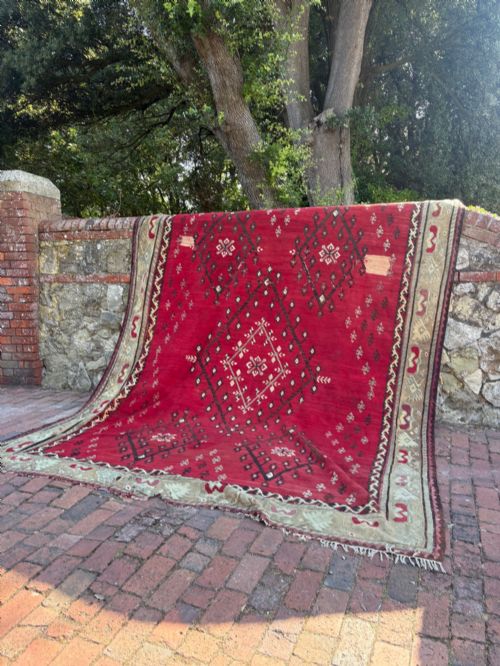
A red flatweave rug brings tribal geometry and rich wool textures into a room through flat tapestry-woven textiles made across Persia, the Caucasus, and Central Asia.
Red Flatweave Rug
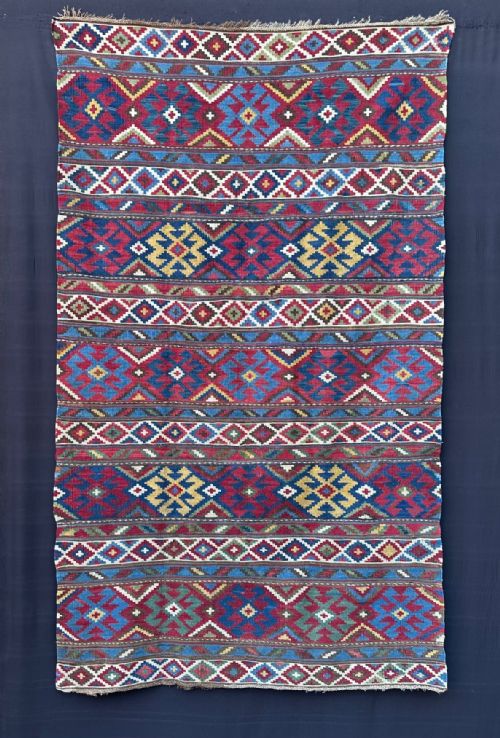
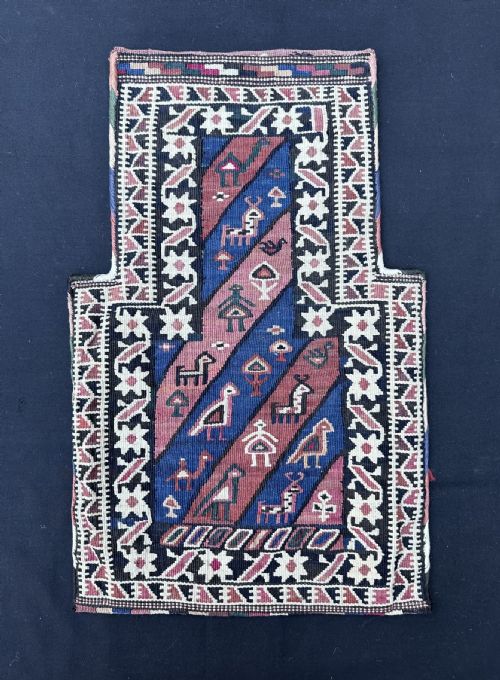
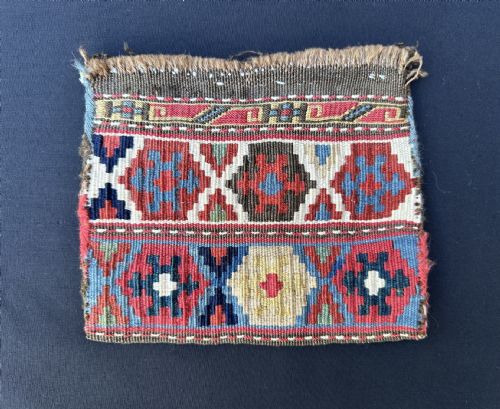
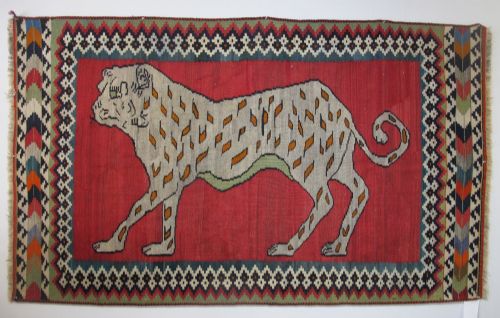
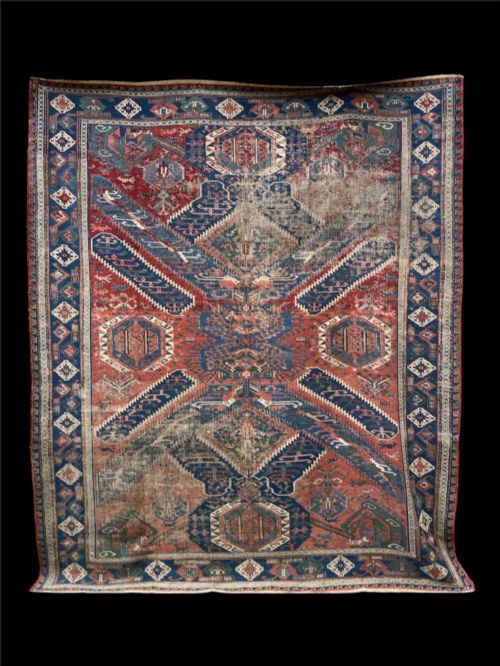
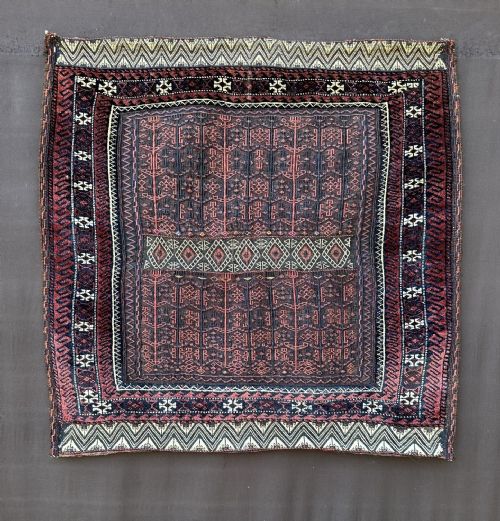
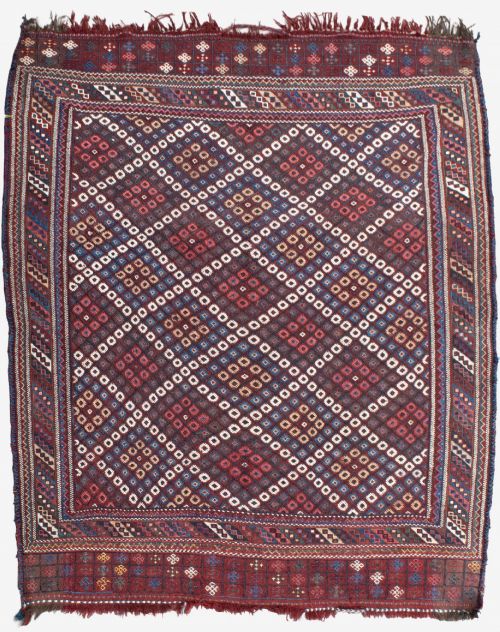
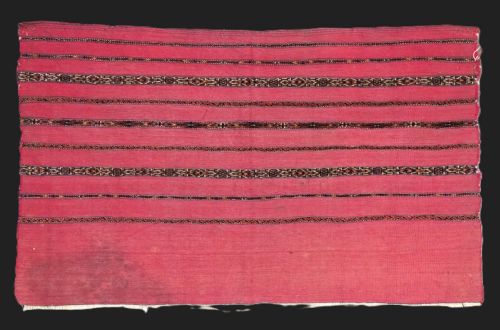
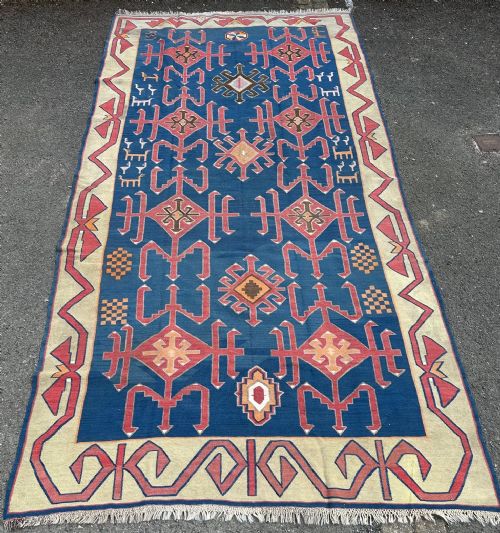
When you search for a red flatweave rug, you encounter tapestry-woven textiles from nomadic and village traditions rather than pile carpets. The pieces appearing here span regional forms such as kilims, sofreh bread cloths, salt-bags, and storage containers woven across Persia, the Caucasus, and Anatolia. These textiles rely on structural warp and weft interweaving to form patterns, producing a lighter, thinner floor covering or hanging.
The most common versions met on this page originate from nineteenth-century and early twentieth-century tribal groups including the Qashqai, Shahsevan, Yomut, and Bakhtiari. Makers produced these items for utilitarian household roles, such as storing grain, carrying salt, or serving meals, rather than for export. Consequently, survival rates depend on the durability of the original wool and the intensity of natural dyes.
Stylistically, a red flatweave rug often displays geometric medallions, diagonal bands, and hooked motifs rendered in madder-dyed reds alongside contrasting indigo and ivory tones. Tribal weavers worked from memory, passing specific border arrangements and field symbols down through generations within distinct regional workshops. This structural history means individual pieces carry specific markers of their tribal origin in the weave.
Assessing quality in flatweave textiles
The quality of a red flatweave rug rests on the tightness of the weave and the precision of the geometric drawing. Denser packing of the weft threads produces a firmer, more resilient fabric that maintains its shape on the floor. Finer knotting or tighter tapestry technique allows for sharper definition in complex tribal motifs and borders.
Another primary factor is the depth and complexity of the dye work, particularly the variation within the red fields. Natural madder dyes develop a rich patina and subtle tonal shifts across the surface, known as abrash, which elevates the visual texture of the piece. Uniform, chemically treated dyes lack this nuanced ageing process and appear flat by comparison.
Red Flatweave Rug Retail Price Guide 2026
Typical asking prices for red flatweave rug among the pieces listed under this phrase on Sellingantiques today, from the lower quarter to the upper quarter. They describe what is for sale here now, not the wider market.
Materials recorded across the inventory include hand-spun wool, cotton, silk, and natural dyes applied to diverse tribal forms like sofrehs, chuvals, and kilims.
The Red Flatweave Rug Glossary
- Kilim
- A flat tapestry-woven carpet or rug produced across the Near East and Central Asia. These textiles have no pile and feature bold geometric patterns.
- Sofreh
- A utilitarian cloth used for preparing, serving, or eating meals, often featuring striking tribal iconography. Collectors prize them for their minimalist graphic compositions.
- Abrash
- Natural variations in colour tone caused by changes in dye batches or hand-spun wool. This subtle striping indicates traditional dyeing methods.
- Warp
- The stationary vertical threads stretched across a loom onto which the coloured weft is woven. The density of these foundation threads dictates the weight of the textile.
- Sumak
- A wrapping technique where weft threads are wound around warp threads to create a textured, durable surface with a braided appearance on the reverse.
Red Flatweave Rug: Frequently Asked Questions
What is a flatweave rug?
A flatweave rug is a textile constructed without a pile by interweaving warp and weft threads on a loom. This method produces a thin, flexible fabric that works well on floors or as a wall hanging.
Unlike knotted carpets, flatweaves rely entirely on the tension of the weave for their structural integrity. This category includes kilims, soumaks, and various nomadic utility bags.
How do I care for a flatweave?
Care for an antique flatweave requires gentle maintenance, starting with regular vacuuming without a rotating brush bar. Professional cleaning by a specialist in antique textiles preserves the structure of the wool and the integrity of natural dyes.
Using a quality rug underlay prevents slipping and reduces friction between the flatweave and the floorboards. Keeping the textile out of direct, harsh sunlight protects the natural madder reds from fading.
How do I identify tribal origins?
Identifying the origin of a flatweave involves examining the specific geometric vocabulary, border arrangements, and colour palettes unique to particular regions. Distinct groups like the Qashqai or Shahsevan employed characteristic motifs and weave structures.
Regional materials and dye preferences further narrow down where a piece was made. Comparing structural details against documented tribal examples helps clarify attribution.