







Balkan Flatweave Rug
A balkan flatweave rug brings distinctive folkloric geometric geometry and soft vegetable hues into a room.
Balkan Flatweave Rug
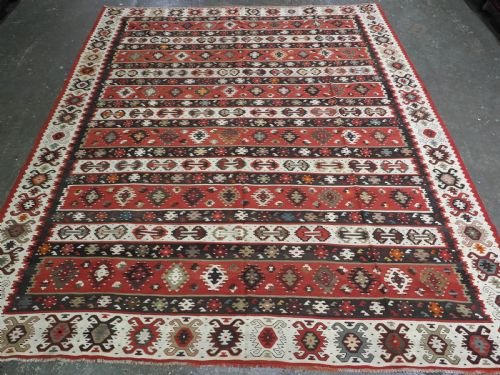
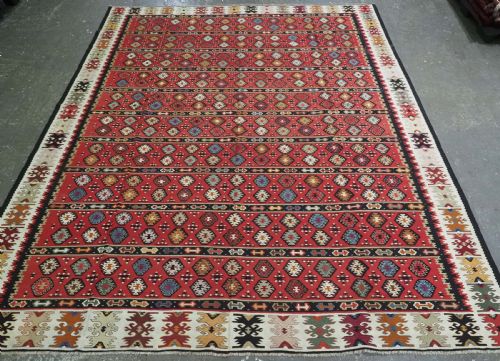
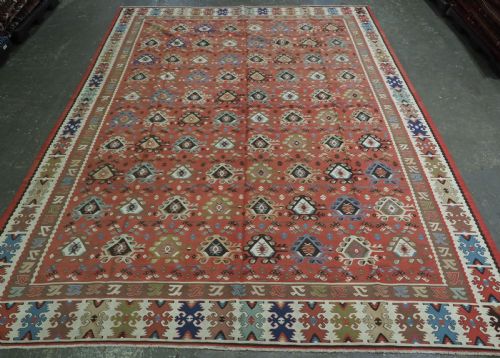
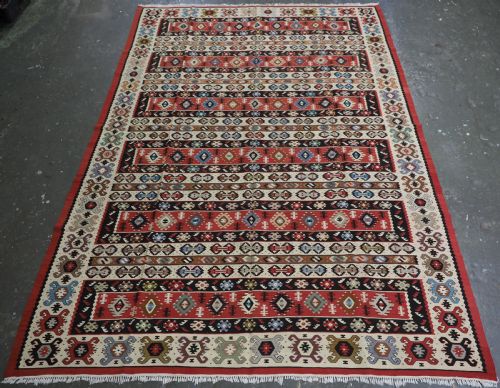
A balkan flatweave rug represents traditional woven textiles originating from the Balkan region, encompassing specific regional forms like Sarkoy and Pirot kilims. These pieces typically display classic, banded, repeat, or flowering tree designs woven in large room sizes or area rug formats.
Buyers exploring this category most frequently encounter examples dating from the late nineteenth century up to the 1930s. The listings demonstrate a strong presence of Turkish Sarkoy and Pirot attribution, reflecting Ottoman Balkan heritage.
What varies in quality
The distinction between standard and superior pieces rests largely on the complexity and clarity of the design work, such as intricate lattice or repeat medallion patterns. Fineness of the weave and the preservation of soft, balanced colour palettes also differentiate individual rugs.
Scale and proportion play a significant role, with large room size formats demanding greater consistency in the flatweave structure. Overall preservation of the original wool and cotton fibres influences the structural integrity of the textile.
Balkan Flatweave Rug Retail Price Guide 2026
Typical asking prices for balkan flatweave rug among the pieces listed under this phrase on Sellingantiques today, from the lower quarter to the upper quarter. They describe what is for sale here now, not the wider market.
Weavers often incorporated flowering trees into the wool weave, giving floors a permanent garden.
The Balkan Flatweave Rug Glossary
- Kilim
- A flatwoven carpet or rug produced in countries of the former Ottoman Empire, Persia, and Central Asia. These textiles lack a pile and are constructed using a vertical or horizontal loom.
- Sarkoy
- A specific type of kilim originating from the European territories of the Ottoman Empire, often associated with distinct banded or floral motifs. These rugs frequently date from the nineteenth and early twentieth centuries.
- Pirot
- A town in Serbia renowned for traditional kilim production featuring geometric ornamentation and double-sided identical patterns. Pirot kilims hold an important place in Balkan textile history.
- Flatweave
- A textile made by interweaving warp and weft threads without knotting pile yarn onto the foundation. This method produces a thin, pliable fabric used primarily for floor coverings.
- Medallion
- A central ornamental motif positioned in the middle of the rug field. In Balkan flatweaves, these take geometric or repeated forms.
Balkan Flatweave Rug: Frequently Asked Questions
What is a balkan flatweave rug?
A balkan flatweave rug is an antique textile originating from the Balkan region, commonly identified as a Sarkoy or Pirot kilim.
These pieces are woven without a pile using wool and cotton, displaying traditional regional motifs such as flowering trees, banded patterns, and repeat medallions.
How old are these rugs typically?
The available pieces predominantly date from the late nineteenth century through the 1920s and 1930s.
Production methods during this era relied on traditional village and regional weaving practices spanning the Ottoman Balkan territories.
Where were these rugs made?
They originated across the Balkan region, with specific attribution often pointing towards Pirot and Sarkoy.
These centres produced distinctive flatweaves that blended Ottoman design influences with local folkloric traditions.
How should I care for a flatweave rug?
Flatweave rugs require gentle maintenance due to their wool and cotton construction.
Regular light vacuuming without a rotating brush roll helps preserve the flat textile surface.