







Balkan Kilim Carpet
A balkan kilim carpet brings flatweave textile heritage into a room, offering geometric patterns and rich regional character.
Balkan Kilim Carpet
A balkan kilim carpet is a flatweave textile originating from the Balkan region, encompassing regional styles such as Balkan Folk Art and Ottoman Balkan. These floor coverings bridge nomadic weaving traditions and European interior aesthetics, often arriving in large room sizes suitable for modern spaces.
The selections available here lean heavily toward early twentieth-century production, specifically pieces dated around 1920 and 1930. Alongside these, earlier examples from 1860, 1890, and 1910 appear, providing a direct link to nineteenth-century regional weaving practices.
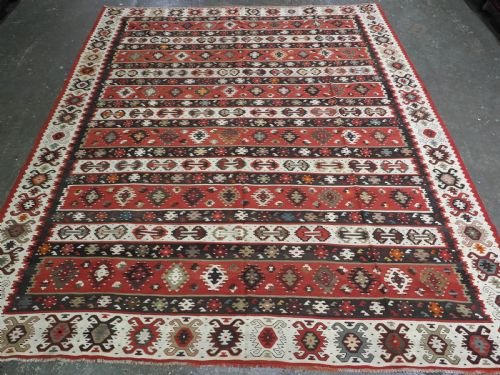
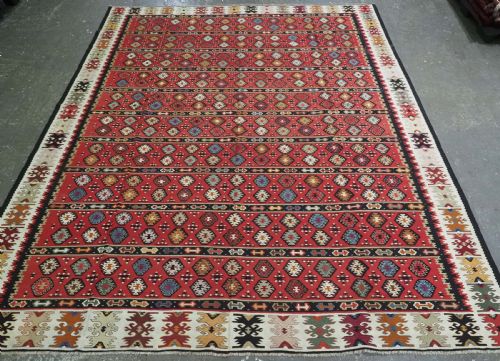
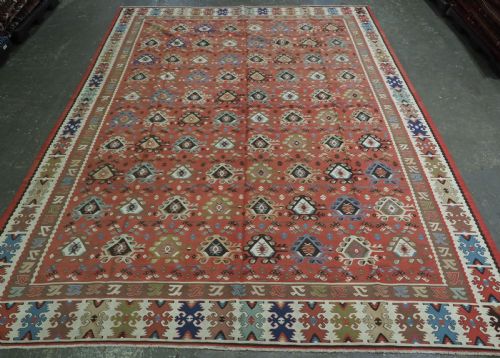
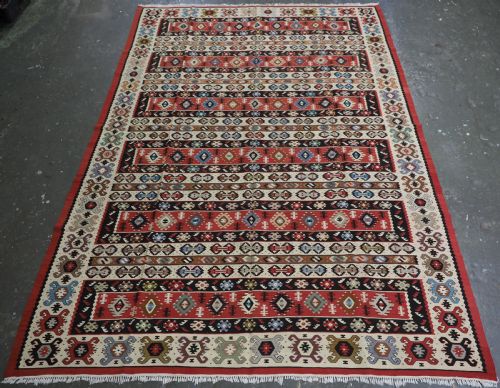
The dominant forms collected under this heading include Sarkoy kilims and Pirot kilims, categorised in titles as kilim rugs or area rugs. Buyers encounter classic designs, flowering tree motifs, banded layouts, and repeat medallion patterns across these regional classifications.
How they were made
These textiles are constructed using wool and cotton fibres, relying on traditional flatweaving techniques without a piled surface. The interplay of these natural materials gives the carpets their characteristic flat handle and structural durability.
Weavers utilised supplementary weft-insertion and slit-tapestry weaving methods to build up the geometric and floral designs. This technique allows for sharp colour transitions and distinct patterning, visible in the banded and repeat medallion layouts.
Balkan Kilim Carpet Retail Price Guide 2026
Typical asking prices for balkan kilim carpet among the pieces listed under this phrase on Sellingantiques today, from the lower quarter to the upper quarter. They describe what is for sale here now, not the wider market.
Weavers often tucked small personal symbols into the borders, leaving a quiet signature in the wool.
What varies in quality
Quality in a balkan kilim carpet rests upon the precision of the flatweave structure and the complexity of the design layout. Finer wool preparation and tighter weft packing create a denser textile that holds its geometric lines with greater clarity.
The depth and preservation of colour also distinguish individual pieces, as seen in examples featuring soft reds, pastels, or outstanding overall palettes. Balance in the repeat patterns and the sophistication of regional motifs elevate specific examples above standard production.
The Balkan Kilim Carpet Glossary
- Kilim
- A flatwoven textile produced without pile by tightly interlacing warp and weft threads. This construction method results in a lightweight carpet suitable for both floor placement and wall hanging.
- Sarkoy
- A specific regional designation for flatweaves associated with the European territories of the Ottoman Empire. These pieces often display sophisticated banded or medallion designs.
- Pirot
- A traditional weaving centre known for producing fine flatweaves with distinct geometric borders and symmetrical motifs. Pirot kilims share stylistic traits with broader Balkan traditions.
- Flatweave
- A textile category defined by the absence of a raised pile surface. The design is created entirely through the interlacing of the foundational threads.
- Medallion
- A central decorative motif placed within the field of the carpet. In these textiles, medallions often repeat across the length of the rug.
Balkan Kilim Carpet: Frequently Asked Questions
What is a balkan kilim carpet?
A balkan kilim carpet is a flatwoven floor covering created in the Balkan region during the nineteenth and twentieth centuries. These textiles use wool and cotton to form geometric and floral patterns.
They reflect local folk traditions and Ottoman influences, offering a durable and flat surface without a piled pile. Collectors prize them for their distinct regional designs, including banded and medallion layouts.
How are these carpets used?
These flatweaves function primarily as area rugs and room-size floor coverings in residential spaces. Their flat profile makes them practical for high-traffic areas where piled carpets might catch on doors.
Historically, they also served as wall hangings or decorative covers within homes. Today, buyers place them in living rooms and dining areas to introduce historic pattern and texture.
How do I care for a flatweave?
Care involves regular, gentle vacuuming without a rotating brush roll to protect the flatwoven structure. Professional cleaning tailored to antique textiles helps maintain the integrity of the wool and cotton fibres.
Keeping the carpet out of direct, prolonged sunlight prevents the natural dyes from fading. Using a quality underlay prevents slipping and reduces friction against hard floors.
How do I identify a Sarkoy kilim?
Sarkoy kilims are identified through specific regional design characteristics, such as banded layouts and flowering tree motifs. They often date from the late nineteenth century into the 1920s and 1930s.
The handle of the wool and the specific colour palette, including soft reds and pastel tones, help separate them from other regional weaves. Dealers frequently note these attributions based on structural traits and traditional pattern archives.