






Pirot Sarkoy Kilim
A pirot sarkoy kilim brings bold Balkan folk art into a room through flatweave textiles dated around nineteen twenty.
Pirot Sarkoy Kilim
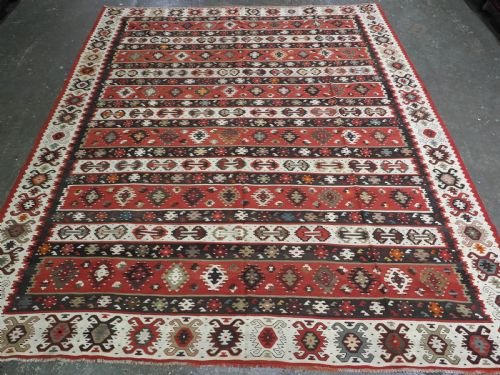
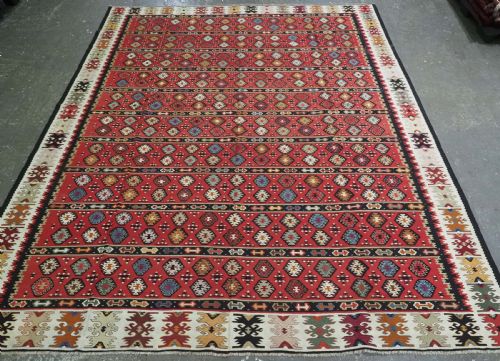
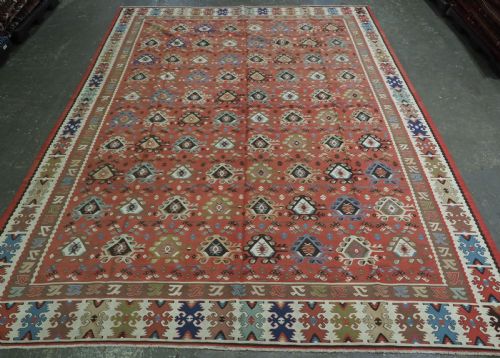
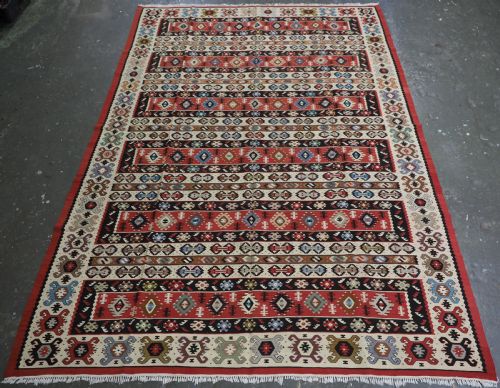
A pirot sarkoy kilim represents traditional Balkan folk art expressed through flatweave area rugs and carpets. These textiles emerge predominantly from the nineteen twenties, offering distinct decorative motifs for large room sizes.
The designs span classic patterns, flowering trees, lattice layouts, banded arrangements, and repeat medallions. Buyers encountering these pieces engage with historical Balkan tribal craftsmanship translated into decorative floor coverings.
How they were made
The construction relies upon wool and cotton materials woven together to form flat surface kilims. Textile makers sometimes produced larger formats by joining separate woven parts together.
Techniques follow traditional Balkan methods focused on durable flatweave structures rather than knotted piles. Artisans integrated wool and cotton to achieve both structural stability and pliable regional aesthetics.
Pirot Sarkoy Kilim Retail Price Guide 2026
Typical asking prices for pirot sarkoy kilim among the pieces listed under this phrase on Sellingantiques today, from the lower quarter to the upper quarter. They describe what is for sale here now, not the wider market.
Some larger floor coverings were cleverly woven in four separate parts to achieve room scale.
What varies in quality
Variations in quality stem from the complexity of the design layout, ranging from standard repeat patterns to scarce lattice and flowering tree configurations. The visual impact depends heavily on the nuance of the colour palette used across the weave.
Design execution and adherence to traditional Balkan motifs dictate the standing of individual rugs. Pieces displaying balanced proportions and careful composition within their banded or medallion frameworks represent the upper tier.
The Pirot Sarkoy Kilim Glossary
- Kilim rug
- A flatweave textile produced without a pile, traditionally utilised as a floor covering or wall hanging. These pieces rely on interlocking the warp and weft threads.
- Balkan folk art
- Design traditions originating from the Balkan region incorporating regional motifs and local weaving techniques. This style informs the visual language of these textiles.
- Banded design
- A decorative arrangement featuring horizontal bands or stripes across the field of the rug. This layout structures the visual rhythm of the piece.
- Repeat medallion
- A symmetrical motif that is duplicated at regular intervals across the textile. This form creates an ordered geometric pattern.
- Flatweave
- A textile construction method where horizontal weft threads are passed tightly through vertical warp threads. This technique yields a smooth, non-pile surface.
Pirot Sarkoy Kilim: Frequently Asked Questions
How do I use a kilim in a room?
These flatweave rugs function well as floor coverings in large living spaces, bringing regional patterns onto the ground.
Their lightweight construction also permits hanging them on walls as textile art.
What materials are these rugs made from?
The construction utilises wool and cotton fibres combined in flatweave structures.
These materials provide the necessary durability and flexibility for floor use.
What periods do these textiles date from?
The available pieces predominantly date around nineteen twenty, representing early twentieth century output.
Archive records also point to examples originating around nineteen hundred.
How are different designs categorised?
Designs are grouped by their visual motifs, such as flowering trees, lattice patterns, and repeat medallions.
Banded layouts and classic repeat formats further distinguish the stylistic varieties.