

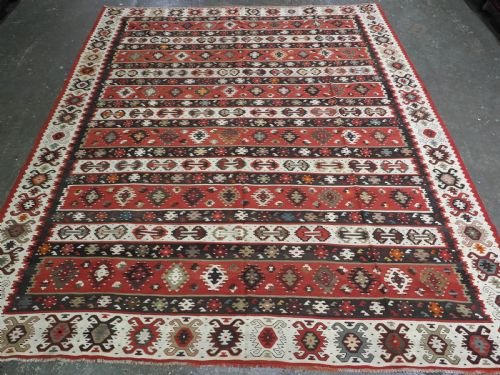


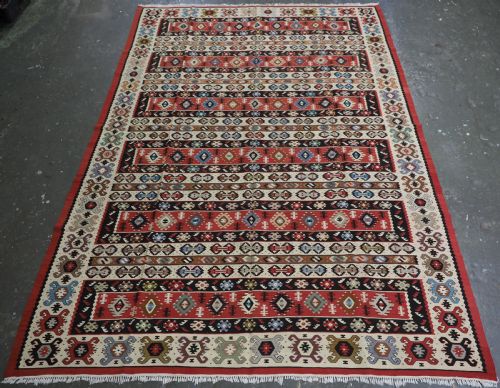

Serbian Pirot Carpet
These serbian pirot carpet pieces are traditional flatweaves of striking Balkan folk art design, prized for their rich patterns and historic wool construction.
Serbian Pirot Carpet
When you search for a serbian pirot carpet, you are looking at flatwoven kilims originating from the Balkans around 1920. These textiles serve primarily as area rugs and large room-size floor coverings.
The pieces available here showcase distinct stylistic expressions such as classic, banded, and repeat medallion designs. Each rug embodies the traditions of Balkan folk art through geometric layouts and flowering tree motifs.
How they were made
Pirot and Sarkoy kilims are constructed using wool and cotton materials, relying on traditional flatweaving techniques without a knotted pile. This method creates a durable, reversible textile with a smooth surface.
The weavers utilise natural dyes to achieve the warm soft colours characteristic of the period. Skilled hands build the intricate lattice and banded patterns directly into the warp and weft.
Serbian Pirot Carpet Retail Price Guide 2026
Typical asking prices for serbian pirot carpet among the pieces listed under this phrase on Sellingantiques today, from the lower quarter to the upper quarter. They describe what is for sale here now, not the wider market.
These rugs were often designed to be reversible, meaning your floor gets a brand new pattern simply by flipping the kilim over.
What varies in quality
The distinction between average and exceptional pieces rests upon the complexity of the design and the preservation of the woven structure. Elaborate layouts like flowering trees and lattice patterns demand greater skill from the maker.
Colour retention and dye saturation also dictate the visual strength of the rug. Warm soft shades and well-maintained wool integrity elevate the overall presence of the textile.
The Serbian Pirot Carpet Glossary
- Kilim
- A flatwoven carpet or rug produced in the Balkans and the Near East. These textiles lack a pile and feature geometric or floral patterns.
- Warp
- The vertical threads stretched on a loom before weaving begins. They form the structural foundation of the carpet.
- Weft
- The horizontal threads passed through the warp to create the pattern and colour of the textile. These threads are tightly beaten down during production.
- Banded design
- A decorative layout characterised by horizontal stripes or bands of colour and pattern running across the rug. This arrangement is common in traditional folk weaving.
Serbian Pirot Carpet: Frequently Asked Questions
How do I clean a kilim?
Regular gentle vacuuming without a rotating brush helps remove surface dust from wool flatweaves. Professional textile cleaning is recommended for deep maintenance.
Water and harsh detergents should be avoided to protect the traditional dyes and cotton foundations.
Are these rugs reversible?
Traditional flatwoven kilims share a similar appearance on both sides because the pattern is woven directly into the structure. This allows the rug to be flipped periodically to ensure even wear.
Using an appropriate underlay helps prevent slipping on smooth floors.
Where were these rugs made?
These textiles originate from the Pirot and Sarkoy regions in the Balkans. They represent centuries of local weaving heritage and traditional craft.
Weavers passed down specific geometric motifs and dyeing methods through generations.
How do I date a 1920 kilim?
Dating relies on stylistic analysis, material examination, and historical documentation associated with the workshop traditions of the period. Natural dyes and specific wool textures provide key indicators.
Comparing structural details with documented examples helps confirm the approximate decade of production.