


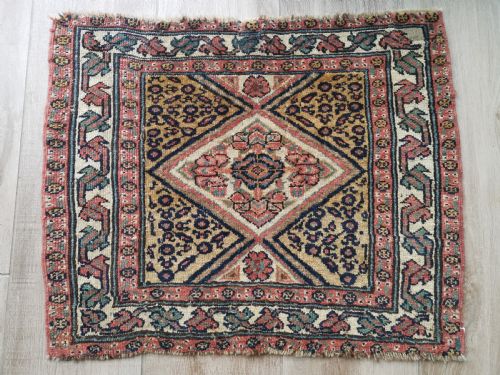
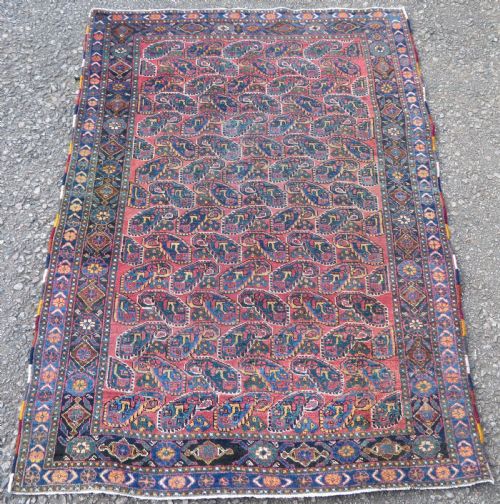
Terracotta Woven Rug
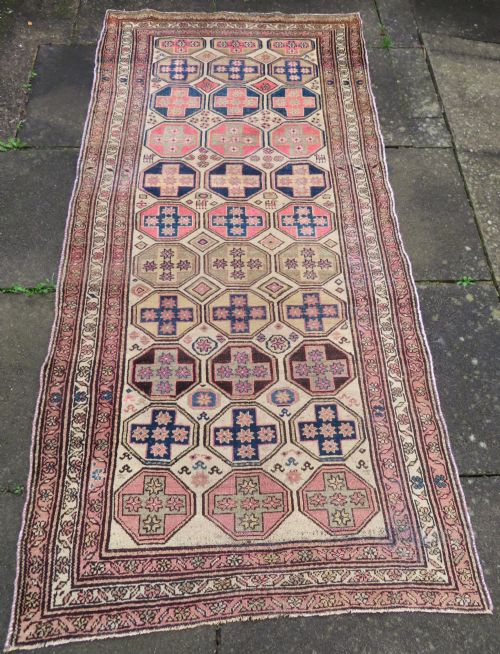
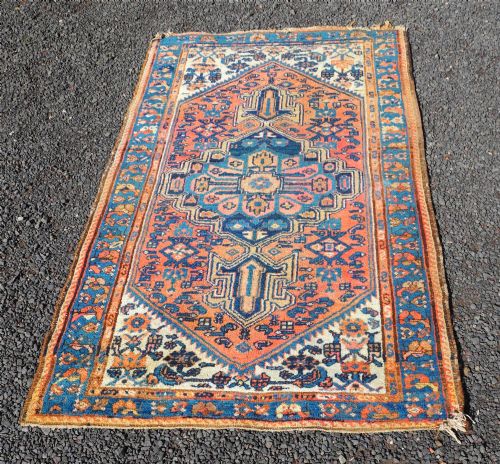
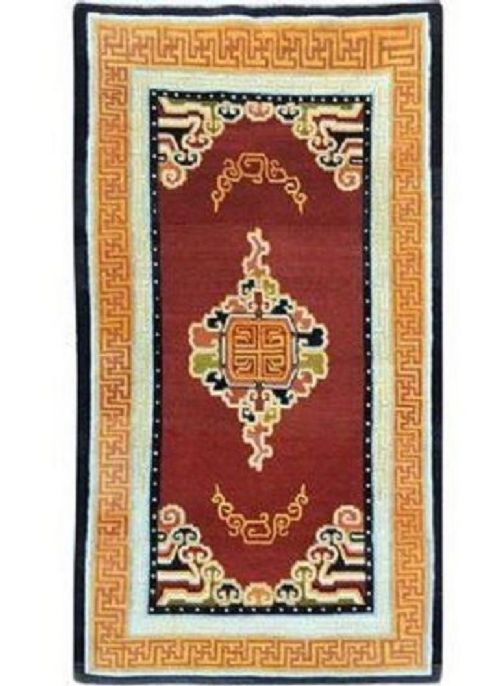
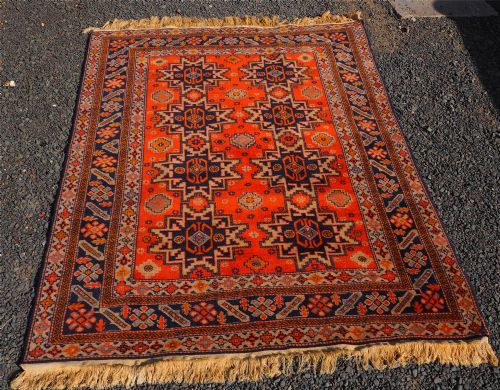
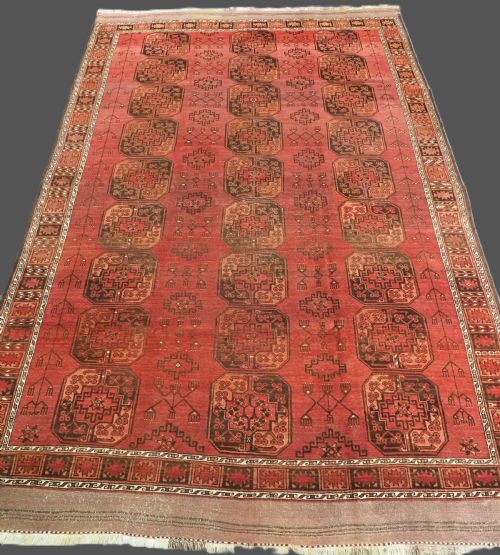
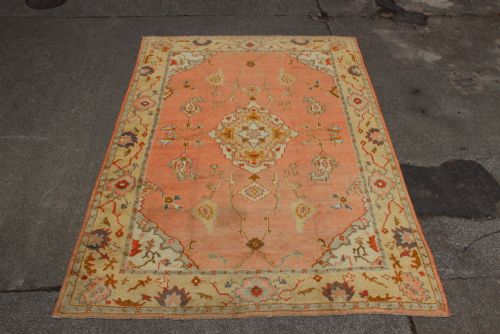
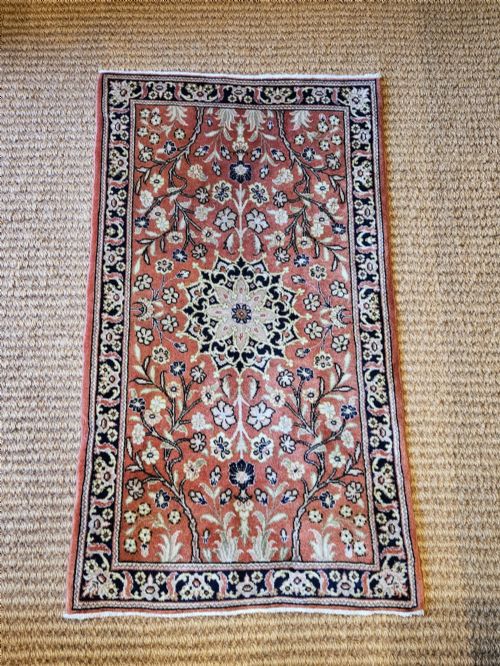
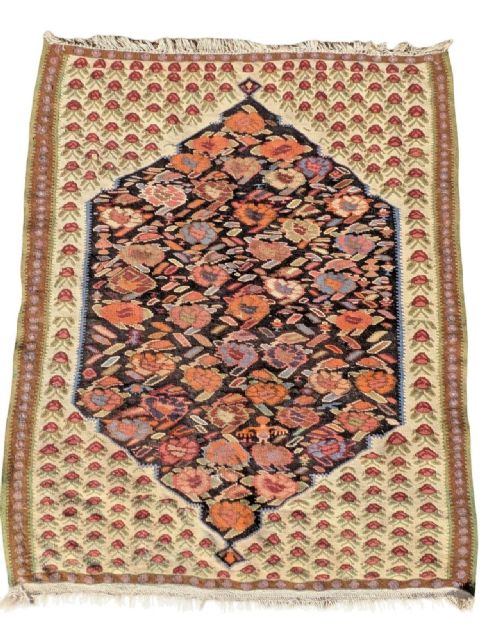
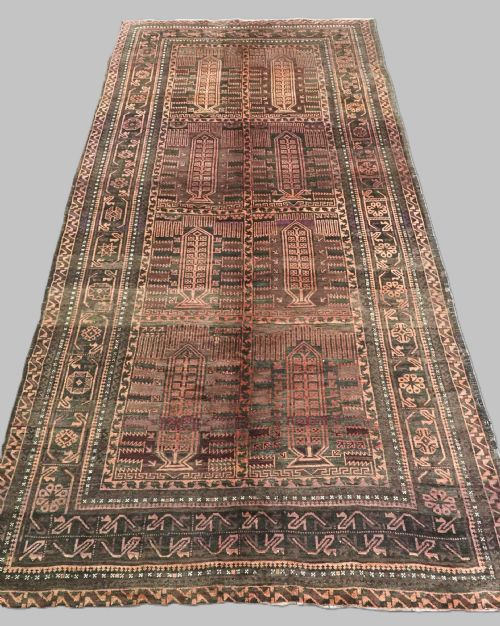
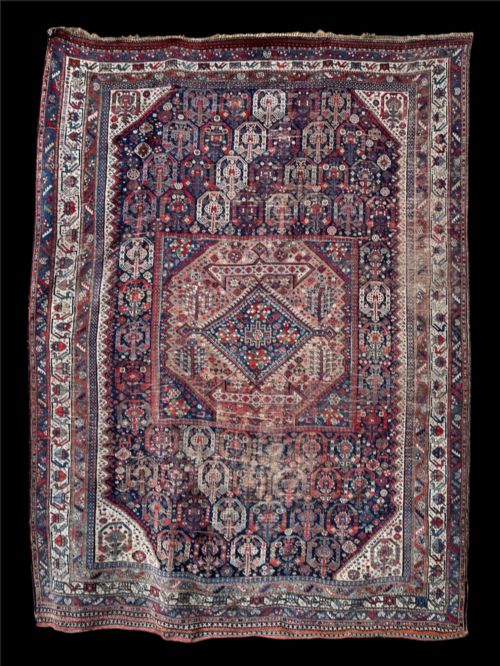
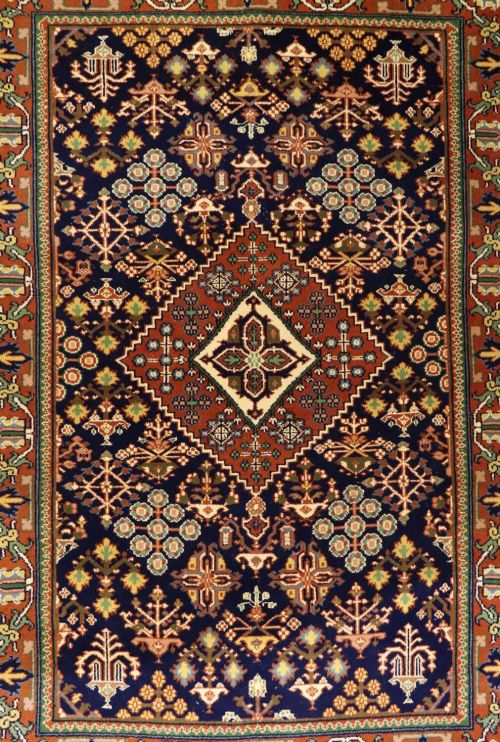
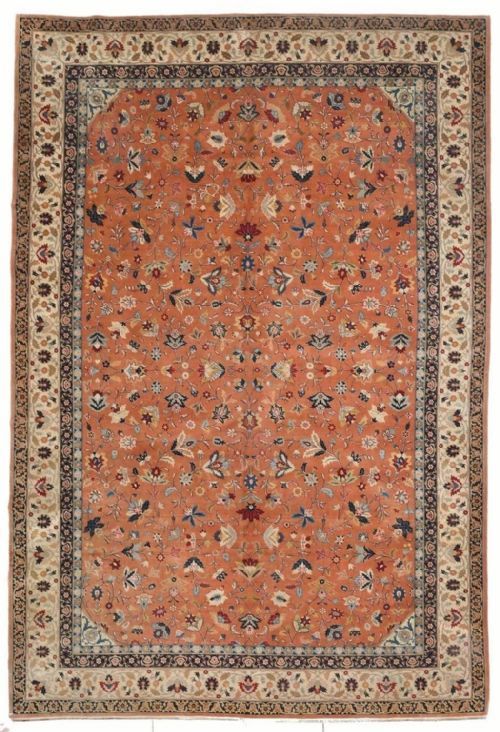
These terracotta woven rug examples span tribal and town workshops across Persia, the Caucasus, and Central Asia, offering earthy tones and geometric designs.
Terracotta Woven Rug
A terracotta woven rug brings together dense village and nomadic floor coverings shaped by Persian, Turkmen, Kurdish, and Caucasian traditions. You will encounter room-sized carpets, hearth-sized mats, runners, and smaller utilitarian items like salt-bags and saddle-covers.
The pieces listed on this page originate predominantly from the late nineteenth and early twentieth centuries, spanning periods from the eighteen-seventies through to nineteen-thirty. They display the characteristic palettes and regional weaving methods of their respective tribes and urban workshops.
Buyers seeking a terracotta woven rug find floor coverings that range from geometric village formats like Heriz and Hamadan to intricate town carpets from Tabriz and Oushak. Each piece reflects the specific knotting technique and design vocabulary of its geographic origin.
Materials and structural construction
These floor coverings are constructed primarily from hand-spun wool and cotton, utilising natural dyes to achieve deep terracotta, madder, and mellow hues. Silk appears occasionally in finer town carpets.
The structure relies on hand-knotted pile or flatwoven techniques such as kilim construction, bound securely over warp and weft foundations. Nomadic pieces often incorporate heavy wool backs and durable side cordings designed for utilitarian endurance.
Terracotta Woven Rug Retail Price Guide 2026
Typical asking prices for terracotta woven rug among the pieces listed under this phrase on Sellingantiques today, from the lower quarter to the upper quarter. They describe what is for sale here now, not the wider market.
Nomadic weavers frequently tucked tiny intentional errors into geometric borders to ward off the evil eye.
Factors determining distinction
Quality in these textiles rests upon the density of the hand-knotting, the precision of the geometric or medallion layout, and the depth achieved by natural dyes. Finer examples display crisp drawing in the border systems and supple handling in the wool.
Condition and completeness also distinguish the range, particularly in nomadic bagfaces and tent rugs retaining their original finishes and backs. The integrity of the foundational weave and the preservation of the pile determine the longevity of the piece.
The Terracotta Woven Rug Glossary
- Medallion
- A central ornamental motif set into the field of a carpet. It is often anchored by pendant forms and corner spandrels.
- Boteh
- A stylised almond or pear-shaped motif representing a leaf, bush, or flame. This design appears frequently in all-over patterns across Persian rugs.
- Kilim
- A flatwoven textile produced without a pile by tightly interweaving warp and weft strands. These function as reversible rugs or decorative coverings.
- Warp
- The stationary vertical threads stretched upon a loom that form the structural foundation of the textile. Wefts are passed horizontally between them.
- Torba
- A small Turkmen storage bag traditionally hung inside a yurt. They feature characteristic guls and detailed geometric borders.
Terracotta Woven Rug: Frequently Asked Questions
How do I clean an antique rug?
Gentle surface brushing and professional specialist immersion washing preserve the natural wool fibres and dyes. Avoid harsh chemical agents and excessive water.
Regular low-suction vacuuming without a rotating beater bar prevents dust accumulation within the pile base. Rotating the rug periodically ensures even wear in high-traffic zones.
What is a nomadic tribal rug?
Nomadic tribal rugs are woven by pastoral groups using memory designs rather than drawn cartoons. They feature geometric motifs, spontaneous colour shifts, and robust wool.
These pieces reflect the daily lives and cultural symbolism of specific confederacies such as the Afshar, Bakhtiari, and Turkmen tribes. Their structures are typically heavier and more idiosyncratic than city workshop productions.
Are these rugs suitable for modern floors?
These floor coverings provide durable wool construction and dense pile suited to everyday domestic use. A quality breathable underlay prevents slipping and cushions the foundation.
Placing them away from direct, harsh sunlight preserves the natural madder and indigo dyes over decades of living spaces.
How are regional styles identified?
Regional styles reveal themselves through distinct structural traits, knot types, colour palettes, and characteristic border designs. Heriz carpets display bold geometric medallions, while Tabriz pieces offer refined floral curves.
Examining the selvage finishes and back foundations helps separate Caucasian village weaving from southern Persian tribal output.