







Balkan Flatweave Carpet
A balkan flatweave carpet brings bold geometric patterns and rich regional character into a room.
Balkan Flatweave Carpet
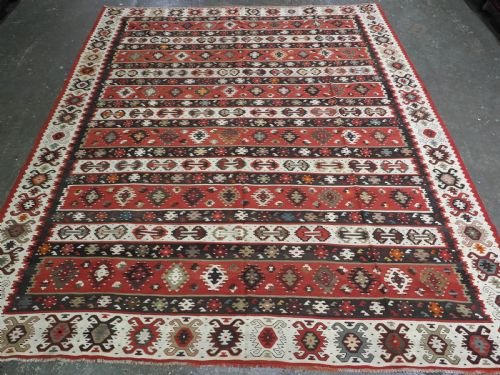
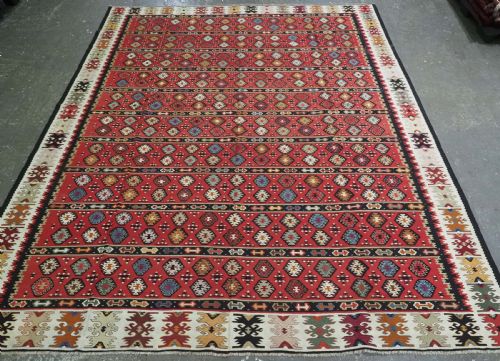
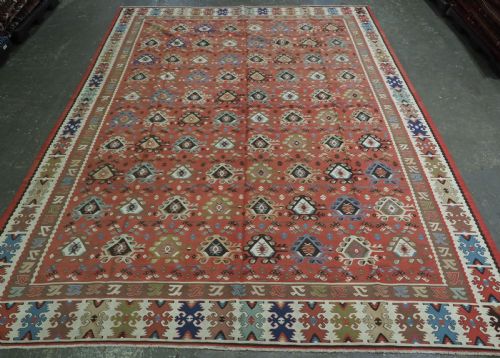
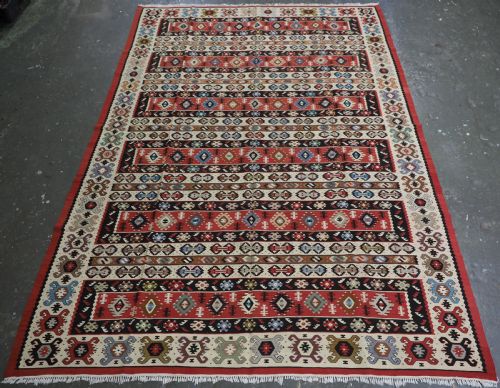
A balkan flatweave carpet is a traditional textile woven without a pile, originating from regions across the Balkans and Ottoman territories. When you search for this phrase, you encounter textiles that serve as functional floor coverings or decorative area rugs.
The pieces on this page span dates from the mid-nineteenth century through the early twentieth century, specifically covering periods such as 1860, 1890, 1910, 1920, and 1930. The version you are most likely to meet is a kilim rug displaying classic, banded, or repeat medallion designs.
Makers utilised various stylistic influences, including Balkan folk art, tribal motifs, and traditional Anatolian patterns. These rugs appear in multiple formats, ranging from standard room sizes to large area rugs.
How they were made
The construction relies on tightly interlacing warp and weft threads to create a flat surface without pile. Wool and cotton provide the primary materials for these textiles, ensuring durability and flexibility in the weave.
Weavers employed slit-tapery techniques to build sharp geometric pattern transitions and distinct colour blocks. Natural dyeing methods produced the soft reds, warm pastels, and varied colour palettes seen across the period examples.
Balkan Flatweave Carpet Retail Price Guide 2026
Typical asking prices for balkan flatweave carpet among the pieces listed under this phrase on Sellingantiques today, from the lower quarter to the upper quarter. They describe what is for sale here now, not the wider market.
Woven with enough geometric spirit to confuse your cat and delight your guests.
What varies in quality
Quality rests upon the precision of the geometric layout and the complexity of the design composition. Pieces featuring scarce lattice work or flowering tree designs demonstrate superior artistic execution compared to standard repeat patterns.
The depth and preservation of colour separate standard examples from finer specimens. Well-preserved pieces maintain balanced soft palettes or striking contrasts that elevate the visual impact of the weaving.
The Balkan Flatweave Carpet Glossary
- Flatweave
- A textile constructed without knots or pile by interlacing warp and weft threads directly on a loom. This technique produces a thin, lightweight rug suitable for floor use or wall hanging.
- Kilim
- A specific type of pileless rug originating from the Balkans, Anatolia, and the wider Middle East. These pieces utilise slit-weave techniques to form sharp geometric motifs.
- Warp
- The stationary vertical threads stretched tightly on a loom before weaving begins. They form the structural foundation that holds the weft yarns.
- Weft
- The horizontal threads passed back and forth through the warp to create the fabric and pattern. In flatweaves, these threads are beaten down tightly to conceal the warp.
- Medallion
- A central ornamental design motif placed in the middle of the carpet field. This focal point organises the surrounding geometric patterns and border elements.
Balkan Flatweave Carpet: Frequently Asked Questions
How do I clean a flatweave carpet?
Regular gentle vacuuming without a rotating brush helps remove embedded dust and debris from the flat surface.
Professional specialist cleaning is recommended for addressing deeper soiling or maintaining the integrity of older wool and cotton fibres.
Can I place these rugs in high traffic areas?
The sturdy wool construction allows these textiles to withstand normal foot traffic in hallways and living spaces.
Using a quality underlay helps prevent slipping and reduces friction wear between the rug and the floor.
How do I identify the age of a rug?
Examining the specific design vocabulary, such as traditional folk motifs or banded layouts, provides initial chronological clues.
Material analysis of the wool and the characteristics of natural dye palettes help narrow down production to periods like the nineteenth or early twentieth century.
Where should I display a kilim rug?
These pieces function well as floor coverings in sitting rooms, dining areas, and studies to add warmth and pattern.
Their relatively thin profile also makes them suitable for hanging on walls as textile art.