





Vintage Turkish Kilim
These vintage turkish kilim textiles bring flatwoven geometric craft into modern rooms.
Vintage Turkish Kilim
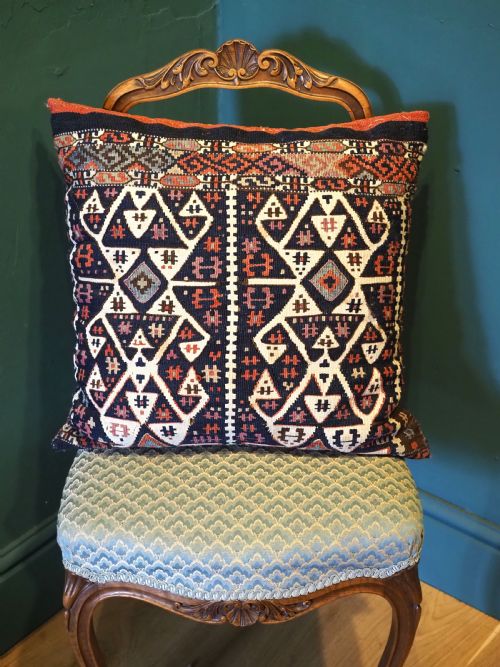
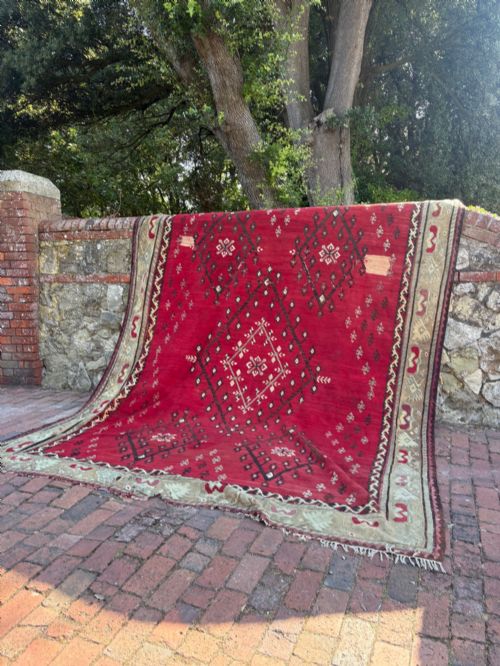
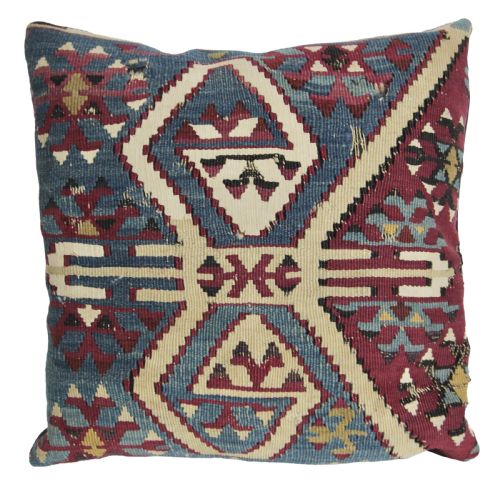
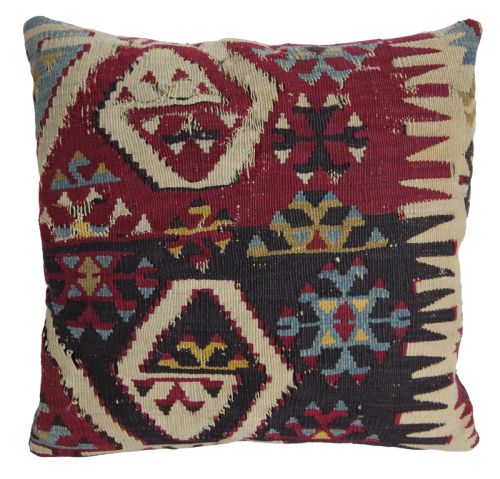
A vintage turkish kilim is a flatwoven textile originating from Anatolian and Balkan regions, spanning eras from the mid nineteenth century into the twentieth century. These pieces appear as large room size carpets, long runner rugs, smaller area rugs, and decorative cushions fashioned from repurposed saddle bags and bag faces.
Regional variants like Malatya, Konya, Ushak, Bergama, Esme, Reyhanli, Sarkoy, Pirot, Mut, Obruk, Kayseri, Afyon, and Thracian show distinct tribal and traditional motifs. Buyers encounter both single piece flatweaves and larger formats woven in two parts before being joined.
Functional items range from floor coverings and wall hanging panels to prayer kilims and nomadic saddle bags. The designs incorporate repeat medallions, banded patterns, and embroidered cicim panels reflecting traditional Anatolian and Balkan folk aesthetics.
Materials and construction
These textiles are constructed primarily from wool and cotton, occasionally incorporating leather elements in items such as saddle bags. The flatweave technique omits a pile entirely, creating a smooth, durable textile surface through the interweaving of warp and weft threads.
Many larger carpets and regional runners are constructed in two separate panels and expertly joined down the centre. Surface decoration utilises hand woven techniques alongside supplementary embroidery, as seen in specific cicim panels and tribal bag faces.
Vintage Turkish Kilim Retail Price Guide 2026
Typical asking prices for vintage turkish kilim among the pieces listed under this phrase on Sellingantiques today, from the lower quarter to the upper quarter. They describe what is for sale here now, not the wider market.
Materials across these listings consist entirely of wool, cotton, and leather.
Distinctions in quality
Quality rests upon the crispness of the geometric design, the integrity of the flatweave structure, and the vibrancy or harmony of the natural dye palette. Pieces retaining strong structural cohesion across large formats command greater appreciation.
The finesse of regional weaving, such as the precision in Pirot or Sarkoy repeat medallions and the intricacy of Konya or Malatya tribal motifs, separates standard examples from exceptional regional work.
Malatya Konya·Anatolian Tribal·Sarkoy Pirot·Anatolian Traditional
The Vintage Turkish Kilim Glossary
- Kilim
- A flatwoven textile or rug made without a pile. These pieces rely on interlocking weft techniques to create sharp geometric patterns.
- Flatweave
- A method of weaving where warp and weft threads are interlaced tightly to produce a flat fabric. This construction method yields durable, lightweight floor coverings.
- Cicim
- A decorative embroidery technique applied to a woven ground. Artisans add supplementary threads to create raised patterns across the surface.
- Saddle bag
- A paired utilitarian container woven by nomadic groups for transport on animals. The face of these bags is frequently salvaged to create decorative cushions.
- Warp
- The stationary lengthwise threads held under tension on a loom. Weft threads are passed over and under these foundational strands.
Vintage Turkish Kilim: Frequently Asked Questions
How do I clean a kilim rug?
Gentle surface cleaning and regular light vacuuming without a rotating brush help maintain wool and cotton flatweaves. Professional textile cleaning is recommended for deep maintenance.
Harsh chemical treatments or soaking should be avoided to protect the traditional dyes and structural integrity of the flatweave.
Are these rugs suitable for high traffic areas?
Flatwoven wool construction makes these textiles durable for everyday use in living spaces and hallways. Their lack of pile prevents crushing under heavy foot traffic.
Placing a suitable underlay beneath the rug prevents slipping and reduces friction against hard flooring surfaces.
What is the difference between a rug and a cushion?
Rugs are full format floor coverings or runners designed for horizontal display. Cushions are smaller decorative items often fashioned from repurposed saddle bag faces or fragments.
Both share the same flatwoven technique and regional wool construction methods.
How are two part kilims joined?
Larger formats were traditionally woven in two narrower vertical strips on smaller village looms. These matching panels were subsequently stitched together down the centre to create a room size carpet.
This seam is a characteristic feature of regional weaving from specific Anatolian districts.