







Antique Balkan Kilim
These flatwoven floor coverings offer rich geometric patterns and soft historic hues from the region.
Antique Balkan Kilim
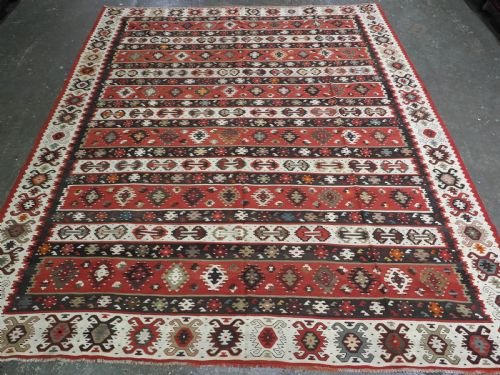
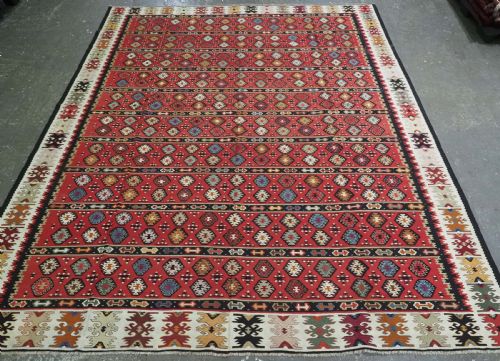
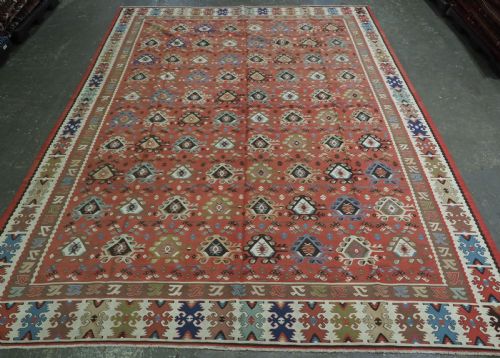
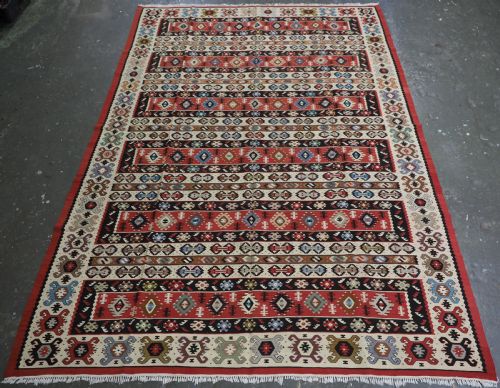
An antique balkan kilim brings flatwoven textile tradition into modern spaces, utilising geometric motifs and regional colour palettes. These pieces originate from distinct centres such as Pirot, Sarkoy, and Thracian territories, spanning the late nineteenth and early twentieth centuries.
The version most commonly met on this page is the Sarkoy or Pirot kilim, often displaying classic banded, lattice, or flowering tree designs. They arrive in various formats, ranging from manageable area rugs to large room-sized carpets.
Makers utilised wool and cotton fibres to construct flat surfaces without pile, relying on slit-weave techniques to keep colour boundaries sharp. These textiles served both decorative and functional purposes in traditional households across the Ottoman Balkan sphere.
How they were made
Weavers constructed these flatweaves predominantly from wool and cotton, hand-spinning the fibres to achieve durable foundations and soft surfaces. The interlocking of dyed yarns created reversible textiles with clean geometric lines.
The craft relies on slit-tapery weaving, where individual colour blocks meet along warp threads without intertwining, producing distinct vertical slits in the fabric. Artisans employed natural dye sources to yield soft reds, pastels, and warm tonal bands.
Antique Balkan Kilim Retail Price Guide 2026
Typical asking prices for balkan kilim among the pieces listed under this phrase on Sellingantiques today, from the lower quarter to the upper quarter. They describe what is for sale here now, not the wider market.
Weavers occasionally hid tiny asymmetrical mistakes in their geometric bands just to trick the evil eye.
What varies in quality
Quality rests in the precision of the geometric layout and the clarity of the repeat medallion or flowering tree motifs. Tighter weave densities and disciplined colour control elevate certain pieces above standard production.
The vibrancy and retention of soft historic hues distinguish superior examples from plain variations. Scale also dictates standing, with large room-sized pieces requiring greater mastery from the weaver to maintain structural integrity across extended widths.
The Antique Balkan Kilim Glossary
- Kilim
- A flatwoven textile produced without a pile by tightly interweaving warp and weft strands. These pieces function primarily as floor coverings or wall hangings.
- Sarkoy
- A traditional style of flatweave originating from the European territories of the Ottoman Empire. These textiles frequently display banded or floral repeat patterns.
- Pirot
- A renowned centre of flatweaving located in the Balkans known for intricate geometric designs and fine wool construction. Pieces from this origin command attention for their disciplined layouts.
- Slit-weave
- A structural technique in flatweaving where weft yarns turn back at the edge of colour fields, leaving small openings in the fabric. This method permits sharp transitions between contrasting hues.
- Banded design
- A decorative arrangement featuring horizontal stripes or repeating bands of colour and motif across the field. This layout is typical of regional floor coverings from the era.
Antique Balkan Kilim: Frequently Asked Questions
Where were antique balkan kilims made?
These flatweaves originate from traditional weaving centres across the Balkan region, including Pirot and Sarkoy.
Craftsmen produced them in households and local workshops using regional wool and cotton materials.
How do I clean an antique balkan kilim?
Gentle surface brushing and careful vacuuming without a beater bar help maintain the flatwoven wool surface.
Professional textile cleaners experienced in historic flatweaves should handle deep maintenance.
What is a slit-weave kilim?
A slit-weave construction occurs when adjacent colour blocks meet on a shared warp thread without interlocking.
This technique creates characteristic small slits between the colour fields and allows for sharp geometric patterns.
How do I date an antique balkan kilim?
Dating relies on stylistic analysis of the repeat motifs, banded arrangements, and regional colour palettes.
Periods represented in these pieces typically span from the mid-nineteenth century through the early twentieth century.