
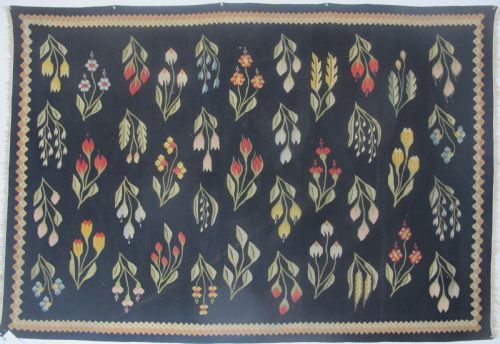
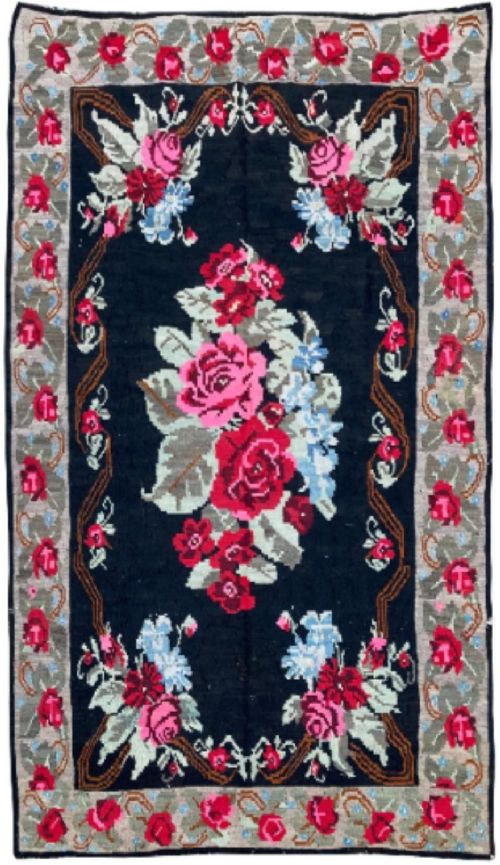
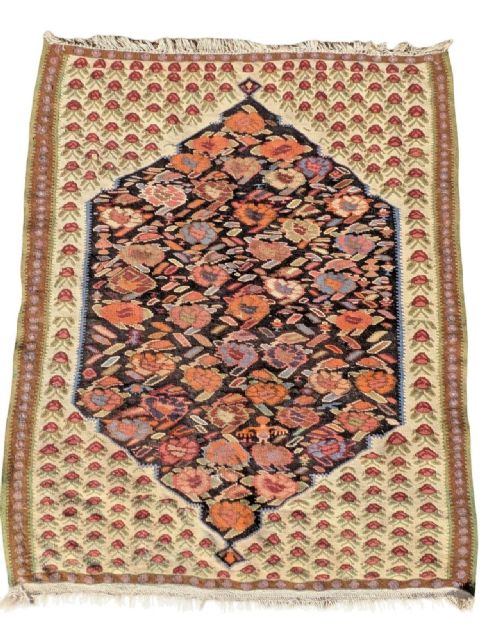
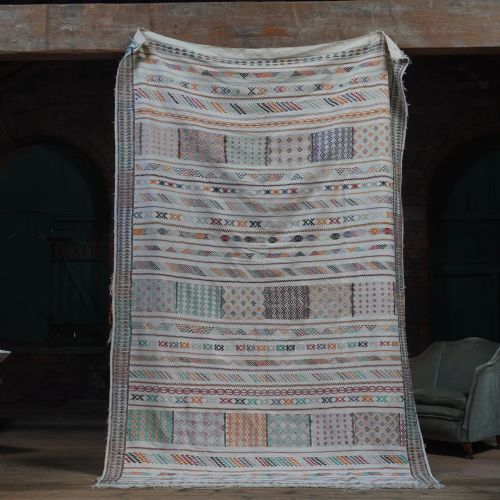

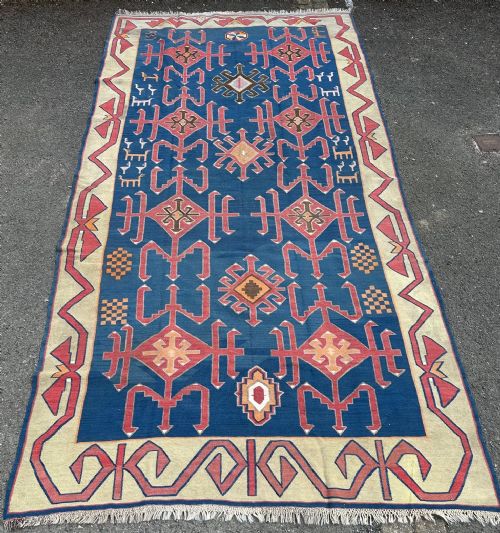


Vintage Kilim Carpet
A vintage kilim carpet brings graphic tribal geometry and flat-woven textile history straight onto the floor.
Vintage Kilim Carpet
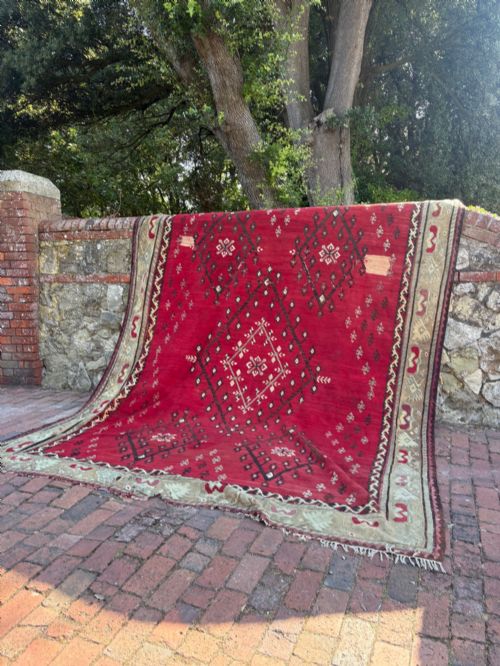
A vintage kilim carpet is a flat-woven textile produced by tribal and village weavers across regions spanning Anatolia, the Caucasus, Persia, and Central Asia. These floor coverings and wall hangings bypass the deep pile of standard carpets in favour of a smooth, tapestry-like surface formed by interlocking weft threads. The pieces found here date from the nineteenth century through the early decades of the twentieth century, reflecting traditional weaving methods passed down across generations.
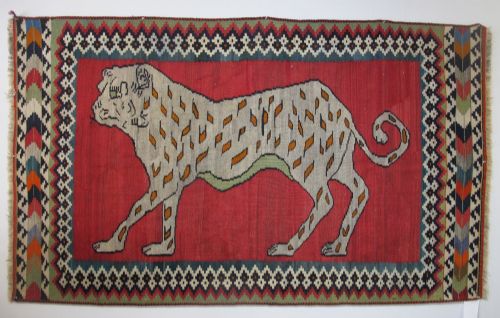
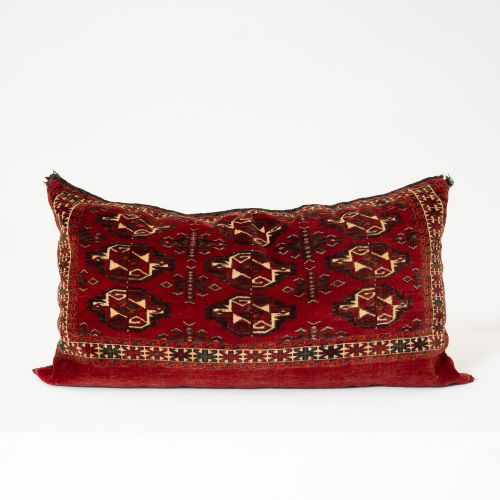
Buyers encountering this selection will find rugs, runners, cushions, and large room-sized carpets originating from specific nomadic and sedentary groups such as the Qashqai, Shahsavan, and Uzbek populations. Designs range from bold geometric medallions and banded stripes to figurative elements like animal motifs and floral interpretations. Each piece serves as a functional textile that records the specific aesthetic vocabulary of its weaving community.
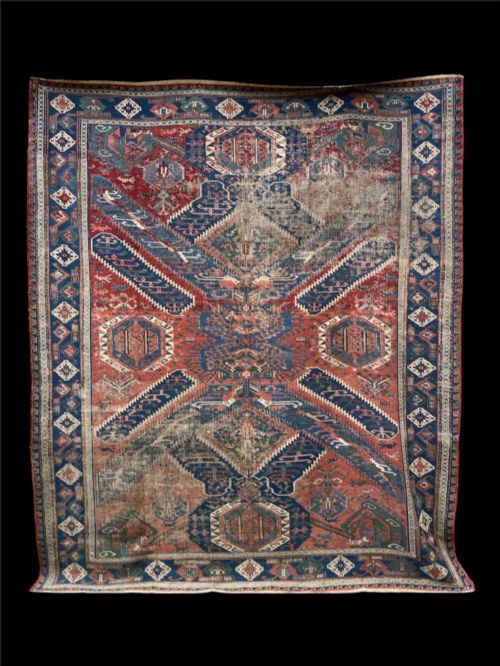
The format varies from narrow runners suited for hallways to expansive room-size carpets designed to anchor large living spaces. Many examples display the timeworn character of genuine age, including faded dyes and historic repairs that document active service in village homes. These textiles offer an alternative to mass-produced floor coverings through their direct connection to regional weaving traditions.
What Varies in Quality
Quality in these flat-weaves rests upon the tightness of the weave and the precision of the structural tension across the warp and weft. Finer weaves maintain consistent gauge and edge integrity, allowing intricate geometric patterns to hold their sharpness without distortion. The choice of dye materials also dictates longevity, as superior natural colorants age gracefully while retaining depth and variation across the field.
The integrity of the structural joinery in multi-strip panels and the sophistication of the tribal iconography distinguish finer examples from standard utility pieces. Compositional balance within traditional regional layouts indicates the weaver's mastery of proportion and colour distribution within the constraints of the loom.
Vintage Kilim Carpet Retail Price Guide 2026
Typical asking prices for vintage kilim carpet among the pieces listed under this phrase on Sellingantiques today, from the lower quarter to the upper quarter. They describe what is for sale here now, not the wider market.
Listings feature flat-woven rugs and carpets spanning the nineteenth century through the mid-twentieth century, utilising wool, cotton, and natural dyes.
The Vintage Kilim Carpet Glossary
- Kilim
- A flat-woven carpet or rug produced without a pile by tightly interweaving warp and weft strands. This construction method creates a lightweight, reversible textile suitable for floors or walls.
- Warp
- The stationary vertical threads stretched across the loom that form the structural foundation of the textile. Weft threads pass over and under these lines to create the visible design.
- Weft
- The horizontal threads passed through the warp to build the pattern and colour blocks of the flat-weave. In slit-weave kilims, these threads turn back at the edge of each colour block.
- Sumak
- A wrapping technique where decorative weft threads wrap around the warp threads to produce a textured surface resembling embroidery on the front and loose floats on the back.
- Sofreh
- A traditional woven cloth used primarily for ceremonial meals, spreading food, or processing dough within nomadic households. These functional textiles often feature distinct central medallions and border geometry.
Vintage Kilim Carpet: Frequently Asked Questions
How do I clean a vintage kilim carpet?
Regular gentle vacuuming without a rotating brush roll removes surface dust and grit from the flat weave. Professional specialist cleaning remains necessary for deeper maintenance to protect natural dyes and wool fibres.
Water washing should only be handled by experts familiar with antique textiles to prevent dye bleeding or shrinkage. Keeping the carpet out of direct, harsh sunlight preserves the original tones of the natural colourants.
Are these carpets suitable for heavy foot traffic?
The sturdy flat-woven structure handles normal walking remarkably well because the absence of a pile prevents crushing. Placing a quality underlay beneath the textile prevents slipping and cushions the weave against hard flooring.
Runners and rugs placed in corridors benefit from occasional rotation to distribute wear evenly across the surface. Lighter panels or delicate silk blends perform better in low-traffic spaces or mounted on walls.
How do I identify different regional styles?
Caucasian pieces typically display sharp geometric polygons and stark, contrasting palettes, whereas Persian tribal weaves utilise softer field arrangements and earthy tones. Central Asian works often incorporate banded stripes or repeated subsidiary strips joined together.
Examining the edge finishes, fringe construction, and specific motif vocabulary provides further clues to the specific nomadic group or village origin. Comparing the wool texture and dye behaviour against known regional examples helps confirm attribution.
What causes the faded colours in older pieces?
Decades of exposure to domestic light and regular use naturally soften natural botanical and mineral dyes over time. This gentle patina is an expected characteristic of age rather than a structural defect.
Variations in the initial mordants used to set the dyes also influence how different colour batches weather across the field. These subtle tonal shifts contribute to the visual depth valued by collectors of vintage textiles.