



Caucasian Flatweave Rug
A caucasian flatweave rug brings tribal geometry and expressive wool into modern spaces through enduring regional traditions.
Caucasian Flatweave Rug
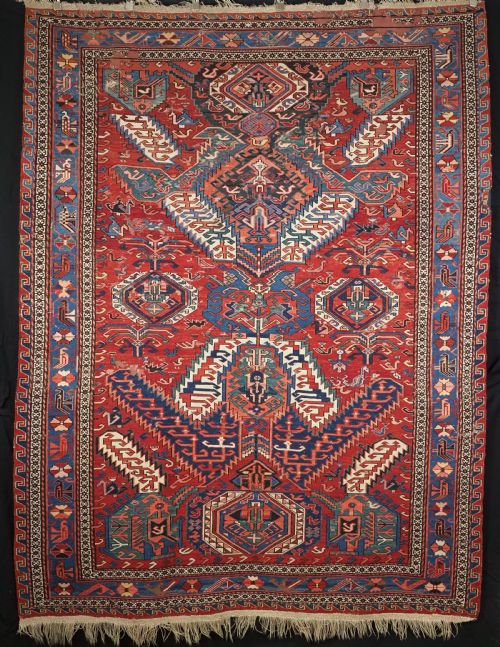
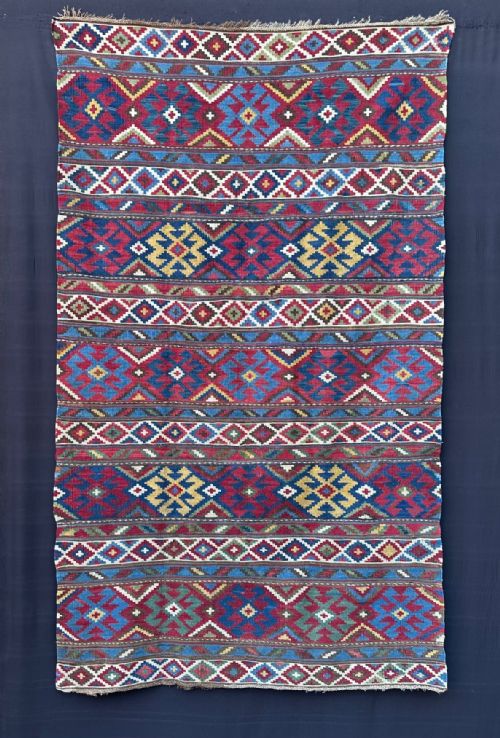
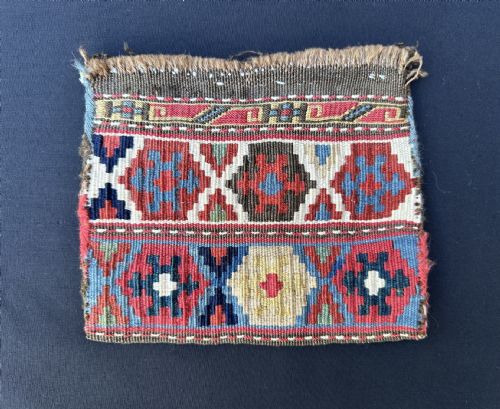
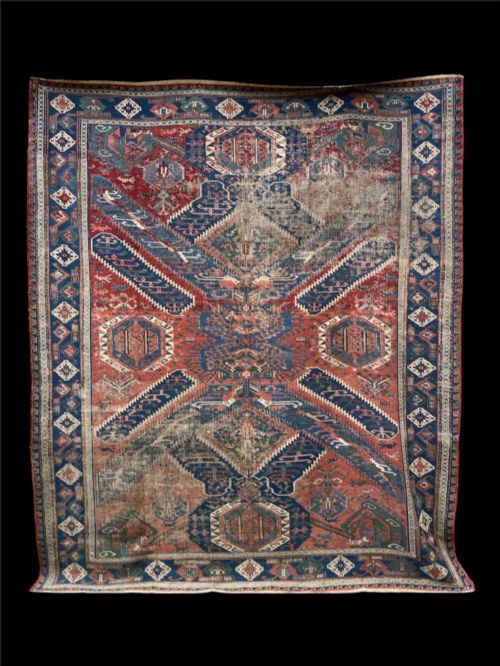
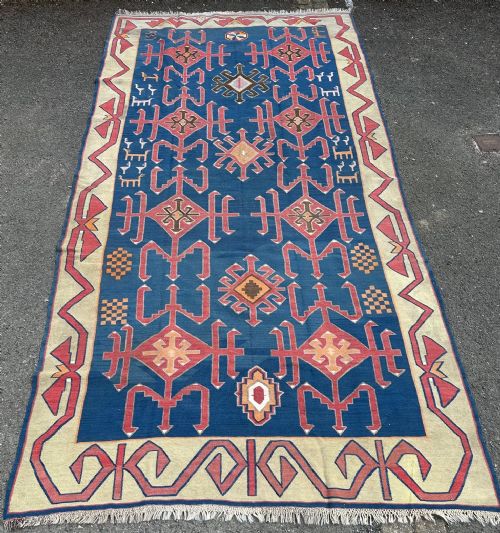
A caucasian flatweave rug encompasses diverse tribal textiles, including kilims, soumaks, and utilitarian storage bags originating from mountainous weaving regions. Buyers encounter historical examples ranging from nineteenth-century village fragments to complete nomadic furnishings.
The regional variety spans specific production centres such as Shirvan, Karabagh, Daghestan, and Moghan, often tied to nomadic Shahsavan and Kurdish groups. These textiles reflect deep-rooted local weaving idioms defined by bold geometric medallions and directional borders.
Materials and construction methods
Weavers utilised hand-spun wool alongside cotton and silk foundations, applying natural vegetable and plant-based dyes to achieve rich, enduring palettes. The resulting surfaces rely on interlocking weft techniques or supplementary wrap-faced brocade work.
Soumak construction involves wrapping supplementary weft threads around warp threads to produce textured, durable structures often utilised for heavy-duty bags and carpets. Flatweave kilim methods omit pile entirely, producing crisp geometric outlines and lightweight textiles.
Caucasian Flatweave Rug Retail Price Guide 2026
Typical asking prices for caucasian flatweave rug among the pieces listed under this phrase on Sellingantiques today, from the lower quarter to the upper quarter. They describe what is for sale here now, not the wider market.
Bees and dragons frequently inhabit the geometric fields, proving that nomadic weavers possessed very active imaginations.
Assessing quality in historical flatweaves
Quality rests upon the fineness of the weave, the clarity of the geometric layout, and the complexity of the design vocabulary. Pieces featuring scarce iconography like dragons, birds, or specific shield medallions command greater attention.
The integrity of the natural dye palette and the preservation of original borders or structural edges strongly influence the character of each piece. Superior examples maintain structural soundness alongside vibrant, harmonious colouration.
The Caucasian Flatweave Rug Glossary
- Kilim
- A tapestries-woven, pileless flatweave rug constructed by tightly interlocking horizontal wefts over vertical warps. This technique yields flat, geometric textiles utilised for floor coverings and wall hangings.
- Soumak
- A brocaded flatweave technique where coloured threads are wrapped around warp threads to create a textured, ribbed surface on the face. It provides extra durability and allows for intricate patterns.
- Mafrash
- A large, rectangular storage bag produced in panels by nomadic groups like the Shahsavan for household packing. These panels are frequently separated and repurposed into smaller rugs or cushions.
- Khorjin
- A traditional pair of saddlebags designed for transport on animals, featuring flatweave or soumak faces. Complete pairs remain prized collector items.
- Verneh
- A brocaded flatweave textile typically featuring recurring animal or bird motifs arranged in rows. It shares technical similarities with soumak construction.
Caucasian Flatweave Rug: Frequently Asked Questions
How do I care for an antique flatweave rug?
Protect the textile by placing it in low-traffic areas or mounting it securely on a wall to reduce mechanical wear. Vacuum gently without a rotating brush bar and keep it out of direct sunlight.
Professional cleaning should be undertaken sparingly by specialists experienced in natural-dyed historical wool. Spot cleaning with harsh domestic agents can permanently alter the historic dye colours.
What is the difference between a kilim and a soumak?
A kilim is constructed using a flat tapestry weave that leaves both sides relatively smooth and similar in appearance. The design edges follow the diagonal steps of the interlocking weft threads.
Soumak involves wrapping coloured threads over and around the warps to create a raised, textured front surface with a messy underside of loose floating threads. This technique allows for sharper structural lines and heavier rugs.
Where were these textiles originally made?
These pieces originated across the Caucasus region, encompassing modern-day Azerbaijan, Daghestan, Armenia, and surrounding mountainous territories. Nomadic and village groups such as the Shahsavan, Kurds, and Avar tribes produced them.
Production centres like Shirvan, Kuba, and Karabagh developed distinct local design vocabularies and colour preferences. Local sheep breeds provided the essential wool for these regional workshops.
Can repurposed storage bags be used on the floor?
Many smaller pieces formed from storage bag panels or complete mafrash sides possess durable wool construction suitable for light floor use. Their original structural context as utility items means they were built to withstand daily handling.
Due to their historical age and delicate flatweave structure, placing them in heavy-traffic hallways should be avoided. Using a proper underlay helps prevent slipping and reduces fibre abrasion.