
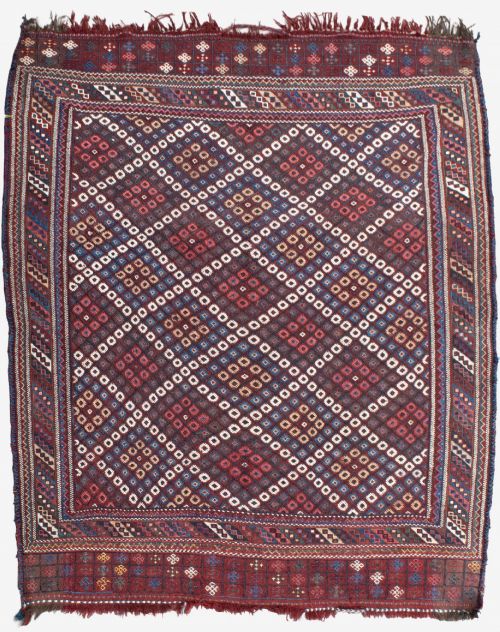


Antique Tribal Kilim
An antique tribal kilim brings geometric precision and rich nomadic history into a modern interior through flatwoven wool.
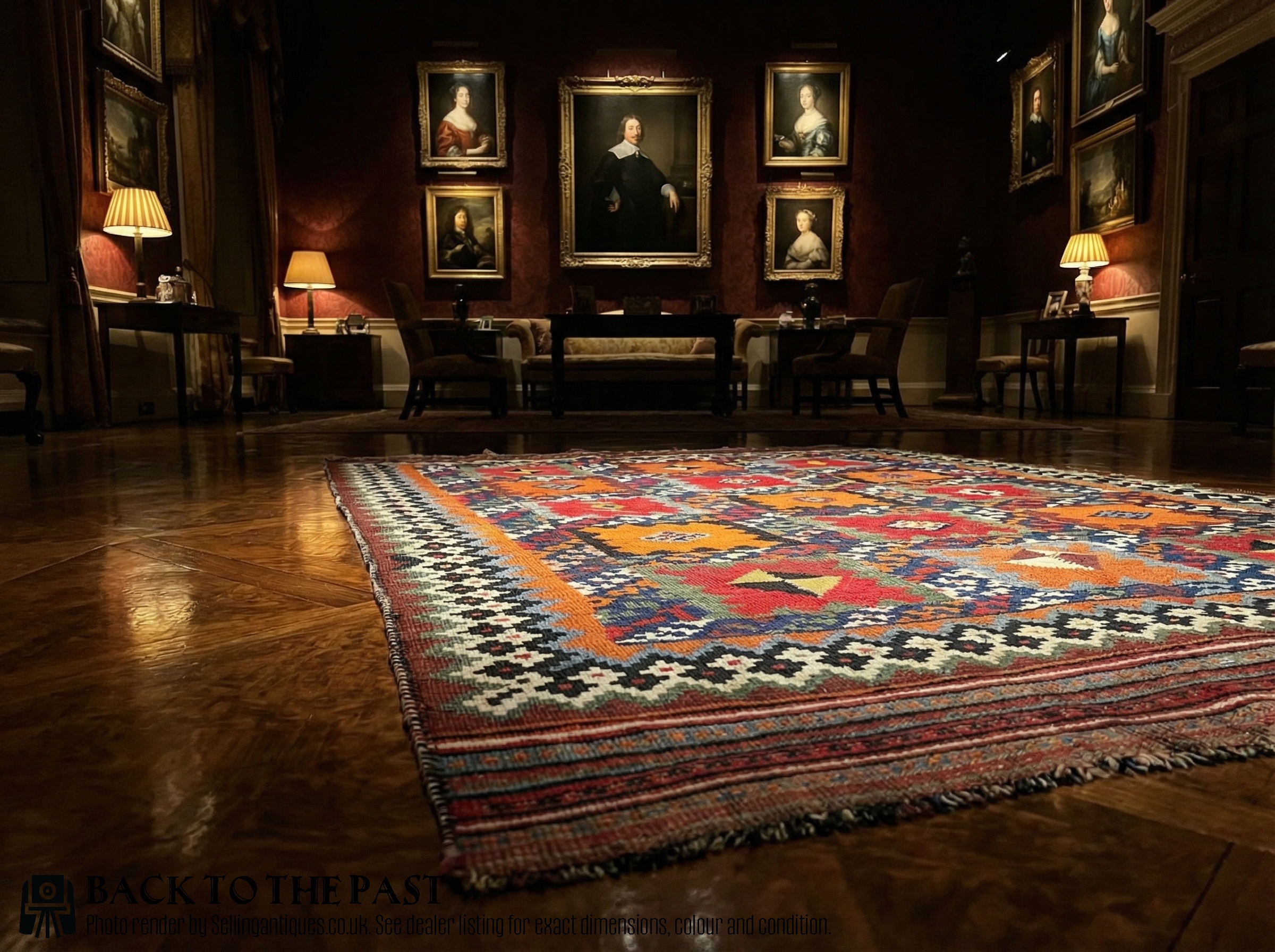
Antique Tribal Kilim
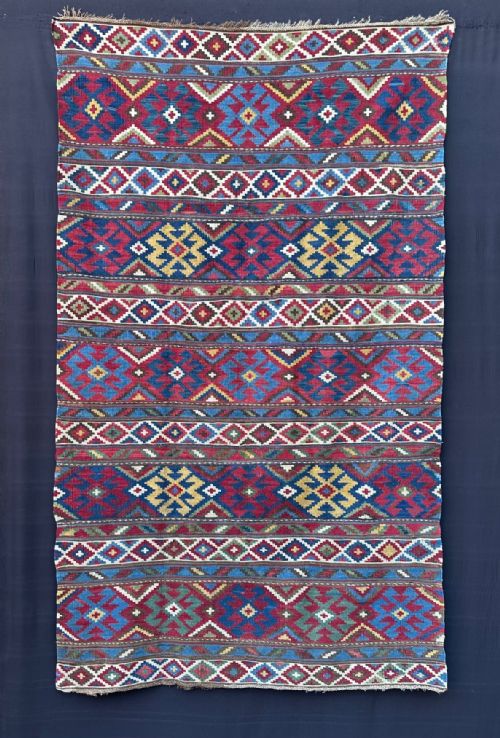
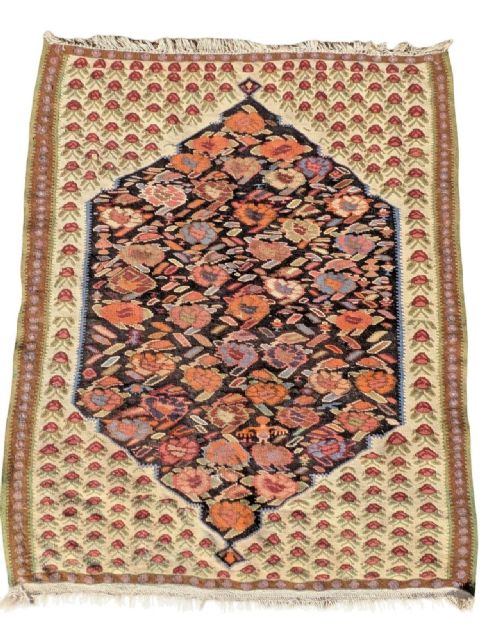
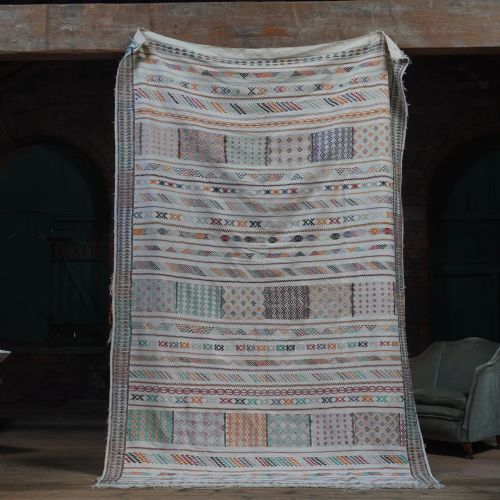
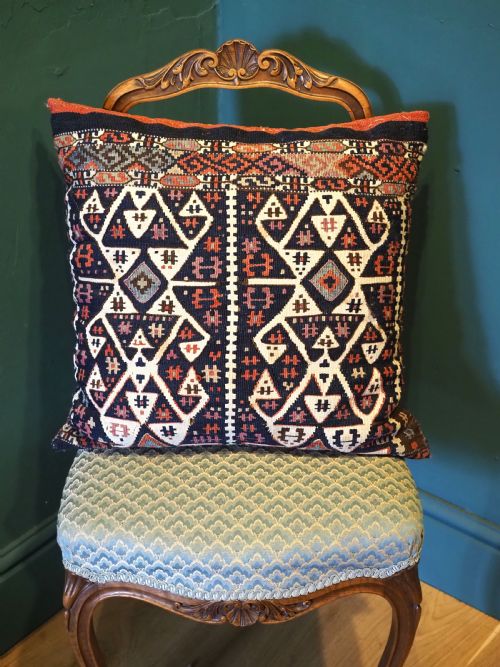
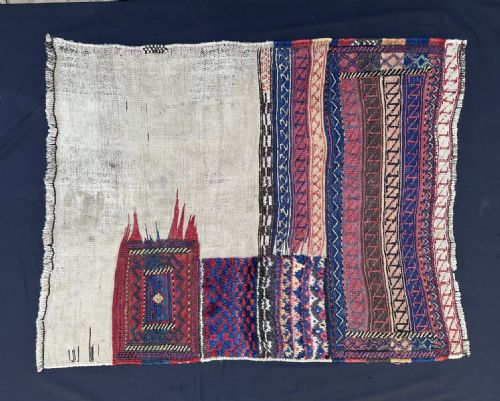
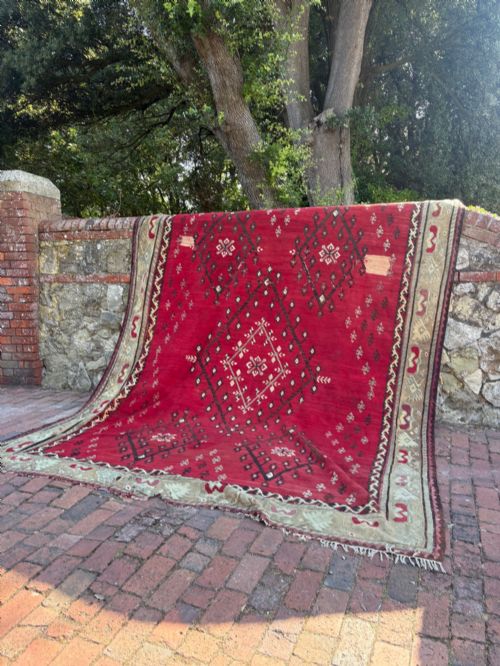
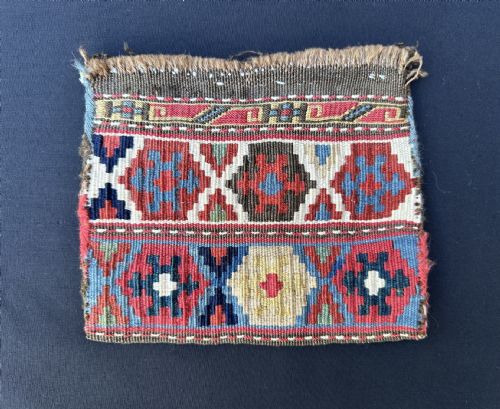
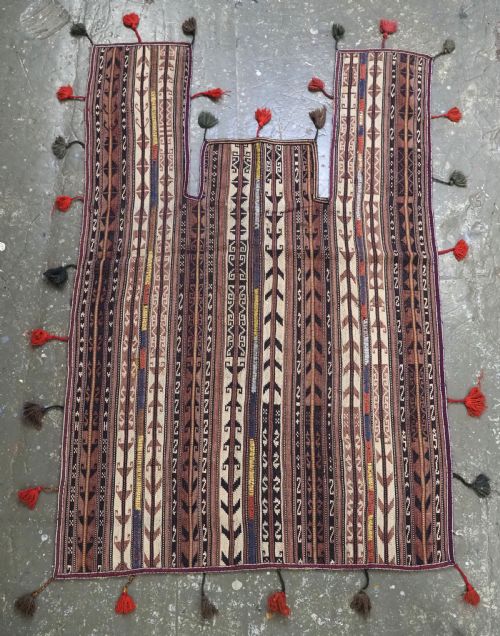
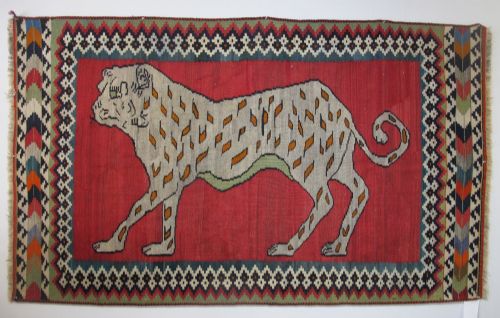
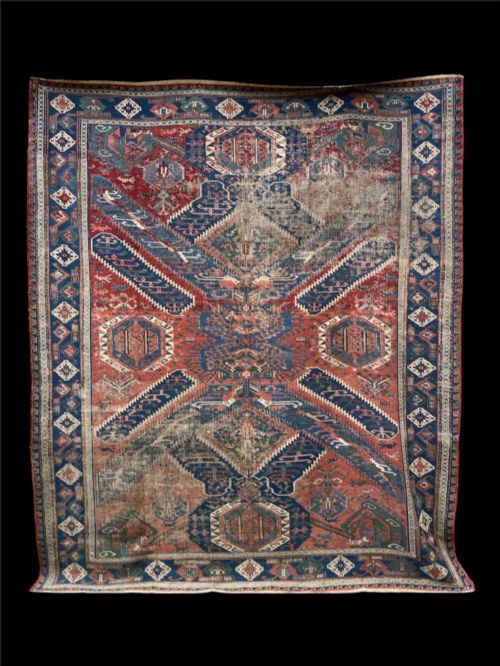
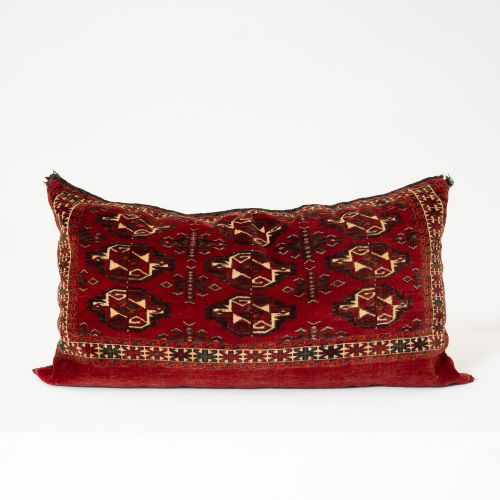
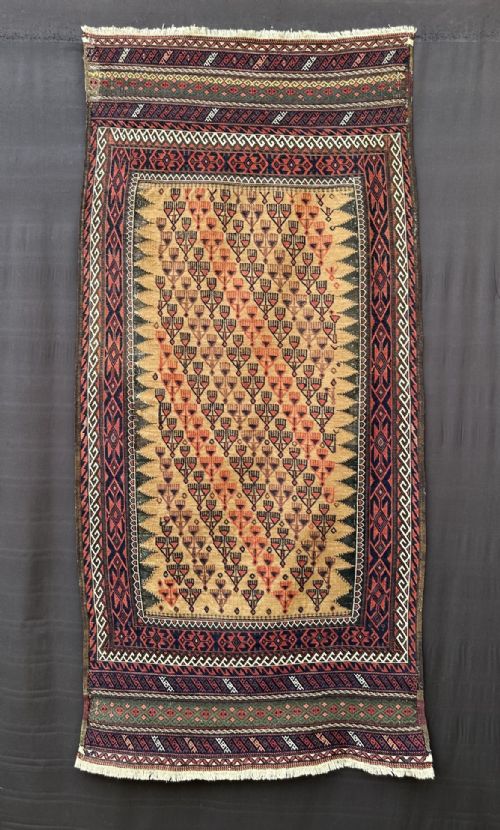
When exploring antique tribal kilim selections, you encounter flatwoven textiles produced by nomadic and village weavers across Persia, Anatolia, the Caucasus, and Central Asia. These items serve practical domestic purposes, ranging from floor coverings and horse blankets to storage bags and eating cloths.
The objects on this page span from the mid-nineteenth century to the early twentieth century, reflecting traditional tribal patterns passed down through generations. Common regional forms include Qashqai sofreh, Shirvan flatweaves, and Anatolian runners.
Nomadic groups such as the Shahsevan, Afshar, and Yomut Turkmen created these pieces for daily use within their communities rather than for export. Consequently, each piece carries distinct regional motifs and structural characteristics unique to its weaving group.
Materials and construction
Weavers relied primarily on hand-spun wool and cotton, occasionally incorporating goat hair for structural durability in utility bags and heavy covers. Natural dyes extracted from local plants and minerals provide the muted earth tones characteristic of these flatweaves.
The standard technique is slit-tapestry weaving, where the weft threads are wrapped back around the warp without tying knots, creating clean vertical edges between colour shifts. This method allows for sharp geometric patterns and reversible designs.
Denser packing of the weft produces a firm, resilient fabric that withstands heavy floor use while maintaining flexibility for folding and transport in nomadic camps.
Antique Tribal Kilim Retail Price Guide 2026
Typical asking prices for tribal kilim among the pieces listed under this phrase on Sellingantiques today, from the lower quarter to the upper quarter. They describe what is for sale here now, not the wider market.
Some antique bread sofreh textiles still carry faint traces of flour dust from their days inside nomadic tents.
Judging quality and character
The finesse of the weave sets the finer examples apart, visible in the tightness of the weft compaction and the crispness of the geometric pattern transitions. Tighter structures require greater skill from the weaver and yield longer-lasting textiles.
The depth and harmony of the natural dye palette contribute significantly to a piece's visual standing, with nuanced colour shifts indicating skilled dye preparation. Secondary materials such as camel wool or finely spun goat hair add further textural interest.
Integrity of the original flatweave structure, including minimal intervention in past repairs, preserves the authentic character of nomadic utilitarian objects.
The Antique Tribal Kilim Glossary
- Sofreh
- A flatwoven cloth used for serving meals or kneading bread within nomadic households. These items often feature elongated formats and specific regional border motifs.
- Sumak
- A supplementary weft-wrapping technique that creates a textured surface resembling embroidery on the face of the textile. This method adds structural strength and visual relief.
- Mafrash
- A large rectangular storage bag or chest panel used by nomadic groups for domestic transport and organisation. They frequently display banded flatweave designs.
- Warp
- The stationary vertical threads stretched across a loom that form the foundational grid of the textile. Weft threads are woven horizontally through these parallel strands.
- Weft
- The horizontal strands passed through the warp threads to build the visible pattern and colour fields of the flatweave. In kilims, these threads are tightly beaten down to conceal the warp.
Antique Tribal Kilim: Frequently Asked Questions
How were kilims used originally?
Nomadic communities utilised these flatwoven textiles for multiple daily functions inside tents and temporary dwellings. They served as floor rugs, saddle bags, sleeping covers, and dining cloths.
Because weavers lived mobile lives, the items had to be durable, lightweight, and easily packed alongside other household belongings during seasonal migrations.
Where do these tribal pieces originate?
The pieces come from various weaving traditions across Persia, Anatolia, the Caucasus, and Central Asian regions. Specific tribes and confederations, such as the Qashqai, Afshar, and Yomut Turkmen, developed distinct regional palettes.
Local access to specific sheep breeds and native dye plants heavily influenced the distinct appearance of each weaving group.
Are natural dyes easy to spot?
Natural dyes present subtle tonal variations and mellow patination developed over decades of exposure to light and use. These plant and mineral colorants age gracefully without harsh fading.
Examinations under natural daylight often reveal nuanced shifts in shade across a single field of colour, pointing to traditional dyeing methods.
How do I care for an antique flatweave?
Gentle vacuuming without a rotating brush roll helps remove embedded dust and grit from the wool fibres. Keeping the textile away from prolonged direct sunlight prevents excessive drying of the natural materials.
Professional specialist cleaning is recommended for washing, while breathable underlays help protect the flat structure from slipping on hard floors.