


Antique Floral Kilim
An antique floral kilim brings flat-woven pattern and botanical warmth into a room, spanning styles from Bessarabian to Caucasian.
Antique Floral Kilim
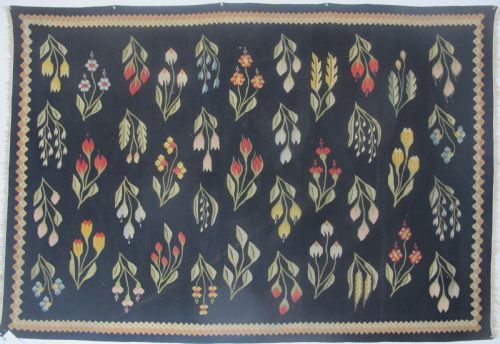
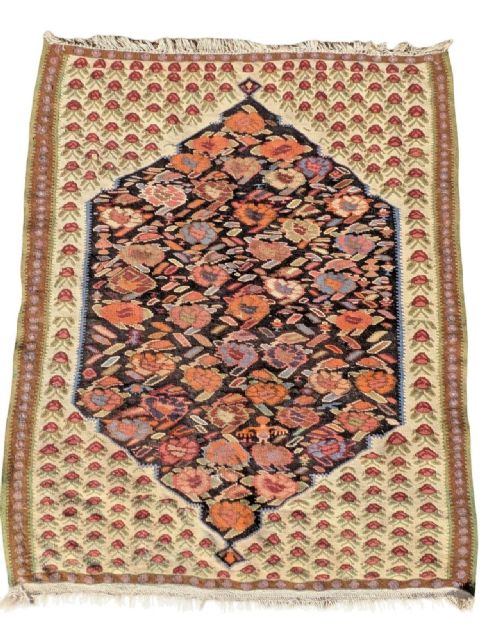
When you search for an antique floral kilim, you encounter flat-woven textiles featuring botanical motifs from Eastern European and Persian traditions. These rugs range from room-sized carpets to smaller area pieces, created across the late nineteenth and early twentieth centuries.
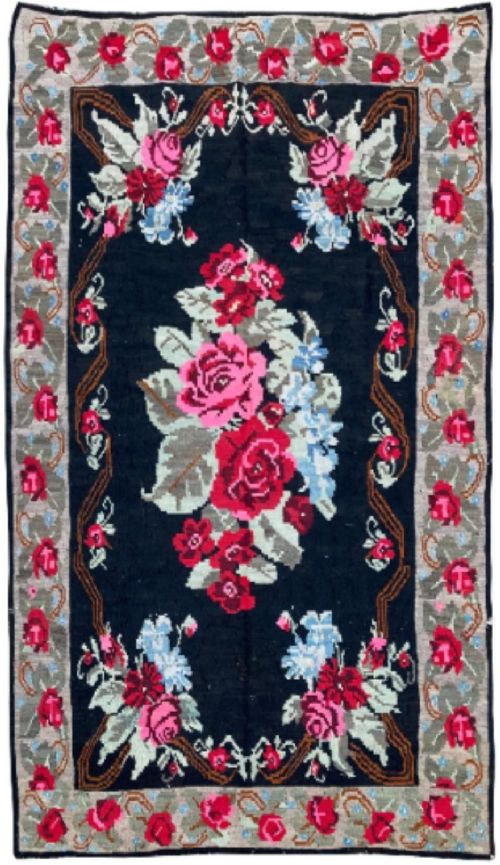
The Bessarabian examples dominate the selection, often displaying large-scale floral compositions against dark grounds. Alongside these, pieces from regions such as Ukraine, the Caucasus, and Persia bring varied regional weaving techniques and distinct floral interpretations to the form.
Materials and construction
These flat-woven textiles rely principally on wool and cotton as foundational materials. Wool provides the durable surface for the intricate floral patterns, while cotton frequently serves as a sturdy structural warp.
Weavers employed traditional slit-taperting and flat-weaving methods to build the pictorial floral fields without pile. This technique creates a crisp surface where botanical sprays, roses, and trailing vines emerge sharply from the background.
Listings demonstrate production dates spanning from eighteen-eighty through to nineteen-thirty, using wool and cotton materials.
Assessing quality in flat-weaves
Quality rests in the precision of the flat-weave structure and the artistic rendering of the floral design. Pieces at the upper end exhibit skilful handling of scale and colour transitions within the botanical motifs.
The handling of the wool also distinguishes finer examples, where tight spinning and resilient dyeing retain clarity in the floral patterns. Weaving density and structural integrity across large formats separate standard regional work from master production.
The Antique Floral Kilim Glossary
- Kilim
- A flat-woven textile produced without a pile. This construction method creates a lightweight rug suitable for floors or wall hanging.
- Bessarabian
- A regional style originating from the historical Bessarabia area, known for dark grounds and naturalistic floral sprays. These pieces often show French influence in their botanical layouts.
- Warp
- The stationary lengthwise threads on a loom that hold the tension. Cotton is commonly utilised for this structural element in these flat-weaves.
- Slit-weave
- A flat-weaving technique where the weft threads of different colours turn back at their own colour boundaries. This method creates small vertical slits in the textile where pattern blocks meet.
Antique Floral Kilim: Frequently Asked Questions
How do I clean an antique floral kilim?
Gentle surface vacuuming without a beater bar removes loose dirt from the flat weave. Professional specialist cleaning remains essential for addressing deeper soil.
Water saturation and aggressive rubbing damage the wool fibres and distort the flat structure. Regular rotation distributes foot traffic evenly across the textile.
Where should I place these rugs?
These flat-woven textiles suit low-traffic living spaces, dining areas, and bedrooms where heavy furniture wear is minimal. Their thin profile allows doors to open smoothly across them.
Using a quality underlay prevents slipping and cushions the flat-weave against hard floors. Direct, strong sunlight fades the natural dyes over extended periods.
How do I date an antique floral kilim?
Dating relies on wool characteristics, natural dye palettes, and regional design structures recorded across nineteenth and twentieth-century production. Stylistic influences, such as French botanical motifs in Bessarabian work, provide chronological clues.
Comparing structural details against documented pieces from periods like eighteen-ninety or nineteen-twenty helps establish age. Construction inconsistencies often point to traditional domestic rather than commercial workshop origins.
What is the difference between a kilim and a carpet?
A kilim is woven flat without any raised pile surface, resulting in a tapestry-like weight and texture. Conventional carpets use knotted pile loops that stand upright from the foundation.
This structural distinction changes how light hits the surface and how the textile feels underfoot. Flat-weaves fold easily and function well as decorative wall hangings.