
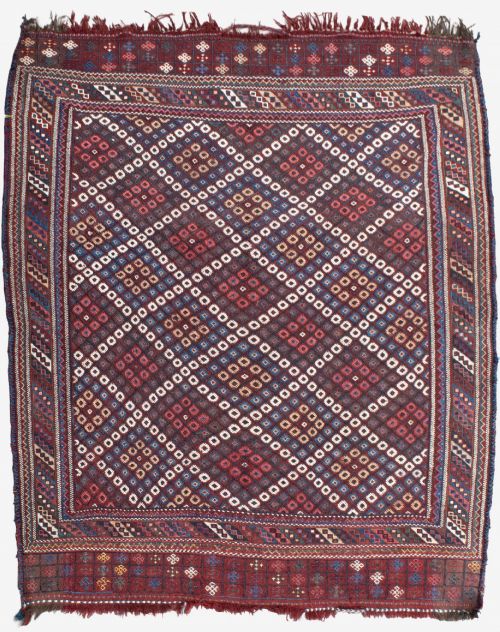


Vintage Kelim Rug
These vintage kelim rug pieces are flat-woven textiles offering bold geometric patterns and rich history for your floors.
Vintage Kelim Rug
When you search for a vintage kelim rug, you are looking at flat-woven carpets and runners originating from tribal and nomadic traditions across Anatolia, Persia, Central Asia, and Eastern Europe. These floor coverings are prized for their lack of a pile, achieved through interlocking or slit-weave techniques that produce crisp, graphic patterns.
On this page, you are most likely to meet pieces spanning from the late nineteenth century through to the nineteen-thirties. The selection includes specific regional identities such as Turkish Konya, Afghan, Bessarabian, and Qashqai works, reflecting distinct tribal heritages.
The forms range from room-sized carpets down to long runner rugs and specific formats like Sofreh or Gajeri kelims. Each piece demonstrates the utilitarian history of nomadic weaving transformed into decorative interior items.
How they were made
The construction relies primarily on wool and cotton, utilised as warp and weft foundations to create durable, flat surfaces without knots. Weavers interlaced the coloured yarns tightly to build up sharp geometric and linear motifs.
Certain pieces, such as specific Firozkohi Char Aimaq kelims, were woven in multiple parts and joined together to achieve larger formats. The resulting textiles depend entirely on tension and precision during the flat-weave process.
Some textiles were constructed in separate halves before being joined to form one complete carpet.
What varies in quality
Quality in these flat-weaves rests on the tightness of the weave and the clarity of the graphic design. Tightly packed wool yarns create a firmer handle and a more resilient structure that preserves the geometric lines.
The sophistication of the dye palette and the precision of the tribal motifs distinguish the finer examples. Softer handle, balanced proportions, and well-executed slit-weave junctions elevate certain regional pieces above standard production.
The Vintage Kelim Rug Glossary
- Kelim
- A flat-woven carpet or rug produced without a pile across various regions of the Middle East, Central Asia, and Eastern Europe.
- Warp
- The stationary vertical threads stretched on a loom before the weaving begins. The weft yarns are passed through these structural threads.
- Weft
- The transverse threads passed horizontally through the warp to create the fabric and pattern of the textile.
- Sofreh
- A specialised type of spread or cloth used traditionally for sharing meals or kneading bread, often treated as a collectible textile.
- Soumak
- A technique of wrapping weft threads over warp threads to produce a textured, braided surface resembling embroidery on the reverse.
Vintage Kelim Rug: Frequently Asked Questions
What is a kelim rug?
A kelim rug is a flat-woven textile created without a knotted pile, using techniques where the weft threads are pulled tightly across the warp.
These pieces were traditionally produced by nomadic and tribal groups across regions including Turkey, Persia, and Central Asia for utility and decoration.
How do I care for a kelim?
Care for flat-weaves involves regular gentle vacuuming without a rotating brush head to protect the fragile edges and flat surface.
Professional specialist cleaning is recommended for antique wool textiles to preserve the integrity of the natural dyes and fibres.
Where were kelim rugs made?
Kelim production spans multiple geographic areas, with notable traditions in Anatolian centres like Konya and Malatya, alongside Persian and Caucasian regions.
Different tribes, such as the Qashqai and Afshar, developed distinct visual vocabularies and weaving structures characteristic of their specific localities.
Are these rugs durable?
The flat-woven construction using wool provides a sturdy surface suitable for many areas of the home when paired with a proper underlay.
Because they lack a pile, they lie flat and withstand regular foot traffic well, though older pieces require thoughtful placement to prevent excessive wear.