


Antique Eastern European Rug
An antique eastern european rug brings flat-woven warmth and deep botanical patterns to a floor, offering robust folk character from the late nineteenth and early twentieth centuries.
Antique Eastern European Rug
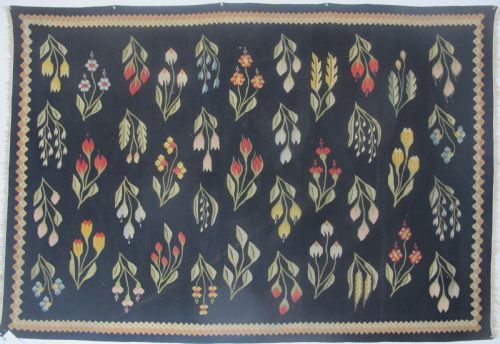
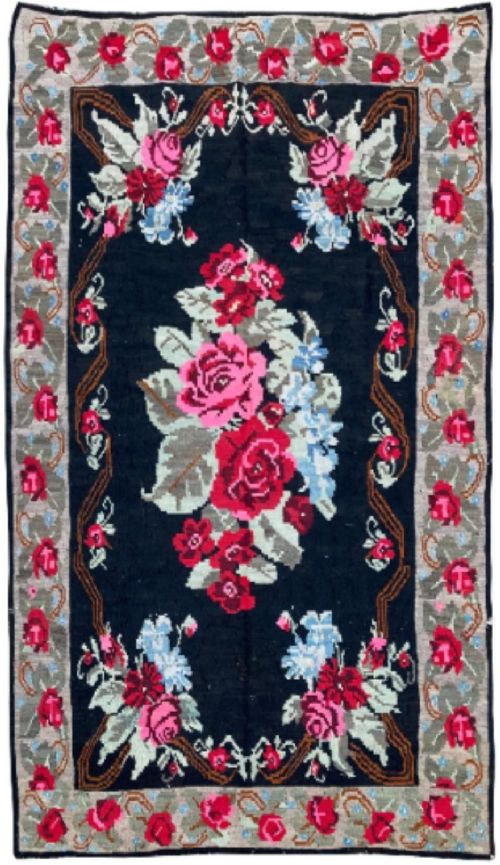
An antique eastern european rug encompasses flat-woven kilims, tapestries, and area rugs originating from regions such as Romania, Ukraine, Moldova, and the Caucasus. These floor coverings bridge utility and folk artistry, often featuring dark fields set with prominent floral motifs.
The pieces most frequently met on this page are Bessarabian kilims dating from the decades around nineteen hundred. They are typically rendered in wool and cotton, displaying regional styles that range from traditional floral compositions to bold folk art geometries.
How they were made
These textiles rely on wool and cotton as foundational materials, manipulated through flat-weave and tapestry techniques. Weavers employed durable wool yarns for the surface design, creating reversible flat surfaces without a traditional pile.
The construction methods allow for sharp geometric transitions alongside curvilinear botanical elements. Natural dye absorption across these organic fibres creates the characteristic saturated hues found in the regional kilims and tapestries.
The selection spans from eighteen eighty to nineteen thirty, focusing on wool and cotton textiles from Bessarabian, Caucasian, and Ukrainian traditions.
What varies in quality
Quality rests upon the crispness of the woven floral or geometric motifs and the structural integrity of the flat-weave. Finer examples maintain tension across the wool and cotton yarns, ensuring the borders and central fields hold their intended proportions without distortion.
The sophistication of the colour palette also distinguishes finer works, where tonal shifts within the floral elements demonstrate greater depth. The handling of traditional Bessarabian or Caucasian designs reveals the weaver's command over the loom.
The Antique Eastern European Rug Glossary
- Kilim
- A flat-woven carpet or rug produced without a pile. This technique creates a lightweight, reversible textile suitable for floor placement.
- Bessarabian
- A regional style known for dark floral carpets and kilims. These pieces typically feature naturalistic blooms against deep brown or black fields.
- Caucasian
- Pertaining to rugs originating from the Caucasus region. These textiles often incorporate distinct geometric elements alongside folk motifs.
- Tapestry
- A form of textile art woven on a vertical loom. The technique permits pictorial and floral compositions executed in wool and cotton.
Antique Eastern European Rug: Frequently Asked Questions
How do I clean an antique rug?
Surface dust is best managed through gentle suction without a rotating brush. Professional textile cleaning is recommended for deeper maintenance.
Water exposure should be limited to prevent dye bleeding within the wool and cotton fibres. Specialist care ensures the flat-weave structure remains undisturbed.
Where were these rugs made?
Production centres include Romania, Ukraine, Moldova, and the Caucasus. Local weaving traditions influenced the specific motifs and colour palettes.
Villages and regional workshops produced these flat-weaves for domestic use and local markets. Each area maintained distinct preferences for floral or geometric arrangements.
Are these rugs reversible?
Most flat-woven kilims display the design clearly on both sides. This reversibility results from the interlocking weave technique used during production.
While both faces show the pattern, choosing one side to rest against the floor helps preserve the primary display surface over time.
How do I date a kilim?
Dating relies on stylistic analysis, material composition, and structural characteristics. Natural dyes and hand-spun wool generally point to nineteenth or early twentieth-century origins.
Comparing regional motifs, such as Bessarabian florals or Caucasian geometries, provides a reliable window into the period of manufacture.