
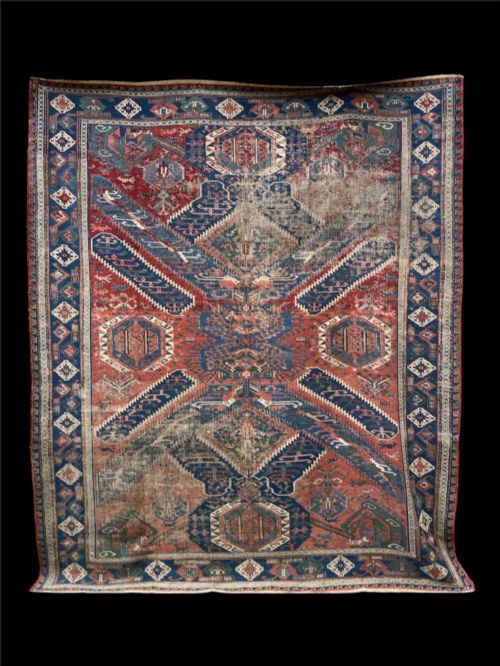
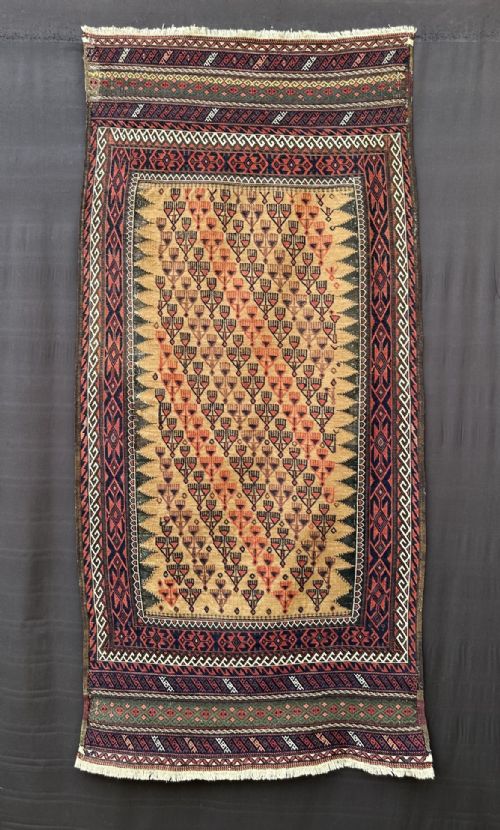
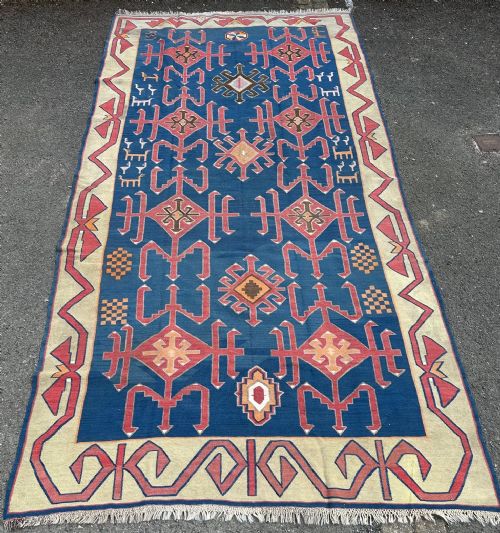


Vintage Oriental Flatweave
These vintage oriental flatweave pieces bring tribal history and hand-woven texture directly to your floor or walls.
Vintage Oriental Flatweave
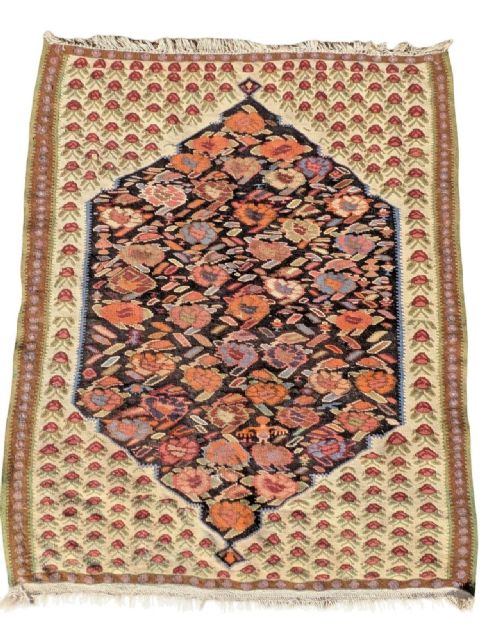
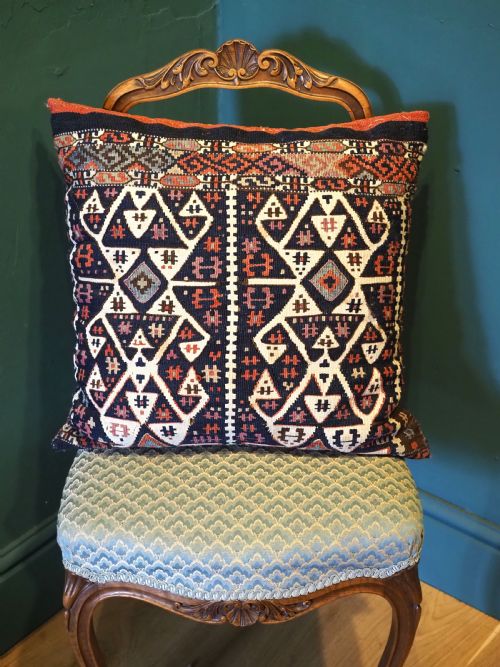
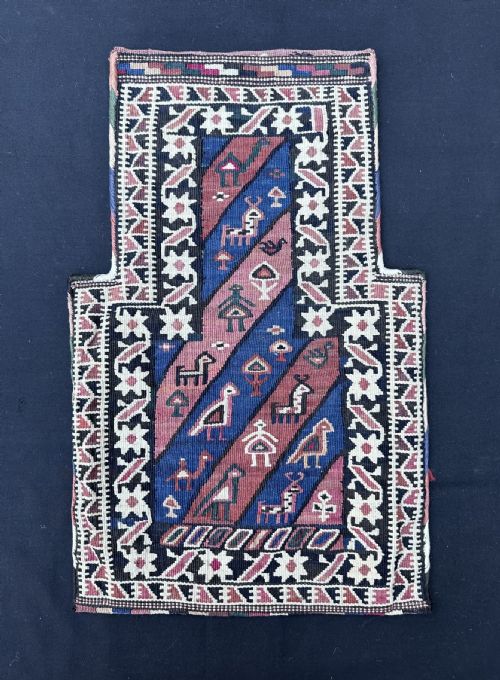
A vintage oriental flatweave represents the woven artistry of nomadic and village makers across Persia, the Caucasus, Turkey, and Central Asia. Buyers exploring this category encounter a range of forms, from room-sized carpets and narrow runners to utilitarian storage bags, salt-bags, and cushions.
The objects stem from distinct tribal groups such as the Shahsevan, Baluch, Shirvan, and Yomut, spanning periods from the mid-nineteenth century through the early twentieth century. Most pieces on this page comprise traditional kilims, sumaks, and soft furnishings adapted from larger tribal panels.
Materials and construction
Makers relied primarily on hand-spun wool and cotton, occasionally incorporating camel wool and silk to build resilient pile-free structures. Natural dyes provided the foundational palette for these textiles, yielding organic tones that aged across decades.
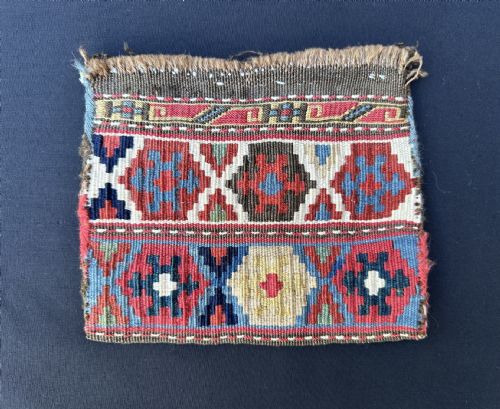
Weaving techniques involved complex flat-weaving methods, including slit-tapestry kilim construction and supplementary weft-wrapping seen in sumaks. Artisans also produced multi-strip formats, such as Uzbek kilims joined together from narrow woven sections.
Vintage Oriental Flatweave Retail Price Guide 2026
Typical asking prices for vintage oriental flatweave among the pieces listed under this phrase on Sellingantiques today, from the lower quarter to the upper quarter. They describe what is for sale here now, not the wider market.
Several items on this page began life as humble salt-bags and vanity containers carried by nomadic families across mountain passes.
Evaluating quality and execution
Superior examples demonstrate tighter structural integrity, highly disciplined geometric drawing, and complex regional iconography executed by skilled hands. The handling of natural dyes creates harmonious fading and tonal depth across the field.
Design clarity and the preservation of original formats, such as complete storage bags with their backs intact or full room-sized carpets, elevate an item's standing. Finer work exhibits precise edge finishing and deliberate integration of traditional motifs.
The Vintage Oriental Flatweave Glossary
- Kilim
- A flat-woven carpet or rug produced without a pile through interlocked weft threads. This technique creates a lightweight textile historically utilised for floor coverings and wall hangings.
- Sumak
- A sturdy flat-weave technique utilising supplementary weft-wrapping to produce a textured, raised pattern on the face. It offers greater structural weight than standard tapestry weaving.
- Sofreh
- A ceremonial or utilitarian cloth used for spreading meals or handling bread within nomadic households. These textiles often feature minimalist tribal compositions.
- Mafrash
- A large rectangular storage container or bedding bag woven in panels by nomadic groups. Panels from these items are frequently repurposed into smaller rugs or cushions.
- Chuval
- A large face-bag traditionally woven by Turkmen tribes for domestic storage inside tents. They display characteristic guls and tribal medallions.
Vintage Oriental Flatweave: Frequently Asked Questions
What is a flatweave rug?
A flatweave rug is constructed without knots, using only warp and weft threads interlocked tightly together. This creates a thin, flexible textile that lies flat on the floor.
Such pieces are traditionally lighter than knotted carpets and serve as versatile floor coverings or decorative wall hangings.
How do I care for antique flatweaves?
Vacuum these textiles gently with a suction-only attachment, avoiding rotating brush bars that can pull at aged wool or cotton threads. Professional cleaning suited for vintage organic dyes is recommended when necessary.
Rotate the piece periodically to ensure even wear from foot traffic and sunlight exposure in your living space.
Where were these textiles made?
The pieces originate from nomadic and village communities across regions including Persia, the Caucasus, Anatolia, and Central Asia. Specific groups such as the Baluch, Shirvan, and Shahsevan created distinct regional patterns.
Tribal weavers incorporated local symbols, animal motifs, and geometric structures unique to their specific geographic borders.
What distinguishes a sumak from a kilim?
A kilim is produced using a flat tapestry weave that leaves the reverse side relatively smooth and similar in appearance to the front. Sumak weaving incorporates a wrapping technique that leaves trailing threads on the back and creates a raised, textured surface on the face.
This extra wrapping process in sumaks results in a heavier, more rigid textile compared to a standard kilim.