
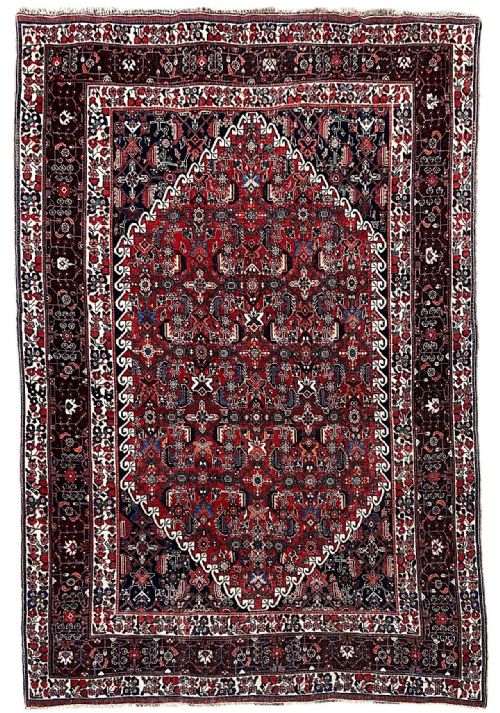
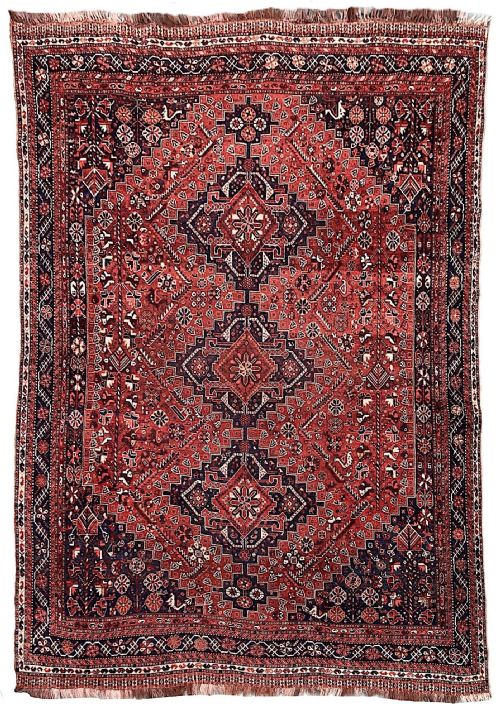


Qashqai Tribal Carpet
When you search for a qashqai tribal carpet, you enter a rich tradition of southwestern Persian nomad weaving prized for bold geometry and saturated natural colour.
Qashqai Tribal Carpet
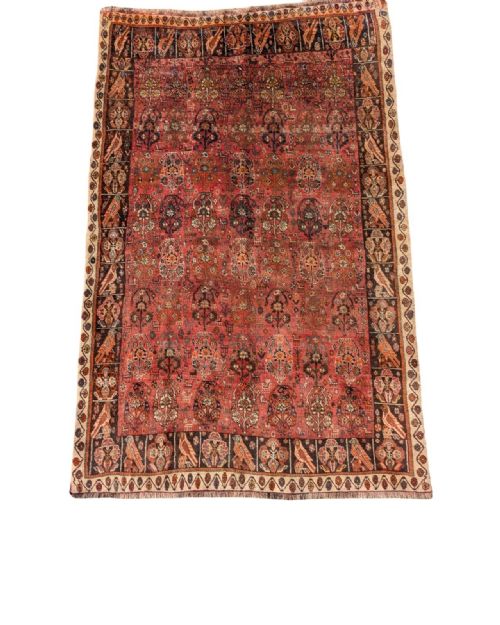
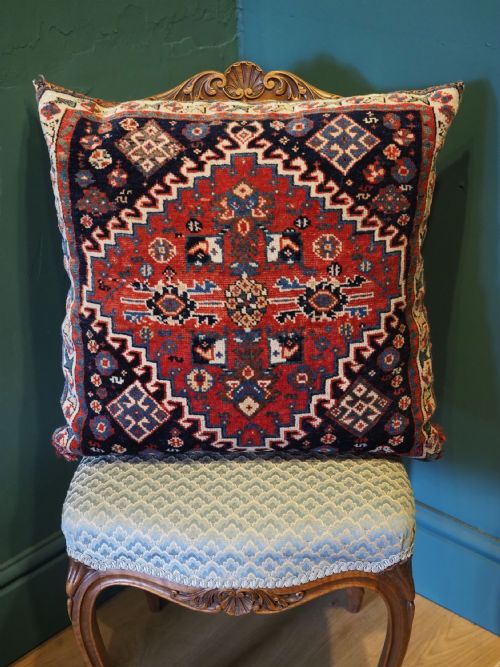
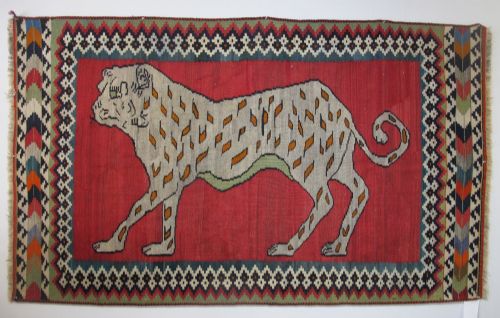
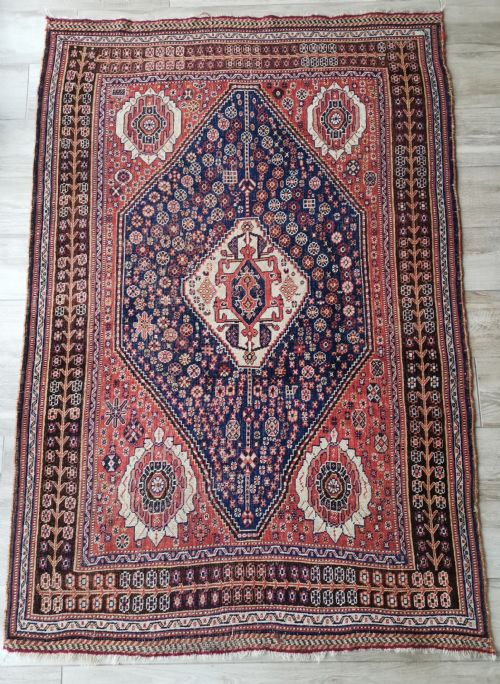
Buyers will frequently encounter rugs bearing geometric field patterns, animal motifs such as lions and peacocks, and elaborate tree of life compositions. Related tribal traditions from the same geographic sphere, including Khamseh, Luri, and Shiraz pieces, often appear alongside core Qashqai work due to shared regional aesthetics and nomadic roots. This selection spans everyday utility items to larger tribal carpets created for domestic use.
Materials and construction
Weavers constructed these textiles using hand-spun wool for the pile, foundations, and structural elements, frequently paired with cotton in later or larger formats. The reliance on natural dyes yielded a palette that matured gracefully over decades, displaying subtle tonal shifts across the surface of the wool. Artisans executed both knotted pile techniques and flatwoven kilim structures, depending on whether the intended textile was a durable floor covering or a lightweight utility hanging.
Nomadic workshops utilised upright or horizontal ground looms set up seasonally during migrations, which accounts for slight irregularities in format and symmetry. The manipulation of hand-spun wool allowed the pile to retain natural lanolin, contributing to the resilience and tactile weight characteristic of authentic tribal weaving.
Qashqai Tribal Carpet Retail Price Guide 2026
Typical asking prices for qashqai tribal carpet among the pieces listed under this phrase on Sellingantiques today, from the lower quarter to the upper quarter. They describe what is for sale here now, not the wider market.
Nomadic weavers frequently smuggled secret tribal markers and tiny, whimsical animal figures into the corners of otherwise strict geometric carpets.
Markers of quality
Quality in these textiles rests upon the density of the knotting, the handling of the wool, and the depth achieved through natural dyes. Finer examples display precise control over complex geometric layouts and figurative motifs, maintaining crisp delineation across medallions and borders. The vitality of the wool, governed by the quality of the fleece and hand-spinning, determines how well the pile survives heavy use and age.
Artistic expression separates standard utility weaving from exceptional tribal artistry, visible in the confident asymmetry of a lion kilim or the nuanced spacing of a tree of life design. The integrity of the foundational structure and the preservation of original selvedges and ends further distinguish pieces that remain closer to their original condition.
The Qashqai Tribal Carpet Glossary
- Gabbeh
- A coarsely knotted, minimalist pile rug woven by tribal groups, traditionally featuring large fields of open colour with sparse geometric or animal motifs.
- Kilim
- A flatwoven textile produced without a pile, utilising slit-tapestry techniques to create sharp geometric patterns visible on both sides.
- Khamseh
- A confederation of five tribes in southwestern Persia whose weaving traditions closely parallel and overlap with Qashqai output.
- Kelleh
- A long, narrow carpet format traditionally used in Persian domestic interiors, proportioned narrower than a standard room-sized carpet.
- Luri
- A tribal group from Luristan in western Persia whose nomadic rug production shares strong stylistic and structural affinities with Qashqai weaving.
Qashqai Tribal Carpet: Frequently Asked Questions
What is a qashqai tribal carpet?
A qashqai tribal carpet is a hand-knotted or flatwoven textile made by the nomadic Qashqai confederacy of southwestern Persia, known for geometric medallions, tribal symbols, and rich wool.
These pieces reflect the cultural heritage and daily environment of pastoral nomads, incorporating motifs inspired by nature, fauna, and traditional tribal history.
How do I identify a qashqai carpet?
Identification relies on observing characteristic design elements such as multi-lobed central medallions, hooked polygons, and small animal or bird figures scattered across the field. The palette typically employs deep madder reds, indigos, and golds derived from natural dye sources.
Structure also aids identification, as genuine nomadic pieces often feature hand-spun wool pile on wool foundations with distinctive coloured selvedges.
Where were these carpets made?
These textiles were produced in the Fars province of southwestern Persia by nomadic tribes who migrated seasonally between winter pastures near the Persian Gulf and summer quarters in the Zagros Mountains.
Weaving took place on portable ground looms set up within tribal camps, meaning production was tied directly to the rhythms of pastoral nomadic life.
How should I care for an antique tribal rug?
Proper care involves regular, gentle vacuuming without a rotating power brush to prevent stress on the wool pile and delicate foundation threads. Professional cleaning suited to antique vegetable-dyed wool should be undertaken periodically to remove embedded dust without damaging the fibres.
Keeping the textile out of direct, continuous sunlight helps protect the natural dyes from fading and preserves the tonal balance of the wool.