





Traditional Pirot Rug
These traditional pirot rug examples are handwoven flatweaves originating from the Balkans, prized for their geometric precision and rich cultural heritage.
Traditional Pirot Rug
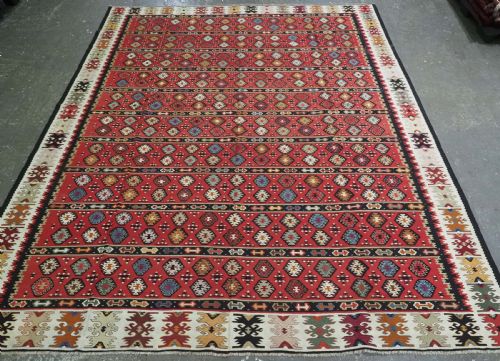
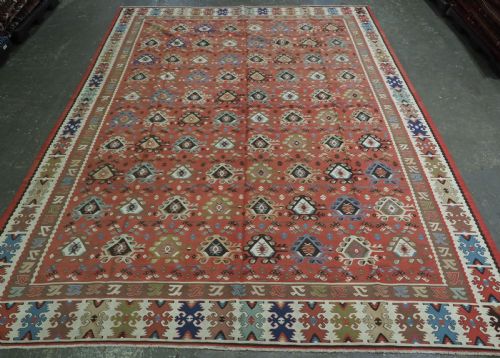
When you search for a traditional pirot rug, you encounter flatwoven textiles closely associated with the Pirot and Sarkoy regions. These pieces emerge primarily from the early twentieth century, specifically around nineteen ten and nineteen twenty.
The inventory on this page consists entirely of kilim rugs and carpets reflecting Balkan folk art and tribal traditions. Makers utilised distinct regional motifs including classic designs, flowering trees, lattices, banded patterns, and repeat medallions.
How traditional pirot rug items were made
These textiles are constructed using wool, forming durable flatweave structures without a pile. Artisans employed traditional Balkan folk weaving techniques to create crisp geometric lines and intricate pattern repeats.
The production relies on tightly beaten wool weft threads wrapping around strong warp foundations. This flatweave method allows both sides of the rug to display the same visual design with equal clarity.
Every woven tree and lattice on these rugs was counted in the wool before the loom was even touched.
What varies in quality
Quality in these flatweaves rests upon the complexity of the design and the richness of the wool palette. Pieces showcasing classic or scarce motifs with warm soft colours represent higher levels of traditional craftsmanship.
The scale of the weaving also influences the character of the piece, with large room sizes and fine banded layouts demonstrating considerable technical skill by the maker. The tightness of the weave ensures the longevity of the wool structure.
The Traditional Pirot Rug Glossary
- Kilim
- A flatwoven carpet or rug produced without a pile in the Balkan and Ottoman traditions. This construction technique creates a lightweight textile suitable for floor coverings or wall hangings.
- Flatweave
- A textile created by interweaving warp and weft threads directly on a loom without knotting yarn to form a pile. Traditional Pirot examples rely entirely on this method.
- Balkan Folk Art
- Cultural design traditions originating from the Balkan region incorporating geometric symbols, floral interpretations, and symbolic motifs passed down through generations.
- Medallion
- A central ornamental motif incorporated into the field of a rug. Repeat medallion designs structure the visual rhythm across the woven surface.
Traditional Pirot Rug: Frequently Asked Questions
How do I clean a traditional pirot rug?
Maintenance requires gentle vacuuming without a rotating brush to protect the flatwoven wool structure.
Professional specialist cleaning is recommended for removing deep dirt while preserving the historical dyes.
Can I use these flatweaves on the floor?
These flatweaves function well as floor coverings in areas with moderate foot traffic.
Using a quality underlay helps prevent slipping and reduces friction against hard flooring surfaces.
How do I date a traditional pirot rug?
Dating relies on stylistic analysis, material examination, and structural characteristics typical of early twentieth-century Balkan production.
Comparing regional motif variations helps narrow the timeframe to the nineteen tens or nineteen twenties.
What is the difference between Pirot and Sarkoy kilims?
Pirot kilims originate from the town of Pirot in the Balkans, known for specific weaving traditions and symmetrical designs.
Sarkoy kilims share stylistic roots within the broader Balkan Ottoman sphere, often overlapping in visual vocabulary and wool techniques.