
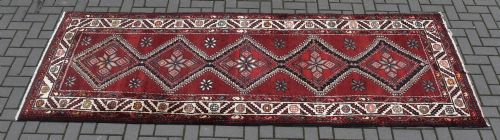


Geometric Diamond Rug
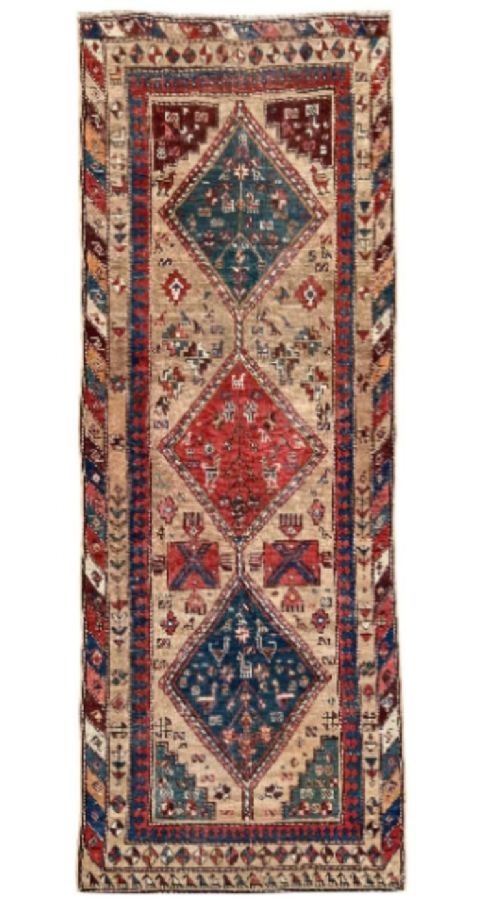
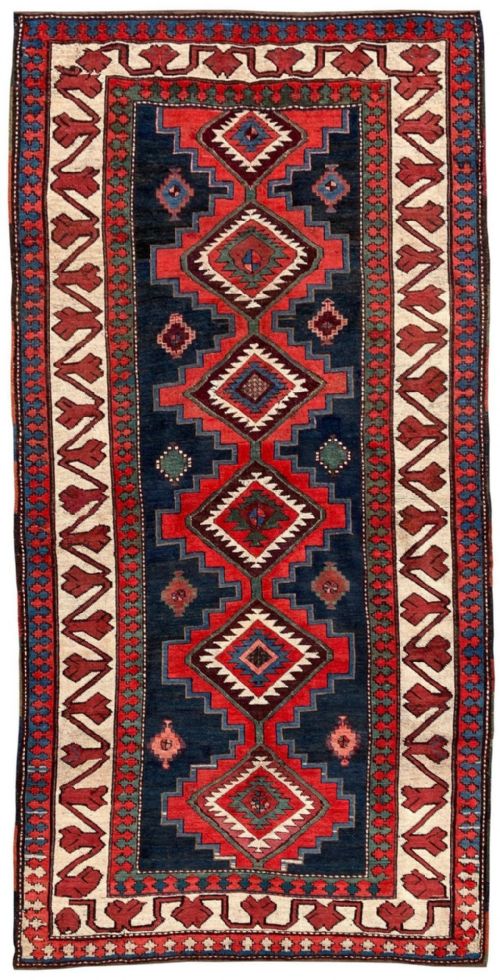
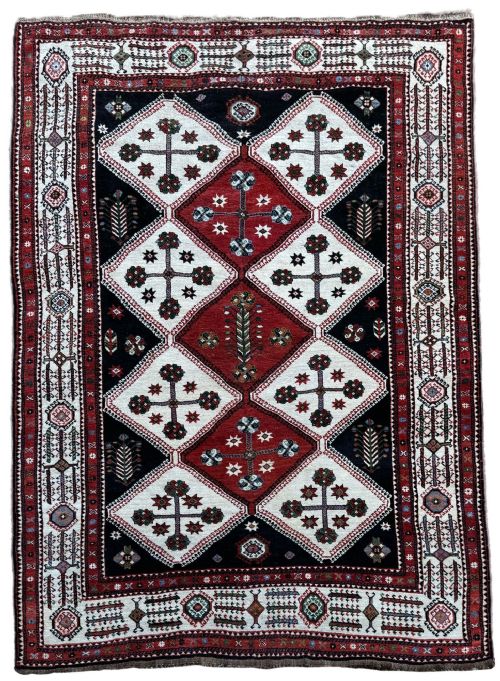
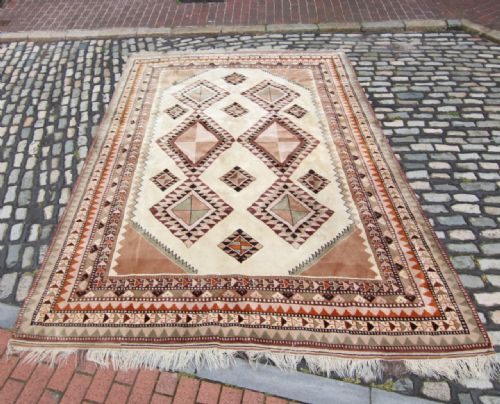
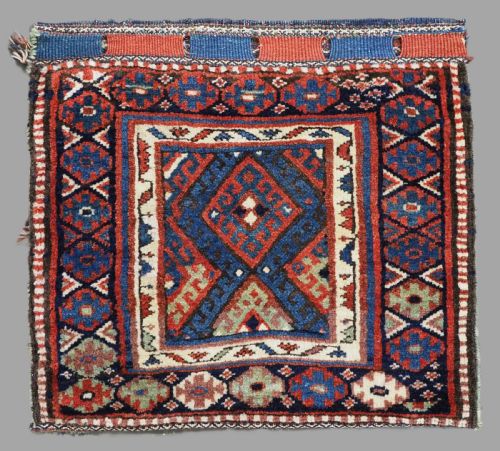
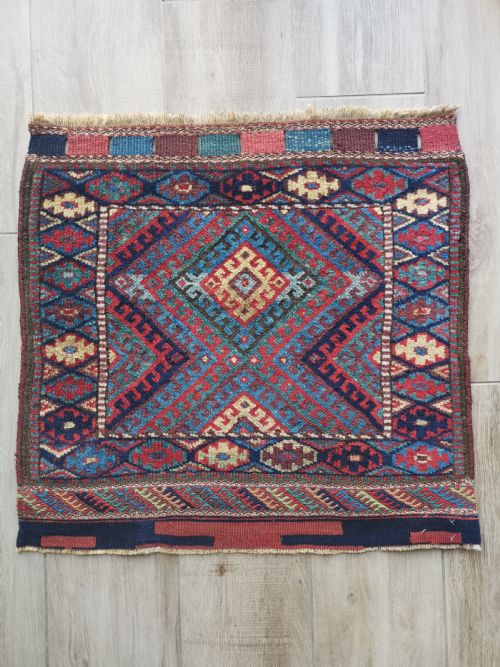
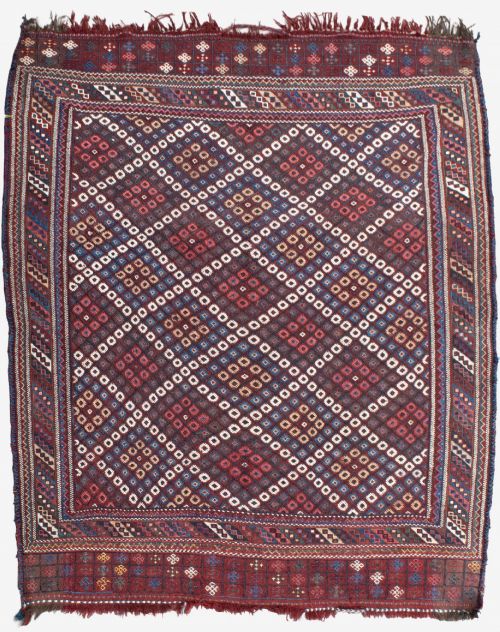
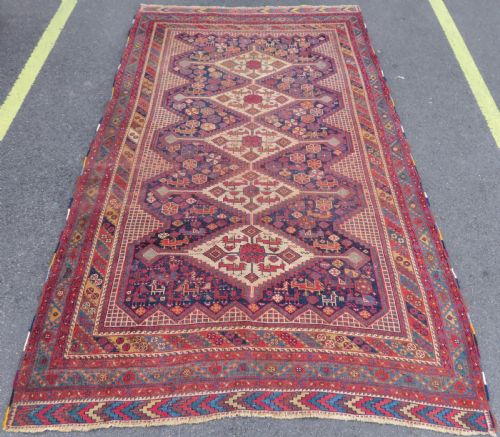
These antique floor coverings offer the striking symmetry of a geometric diamond rug, woven by tribal makers across Persia, the Caucasus, and Central Asia.
Geometric Diamond Rug
A geometric diamond rug brings traditional nomadic patterns into domestic spaces, drawing from Persian tribal, Caucasian, and Turkmen weaving traditions.
The selections span from the late nineteenth century through the early decades of the twentieth century, including room-sized carpets, runners, and saddlebag faces.
Makers utilised wool and cotton foundation materials, often dyed with natural colourants to create repeating medallion and lattice motifs.
How they were made
Weavers utilised hand-spun wool for the pile and structure, combining resilience with textured warmth.
Natural dyes provide the foundation palette across Anatolian, Kurdish, and Baluch examples, yielding rich tones that age with character.
Construction techniques range from knotted pile carpets to flatwoven kilims and soumak structures.
Listings span periods from the 1870s to the 1940s, utilising wool, cotton, and natural dyes across tribal formats.
What varies in quality
Density of knotting and precision in executing complex lattice patterns separate standard room-sized carpets from finer tribal pieces.
The purity and depth of natural colourants directly influence the visual impact across Caucasian and Persian formats.
Preservation of original borders and selvedges determines the integrity of surviving saddlebags, runners, and room carpets.
The Geometric Diamond Rug Glossary
- Kilim
- A flatwoven textile produced without a pile, commonly utilising slit-weave techniques.
- Soumak
- A wrapping technique that creates a brocade-like surface on the reverse side of the textile.
- Sofreh
- A tribal spreading cloth or dining cover, often featuring distinctive central medallions.
- Kazak
- A style of rug originating from the Caucasus, known for bold geometric arrangements and primary colour palettes.
- Saddlebag
- A utilitarian container woven in pairs for transport on animals, frequently surviving today as single bag faces.
Geometric Diamond Rug: Frequently Asked Questions
How do I clean a wool tribal rug?
Gentle surface brushing and professional specialist washing preserve the natural wool fibres and dyes.
Avoid harsh chemical treatments and excessive water immersion to protect the foundation.
Where were these geometric carpets woven?
Tribal groups across Persia, the Caucasus, Anatolia, and Afghanistan produced these floor coverings for daily utility and decoration.
Nomadic and village weavers relied on regional wool sources and generational pattern traditions.
Are these rugs suitable for hallways?
Narrow runner formats and long gallery carpets fit traditional corridor dimensions effectively.
Placement on a quality underlay prevents slipping and cushions the wool pile against heavy foot traffic.
What indicates nineteenth-century origin?
Natural dye variations, hand-spun wool irregularities, and specific tribal motifs point towards earlier production periods.
Structural analysis of the foundation warp and weft threads further clarifies the dating.