


Central Asian Flatweave
Central asian flatweave textiles bring bold tribal geometry and rich nomadic heritage into modern interiors through authentic woven rugs, kilims, and tent bands.
Central Asian Flatweave
When browsing central asian flatweave items, collectors encounter traditional tribal weavings originating from nomadic and semi-nomadic groups across Turkmenistan, Uzbekistan, and Afghanistan. These pieces primarily take the form of utilitarian household objects, storage bags, tent bands, and floor coverings rather than static decorative paintings.
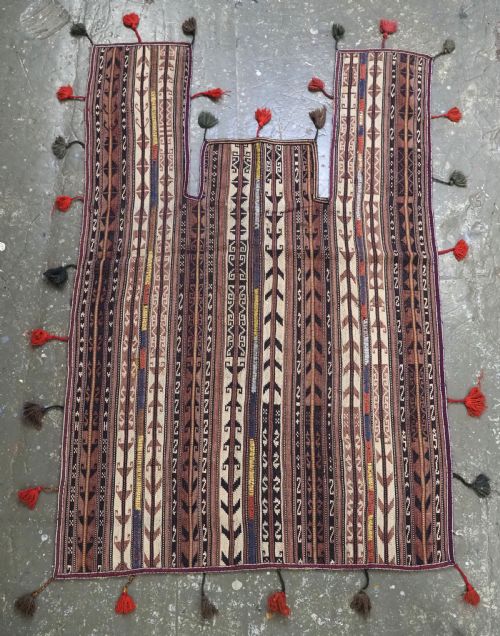
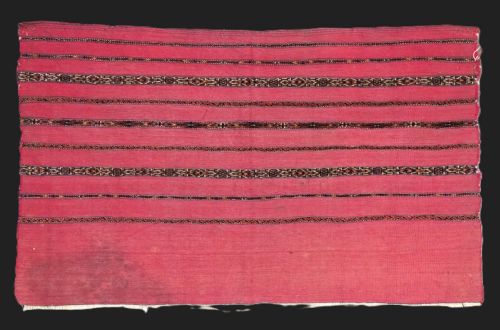
The selection on this page centres heavily on nineteenth and early twentieth-century examples, particularly Turkmen chuvals, Yomut mafrash panels, and Uzbek gajeri kilims. Buyers frequently discover narrow tent bands alongside multi-strip panels and complete horse blankets spanning the decades from the eighteen-fifties onward.
Tribal weaving traditions dictate the distinct visual language found across these textiles, from banded graphic designs to complex geometric repeats. Each region utilised specific structural formats, allowing observers to trace the origins of individual panels back to distinct tribal groups.
Materials and Craftsmanship
Weavers constructed these textiles using hand-spun wool and cotton foundation threads, frequently incorporating camel hair for durable ground colours. Natural dyes provided the saturated reds, browns, and earthy tones that define the palette of these antique nomadic pieces.
Construction techniques relied heavily on flatweave tapestry methods, weft-faced work, and soumak wrapping rather than knotted pile. Artisans often joined multiple narrow woven strips together to create larger panels, storage bags, or architectural tent bands.
Central Asian Flatweave Retail Price Guide 2026
Typical asking prices for central asian flatweave among the pieces listed under this phrase on Sellingantiques today, from the lower quarter to the upper quarter. They describe what is for sale here now, not the wider market.
Object types include horse blankets, chuval faces, tent bands, mafrash panels, and multi-strip kilims from various Central Asian regions.
Assessing Quality and Execution
Superior examples display exceptional tightness of weave and refined handling of the flatweave structure, particularly visible in fine Turkmen chuval faces and banded kilims. The precision of the geometric layout and the clarity of the natural dye palette distinguish finer tribal work from standard utilitarian production.
Original completeness heavily influences the standing of a piece, with surviving backs, tassels, and extended kilim ends marking out better-preserved specimens. The fineness of the spin and the deliberate balance of the graphic motifs reflect the skill invested by the original weaver.
The Central Asian Flatweave Glossary
- Chuval
- A large storage bag face produced by Turkmen tribes to hold household goods inside a yurt. These heavily patterned panels formed an essential part of nomadic domestic life.
- Kilim
- A flatwoven textile made without a knotted pile, created by tightly interweaving warp and weft threads. This technique produces a smooth, durable fabric on both sides.
- Mafrash
- A rectangular storage container or bag face used by Yomut and other Turkmen groups for bedding and personal possessions. They typically feature banded designs or striking geometric repeats.
- Soumak
- A brocading technique where weft threads are wrapped around the warp threads in various sequences to create a raised, textured surface. This method adds structural strength and durability to carpets and flatweaves.
- Tent band
- A long, narrow woven strip utilised structurally and decoratively to secure yurt frameworks in nomadic camps. These pieces showcase dense geometric patterns executed across extended lengths.
Central Asian Flatweave: Frequently Asked Questions
How were central asian flatweave textiles used?
Nomadic communities utilised these flatweaves primarily for practical storage, animal trappings, and architectural tent bands within portable dwellings. Items such as chuvals and mafrash bags held bedding, clothing, and household provisions.
Larger panels and kilims served as floor coverings or protective covers, while long tent bands structurally secured the wooden framework of traditional yurts against harsh weather.
How do I care for an antique flatweave?
Protect antique wool and cotton textiles by keeping them away from direct sunlight to prevent natural dye fading. Gentle vacuuming without a rotating brush helps remove embedded dust from the flatweave structure.
Avoid using harsh chemical cleaners or water immersion on historical pieces. Professional textile conservation specialists should handle any deep cleaning or structural repairs.
How can I tell different tribal styles apart?
Tribal attributions rely on specific structural layouts, colour palettes, and geometric motifs characteristic of particular groups like the Yomut, Tekke, or Uzbek. Turkmen pieces often employ deep reds and precise guls, while Uzbek gajeri kilims favour bold banded configurations.
Examining the weave density and the use of materials such as camel hair or hand-spun wool provides further clues to geographical and cultural origins.
What does flatweave mean?
Flatweave describes a textile produced by tightly interweaving warp and weft threads without knotting individual tufts of pile yarn. This results in a smooth, relatively thin fabric that displays the design equally on both sides.
Techniques under this umbrella include tapestry weaving, soumak wrapping, and banded weft-faced work commonly found in nomadic rugs and utility bags.