


Antique Afghan Kilim
An antique afghan kilim brings flatwoven wool and distinctive tribal patterns into a room, offering durability alongside rich, historic textile art.
Antique Afghan Kilim
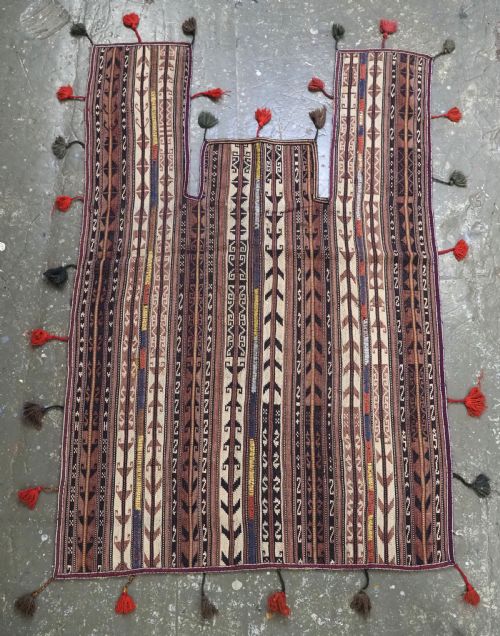
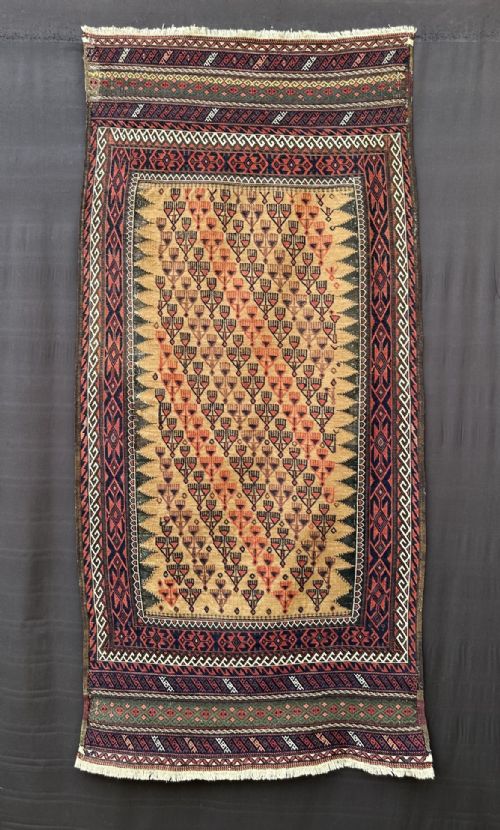
When you search for an antique afghan kilim, you encounter flatwoven textiles produced across regions of Afghanistan and its borderlands. These pieces encompass utilitarian objects such as eating cloths, prayer rugs, horse blankets, and large carpets created by various tribal groups.
The most common examples on this page are flatweave rugs and kilims associated with Baluch, Timuri, Firozkohi, and Pashtun makers. They typically date from the late nineteenth century through to the early decades of the twentieth century, reflecting traditional nomadic and village production.
Many larger formats, particularly those from the Baluch and related tribes, are constructed by weaving two separate vertical strips and joining them down the centre. This method allowed weavers on portable looms to produce substantial floor coverings and covers.
How they were made
Makers relied primarily on hand-spun wool for the pile and flatweave structures, occasionally incorporating cotton for foundations or specific structural details. Natural dyes provided the palette for the geometric bands, weftwork decorations, and tribal motifs characteristic of these pieces.
The construction relies on slit-tapestry weaving and supplementary weftwork techniques, which create the sharp geometric edges and patterned bands seen across the surface. Artisans worked on horizontal or vertical looms set up in nomadic camps or village homes.
Some eating cloths double as floor covers, meaning your antique textile once held several generations of family dinners.
What varies in quality
The standard of an antique afghan kilim depends on the fineness of the wool preparation and the tightness of the weave. Tighter, more precise packing of the weft threads results in a firmer, more resilient textile that withstands floor use.
Artistic execution and complexity of design also separate everyday utility pieces from finer ceremonial examples. The clarity of natural dye colours and the precision in joining two-part weaves contribute to the standing of an individual textile.
The Antique Afghan Kilim Glossary
- Kilim
- A flatwoven carpet or rug produced without a pile by tightly interweaving warp and weft strands. This technique creates a smooth, reversible surface often decorated with geometric bands.
- Sofreh
- A textile used primarily as a spread for dining or sitting during meals. These cloths frequently feature specific tribal borders and practical rectangular formats.
- Weftwork
- Supplementary weft patterning applied across the ground weave to build texture and design. It adds raised geometric details to the flat surface.
- Warp
- The stationary vertical threads stretched onto a loom before weaving begins. The weft threads are passed over and under these foundational strands.
- Baluch
- A tribal grouping associated with numerous woven rugs and flatweaves from the borderlands of Afghanistan and Persia. Their work often displays dark palettes and precise geometric arrangements.
Antique Afghan Kilim: Frequently Asked Questions
How do I care for an antique kilim?
Regular gentle vacuuming without a rotating brush helps remove dust from the tight flatweave structure.
Professional textile conservation cleaning is recommended for heavier maintenance to protect the natural dyes and wool.
What is a two-part kilim?
Many larger tribal flatweaves were produced by weaving two separate long strips on narrow portable looms.
These individual panels were then stitched together down the middle to form a wider carpet or cover.
How do I identify tribal origins?
Tribal attributions rely on specific structural traits, structural wool qualities, and distinct geometric motifs.
Design conventions and regional weaving traditions help link pieces to groups such as the Timuri or Baluch.