
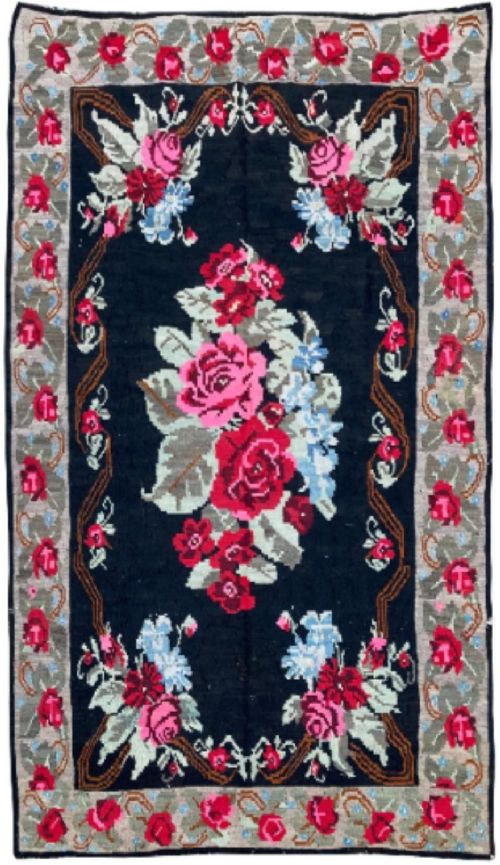
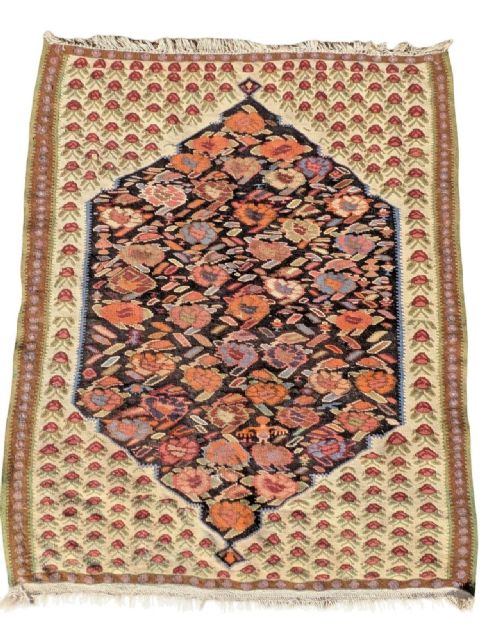
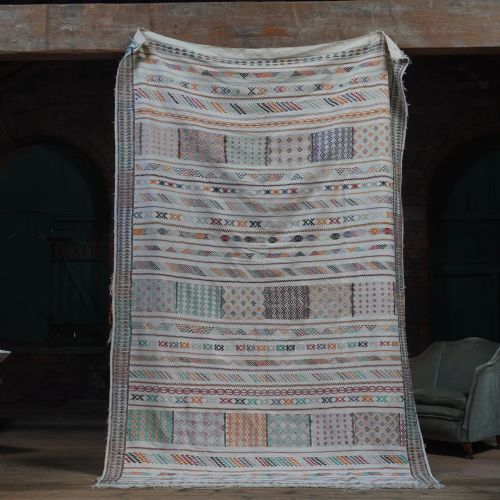
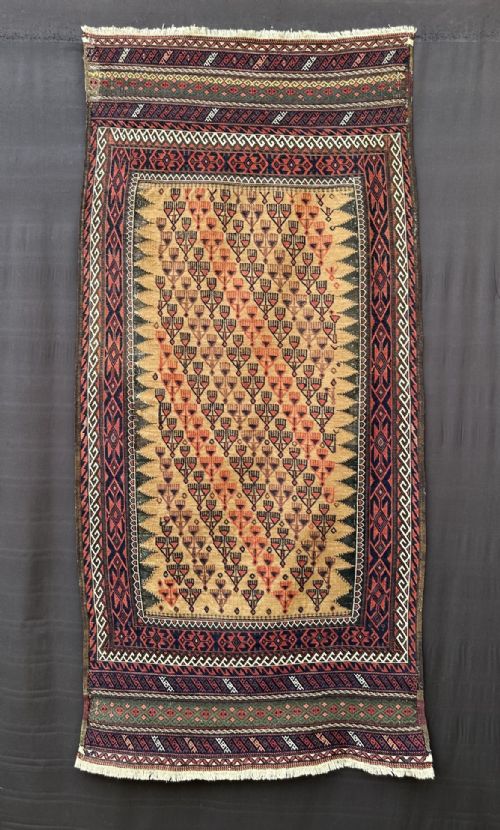


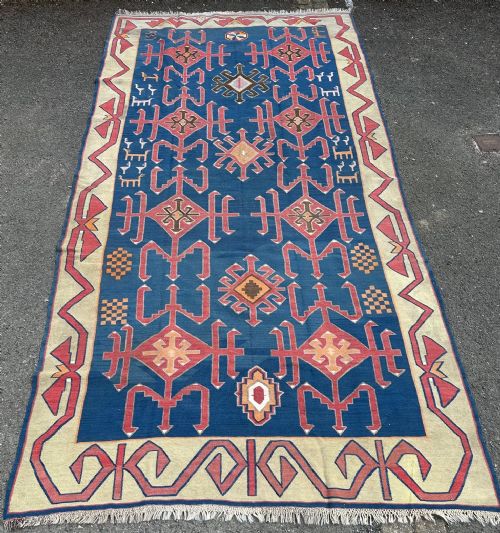


Antique Flatweave Runner
An antique flatweave runner brings linear tribal design and historical textiles straight to narrow corridors and long hallways.
Antique Flatweave Runner
When searching for an antique flatweave runner, buyers encounter narrow, elongated textile pieces originating from tribal and nomadic weaving traditions across the Caucasus, Anatolia, Persia, and Central Asia. These textiles take the form of specialised runner rugs, elongated kilims, and assembled panels or tent bands produced during the nineteenth and early twentieth centuries.
How they were made
The construction relies primarily on hand-spun wool and cotton, occasionally incorporating camel wool for durability and distinct texture in tribal workshops. Weavers utilised natural dyes to achieve soft, faded reds, banded colorways, and rich graphic patterns across the surface.
Techniques range from slit-tapestry flatweaving without a pile to mixed techniques, embroidery, and structural assembly where multiple narrow strips or panels are joined to form a single functional carpet or runner.
Nomadic weavers occasionally joined narrow tent bands and multi-part panels together, creating unexpected fifty-foot corridors of geometric history.
What varies in quality
Quality in these textiles depends on the tightness of the weave, the precision of the geometric or banded design, and the integrity of the structural joins in multi-part pieces. Finer weaves and well-preserved natural dye palettes distinguish master tribal work from standard utilitarian output.
The sophistication of regional motifs, such as complex Caucasian layouts or detailed Central Asian Gajeri panels, marks the upper tier of the range. Condition and the preservation of original selvedges and ends further separate exceptional examples from heavily restored or fragmented items.
The Antique Flatweave Runner Glossary
- Kilim
- A flatwoven carpet or rug produced without a pile by tightly interworking warp and weft threads. This technique creates a lightweight, reversible textile with sharp geometric patterns.
- Sofreh
- A specialised tribal spread or cloth used for dining or bread preparation. These textiles often feature narrow runner-like proportions and distinct regional iconography.
- Mafrash
- A storage bag face or panel from nomadic households, often dismantled and reassembled into small flatwoven rugs or runners. They display characteristic Caucasian or Persian tribal designs.
- Warp
- The stationary vertical threads stretched across a loom upon which the weft is woven. The density and material of these foundation threads dictate the structural stability of the runner.
- Weft
- The horizontal threads passed through the warp to create the visible pattern and colour bands. In flatweaves, these structural threads carry the entire design without a protective pile surface.
Antique Flatweave Runner: Frequently Asked Questions
Where were these runners made?
The pieces originate from tribal weaving centres across Central Asia, the Caucasus, Turkey, and Persia.
Specific nomadic groups, including the Baluch, Qashqa'i, and Uzbek tribes, produced these runners for daily domestic use or structural tent furnishings.
How do I care for a flatweave runner?
Living with a flatweave runner involves using a breathable underlay to prevent sliding and protect the antique wool foundation from friction.
Gentle vacuuming without a rotating brush roll and professional cleaning tailored to natural dyes will preserve the textile.
How are regional styles told apart?
Regional styles are distinguished by specific colour palettes, structural construction methods, and geometric motifs unique to each tribal group.
For instance, Caucasian pieces often feature crisp banded designs, while Persian and Afghan runners frequently incorporate softer red tones and multi-strip assemblies.