
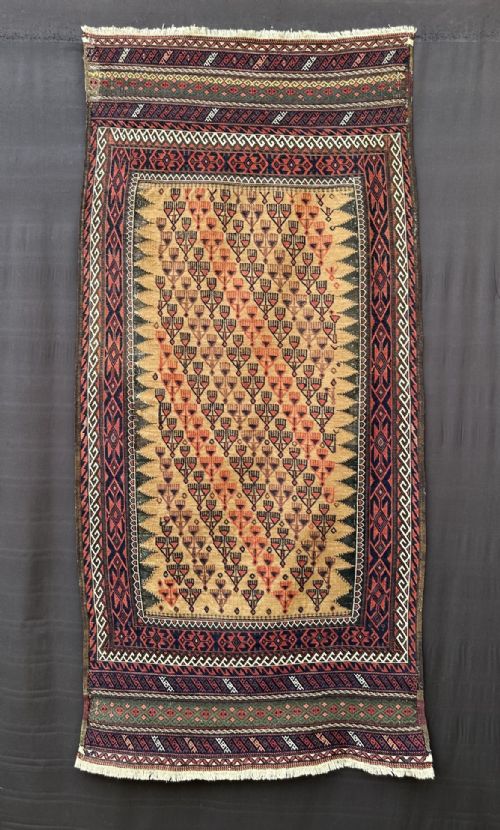
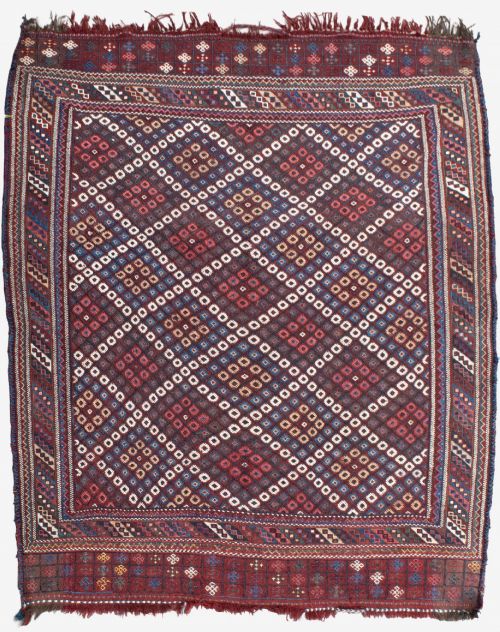


Geometric Persian Kilim
These flat-woven pieces, known as a geometric persian kilim, offer crisp tribal patterns and rich wool textures that anchor a room.
Geometric Persian Kilim
When you search for a geometric persian kilim, you are looking at flat-woven textiles produced by nomadic and tribal groups across Persia. The pieces available here span from the mid-nineteenth century into the early twentieth century, taking forms such as floor rugs, runners, cushions, and utilitarian bread sofrehs.
You will frequently meet examples attributed to tribes such as the Qashqai, Afshar, Shahsavan, and Baluch. These items served practical roles in tribal life, from interior furnishings to storage bags and dining cloths, before finding their way into modern interiors.
How They Were Made
These textiles are constructed using wool and cotton, with artisans employing hand-spun wool to create durable flat-weaves without a pile. The weavers interlaced warp and weft threads tightly to build up sharp structural lines and firm structures.
Makers relied on natural dyes to colour the wool, producing deep tones and soft secondary shades that age gracefully. This dyeing method interacts with hand-spun fibres to give each weave subtle tonal variations across the surface.
Some storage bags retain their original wool backs, offering a complete surviving piece of nomadic housekeeping.
What Varies in Quality
The sophistication of the drawing and the clarity of the tribal motifs set the standard for these weaves. Tighter knotting and precise geometric control distinguish finer pieces from simpler utilitarian items.
The depth and preservation of the natural dyes significantly influence the visual impact of a piece. Examples that retain well-balanced hues and intact original borders demonstrate superior craftsmanship.
The Geometric Persian Kilim Glossary
- Sofreh
- A flat-woven textile traditionally used for laying out meals or kneading bread within nomadic households. These items frequently display stark geometric formats.
- Soumak
- A wrapping technique used to create a textured surface on flat-weaves, distinct from standard plain weave. It adds durability and distinct linear definition to the design.
- Warp
- The stationary vertical threads stretched on the loom before weaving begins. The weft threads are passed through these structural elements.
- Weft
- The horizontal threads that pass over and under the warp to form the cloth and pattern. In these pieces, the weft creates the visible design.
- Bag face
- The decorative front of a nomadic storage sack or saddlebag, repurposed as a small hanging or cushion. These portions often concentrate the finest design work.
Geometric Persian Kilim: Frequently Asked Questions
How do I clean an antique kilim?
Gentle surface brushing and occasional professional specialist cleaning preserve the fragile wool and natural dyes.
Avoid harsh chemical treatments and excessive water immersion to protect the structural integrity of the flat-weave.
Can I use these flat-weaves on the floor?
Many of these pieces function well as floor coverings in areas with moderate foot traffic. Using a suitable underlay helps prevent slipping and reduces friction against hard surfaces.
Delicate formats, such as sofrehs or small bag faces, are better suited to low-traffic placements or display as textiles.
What is the difference between a rug and a sofreh?
Rugs were traditionally woven for floor placement, tent decoration, or general domestic bedding and division.
Sofrehs served specific domestic functions related to food preparation and dining, often resulting in distinct narrow or square proportions.
How do I date an older tribal flat-weave?
Dating relies on assessing the specific wool characteristics, the organic palette of the natural dyes, and structural construction methods. Historical attributions to particular tribal regions also help place pieces within the nineteenth and early twentieth centuries.
Comparing structural styles against documented tribal weaving traditions clarifies the likely period of production.