
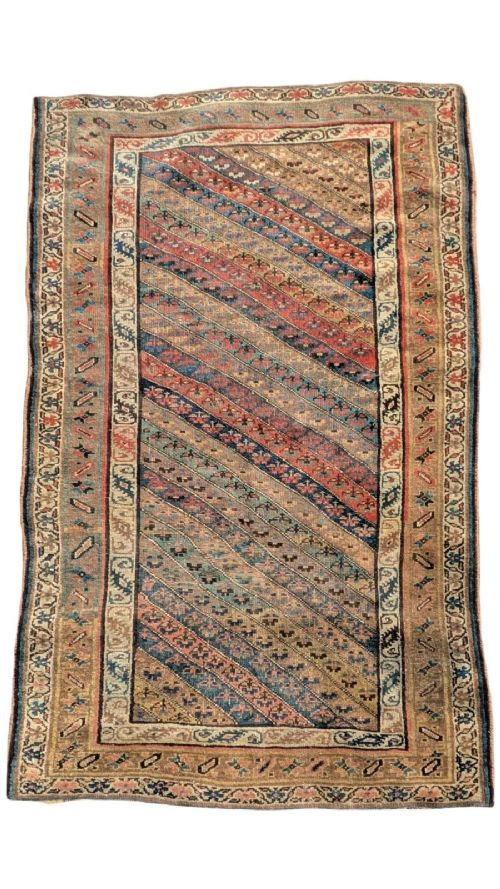
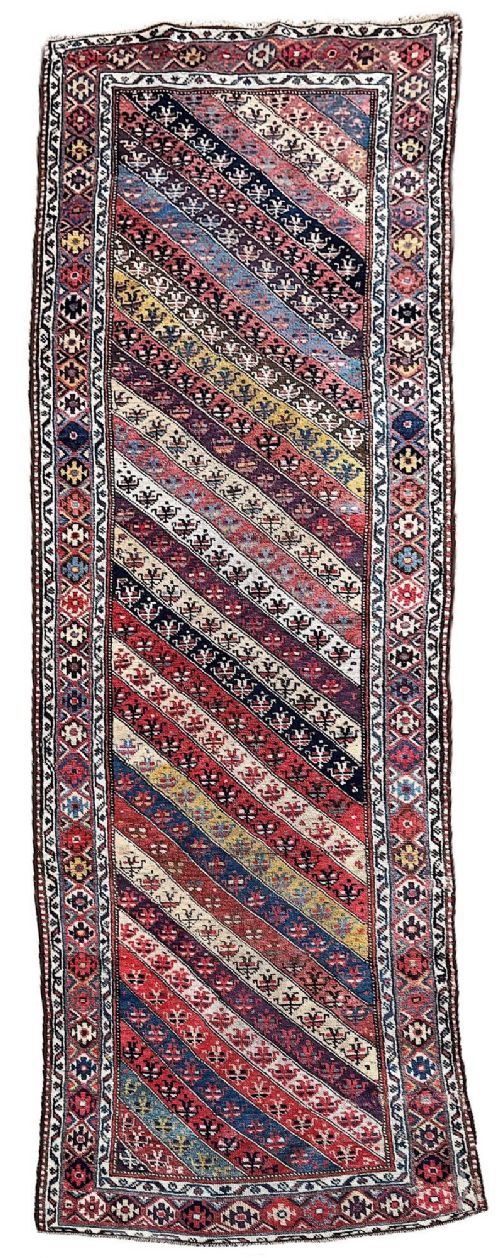


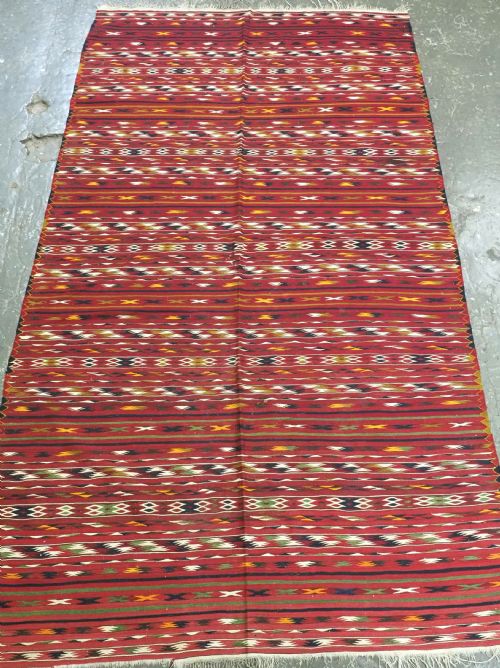

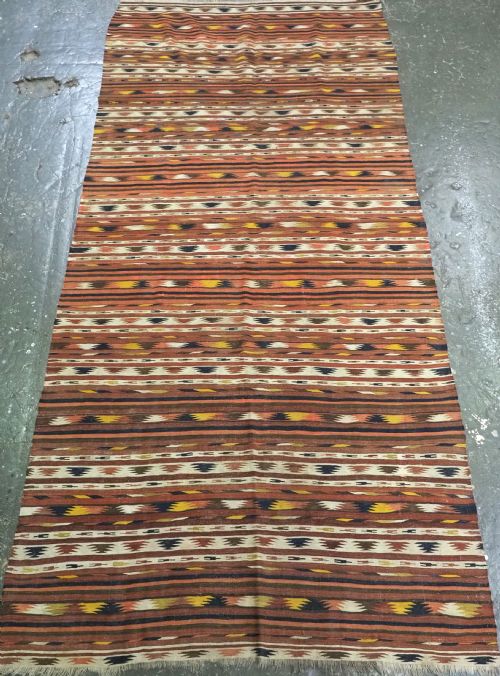

Striped Tribal Area Rug
A striped tribal area rug brings rich texture and geometric history to a room through genuine nomadic weaving traditions.
Striped Tribal Area Rug
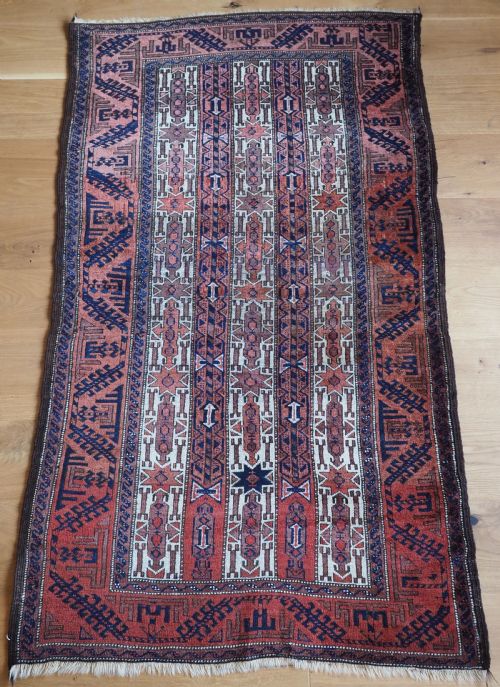
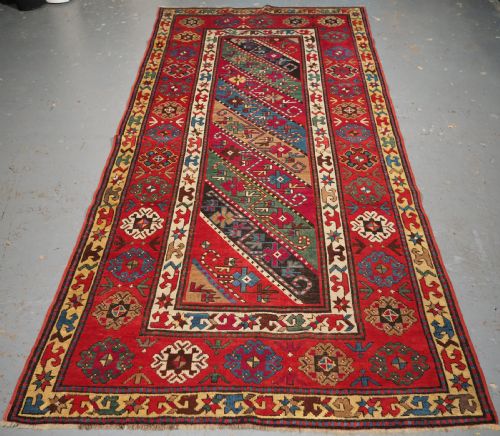
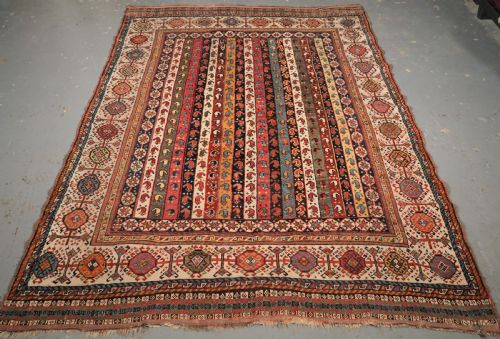
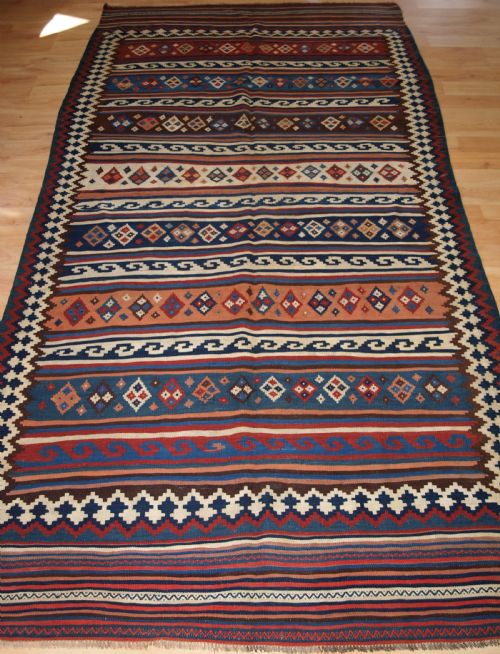
These striped tribal area rug examples encompass regional Caucasian, Central Asian, and Persian nomadic weaving traditions dating from the late nineteenth and early twentieth centuries. Buyers encounter diverse formats ranging from narrow runner rugs and prayer rugs to flatwoven kilims and pile carpets.
The aesthetic centres on linear patterns, including banded designs, chevron motifs, and diagonal stripes alongside boteh patterns. Turkmen, Baluch, Gendje, and Qashqai groups produced these distinct textiles to serve practical nomadic purposes while expressing tribal identity through pattern.
Materials and construction methods
Weavers relied principally on wool and cotton to construct these floor coverings, utilising both pile knotting and flatwoven kilim techniques. Fine weaves appear frequently in Turkmen pieces, whereas others involve wool woven in distinct sections.
Nomadic workshops employed durable natural fibres suited to daily use, ensuring the structural integrity of runners, prayer rugs, and larger carpets.
Listings span the years 1880 to 1920, incorporating Caucasian, Central Asian, and Persian tribal origins.
Factors determining quality
Quality rests in the precision of the weave and the complexity of the linear layout, distinguishing standard utility pieces from exceptionally fine examples with tight knotting or intricate flatweaving. The crispness of banded and striped arrangements dictates the visual impact of each rug.
Scarce designs, such as specific white ground stripe layouts or scarce striped boteh configurations, elevate certain pieces above standard regional output. The overall integrity of the wool and the sophistication of the tribal design grammar separate ordinary production from superior examples.
The Striped Tribal Area Rug Glossary
- Kilim
- A flatwoven textile produced without a pile, commonly associated with nomadic and tribal workshops. These pieces offer lightweight versatility and sharp geometric patterning.
- Boteh
- An almond-shaped or paisley motif originating in Persia and frequently incorporated into traditional Caucasian and tribal designs. This ancient symbol often appears arranged in rows or bands.
- Runner
- A long, narrow carpet format designed for hallways, corridors, or tight spaces. These pieces combine linear proportions with repeating tribal motifs.
- Prayer rug
- A small rug featuring a mihrab or niche design, traditionally used for personal devotion. The composition typically directs the eye toward a central focal point.
Striped Tribal Area Rug: Frequently Asked Questions
How do I clean an antique rug?
Gentle surface brushing and professional specialist care preserve the natural wool fibres without damaging historic dyes.
Avoid harsh chemical treatments or immersion washing unless handled by an experienced textile conservator.
Where should I place a runner?
Narrow formats suit hallways, entryways, and bedside placements where linear dimensions complement the architecture.
Proper underlay protects the historic weave from sliding on hard flooring.
How are periods dated?
Stylistic markers, structural techniques, and regional wool characteristics indicate the approximate decade of production.
Comparison with documented tribal weaving traditions helps establish the likely era of manufacture.
Are flatweaves durable?
Flatwoven kilims withstand moderate foot traffic when paired with a quality rug pad to absorb impact.
Their sturdy wool construction served nomadic groups for daily practical use in domestic settings.