







Antique Balkan Carpet
An antique balkan carpet brings geometric village patterns and rich vegetable dyes directly to wooden floors.
Antique Balkan Carpet
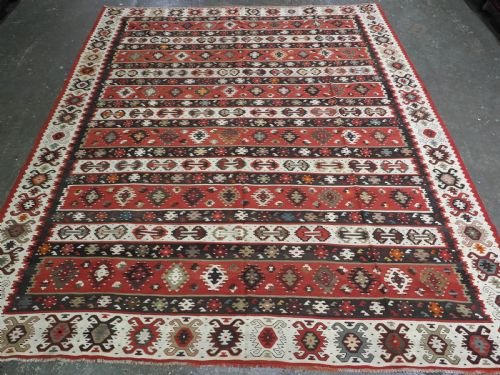
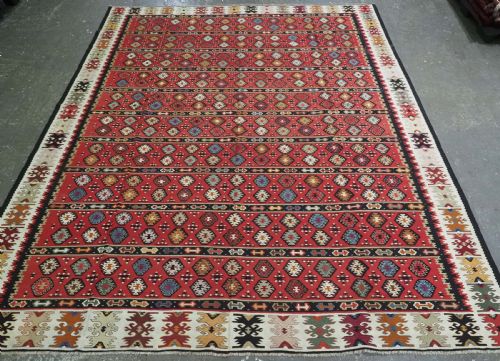
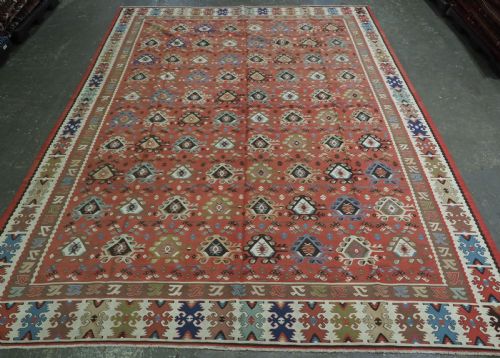
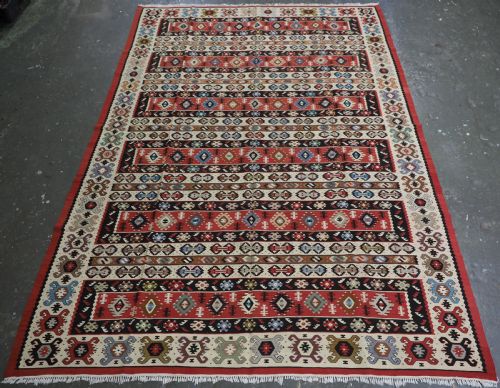
When you search for an antique balkan carpet, you encounter flatwoven kilims and pile rugs originating from the nineteenth and early twentieth centuries. The selection on this page consists predominantly of flatweaves produced in regions such as Pirot, Sarkoy, Monastir, and Thrace.
These floor coverings display distinct regional motifs including flowering trees, banded patterns, lattices, and repeat medallions. Workshops and domestic weavers in these areas produced both room-sized carpets and smaller prayer rugs for daily use.
The aesthetic bridges Ottoman design traditions with distinct Balkan folk art styles. Pieces range from large room formats to smaller utilitarian rugs woven with traditional village symbolism.
Materials and construction
Weavers constructed these textiles primarily using wool for the foundation and surface pattern. Cotton occasionally appears in the structural elements or supplementary details of specific flatweaves.
The makers utilised traditional slit-weave and interlocking tapestry techniques to create sharp geometric colour transitions. Natural dye sources provided the soft reds, warm tones, and pastel shades visible across the period.
Some nineteenth-century weavers hid tiny intentional errors in their geometric borders to ward off the evil eye and appease the spirits.
Defining quality in weaving
Quality rests upon the precision of the flatweave structure and the integrity of the wool. Tighter tension in the weaving creates a firmer fabric that withstands foot traffic over generations.
The depth and harmony of the dyes distinguish finer examples from standard production. Age and wear interact differently depending on the original density of the wool and the conservation of the selvedges.
The Antique Balkan Carpet Glossary
- Kilim
- A flatwoven carpet produced without a pile by tightly interweaving warp and weft threads. This technique results in a lightweight textile suitable for floors or wall hanging.
- Sarkoy
- A specific weaving tradition associated with the Balkan region, known for distinctive geometric and banded layouts. These kilims frequently utilise soft colour palettes.
- Pirot
- A town renowned for its carpet weaving industry, producing flatweaves with intricate bilateral symmetry and detailed geometric motifs. Pirot kilims often feature classic repeat designs.
- Prayer rug
- A small format rug featuring a mihrab or arch design indicating the direction of prayer. These pieces served devotional purposes in domestic spaces.
- Warp
- The stationary vertical threads stretched onto a loom that form the structural foundation of the textile. Wefts are passed horizontally through these threads to build the pattern.
Antique Balkan Carpet: Frequently Asked Questions
How do I clean an antique balkan carpet?
Gentle surface vacuuming without a beater bar removes loose dust and debris from the wool fibres. Professional textile conservators should handle deeper washing to protect historical natural dyes.
Avoid chemical detergents and excessive water immersion during maintenance. Prompt attention to spills prevents moisture from settling into the wool foundation.
Where were these carpets originally made?
Weavers produced these textiles across various Balkan territories influenced by Ottoman design traditions. Specific output centres included Pirot, Sarkoy, Monastir, and Thrace.
Production took place both in organised workshops and household settings. Local stylistic preferences dictated the specific choice of geometric motifs and colour arrangements.
Can I use these rugs on high traffic floors?
Flatwoven kilims possess a durable structure that withstands moderate walking if placed over a quality underlay. A proper rug pad prevents sliding and reduces friction between the wool and the floorboards.
Larger room-sized examples distribute foot traffic across wider surfaces. Rotating the carpet periodically ensures even wear patterns over time.
What materials make up these textiles?
Traditional wool serves as the primary material for both the warp foundation and the weft patterns. Cotton occasionally appears in specific structural areas of certain regional pieces.
Weavers relied on natural dyestuffs derived from plants and minerals to colour the wool. These dyes mature gracefully as the textiles age under ambient light.
How do I date an antique balkan carpet?
Examination of the wool spin, dye palette, and structural wear patterns provides clues to the era of production. Pieces on this page span from the mid-nineteenth century through the early twentieth century.
Stylistic conventions and regional weaving signatures help narrow the timeframe. Older examples often display softer vegetable dye patination compared to later twentieth-century output.