

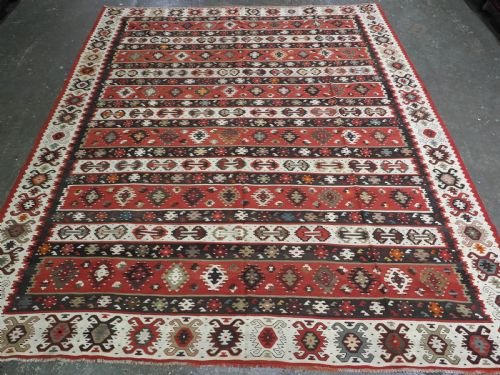


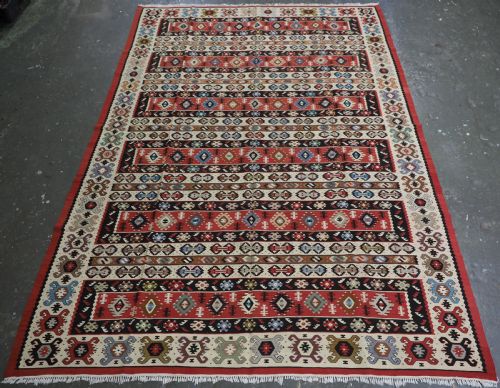

Serbian Pirot Rug
These serbian pirot rug pieces are traditional flatweaves of striking geometric design, bringing authentic Balkan folk art into modern interiors.
Serbian Pirot Rug
A serbian pirot rug represents a rich tradition of Balkan folk art, created as a flatwoven textile designed for functional utility and visual warmth. These works date primarily to the 1920 period, showcasing specific stylistic motifs that define the regional output.
The format typically appears as area rugs, kilim rugs, and broader carpets that utilise traditional weaving methods. Collectors encounter distinct patterns including classic designs, flowering trees, banded layouts, and repeat medallions.
Makers integrated local cultural symbolism into these floor coverings, producing pieces that function as both durable furnishings and decorative art. The visual language relies heavily on balanced geometry and structured borders characteristic of Balkan traditional craft.
How they were made
The construction of a serbian pirot rug relies on natural wool and cotton fibres spun and woven by hand. Weavers utilised interlocking tapestry techniques to build sharp geometric patterns without forming bulky knots.
Dyes derived from local plant and mineral sources provided the warm soft colours and rich hues seen across the pieces. This flatweave method ensures the textile remains reversible, with nearly identical imagery visible on both sides.
All listed pieces originate from the 1920 period and utilise wool and cotton materials in traditional Balkan folk art styles.
What varies in quality
The standard of a serbian pirot rug depends on the precision of the flatweave structure and the complexity of the design layout. Finer examples display tight tension in the wool and cotton weave, ensuring the geometric lines remain crisp and structurally sound.
Colour saturation and the balance of natural tones dictate the visual success of each carpet. Pieces featuring scarce motifs or harmonious banded arrangements demonstrate a higher degree of artisan skill within the Balkan traditional idiom.
The Serbian Pirot Rug Glossary
- Kilim
- A flatwoven carpet or rug produced without pile across the Balkan region and the Near East. This technique creates a lightweight textile that lies flat on the floor.
- Balkan Folk Art
- A category of traditional design reflecting the cultural heritage and domestic crafts of southeastern Europe. It encompasses distinctive geometric patterns and symbolic motifs.
- Area Rugs
- Portable floor coverings smaller than room size, used to define specific zones within an interior space. They offer versatility in placement across wooden or tiled floors.
- Flatweave
- A textile constructed by interweaving warp and weft threads without knotting individual tufts. This method produces a thin, durable fabric suited for traditional floor coverings.
Serbian Pirot Rug: Frequently Asked Questions
What is a serbian pirot rug?
A serbian pirot rug is a traditional flatwoven textile originating from the Balkan region, created using wool and cotton materials. These pieces are celebrated for their intricate folk art designs and distinct regional patterns.
They function primarily as decorative floor coverings that bring warmth and historical character to domestic interiors. Each piece reflects specific weaving traditions passed down through generations of local artisans.
How do I clean a pirot kilim?
Maintenance requires gentle regular vacuuming without a rotating brush to protect the delicate flatweave structure. Professional textile cleaning is recommended for deep maintenance to preserve the natural wool fibres.
Avoiding excessive moisture and direct sunlight helps maintain the integrity of the natural dyes. Proper care ensures the woven structure remains stable over decades of use.
Where were these rugs made?
These textiles were produced in the Balkan region, specifically associated with traditional weaving communities in southeastern Europe. The craft represents a vital part of local cultural heritage.
Weavers utilised locally sourced materials such as wool and cotton to construct these distinctive flatweaves. The geographic origin heavily influences the specific geometric motifs and banded layouts found on the textiles.
Can I use these rugs on stairs?
Flatwoven kilims can be placed in moderate traffic areas when secured with a proper rug underlay. Their thin profile allows doors to clear them easily compared to deep pile carpets.
Placing them in lighter traffic zones helps preserve the fine wool and cotton construction over time. Proper positioning ensures the textile lies flat and prevents slipping.