


Wooden Nest of Tables
A wooden nest of tables offers a clever tiered solution for small spaces, sliding together when floor space matters and separating to serve drinks or hold books.
Wooden Nest of Tables
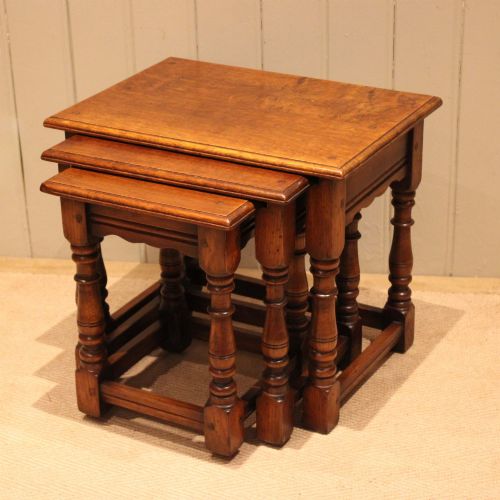
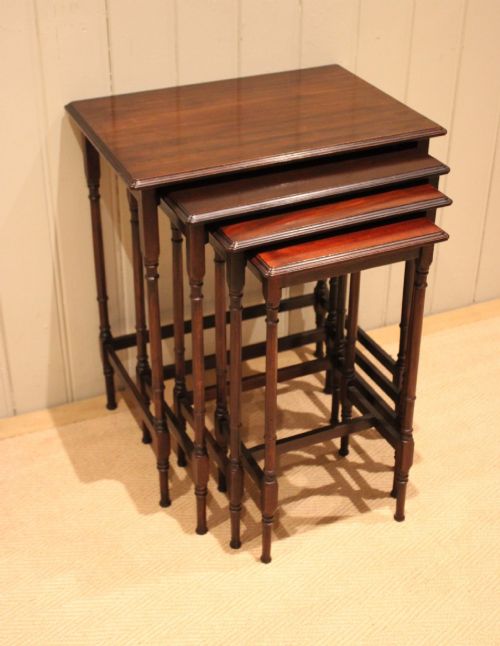
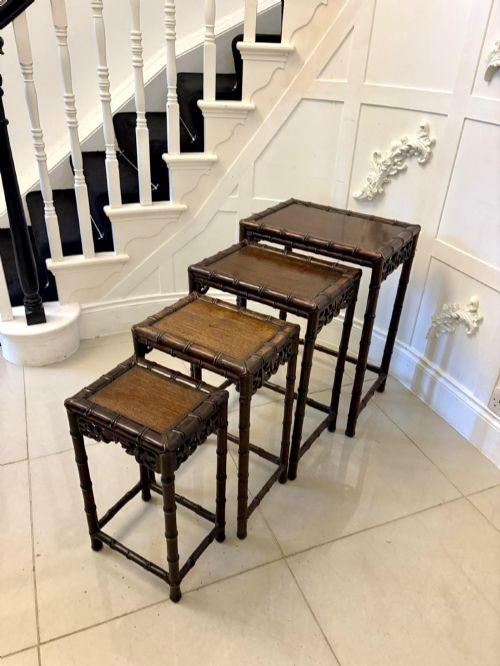
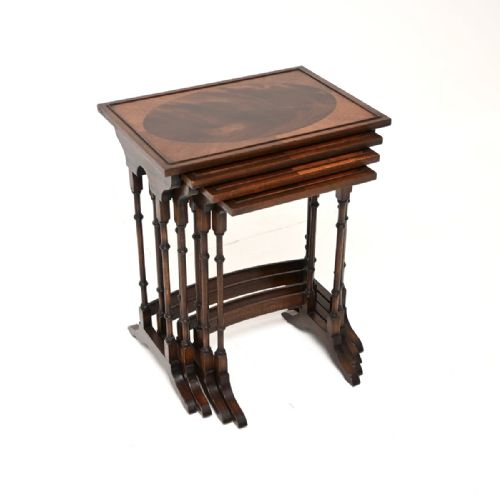
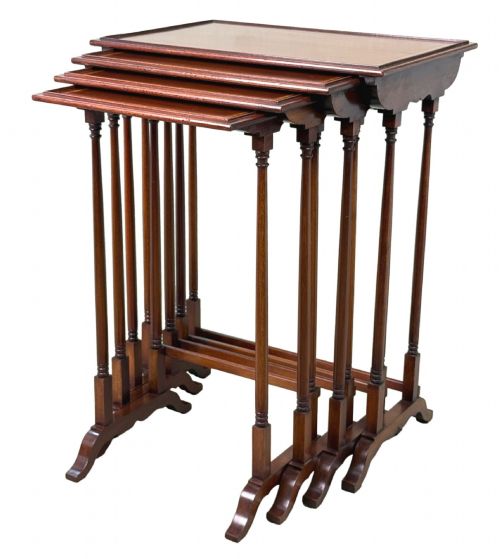
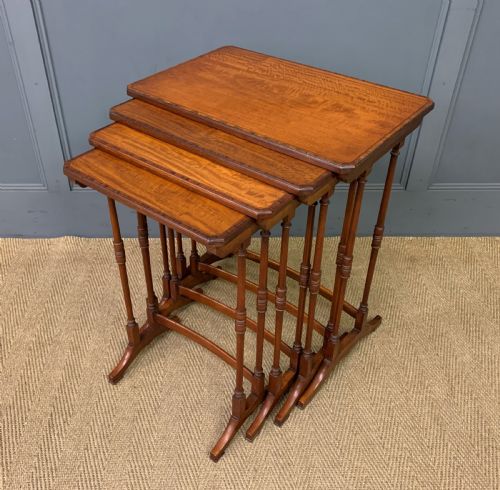
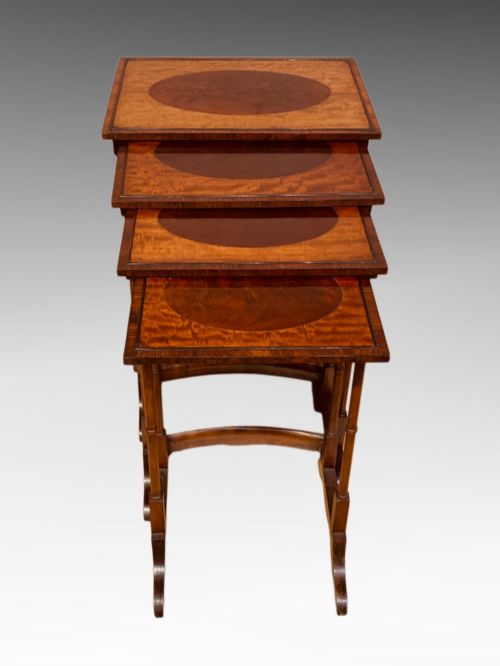
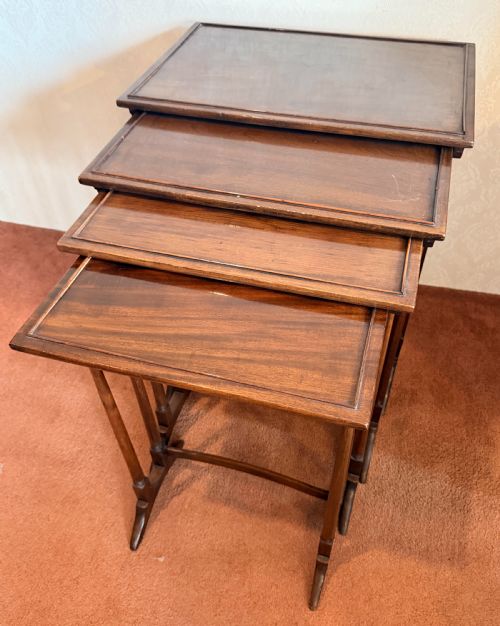
A wooden nest of tables brings together sets of three, four, or five matching pieces designed to slide neatly beneath one another. These practical suites appear across multiple periods, with Edwardian and nineteenth-century examples forming the core of what you will encounter here.
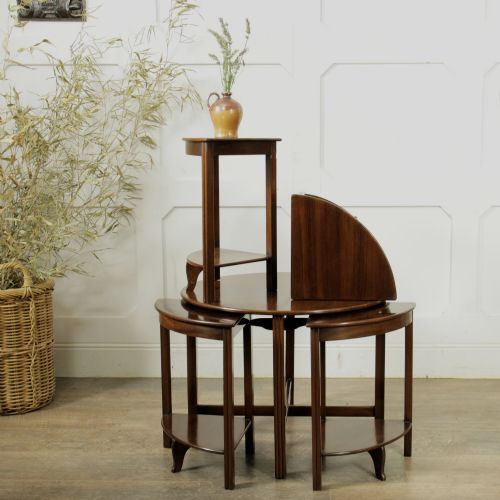
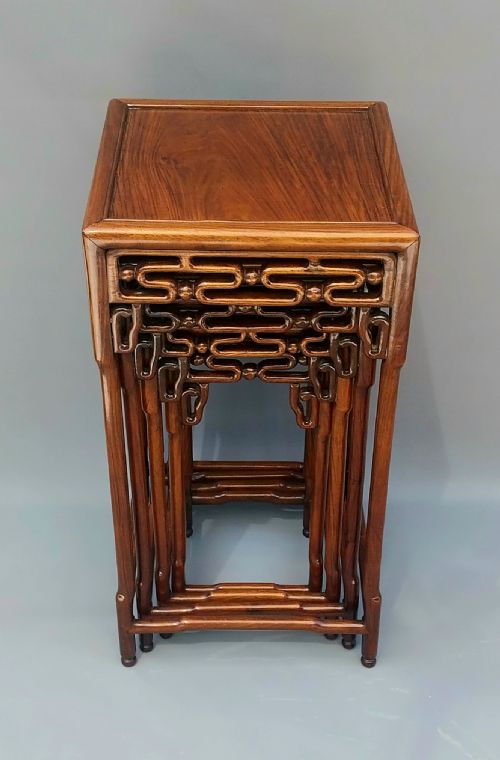
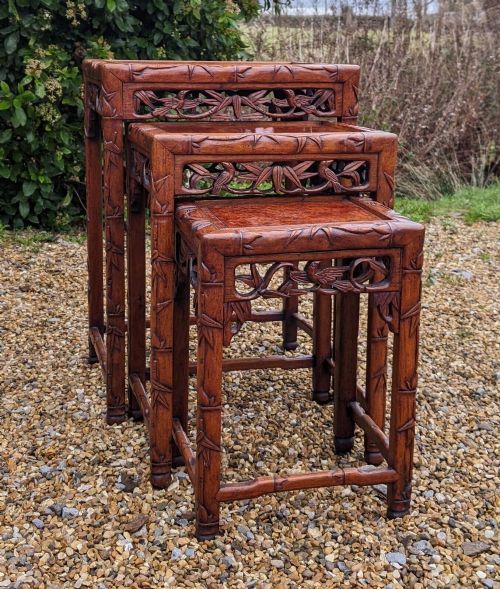
Makers shaped these sets in various configurations, ranging from circular and serpentine tops to traditional rectangular forms. You will find pieces spanning from Georgian and Regency influences through to Art Deco and Chinoiserie interpretations, executed in woods like mahogany, walnut, and rosewood.
The layout typically comprises a master table with smaller companions that graduate in size to tuck completely out of sight. Such designs serve as versatile occasional furniture, moving easily from a primary seating area to bedside service as daily life requires.
Timbers and construction techniques
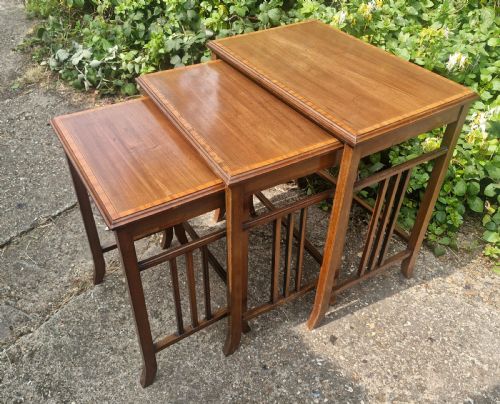
Cabinetmakers relied heavily on dense hardwoods such as mahogany, walnut, and rosewood to withstand the continuous friction of sliding tables in and out. Finer examples incorporate contrasting veneers like satinwood, boxwood, and yew to create geometric borders or decorative central panels.
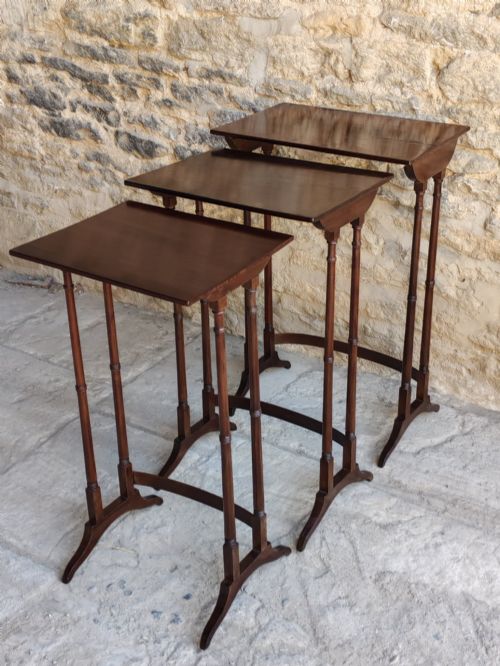
Construction frequently employs delicate turned legs, slender supports, and precise joinery to ensure the smaller tables clear the frame of the one above. Inlaid details, hand-carved motifs, and occasionally embossed leather tops finish the surfaces, balancing structural durability with refined appearance.
Listings feature woods spanning mahogany, walnut, rosewood, satinwood, oak, and teak across Edwardian, Victorian, and Art Deco periods.
Judging construction and finish
Quality rests upon how smoothly the smaller tables slide into the primary frame without binding or rocking on an uneven floor. Superior sets maintain consistent timber grain and careful matching across all tiers, rather than letting secondary tables drift into mismatched wood selections.
The crispness of the inlay work, the integrity of the joints where legs meet the underside of the top, and the weight of the timber separate standard production from exceptional craftsmanship. Fine examples retain their original polish and structural rigidity after a century of daily use.
Heal's
The Wooden Nest of Tables Glossary
- Quartetto
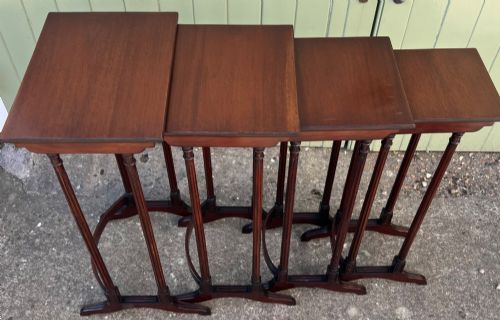
- A set of four tables designed to nest together. This nineteenth-century term often appears on labels for sets inspired by Regency or Victorian designs.
- Inlay
- A technique where pieces of contrasting wood, such as satinwood or boxwood, are inserted into recessed cavities to form decorative patterns. It defines many Edwardian and Sheraton revival pieces.
- Hongmu
- A traditional Chinese term for dense hardwoods, frequently translated as redwood. It describes heavy, finely carved tables from the nineteenth century.
- Serpentine
- A curved line that swoops inward and outward in a continuous flowing wave. This shape appears on the edges of finer tabletop surfaces.
- Veneer
- A thin slice of figured wood applied over a more stable secondary timber. It allows cabinetmakers to display rich grain patterns without risking the warping of solid slabs.
Wooden Nest of Tables: Frequently Asked Questions
What is a wooden nest of tables?
A wooden nest of tables consists of a graded set of matching tables designed to stack directly underneath the largest piece. This arrangement provides multiple surface areas while occupying the floor space of a single small table.
Historically favoured in nineteenth-century and Edwardian homes, these sets adapt easily to modern rooms where floor space is at a premium.
How do you date an old wooden nest?
Dating relies on timber selection, framing styles, and decorative techniques like string inlay or hand-carving. Georgian and Regency pieces show classical proportions, while Edwardian examples often feature satinwood banding or serpentine edges.
Examining the underside and the method used to join the legs to the top reveals the period of manufacture more clearly than surface appearance alone.
Where should I place these tables?
These pieces function best beside armchairs, sofas, or beds where the smaller tiers can be drawn out for cups, books, or lamps. Keeping the set stacked against a wall preserves walk space until guests arrive.
Because the tables slide apart, you can scatter them across a room during gatherings and return them to a single footprint afterwards.
What is a quartetto table set?
A quartetto set is simply a nest comprising specifically four tables that graduate in size. The term gained popularity during the Victorian and Edwardian eras for matching occasional suites.
These four-tier sets offer exceptional versatility, letting you distribute several surfaces around a room simultaneously.