




Stackable Occasional Tables
Stackable occasional tables are ingenious space-saving sets that slide neatly beneath one another, offering versatile surface area when needed.
Stackable Occasional Tables
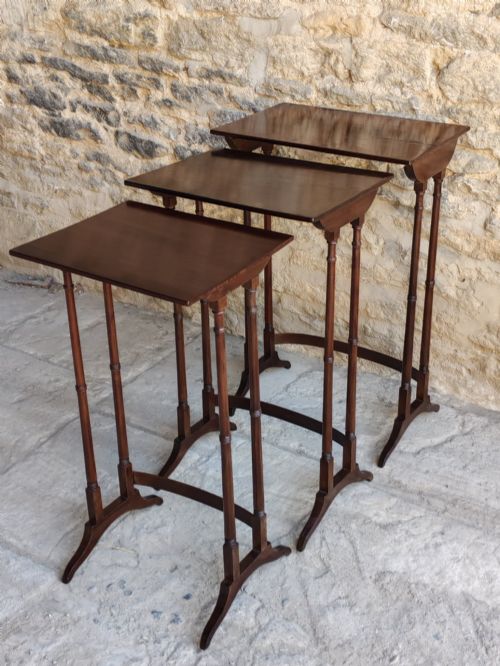
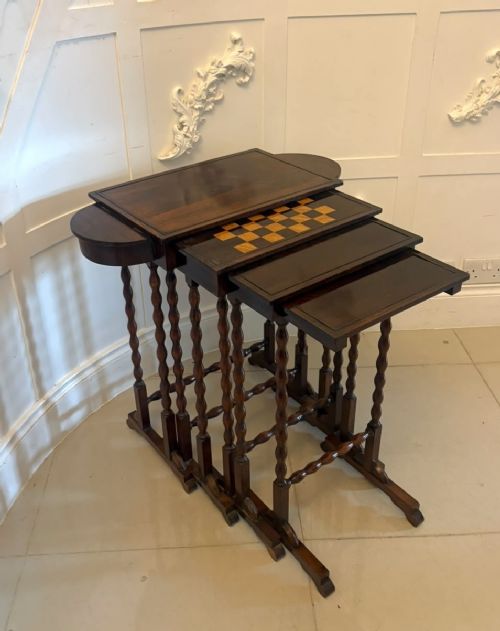
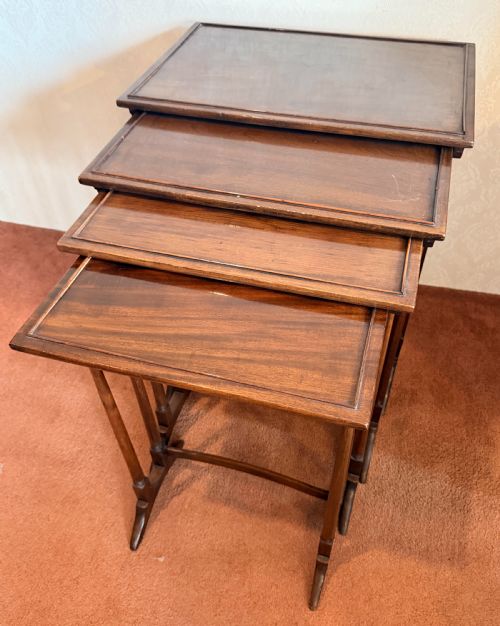
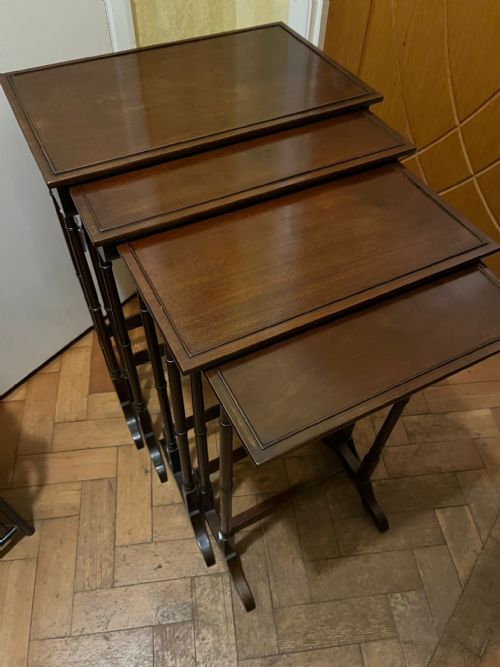
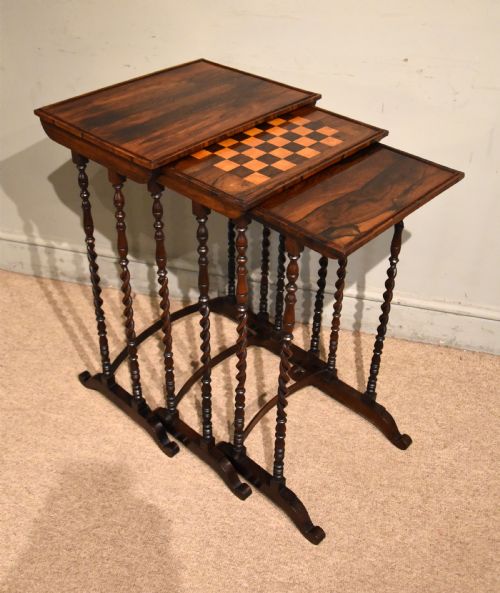
Stackable occasional tables, frequently encountered as nests of tables or quartetto sets, are sets of three or four graduated pieces designed to fit flush into a single footprint. The form appears across the nineteenth century, the Edwardian era, and into the nineteen-thirties, taking the shape of rectangular, oval, or freestanding side tables.
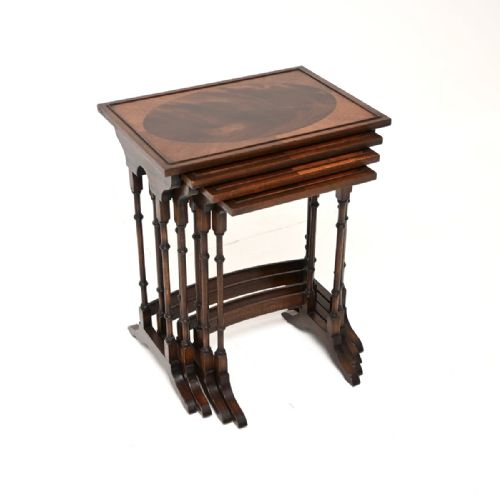
Mahogany predominates amongst the pieces seen here, alongside rosewood and walnut, reflecting the preference for robust hardwoods that endure frequent pulling apart and stacking. Edwardian examples and nineteenth-century interpretations dominate the selection, often presenting inlaid satinwood, boxwood, or parquetry details upon their tops.
How they were made
Cabinetmakers constructed these sets using solid hardwoods and delicate veneers, applying mahogany, rosewood, and walnut over supportive carcases. Satinwood inlay, boxwood stringing, and floral parquetry enrich the surfaces of Edwardian and Georgian style specimens.
Structural ingenuity dictated the manufacture, ensuring each table in a quartetto set scales down precisely to slide beneath the next. Specialised joinery allowed these pieces to withstand the repetitive friction of stacking without loosening their leg frames or damaging the tabletops.
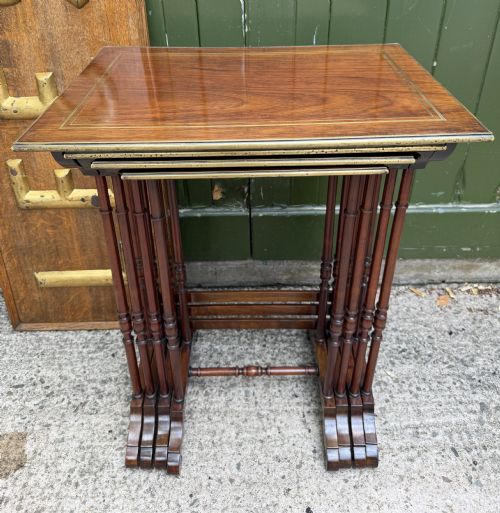
Mahogany and rosewood dominate the timber selections across nineteenth-century and Edwardian listings, frequently enhanced with satinwood inlay or brass details.
What varies in quality
The sophistication of the timber selection and decorative embellishment defines the upper tier of these tables. Finely figured rosewood, intricate brass inlay, and complex Chinoiserie or carved details elevate certain sets far above plain utility versions.
Proportion and stability under repeated nesting separate finer examples from heavier, clumsier constructions. A well-balanced set maintains structural grace across all four graduated sizes without appearing blocky or awkward when separated.
Heal's
The Stackable Occasional Tables Glossary
- Quartetto
- A set of four tables designed to nest together. This term appears frequently in nineteenth-century and Regency descriptions.
- Nest of tables
- A group of graduated tables that slide into one another to save space. They function as portable side or occasional surfaces.
- Parquetry
- Geometric mosaic woodwork used for surface decoration. It creates patterned tabletops on walnut and hardwood pieces.
- Satinwood inlay
- Contrasting light-toned wood inserted into a darker primary timber for ornamentation. It defines many Edwardian and nineteenth-century pieces.
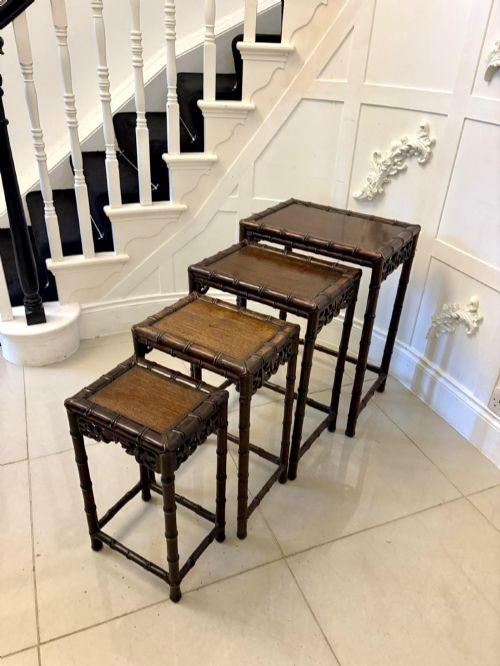
- Faux bamboo
- Carved or painted woodwork imitating natural bamboo stems. This decorative technique appears on nineteenth-century Orientalist occasional tables.
Stackable Occasional Tables: Frequently Asked Questions
What are stackable occasional tables?
Stackable occasional tables are graduated sets of three or four pieces built to slide neatly beneath one another. They provide multiple surfaces for drinks or books while occupying the floor space of a single small table.
Cabinetmakers produced these sets in mahogany, rosewood, and walnut across the nineteenth and early twentieth centuries. They appear in styles ranging from plain Regency designs to inlaid Edwardian and Chinoiserie variations.
How were nesting tables used?
Historically, these tables served drawing rooms and parlours where extra surface space was required only intermittently. Servants or hosts could easily separate the tables to serve tea or support games.
Once guests departed, the smaller tables slid back into the largest frame to clear the room. This practical adaptability explains their enduring popularity through the Victorian and Edwardian periods.
How do I identify an Edwardian set?
Edwardian stackable tables frequently incorporate lighter mahogany frames with decorative satinwood inlay, boxwood stringing, or subtle crossbanding. They often arrive as sets of four, reflecting the refined domestic interiors of nineteen hundred.
Unlike earlier Regency models that relied on rich rosewood grains or brass inlay, Edwardian versions favour polished mahogany and delicate floral or geometric borders.
What is a quartetto table set?
A quartetto set specifically consists of four graduated tables designed to nest together sequentially. The term appears frequently in nineteenth-century descriptions of rosewood and mahogany occasional furniture.
Each table diminishes in height and width just enough to clear the frame of the next, allowing the complete group of four to store within the perimeter of the largest piece.