
Antique Side Table Set
An antique side table set brings together matching surfaces designed to stack away neatly when floor space matters.
Antique Side Table Set
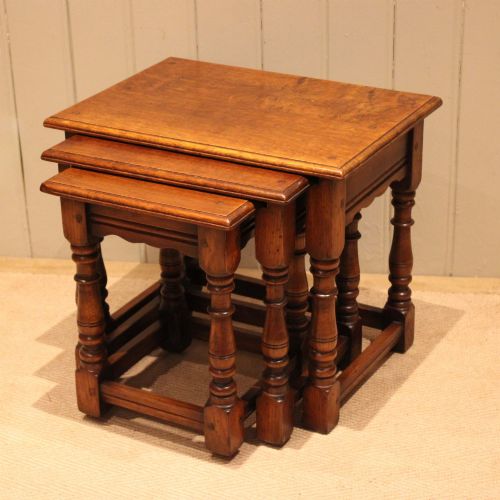
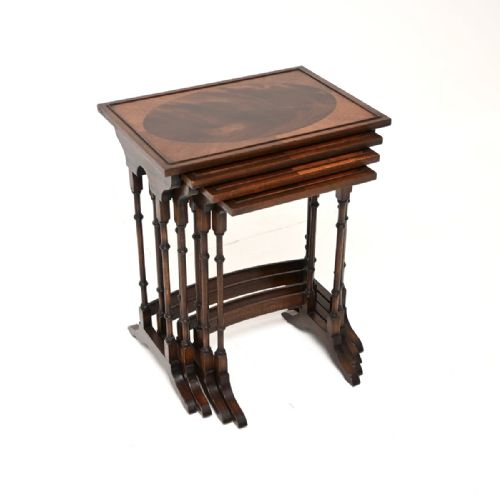
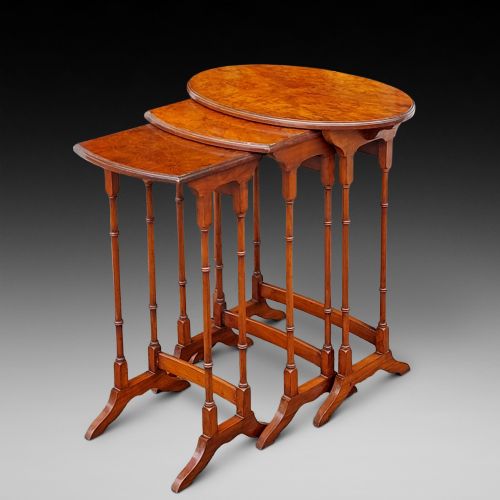
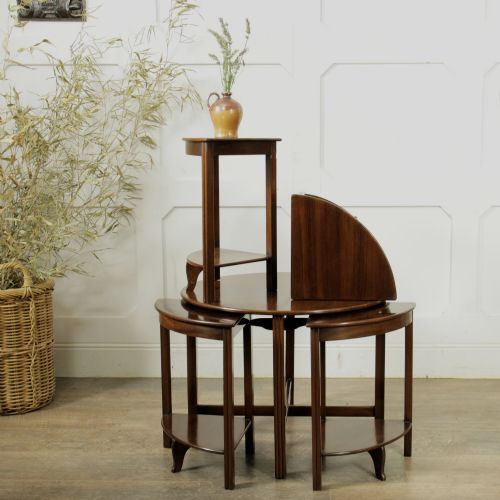
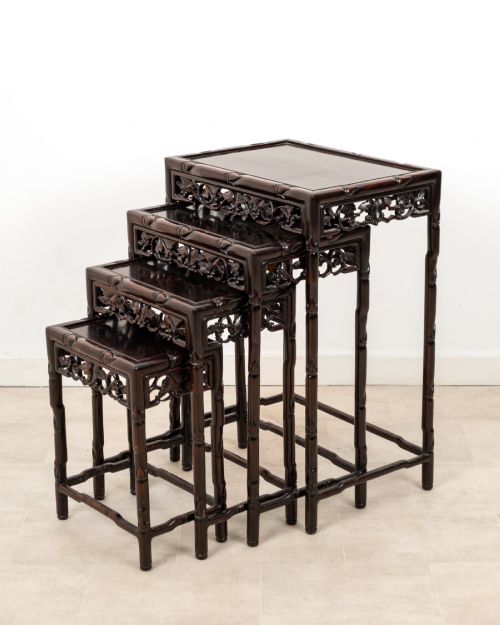
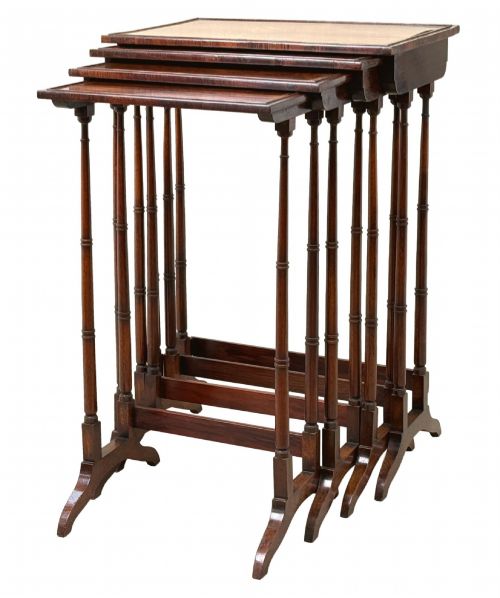
These sets appear in configurations of three, four, or five graduated tables designed to pull out for serving tea or holding lamps. Alongside traditional nests, the category includes quartetto sets and occasional tables originating from Georgian, Regency, and later periods.
While nests dominate the selection, related groupings such as console tables with mirrors and garniture sets also emerge within the broader evidence. The core of the search remains the stacking side table designed for flexible domestic use.
Materials and Construction
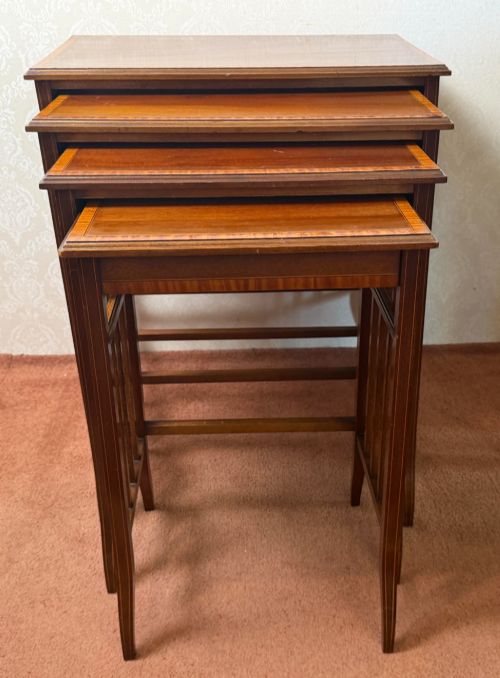
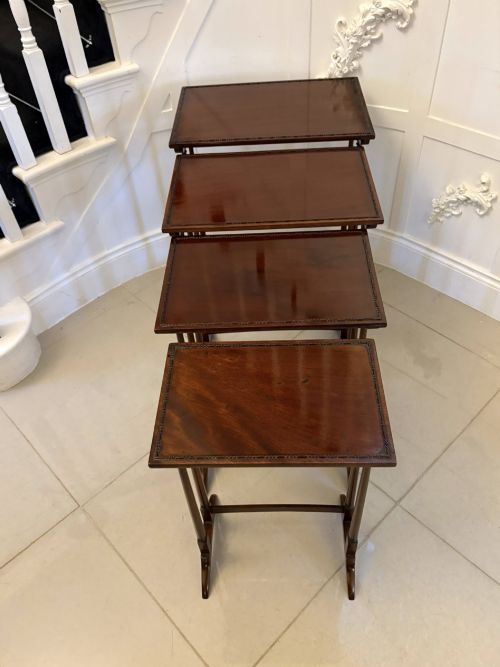
Cabinet makers utilised dense hardwoods such as mahogany, rosewood, and walnut to build durable frames capable of enduring regular stacking and unstacking. Finer examples incorporate satinwood cross banding, intricate inlay, and hand-painted floral decoration to enhance the visual appeal of the smaller tabletops.
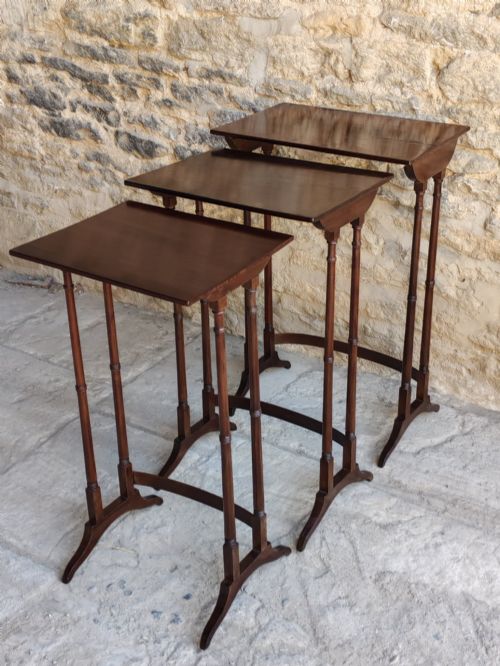
Structural joinery relies on turned or square tapered legs, sometimes finished with sabre or slender upright supports depending on the period style. Surfaces range from polished timber grains to specialised additions like leather top inserts and glass panels.
Some Edwardian tables stack five deep, providing a cascading tower of wood for households with an enthusiasm for miniature furniture.
Distinctions in Execution
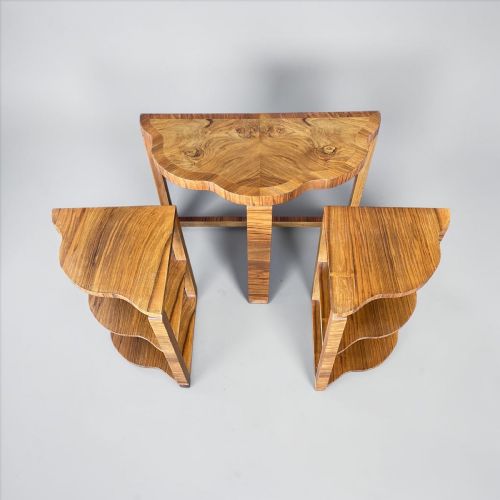
Quality rests upon the precision of the graduated fit, ensuring each smaller table slides smoothly into the frame without binding or loose wobble. Superior examples display careful timber selection, such as matched burr walnut veneers or finely figured mahogany grain running continuously across the set.
The refinement of secondary details elevates a piece, distinguishing standard utility items from finer parlour furniture. Crisp cross banding, delicate string inlay, and well-executed hand carving indicate skilled workshop production from periods like the Edwardian era or the Regency.
Heal's·Elkington & Co·Royal Vienna
The Antique Side Table Set Glossary
- Quartetto
- A matched set of four nesting tables designed to stack inside one another. This term appears frequently in nineteenth-century and Edwardian listings.
- Cross banding
- A narrow strip of veneer laid around the border of a tabletop with the grain running perpendicular to the centre. It provides a decorative framing effect on mahogany and satinwood surfaces.
- Garniture
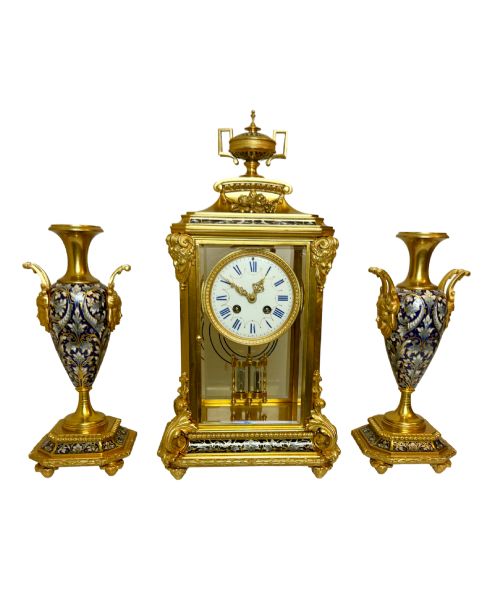
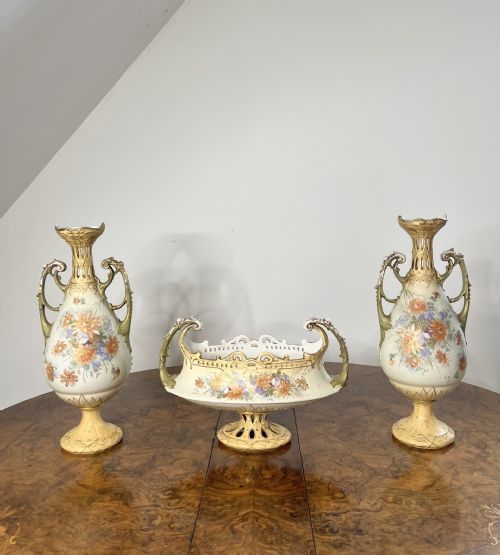
- A matching set of ornamental vases or clocks designed to sit together on a mantelpiece or side table. These decorative groupings often incorporate porcelain, marble, or gilt bronze.
- Serpentine form
- A curved outline featuring a convex centre flanked by concave ends, commonly seen on the edges of tabletops. This shaping requires expert woodworking skill to execute cleanly.
- Chinoiserie
- European decorative art employing imitation Chinese motifs and lacquerwork. Pieces featuring this style display painted Oriental scenes on dark backgrounds.
Antique Side Table Set: Frequently Asked Questions
What is a quartetto table set?
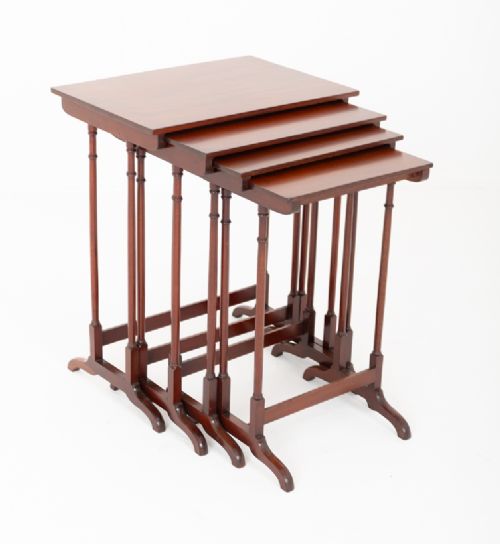
A quartetto set consists of four stacking tables designed to fit progressively beneath the largest surface. They were originally used in nineteenth-century drawing rooms for serving tea or holding small lamps.
When not in use, the entire group occupies the floor space of a single small table. This clever engineering made them immensely popular throughout the Edwardian period.
How do I date a nesting table set?
Dating relies on combining timber choices, leg shapes, and decorative inlay styles recorded across different eras. Georgian and Regency examples typically feature solid mahogany or rosewood with restrained lines.
Edwardian pieces often introduce burr walnut veneers, satinwood banding, or painted floral details. Examining the underside and joinery helps confirm the period of manufacture.
Where were side table sets used?
These practical sets served primarily in reception rooms, drawing rooms, and parlours as versatile auxiliary furniture. Hosts pulled out the individual surfaces to accommodate guests during tea or card games.
Their compact stacking design allowed households to maximise available floor space without sacrificing surface area. Today, they function effectively as flexible lamp or side tables in modern living spaces.
What woods were used for these tables?
Cabinet makers predominantly selected rich hardwoods like mahogany, walnut, and rosewood for their durability and attractive grain patterns. Oak appears in earlier or more rustic country pieces, sometimes paired with leather inserts.
Lighter decorative accents frequently involved satinwood cross banding or floral marquetry. These contrasting timbers highlight the edge profiles of the graduated tabletops.