
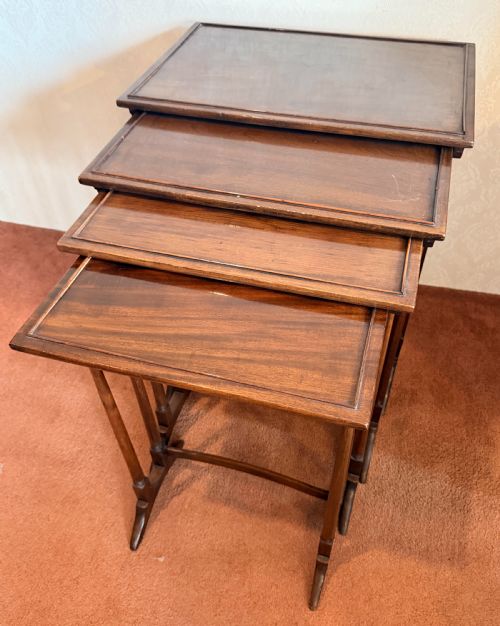
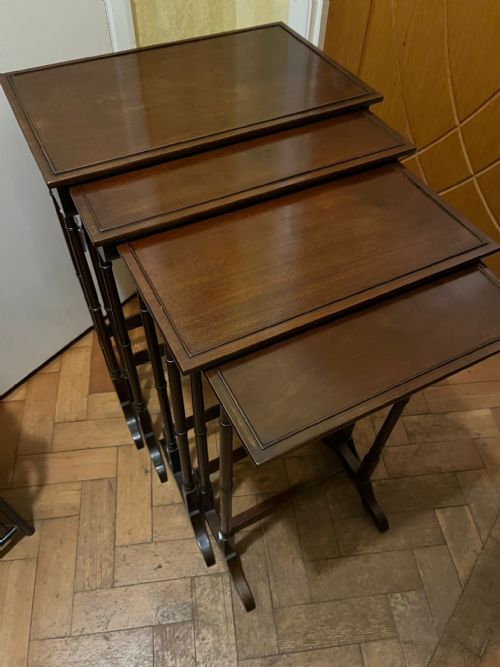


Four Mahogany Nesting Tables
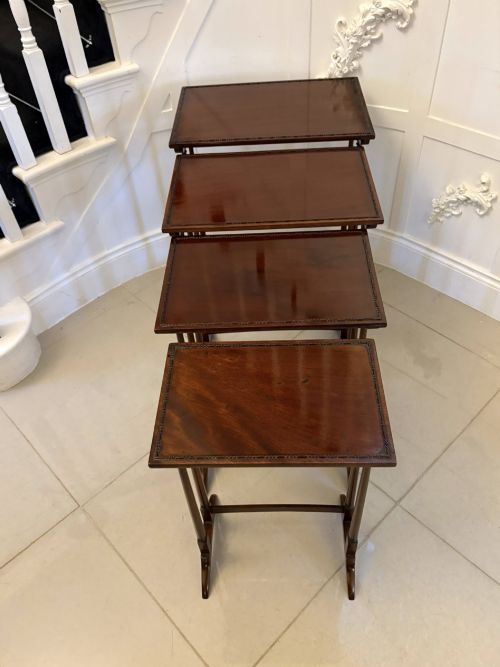
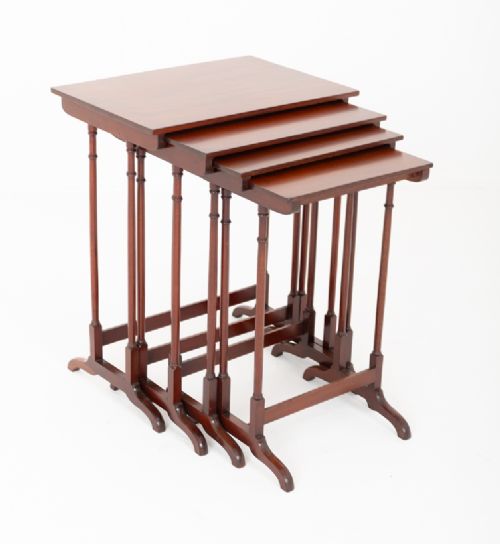
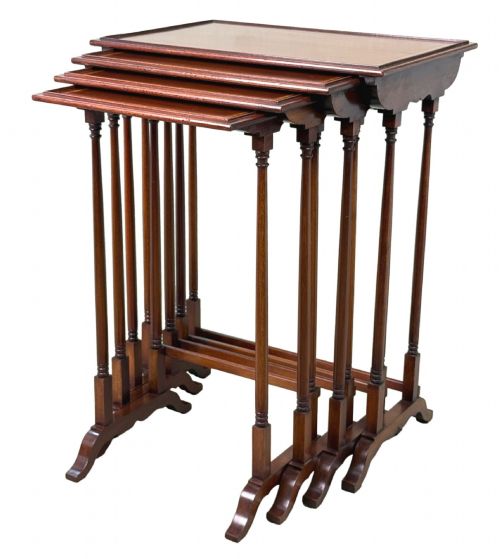
Four mahogany nesting tables offer ingenious space-saving utility through a graduated set of four stacking surfaces.
Four Mahogany Nesting Tables
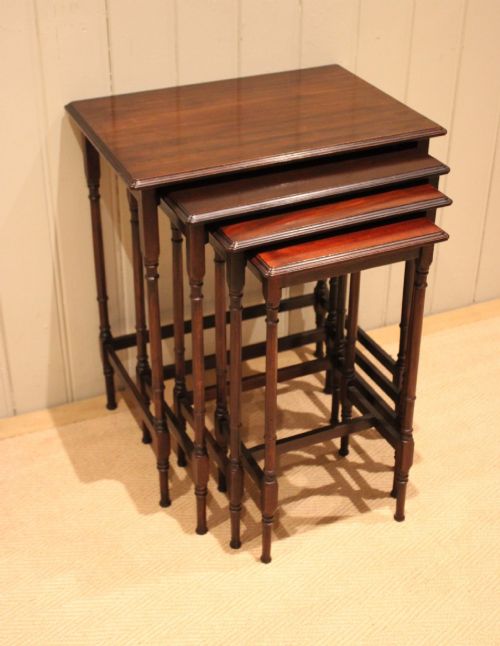
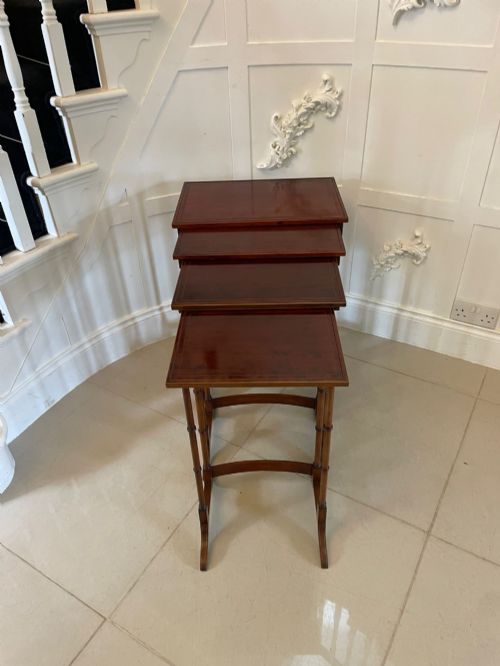
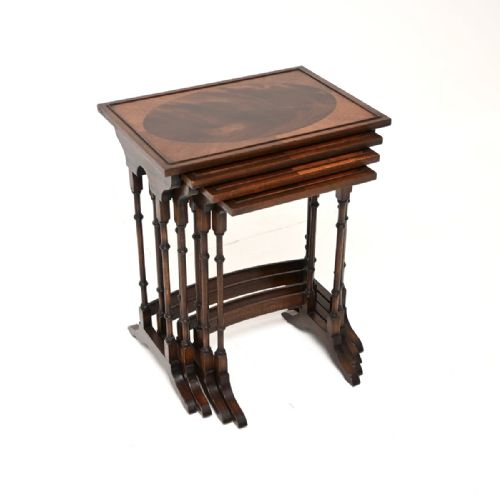
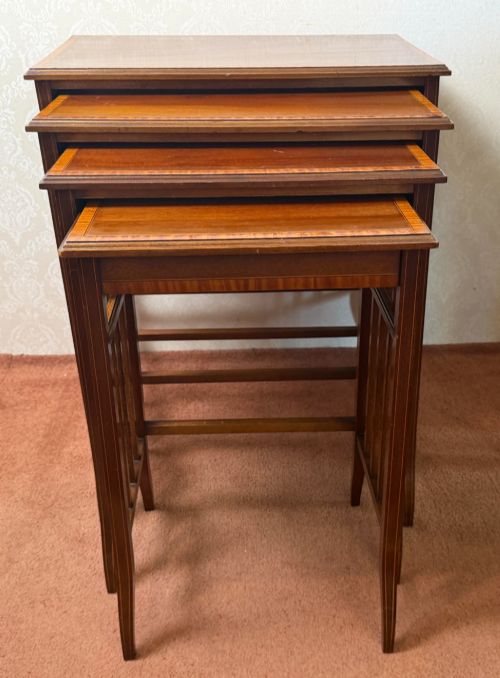
Four mahogany nesting tables comprise a graduating set of four tables designed to slide neatly beneath one another when not in use. They appear frequently in Edwardian and Victorian forms, alongside 19th-century examples and 1920s pieces.
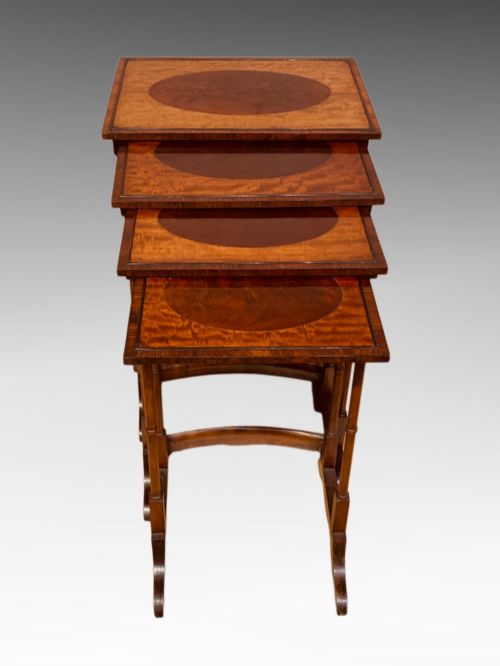
The form typically follows the quartetto style, where four separate occasional tables descend in size so the smaller ones fit precisely under the next largest. Buyers often encounter Edwardian interpretations featuring satinwood inlay and boxwood details.
Originating as practical items for drawing rooms, these sets provide flexible surfaces for tea, lamps, or writing. The selection spans straightforward Victorian designs to revival pieces reflecting Georgian and Regency aesthetics.
How they were made
Cabinet makers used solid mahogany and mahogany veneers over secondary timbers to construct the frames and table tops. Figured grain timber often appears on the main surfaces to provide visual depth.
Inlaid decoration utilises contrasting woods such as satinwood, boxwood, and ebony, shaped into banded borders or delicate stringing. Joinery relies on traditional techniques to ensure each table slides smoothly into its neighbour.
Listings span the Victorian and Edwardian periods, stretching into the 1920s with Regency and Georgian revival styles.
What varies in quality
The refinement of the timber selection dictates the visual appeal, with highly figured mahogany and crisp satinwood cross-banding marking out superior examples. Plain timber constructions sit at the simpler end of the range.
Precision in the sizing determines how cleanly the tables nest together without binding or excessive clearance. Delicacy in the turned or tapered legs also separates standard utility pieces from finely proportioned examples.
The Four Mahogany Nesting Tables Glossary
- Quartetto
- A set of four nesting tables designed to stack inside one another. This term appears frequently in Edwardian and Victorian listings.
- Satinwood
- A pale, lustrous exotic timber utilised for contrasting borders and inlay work. It brings a bright decorative edge to dark mahogany surfaces.
- Stringing
- A thin line of inlay set into the wood surface to outline tabletops or legs. Boxwood and ebony are common materials for this technique.
- Cross-banding
- A border of veneer laid with the grain running perpendicular to the main panel. This method frames the primary mahogany surface.
- Occasional table
- A small, movable table intended for specific, intermittent use rather than permanent placement. These sets function as versatile side surfaces.
Four Mahogany Nesting Tables: Frequently Asked Questions
How do four mahogany nesting tables work?
The tables graduate in size from largest to smallest, allowing each one to slide beneath the previous one. This stacking mechanism saves floor space when multiple surfaces are not required.
Users pull out individual tables as needed for drinks, books, or lamps, then return them to the nested stack when finished.
What periods do these tables come from?
The available pieces span the Victorian and Edwardian eras, alongside 19th-century examples and 1920s reproductions. Edwardian and 1900s pieces appear most frequently among current listings.
Earlier Victorian models share space with Regency revival styles and Georgian aesthetic interpretations from the early 20th century.
Where were nesting tables placed in a home?
Drawing rooms and parlours provided the primary home for these sets during the Victorian and Edwardian periods. Their compact footprint suited spaces where permanent large tables would obstruct movement.
Hosts deployed the smaller tables around the room for tea service or guests, returning them to the corner stack afterwards.
How do I identify Edwardian nesting tables?
Edwardian examples often incorporate lighter decorative elements like satinwood inlay and boxwood stringing on mahogany frames. They frequently carry the quartetto designation in period descriptions.
The leg profiles and overall proportions tend to be slender, reflecting the lighter aesthetic preferences of the early 1900s.