




Quartetto Nesting Tables
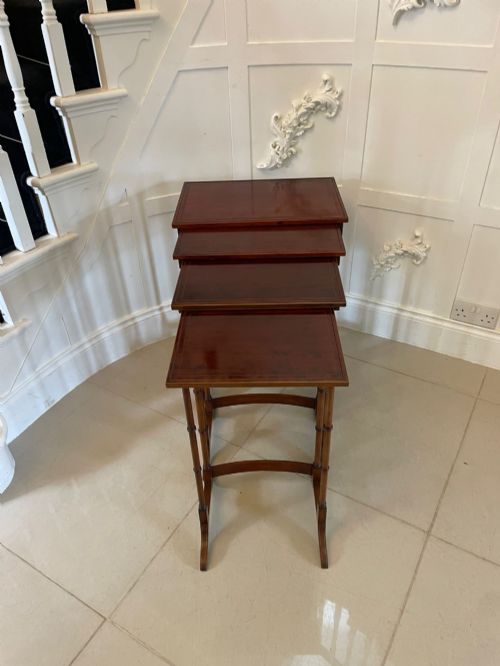
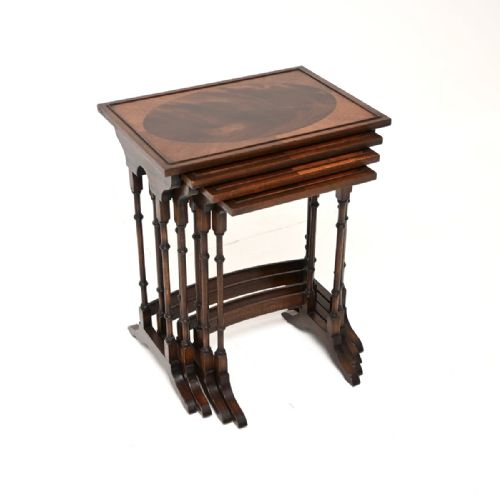
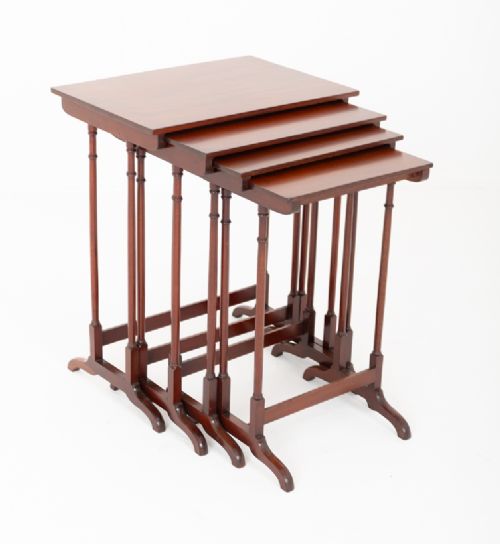
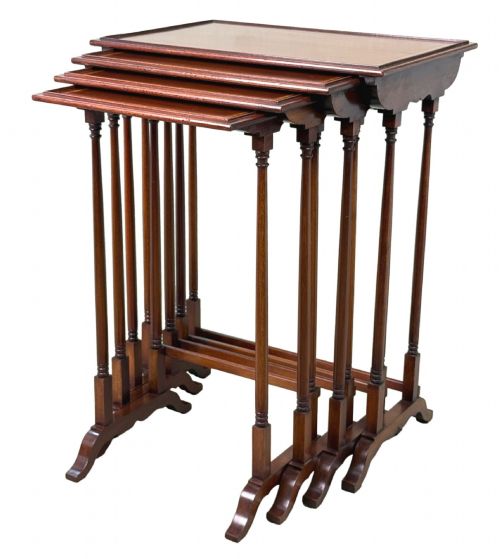
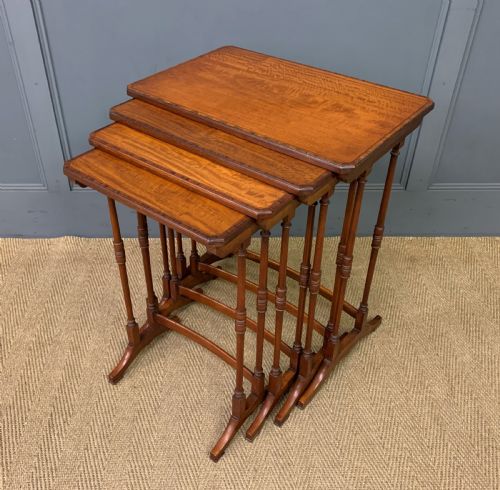
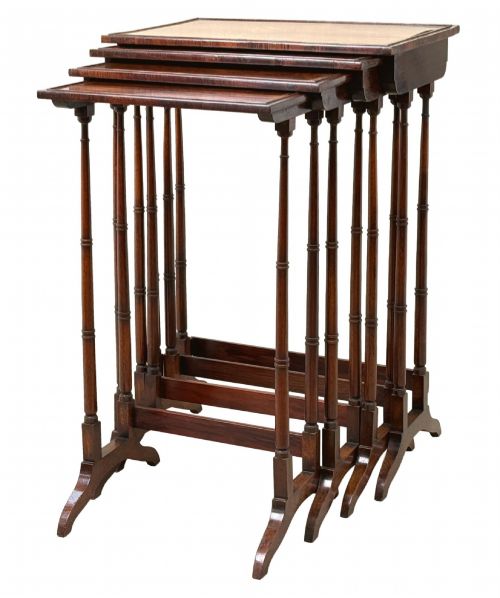
These quartetto nesting tables are sets of four graduating occasional tables designed to slide neatly beneath one another.
Quartetto Nesting Tables
When you search for quartetto nesting tables, you are looking at sets of four graduating occasional tables designed to slide beneath one another to save space. They appear across the nineteenth century and into the Edwardian era, taking the form of occasional, coffee, lamp, or side tables.
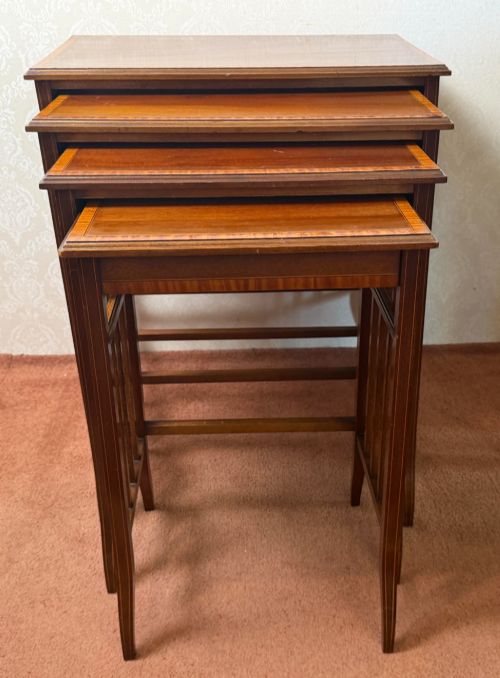
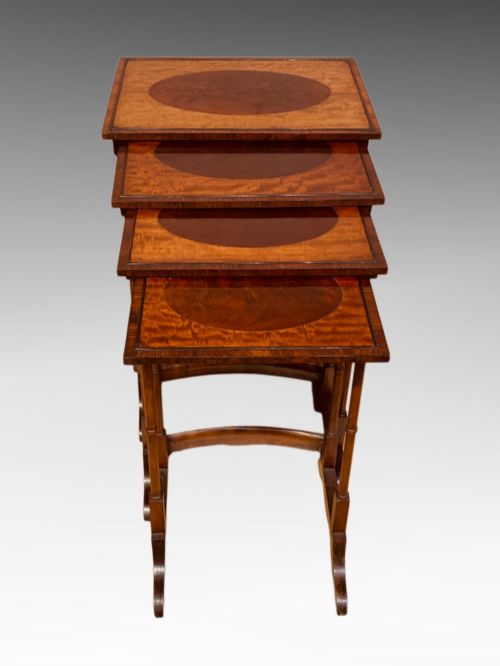
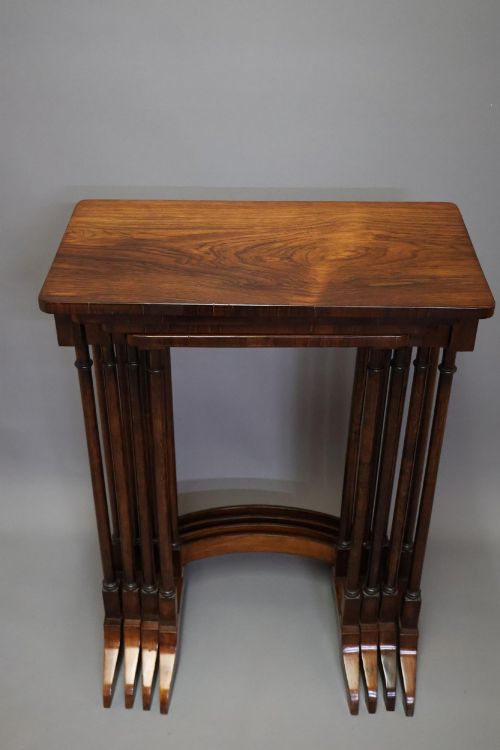
Mahogany forms the backbone of these pieces, alongside rosewood and satinwood, spanning styles from Regency and Georgian to Victorian and Edwardian. The Edwardian examples often display delicate satinwood inlay in the Sheraton style.
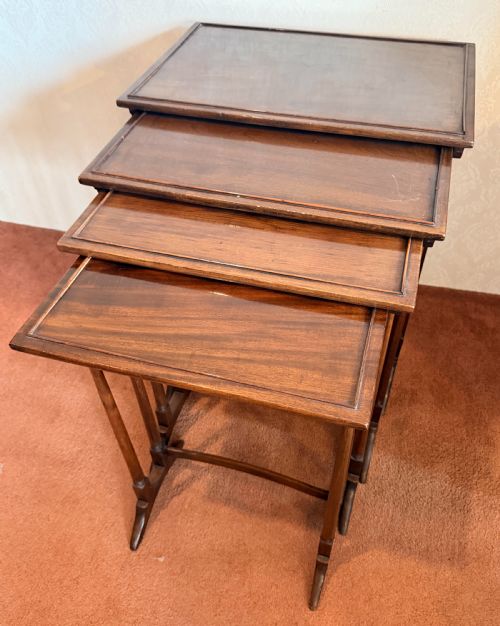
Most sets comprise four tables of descending size, though occasional three-table nests appear. They function brilliantly beside a chair or sofa, ready to be drawn out when extra surface space is needed.
How they were made
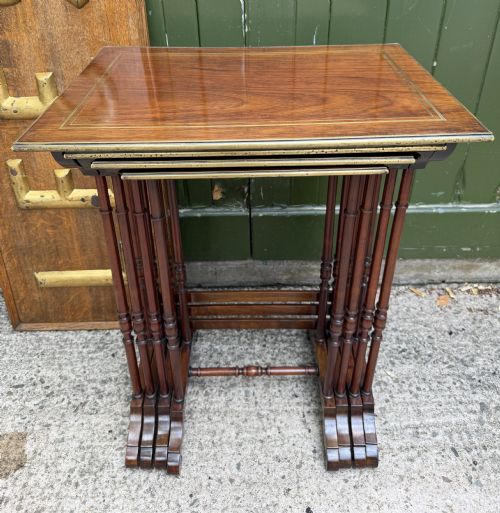
Cabinet makers constructed these sets principally from timber such as mahogany, rosewood, and walnut, often selecting figured veneers for the top surfaces. Satinwood and boxwood inlay added linear detail or elaborate motifs, while brass inlay occasionally enhanced Regency rosewood models.
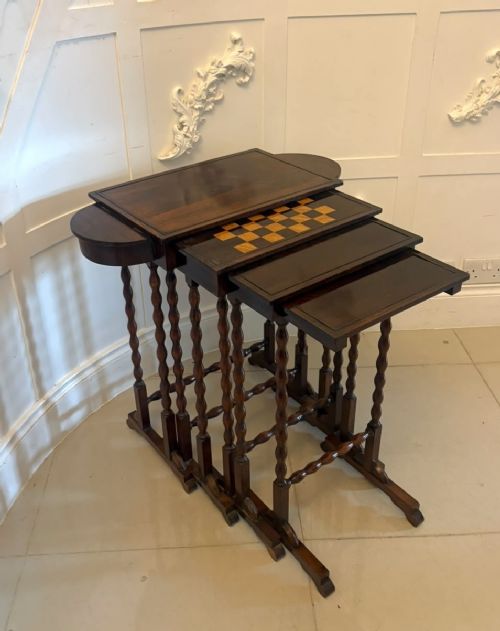
Tables were engineered with slender, square tapered or turned supports so the smaller frames could slide smoothly into the rebates of the larger ones above. Hardwood and carved elements also appear in specific Asian export variations recorded in the archive.
One exceptional Regency rosewood set hides an integrated chess table within the nest.
What varies in quality
The distinction between ordinary and superior sets rests on the crispness of the timber selection and the refinement of the joinery. Finely figured veneers, precise boxwood or satinwood inlay, and balanced proportions elevate a set above standard production.
Gillows
The Quartetto Nesting Tables Glossary
- Quartetto
- A set of four graduating tables designed to nest inside one another. This term originates from Italian musical terminology denoting a quartet.
- Cross banding
- A border of veneer laid around the perimeter of a table top with the grain running perpendicular to the central panel. This technique creates a neat framing effect.
- Satinwood
- A lustrous, hard timber native to Ceylon and India with a yellowish sheen. Cabinet makers utilised it for contrasting stringing and decorative inlay.
- Sheraton style
- A late eighteenth-century neoclassical design idiom characterised by straight tapered legs and delicate marquetry. Edwardian makers frequently revived these motifs.
- Occasional table
- A small, movable table intended for specific, temporary use around a room rather than a fixed dining or writing purpose.
Quartetto Nesting Tables: Frequently Asked Questions
What are quartetto nesting tables?
These are clever sets of four graduating tables engineered to slide entirely beneath the largest one when not in use. They provide practical surface space without cluttering a room.
First popularised during the Regency period and widely produced through the Victorian and Edwardian eras, they serve as versatile occasional or coffee tables.
How were they used historically?
Historically, households deployed these tables for tea, writing, or holding lamps, drawing out the smaller tiers as guests arrived. They offered adaptable furniture for drawing rooms and parlours.
The graduated nesting design meant multiple surfaces could occupy the floor space of just one small table until required.
How do I date a set?
Dating relies on timber choice, leg profiles, and inlay styles, moving from heavy rosewood with brass stringing in the Regency period to lighter inlaid mahogany in Edwardian times. Georgian revival pieces often emulate earlier proportions.
Examining the underside and construction joints also helps clarify whether a set dates to the nineteenth century or a later Edwardian revival.
Are all sets made of four tables?
While the term quartetto specifically denotes a set of four, surviving examples occasionally comprise three tables. Most listings on this page maintain the standard four-tier arrangement.
Checking the graduation ensures the entire set remains together as originally conceived by the cabinet maker.