


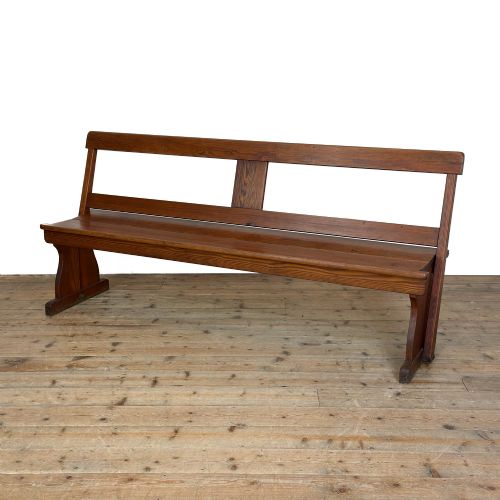
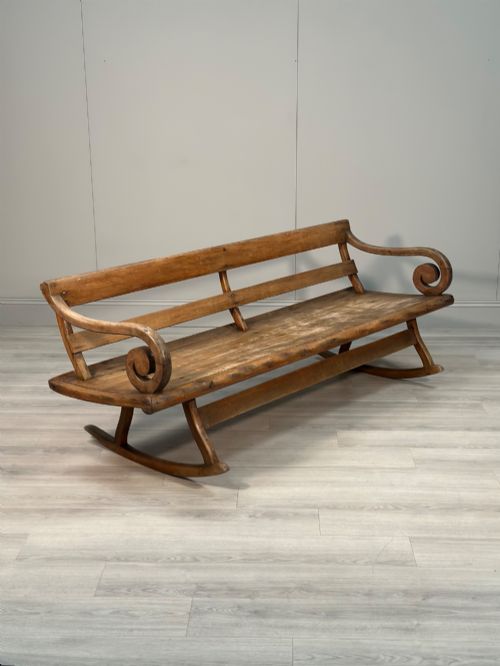
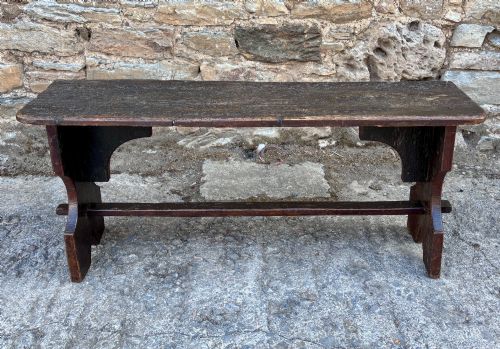
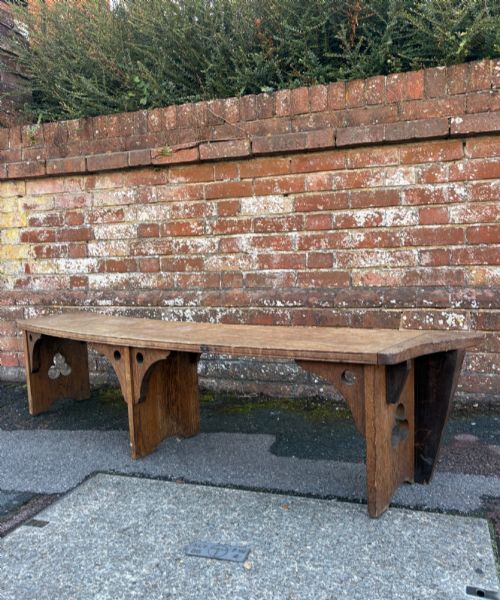

Wooden Church Seat
A wooden church seat brings ecclesiastical heritage into domestic interiors, offering sturdy seating formed from honest timber.
Wooden Church Seat
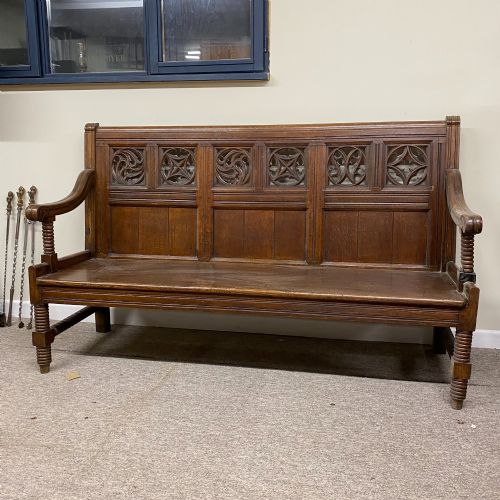
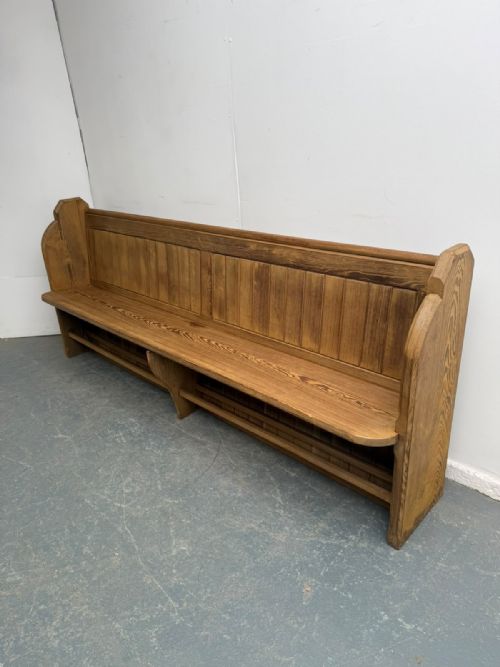
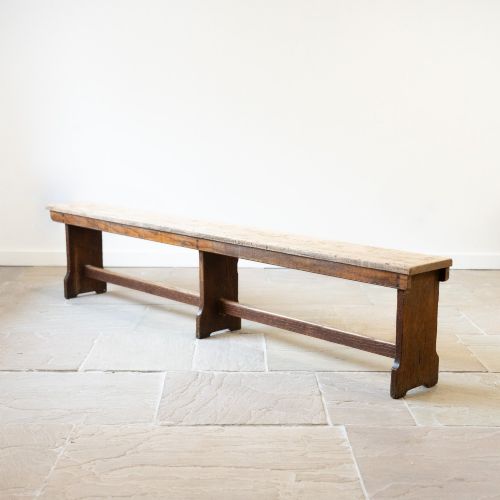
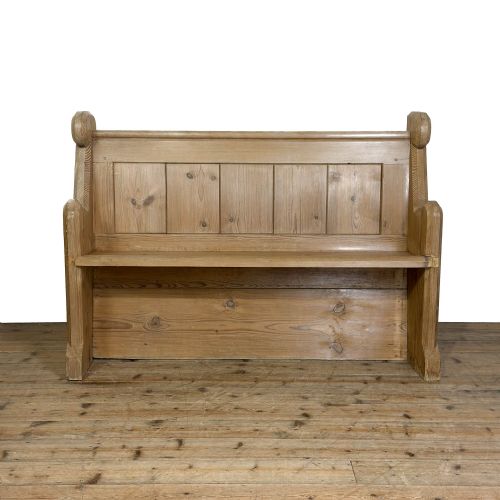
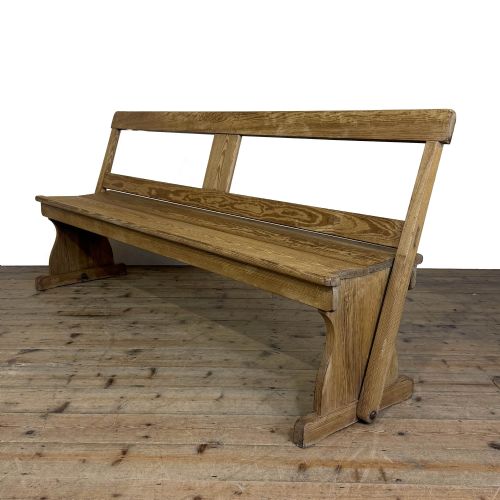
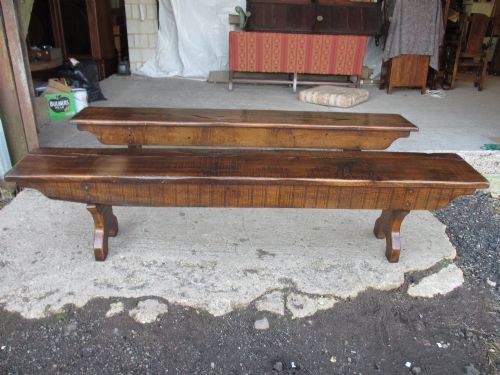
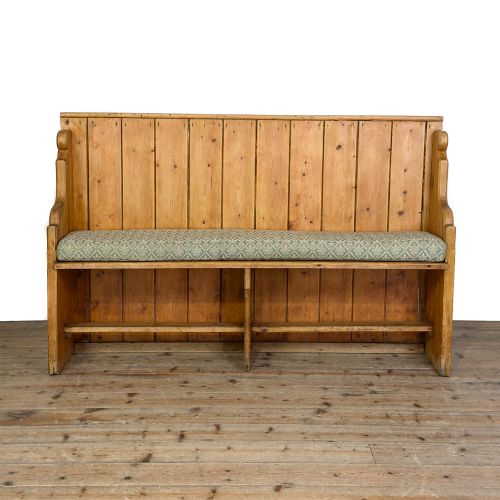
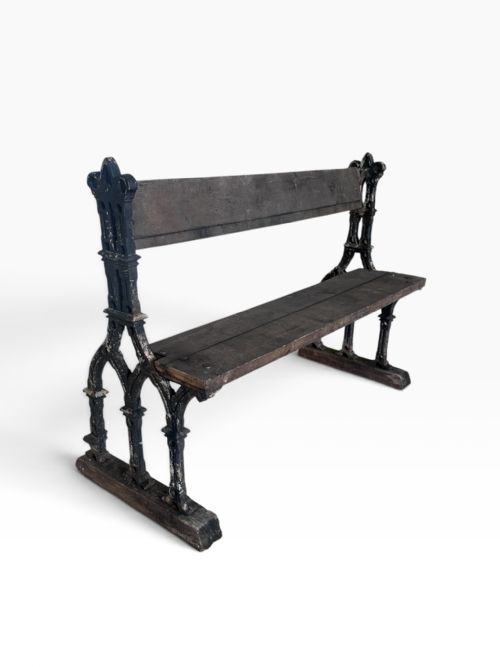
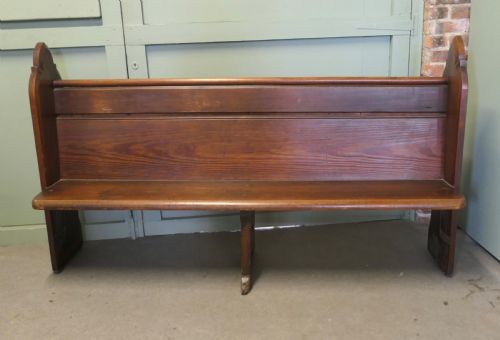
A wooden church seat serves as a practical bench or pew derived from ecclesiastical settings, chapel interiors, and assembly halls. Buyers seeking a wooden church seat encounter forms ranging from simple pine chapel pews to architectural oak settles with high panelled backs.
The pieces on this page span the eighteenth, nineteenth, and early twentieth centuries, capturing periods from Georgian utility through Victorian Gothic Revival to Edwardian craftsmanship. Most examples utilise durable native timbers like oak and pitch pine, shaped for communal worship or parish administration.
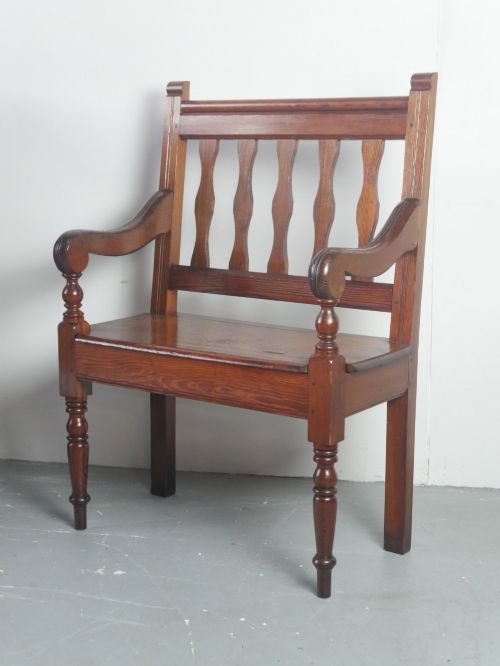
Beyond traditional pews, the selection includes flip-over chapel benches, organist seating, and Gothic armchairs intended for ecclesiastical or domestic devotion. These forms reflect the functional needs of historic churches repurposed for modern hallway, dining, or living spaces.
How they were made
Construction relies heavily on solid timber, with pine, pitch pine, and English oak forming the primary structural elements. Joinery techniques such as mortise and tenon ensure enduring stability for heavy daily use.
Surfaces frequently display wax finishes that accentuate the natural grain, alongside occasional original paint or ebonised treatments. Carved details like trefoil supports and Gothic arches emerge directly from the solid wood rather than applied ornamentation.
Wooden Church Seat Retail Price Guide 2026
Typical asking prices for wooden church seat among the pieces listed under this phrase on Sellingantiques today, from the lower quarter to the upper quarter. They describe what is for sale here now, not the wider market.
What varies in quality
Quality rests upon the selection of timber and the integrity of the original construction, distinguishing robust architectural pews from simpler utilitarian forms. Dense pitch pine and seasoned English oak command greater appreciation for their longevity and weight.
The refinement of carved detailing, such as trefoil motifs and shaped trestle ends, marks the distinction between standard parish utility and ambitious Gothic Revival design. Original patination and untouched wax finishes further elevate a piece above later stripped or altered examples.
St Paul's Cathedral
The Wooden Church Seat Glossary
- Settle
- A wooden bench with a high back, solid arms, and often a storage box beneath the seat. This form protected sitters from draughts in large historic halls and monastic spaces.
- Pew
- A long wooden bench utilised for communal seating in churches and chapels. These pieces often feature book ledges and simple panelled backs.
- Gothic Revival
- An architectural and decorative style popular during the nineteenth century, drawing inspiration from medieval pointed arches and ecclesiastical ornamentation. This aesthetic defines many ecclesiastical benches.
- Pitch Pine
- A resinous North American pine species valued for its durability and strong grain pattern. Cabinet makers utilised this timber extensively for Victorian church seating.
- Prie Dieu
- A devotional prayer chair featuring a low seat and a padded upper ledge for kneeling and resting elbows. These items served private prayer within domestic or ecclesiastical settings.
Wooden Church Seat: Frequently Asked Questions
How do I fit a church pew in a hallway?
Measure the available floor space carefully, ensuring sufficient clearance for doors and foot traffic alongside the bench. Slimmer pine and oak variants fit narrow corridors particularly well.
Position the bench against a solid wall to anchor its visual weight. Add small felt pads beneath the feet to protect delicate flooring.
Are church pews comfortable for dining?
Many pews feature upright wooden backs designed for posture during services rather than lounging. Adding loose cushions or seat pads increases comfort for prolonged dining use.
Check the seat height relative to your dining table before purchase. Some antique benches sit lower or higher than standard modern chairs.
How do I care for waxed pine furniture?
Maintain the finish by applying a quality beeswax sparingly with a soft cloth and buffing to a gentle sheen. Avoid placing timber pieces near direct heat sources or strong sunlight.
Clean surfaces regularly with a dry or barely damp cloth. Promptly wipe away any liquid spills to prevent water marks on the wax layer.
How can I tell Victorian pews apart from older pieces?
Examine the timber characteristics, tool marks, and construction methods used in the frame. Nineteenth-century examples often utilise pitch pine and machine-sawn components.
Eighteenth-century items typically display hand-adzed surfaces and broader oak panels. Regional joinery styles also help indicate the likely period of origin.