




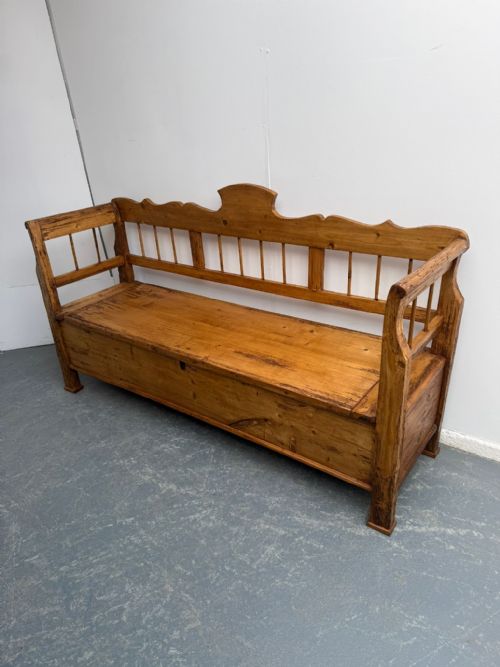


Waxed Pine Bench
These waxed pine bench examples are honest utilitarian seating built for everyday life, offering a warm patina that suits modern hallways and kitchens alike.
Waxed Pine Bench
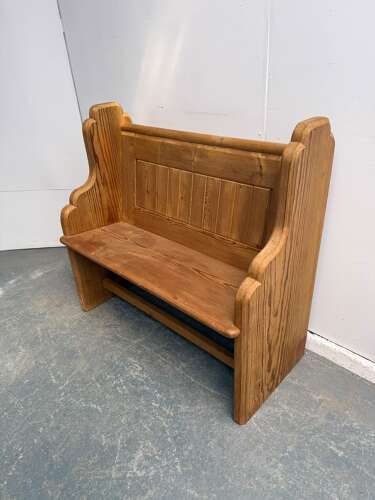
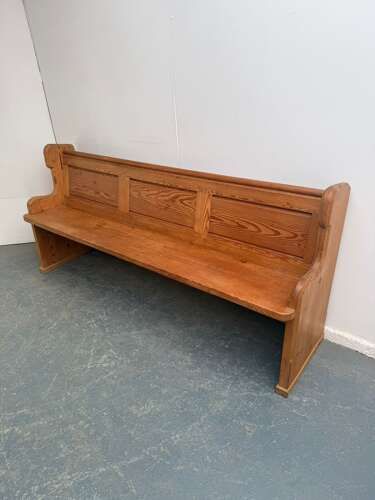
A waxed pine bench is a functional seating form appearing across several distinct periods, most notably in Victorian and Georgian incarnations. Buyers browsing this selection encounter sturdy church pews, Hungarian settles, and long hall or tavern benches designed for robust utility.
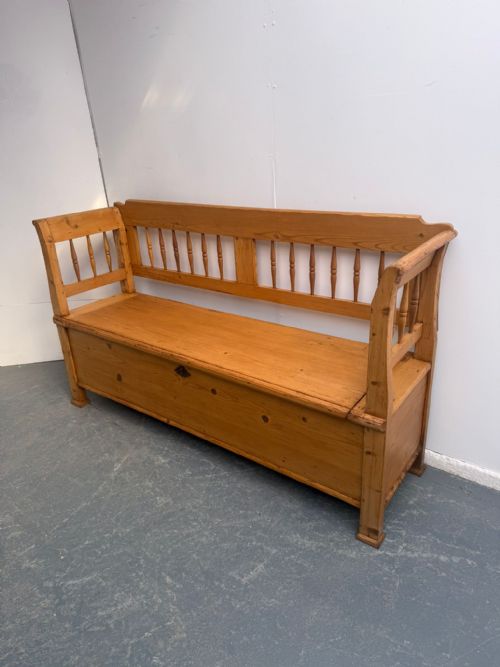
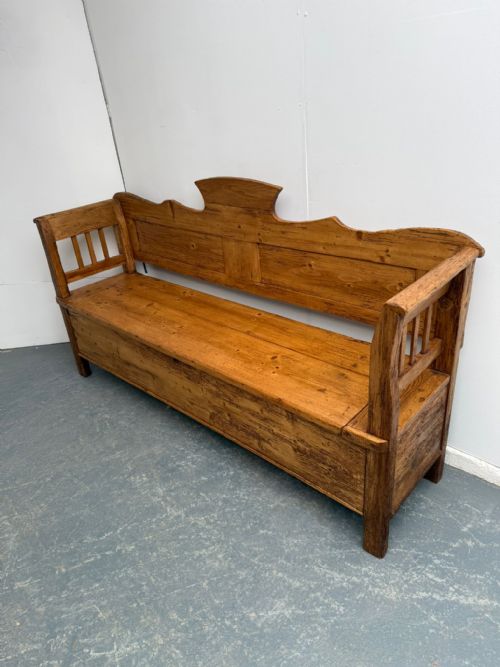
The objects span varied regional origins, including English church seating and East European or Hungarian country forms. Many examples function as box settles or spindled benches, providing practical storage alongside simple seating.
The style ranges from rustic folk art and country primitive to formal Victorian country designs. These pieces bring straightforward timber construction and aged character into contemporary domestic spaces.
How they were made
Construction relies primarily on solid pine timber shaped by regional carpenters and country joiners. Planks are joined to form high backs, solid seats, and storage boxes.
Finishing involves the application of wax to protect the softwood surface and develop a deep lustre over decades of use. Iron hardware occasionally reinforces structural joints on box settles and church pews.
Several Hungarian benches arrive with mysterious nineteenth century notches carved into the arms, suggesting generations of restless sitters.
What varies in quality
Quality separates through the integrity of the original timber and the depth of the wax finish accrued through age. Pieces retaining their structural joinery without excessive replacement timber hold greater integrity.
Proportion and regional detailing distinguish finer country workshops from basic utilitarian forms. The presence of original backboards, spindles, and unaltered box bases elevates the standing of an individual bench.
The Waxed Pine Bench Glossary
- Settle
- A wooden bench with high backs and arms designed to block draughts in older homes. Many examples include a hinged seat opening to a storage box beneath.
- Pew
- Long wooden seating originating from ecclesiastical settings, constructed from solid pine with straight backs. These items provide extended seating capacity for halls or large dining spaces.
- Box settle
- A specific form of bench featuring an enclosed storage compartment beneath the seat boards. This design maximises domestic utility in traditional kitchens and hallways.
- Patina
- The surface sheen and colour developed on wood through years of handling, polishing, and wax application. This quality indicates genuine age and usage.
- Spindled
- Describing a backrest or gallery constructed with turned wooden uprights rather than solid planks. This detail lightens the visual weight of heavier pine seating.
Waxed Pine Bench: Frequently Asked Questions
How do I clean a waxed pine bench?
Maintain the surface by dusting with a dry cloth and applying a clear beeswax periodically to nourish the pine timber. Avoid using chemical sprays that strip the aged finish.
Keep the wood away from direct heat sources and strong sunlight to prevent the pine from drying out or splitting over time.
Where should I place a settle in my home?
These benches fit naturally in entrance hallways, large kitchens, or dining areas where their high backs provide structural presence. Their solid construction handles daily seating demands with ease.
Consider the clearance needed for hinged seats if purchasing a box settle configuration for a smaller room.
What is the difference between a pew and a settle?
Church pews offer open under-seat space and simple upright backs designed for communal seating. Settles typically feature enclosed bases or storage boxes and solid wooden arms.
Both forms utilise pine construction but serve different functional traditions within domestic and institutional settings.
How do I date a nineteenth century pine bench?
Examine the construction methods, tool marks, and the quality of the timber grain visible across the seat and backboards. Hand-cut joinery and authentic wear patterns indicate earlier production periods.
Compare the style against documented regional variations from Georgian and Victorian country traditions to confirm the era.