

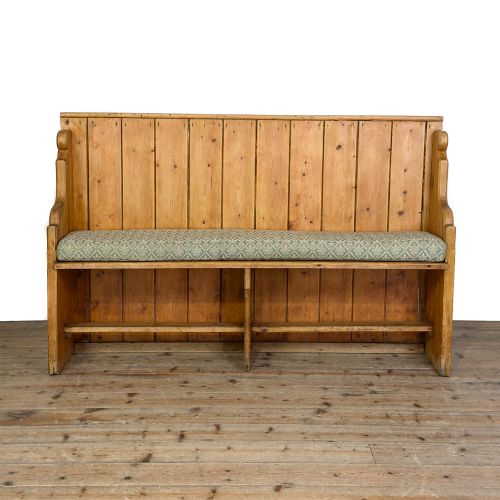
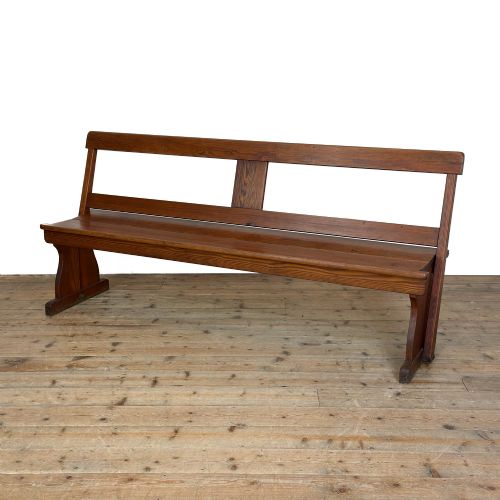

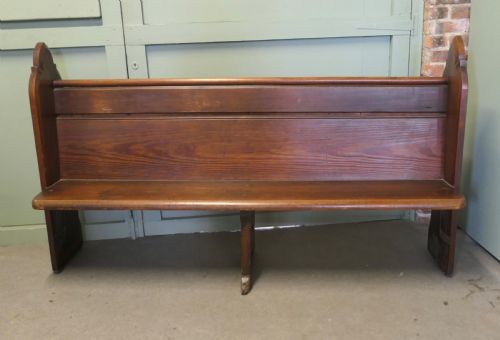
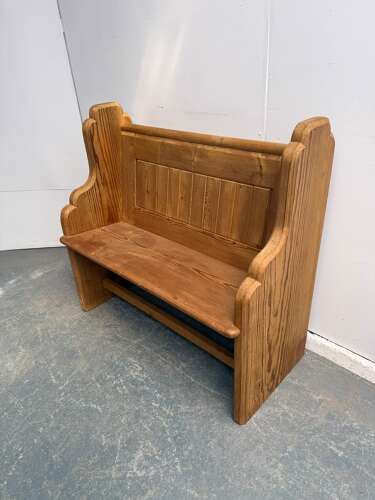
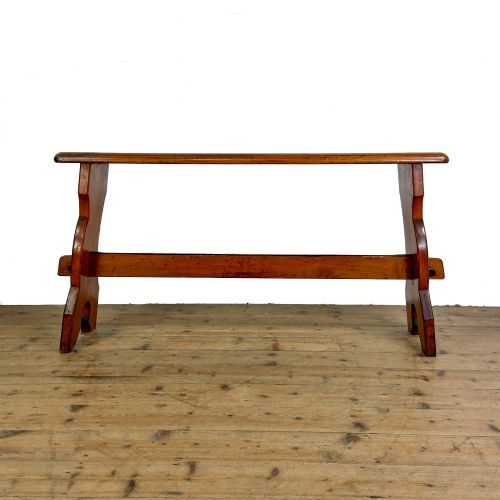
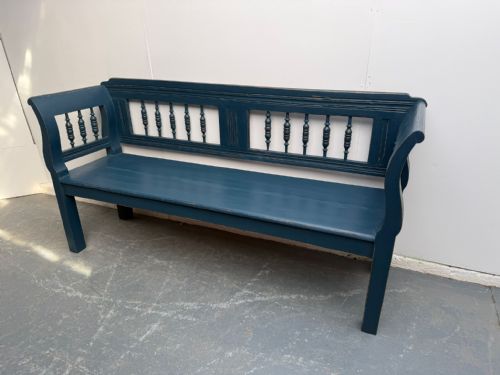

Victorian Pine Church Pew
A victorian pine church pew offers robust ecclesiastical timber seating, bringing honest proportions and utilitarian charm into modern domestic hallways and kitchens.
Victorian Pine Church Pew
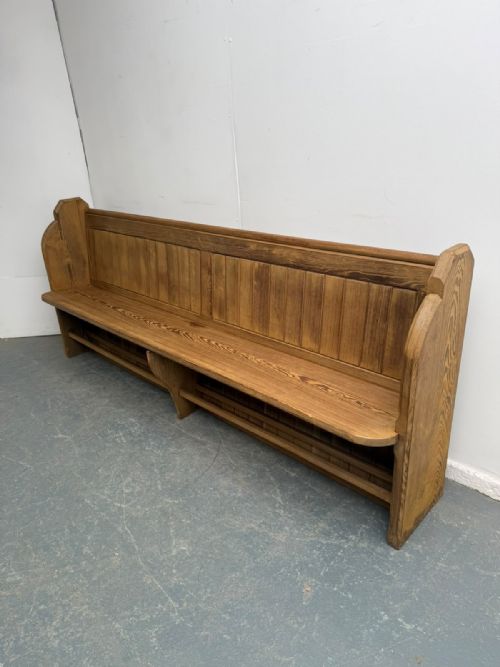
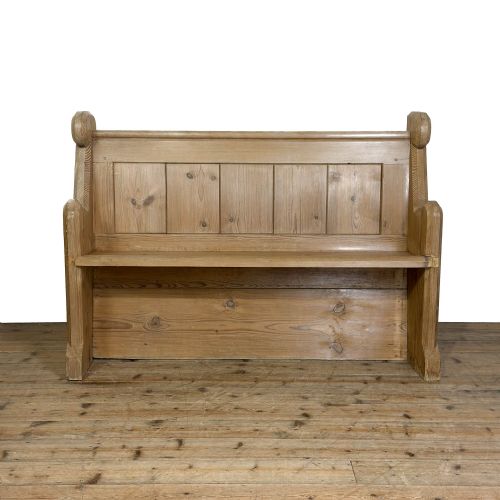
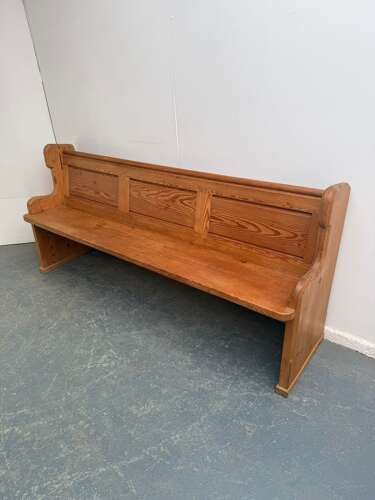
A victorian pine church pew encompasses long linear chapel benches, flip-over seating variants, and compact hall seats originating from the nineteenth century and early twentieth century. Most examples found on this page display straightforward vernacular forms rooted in ecclesiastical and country house contexts.
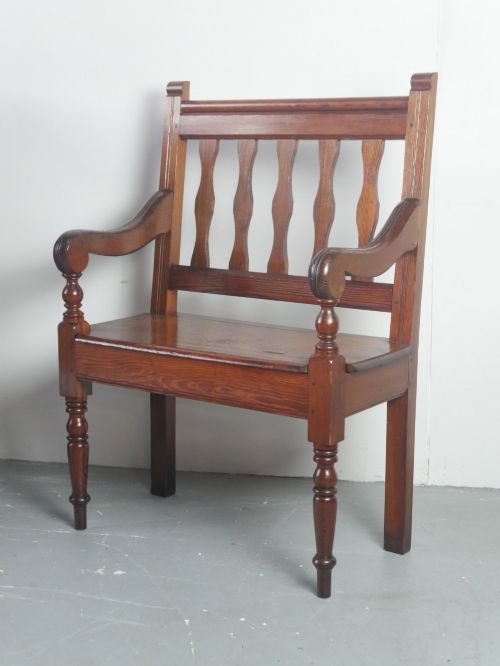
The inventory ranges from standard multi-seater chapel benches finished in wax to specialised organist seats, tavern benches, and painted variants. These objects function effectively as heavy-duty hallway furniture or dining seating.
Origins stretch across English country workshops, continental European examples, and Gothic Revival ecclesiastical settings. Buyers meet everything from simple rustic pine benches to pitch pine Arts and Crafts iterations.
What varies in quality
Quality separates through the integrity of the original timber and the presence of untouched factory or workshop surfaces, such as early painted finishes or deep patinated wax. Pieces retaining their original length, structural feet, and uncompromised book rests sit at the upper end of the range.
The sophistication of the joinery and stylistic detailing, ranging from plain vernacular boards to refined Gothic Revival tracery or Arts and Crafts framing, defines the character of individual examples.
Victorian Pine Church Pew Retail Price Guide 2026
Typical asking prices for victorian pine church pew among the pieces listed under this phrase on Sellingantiques today, from the lower quarter to the upper quarter. They describe what is for sale here now, not the wider market.
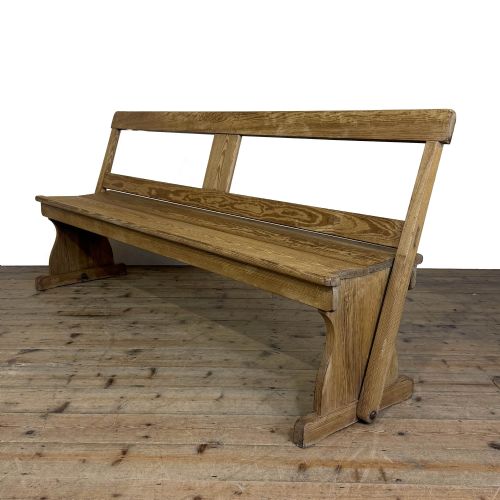
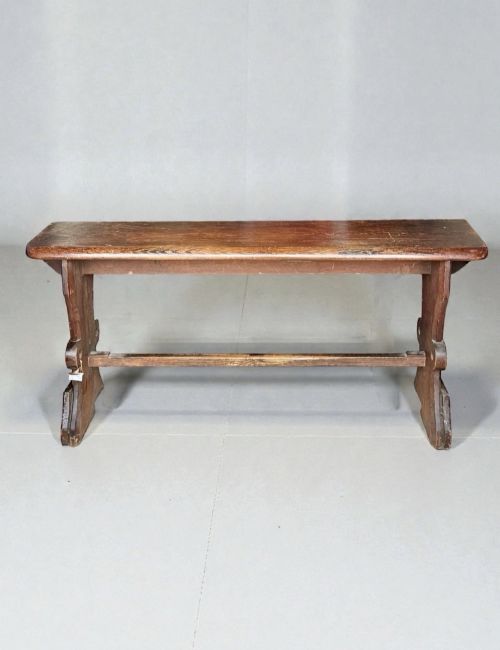
The furniture forms cover traditional church pews, flip-over chapel benches, high-back tavern settles, and slim nineteenth-century hallway seating.
The Victorian Pine Church Pew Glossary
- Pitch Pine
- A dense, resinous variety of pine timber commonly used for heavy-duty ecclesiastical furniture and church pews during the nineteenth century. It is known for its prominent grain pattern and durability.
- Settle
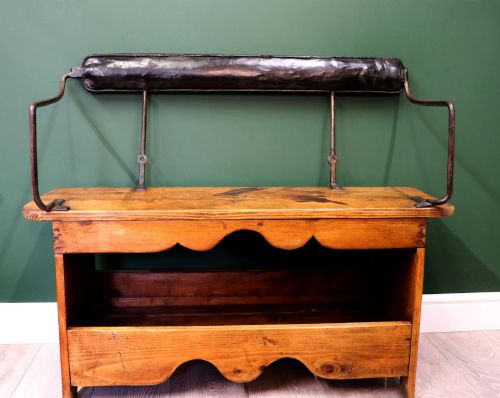
- A wooden bench featuring a high solid back designed to block cold draughts, often incorporating enclosed storage beneath the seat. These form a traditional staple of farmhouse and tavern interiors.
- Flip-Over Bench
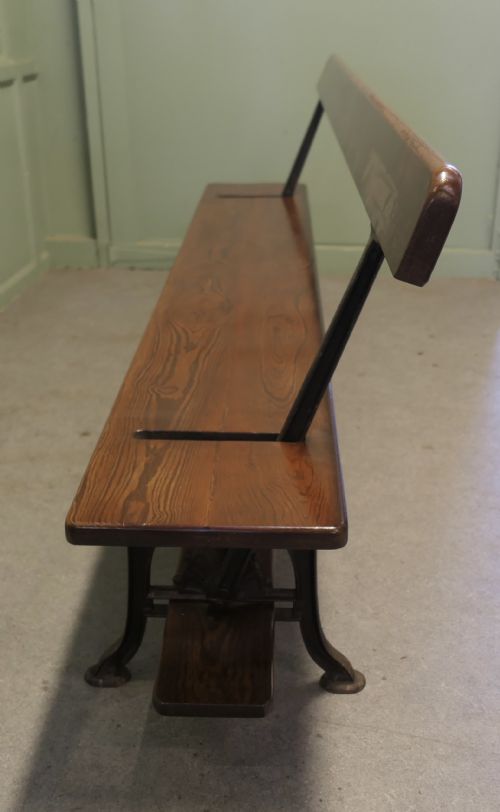
- A specialised seating form featuring a reversible backrest that pivots to face either direction, historically utilised in tram transport, railway carriages, and flexible chapel spaces.
- Vernacular
- Objects designed by local craftsmen to fulfill a practical function rather than adhering to high-style academic design canons. This approach prioritizes utility, regional materials, and straightforward construction.
- Gothic Revival
- An architectural and decorative style popular during the Victorian era that reinterprets medieval Gothic forms. It manifests in church pews through pointed arches, trefoils, and vertical paneling.
Victorian Pine Church Pew: Frequently Asked Questions
How do I clean a waxed pine church pew?
Maintain the surface by dusting with a dry cloth and occasionally applying a traditional beeswax to nourish the dry timber. Avoid using modern chemical sprays that can strip the historic wax finish.
Allow the natural patina to remain untouched rather than aggressively sanding the aged wood. Gentle care preserves the historical character accumulated over generations.
Will a church pew fit in a modern hallway?
Measure your available floor space carefully, as church pews are built for institutional buildings and often run quite long. Slimmer hall benches and shorter chapel seats offer practical alternatives for tighter entryways.
Consider the depth of the base and the height of the backrest before placement. Many buyers utilise these pieces against narrow walls where a bulky wardrobe would not fit.
What is the difference between pine and pitch pine?
Standard pine is softer and lighter in tone, whereas pitch pine contains higher resin content, giving it a heavier weight and a reddish-brown hue with strong grain lines. Pitch pine was favored for institutional seating requiring extra durability.
Both materials weather well, but pitch pine resists knocks and dents more effectively. Identifying the timber helps determine the period and intended public or ecclesiastical use.
Can these pews be used around a dining table?
Pews provide excellent linear seating for dining spaces, particularly when paired with large farmhouse tables. Check the seat height against your table clearance to ensure comfortable dining posture.
Shorter single-seater or three-seater variants work best alongside standard tables without obstructing legroom. Their fixed bench format maximises seating capacity in open-plan kitchens.