
Wooden Hallway Settle
A wooden hallway settle brings sturdy timber seating and hidden storage to an entryway, making an immediate practical statement when you step through the door.
Wooden Hallway Settle
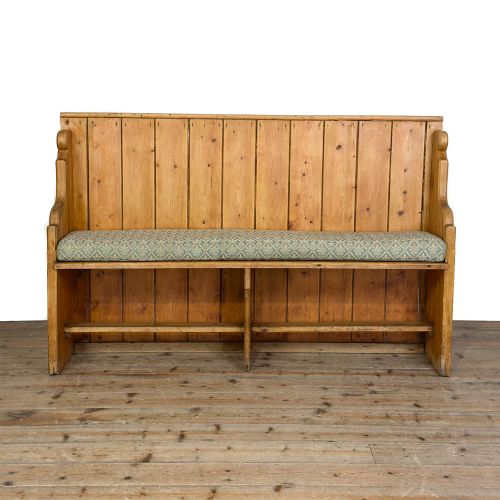
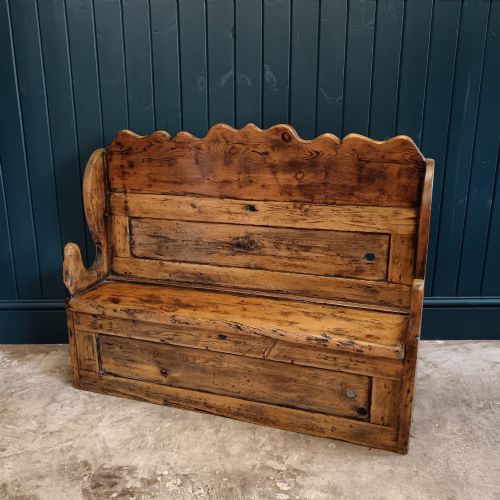
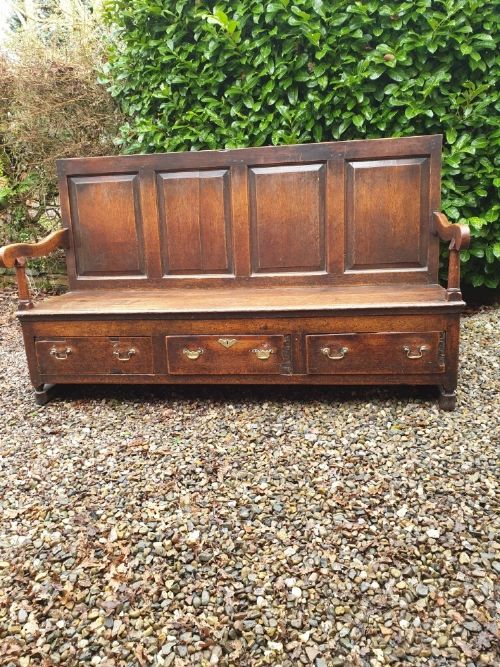
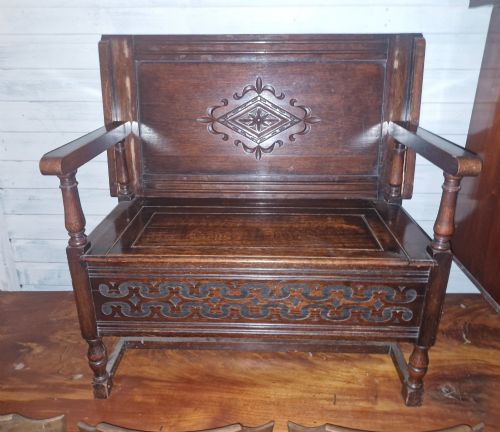
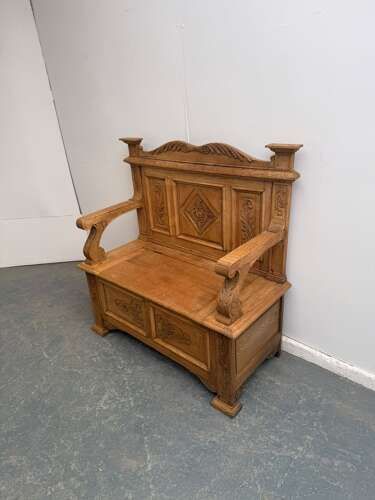
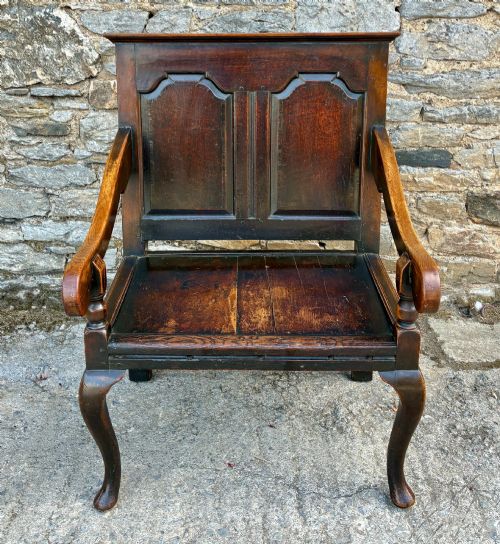
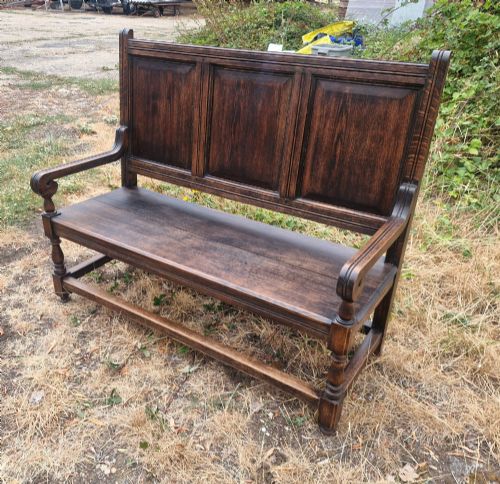
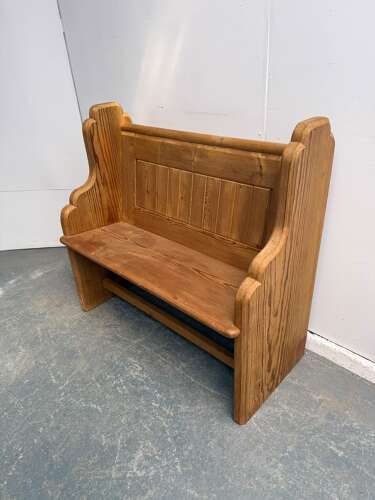
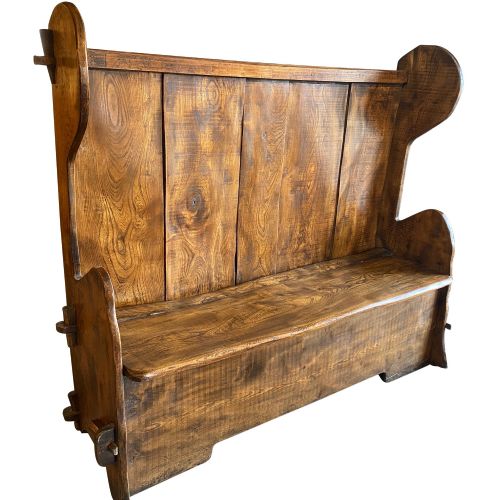
A wooden hallway settle is a high-backed seat designed for corridors and entrance spaces, frequently incorporating a hinged lid over a box base for storage.
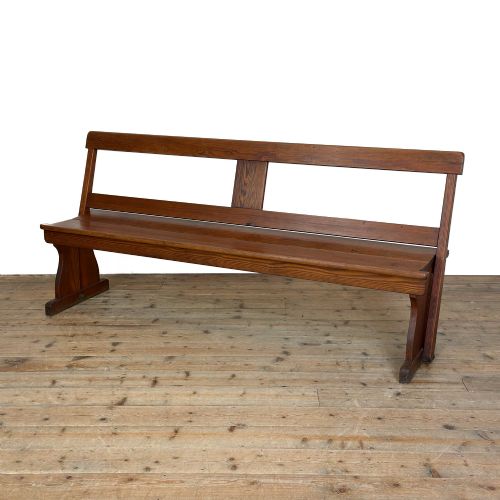
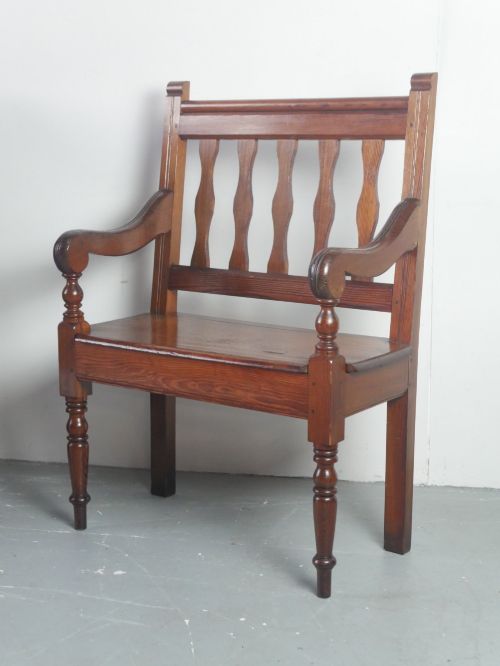
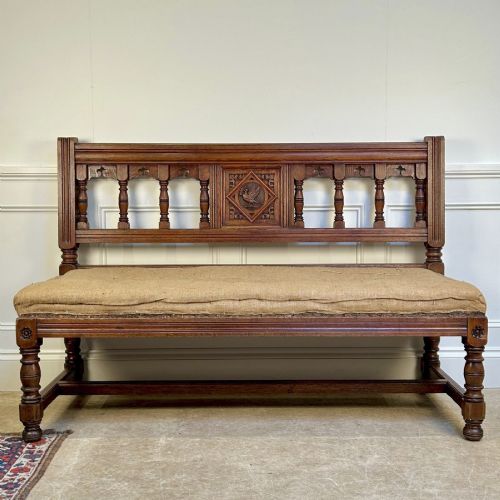
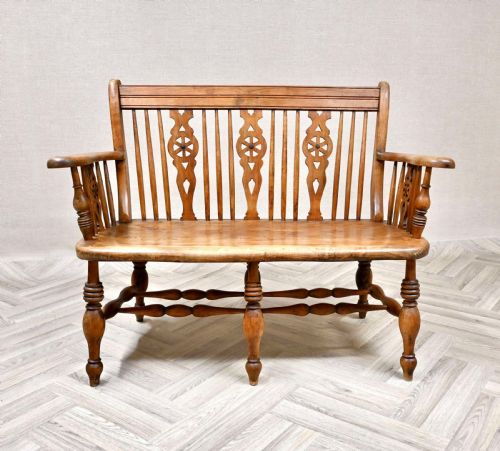
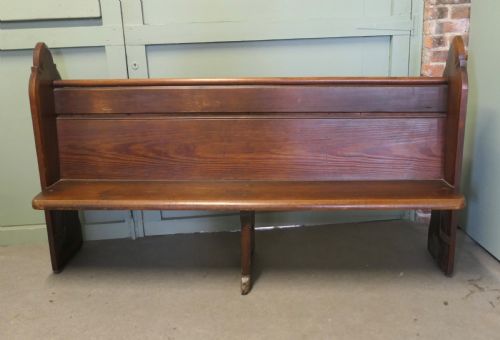
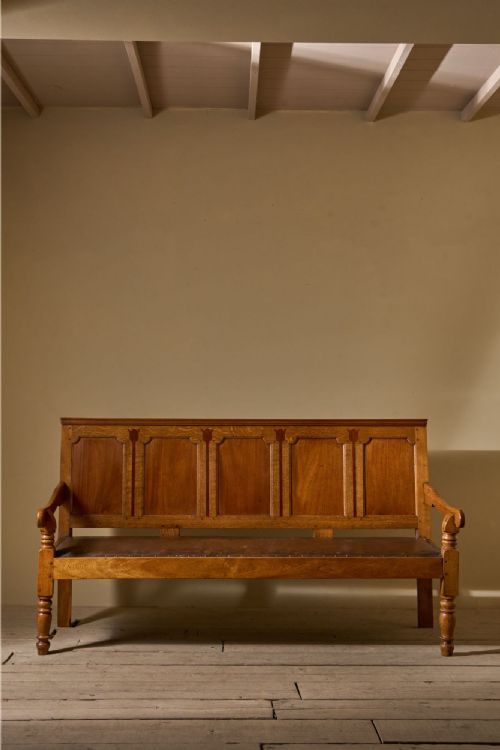
The selections available here span solid oak country house examples, pine church pews, elm benches, and compact Edwardian hall seats.
Buyers will encounter both long slatted waiting room benches and shorter single-seater box settles, often drawing on Georgian proportions or Victorian rustic country styles.
Materials and construction
Construction relies heavily on native timbers, with oak, pine, elm, and walnut joined using traditional panelled and pegged methods.
Surface treatments vary from waxed finishes and honey brown patina to original blue and grey paintwork, complemented by iron or brass hardware.
Listings feature oak, pine, elm, and walnut furniture spanning the Georgian, Victorian, and Edwardian periods.
Assessing the standard
Quality rests upon timber selection and the integrity of the original joints, where heavy daily use demands sturdy structural framing.
Distinction is found in surviving original surface treatments, such as untouched honey patina or authentic painted finishes, rather than later alterations.
Gillows·Shapland & Petter·Liberty
The Wooden Hallway Settle Glossary
- Settle
- A wooden bench featuring a high back to block draughts and solid arms. Many incorporate a box base beneath the seat for storage.
- Box settle
- A form of seating with a hinged seat lifting to reveal a storage compartment underneath. These pieces combine hallway seating with chest utility.
- Pew
- A long wooden bench traditionally found in churches or chapels. Pine examples are frequently adapted for domestic hallway use.
- Patina
- The surface sheen and colour developed by timber through age, handling, and waxing. A desirable finish shows natural warmth and depth.
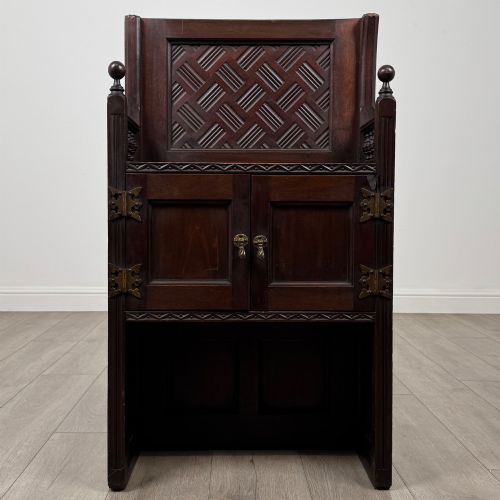
- Jacobean Revival
- A nineteenth-century style imitating seventeenth-century furniture design. Pieces typically feature heavy carved oak panelling and geometric ornamentation.
Wooden Hallway Settle: Frequently Asked Questions
What is a wooden hallway settle used for?
A wooden hallway settle provides a designated place to sit while putting on boots or shoes in an entryway. The enclosed bench base also offers concealed storage for household items.
Historically, the high back helped block cold draughts near doors, making these sturdy benches practical additions to busy household corridors.
How do I tell an 18th-century settle from a later revival piece?
Eighteenth-century examples typically show hand-cut joinery, pegged framing, and timber surfaces that display decades of natural wear and oxidisation.
Later Victorian and Edwardian revival pieces often utilise machine-sawn components and standardised fixings even when incorporating carved decorative elements.
Are pine pews suitable for narrow hallways?
Many pine pews and slim hallway benches are built with shallow depths specifically to fit narrow corridors without blocking passage.
Shorter single-seater or two-seater box settles offer the utility of a traditional settle while accommodating restricted spatial layouts.
How should I care for a waxed oak or pine bench?
Maintain the timber by applying a traditional beeswax polish sparingly to nourish the wood and preserve the surface sheen.
Avoid placing wooden furniture near direct heat sources or in areas with extreme temperature fluctuations to prevent timber splitting.