
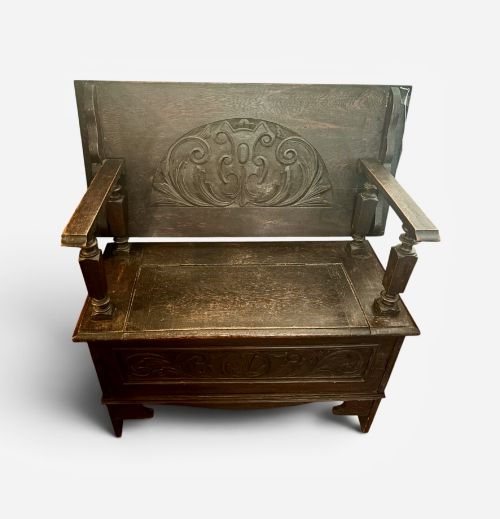
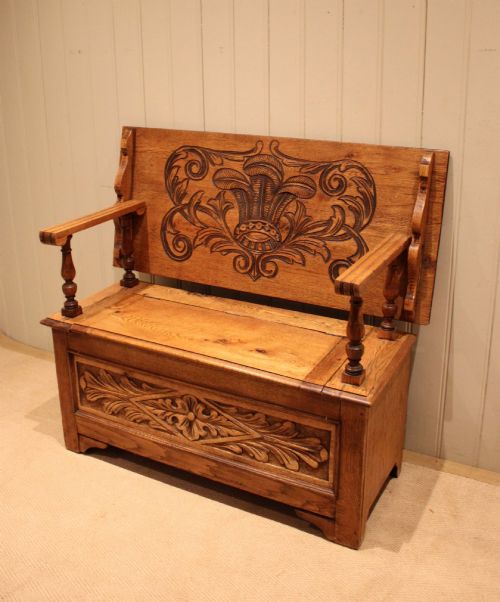
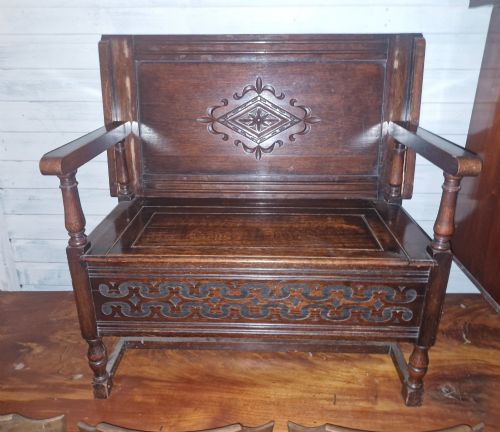


Monks Bench Table
A monks bench table is a dual-purpose piece of furniture that transforms from a seat into a table, offering historic utility for compact spaces.
Monks Bench Table
A monks bench table provides both a seating option and a surface for dining or working through a hinged top mechanism. When you search for this phrase, you find versatile items historically utilised in hallways and living quarters.
The versions most commonly met on this page are constructed from oak, ranging from compact small examples to large hall seats. Pieces appear from the seventeenth century through to the twentieth century, encompassing revival styles and vernacular country pieces.
Makers often incorporated lift-up seats or adjustable backs to provide storage beneath the bench. Object types vary from chair tables and settles to dedicated hall seats with fold-over tops.
What varies in quality
The depth and crispness of the hand carving separate standard production pieces from finer examples. Elaborate detailing on the panels and armrests demonstrates the skill of the original maker.
The integrity of the pivoting mechanism and the thickness of the solid timber dictate the structural longevity of the piece. Superior examples retain their original hinges and balanced proportions when converted between bench and table.
Some industrious shepherds ensured their dining table was securely attached to their seat at all times by using a convertible bench.
The Monks Bench Table Glossary
- Settle
- A wooden bench with a high back, solid arms and enclosed storage beneath the seat. This form often shares design characteristics with early chair tables.
- Chair table
- An early form of seating where the broad back tilts forward over the arms to create a table top. This ingenious design saved valuable floor space in historic homes.
- Jacobean Revival
- A nineteenth-century architectural and furniture style mimicking the robust carved oak aesthetics of the early seventeenth century. Pieces from this movement often display deep geometric mouldings and foliate carving.
- Vernacular
- Everyday furniture built by local craftsmen using regional materials rather than following high-style metropolitan fashions. These pieces often display practical, unpretentious construction methods.
- Hall seat
- A compact bench designed specifically for placement in an entryway or hallway. They frequently incorporate lift-up lids for storing hats, gloves or walking sticks.
Monks Bench Table: Frequently Asked Questions
How do you convert a monks bench into a table?
The upper back section of the bench is designed to pivot or fold forward on wooden pegs or metal hinges. This movement rests the flat rear surface horizontally across the arms to form a table.
Once lowered, the back transforms the seating area into a stable surface suitable for writing or dining. Returning the top to the upright position restores the high-backed bench.
What periods do these benches come from?
Examples span from the seventeenth century through the Victorian era and into the early twentieth century. Many later pieces adopt earlier stylistic influences such as Jacobean or Gothic Revival.
Authentic seventeenth-century pieces are scarce, while nineteenth- and early twentieth-century revival pieces are much more frequently encountered on the market.
Were these benches used by monks?
Despite the traditional name, historical evidence indicates these dual-purpose items were primarily used in secular domestic homes and farmhouses rather than monasteries. The term became popular among later antique dealers and collectors.
In historic households, space-saving furniture was essential for small rooms where a single item needed to serve multiple daily functions.
Where should I place a monks bench table?
These pieces traditionally sit in hallways, entrance passages or compact living spaces where dual functionality is beneficial. Their narrow profile makes them suitable for rooms with limited floor space.
Keeping the surface clear allows the bench to be used for seating while providing quick access to internal storage beneath the lift-up lid.