




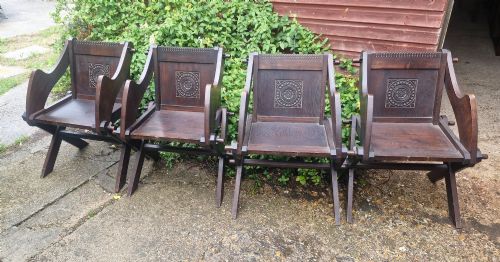
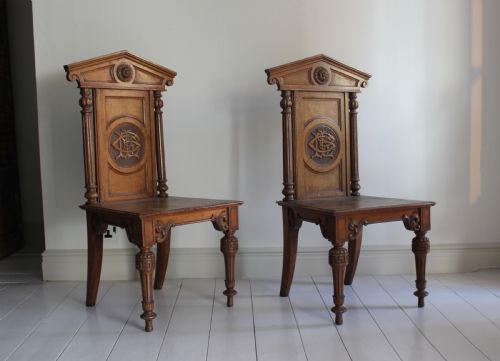
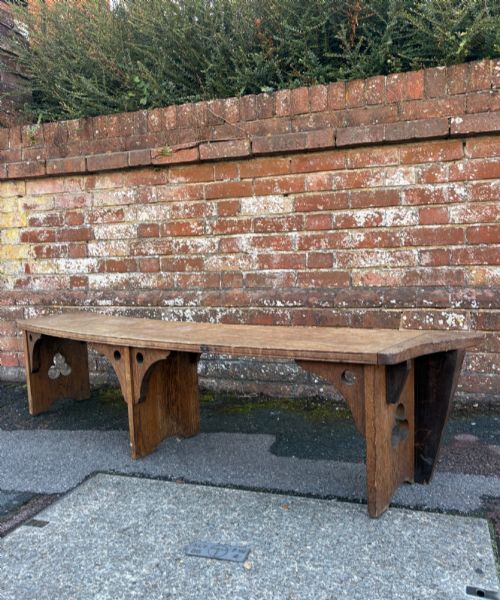
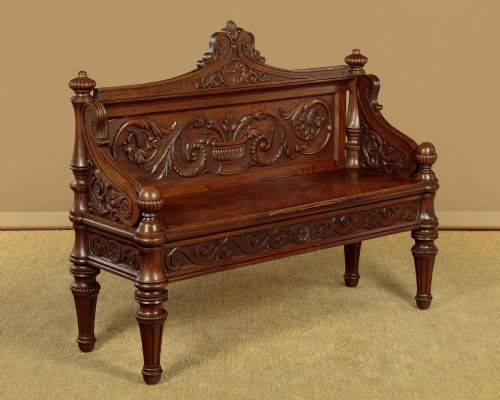

Vintage Oak Hall Seat
A vintage oak hall seat greets visitors in the hallway, offering a sturdy place to sit while pulling off boots.
Vintage Oak Hall Seat
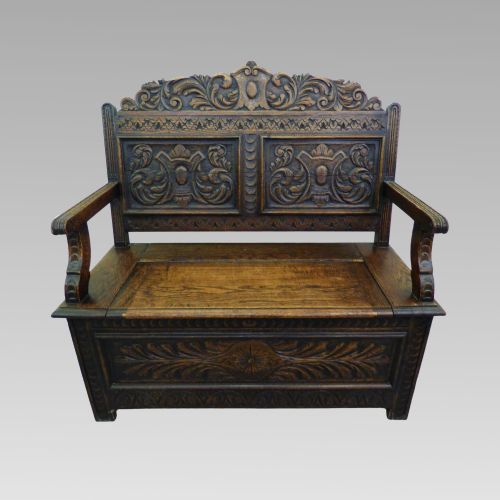
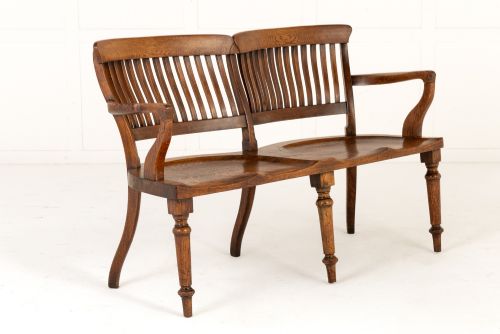
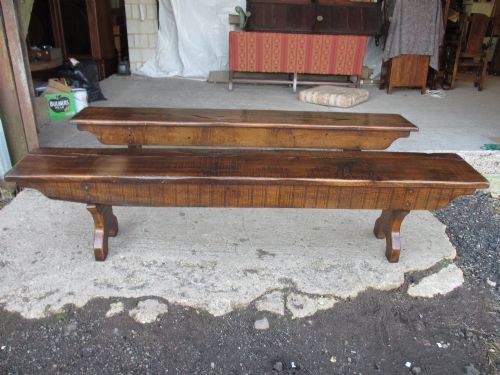
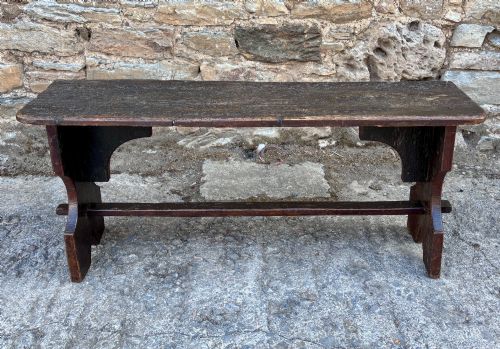
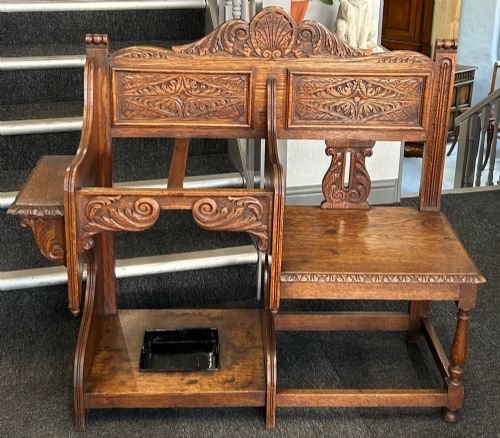
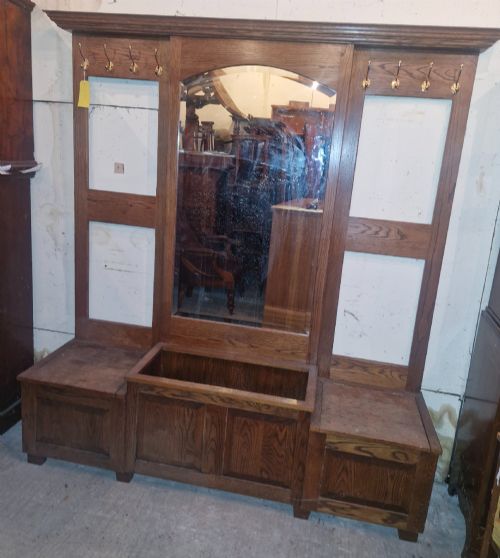
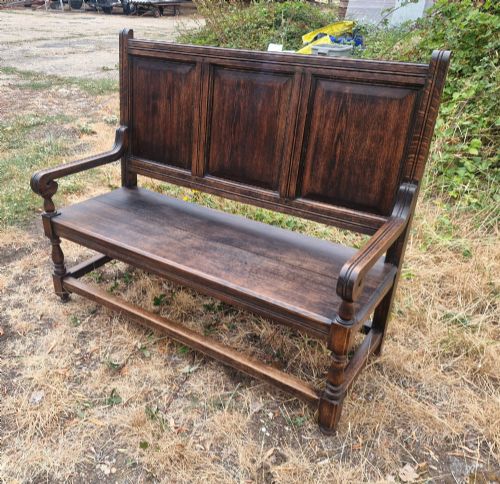
A vintage oak hall seat combines practical hallway seating with storage or display, appearing across the Victorian, Edwardian, and early twentieth-century periods. These pieces range from simple rustic benches and monk's benches to large multi-functional hall stands incorporating stick stands and cupboards.
The materials and styles span English country, Arts and Crafts, and Gothic Revival movements, often showing carved details like trefoils or panels. Common forms include settle boxes with lift-up seats, armchairs, and long benches designed for entryways.
Materials and construction
Construction relies primarily on solid timber, particularly oak, supplemented by brass, iron, and metal hardware. Many examples incorporate upholstered panels in leather or fabric, or feature cane seating.
Cabinet makers utilised traditional joinery methods to build sturdy frames that withstand heavy daily use in narrow spaces. Surfaces often display carved ornamentation, panelled backs, and turned elements like barley twists.
Vintage Oak Hall Seat Retail Price Guide 2026
Typical asking prices for vintage oak hall seat among the pieces listed under this phrase on Sellingantiques today, from the lower quarter to the upper quarter. They describe what is for sale here now, not the wider market.
Some hall seats double as tweed window seats or boot stores, ready for muddy estate walks.
Assessing quality
Quality shows in the depth and crispness of hand-carved details, the choice of golden or dark oak timber, and the integrity of the structural joints. Pieces by notable workshops or retailers demonstrate superior proportion and refined execution.
Liberty·Shapland & Petter
The Vintage Oak Hall Seat Glossary
- Monk's bench
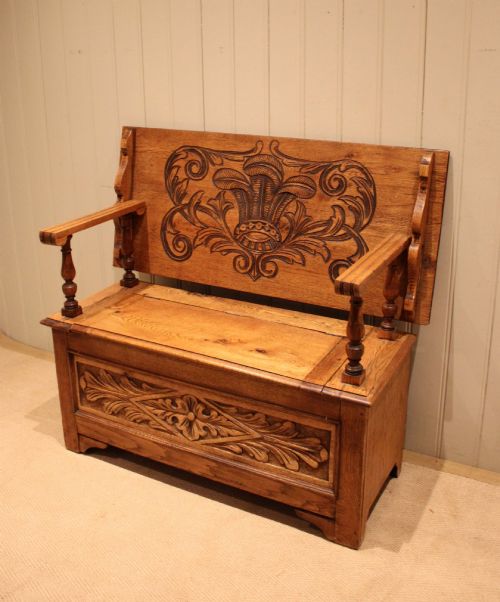
- A multi-functional form featuring a fold-over top that converts the seat back into a table. This clever design suited smaller rooms.
- Settle
- A wooden bench with a high back, solid arms, and often a storage box beneath the seat. It kept draughts away from the user.
- Gothic Revival
- A design style drawing inspiration from medieval architecture, seen here in pointed arches, trefoil carvings, and heavy framing. It dominated many nineteenth-century ecclesiastical and domestic interiors.
- Canopy top
- An architectural hood or overhanging cornice fitted to the upper section of a hall stand or settle. It frames the piece and often incorporates pegs for hanging coats.
Vintage Oak Hall Seat: Frequently Asked Questions
What is a vintage oak hall seat used for?
These pieces provide a practical spot in an entryway or hallway for sitting down to remove shoes and boots. Many designs also offer integrated storage under the seat for everyday items.
Larger variations often incorporate umbrella stands, coat hooks, or mirrors to serve multiple functions in a compact footprint.
How do I tell Edwardian pieces from Victorian ones?
Victorian examples tend to display heavier proportions, darker finishes, and more ornate Gothic or Jacobean Revival carving. They often look substantial and architecturally imposing.
Edwardian pieces generally present a lighter golden oak appearance, leaning towards simpler Arts and Crafts lines with cleaner geometric panels.
Can I use a monk's bench as a table?
Yes, the hinged top of a monk's bench folds forward to rest on the arms, transforming the seat back into a flat table surface. This dual purpose made them popular for smaller domestic spaces.
When positioned in a hallway, it functions primarily as a seat with storage beneath the hinged base.
How do I care for oak hall furniture?
Maintain the wood by applying a natural beeswax periodically to nourish the timber and preserve its finish. Avoid placing the piece in direct sunlight or near heat sources to prevent the wood from drying out.
Clean surfaces gently with a soft, dry cloth to remove dust without disturbing the grain or patina.