










Antique Oak Bench Storage
Antique oak bench storage delivers practical seating and hidden compartments, uniting centuries of craftsmanship with everyday utility in the hallway or boot room.
Antique Oak Bench Storage
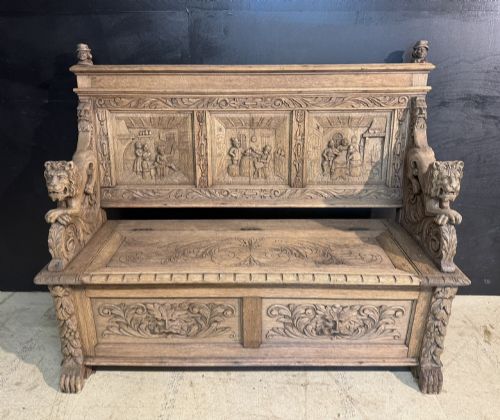
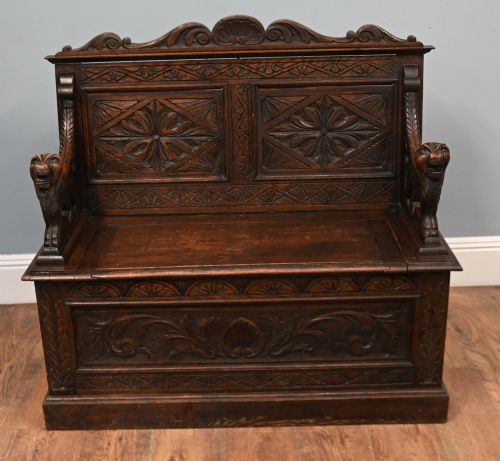
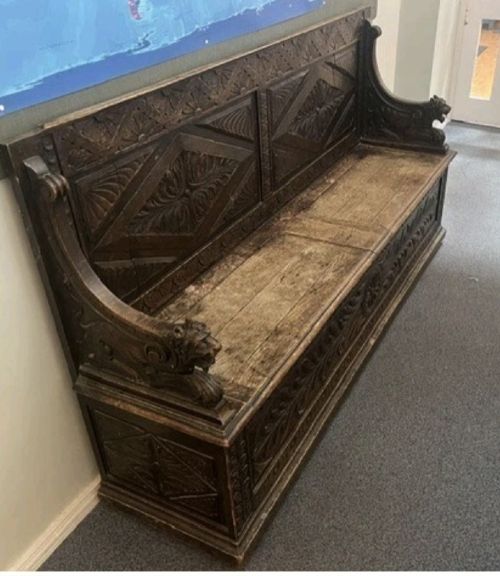
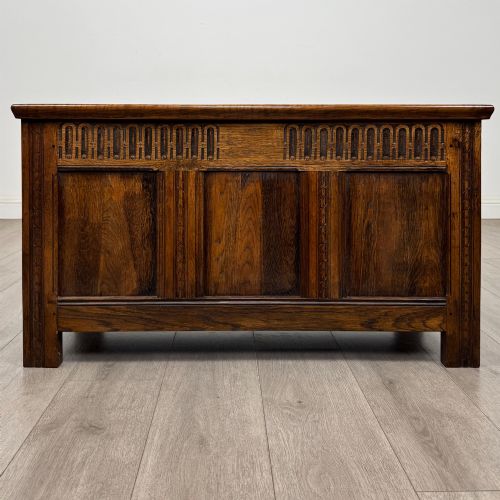
When buyers search for antique oak bench storage, they encounter robust seating forms designed to hold household goods, boots, or textiles out of sight. The pieces span centuries of domestic life, taking the form of box settles, monks benches, and hall seats.
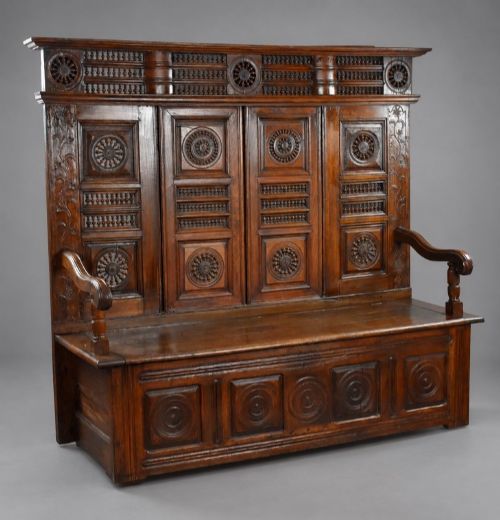
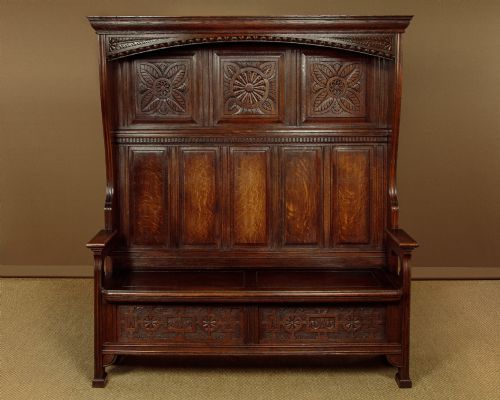
Box settles dominate the selection, featuring high panelled backs and hinged seats that lift to reveal deep storage wells. These items served traditionally beside hearths to block draughts before migrating to entrance halls.
Monks benches appear frequently, offering dual utility through fold-over tops that convert the backrest into a small table surface. Examples range from vernacular country pieces to heavily carved revival styles produced during the Victorian and Edwardian eras.
Materials and construction methods
Solid oak provides the primary structural timber, complemented occasionally by secondary woods such as elm, ash, and pine in internal or vernacular framing. Workshops utilised traditional mortise and tenon joints secured with wooden pegs to handle the weight of daily seating and storage.
Surface decoration relies heavily on hand carving, panel moulding, and waxed finishes rather than complex veneers. Iron and brass hinges, latches, and strapwork secure the lids and folding components while adding functional contrast to the timber.
Antique Oak Bench Storage Retail Price Guide 2026
Typical asking prices for oak bench storage among the pieces listed under this phrase on Sellingantiques today, from the lower quarter to the upper quarter. They describe what is for sale here now, not the wider market.
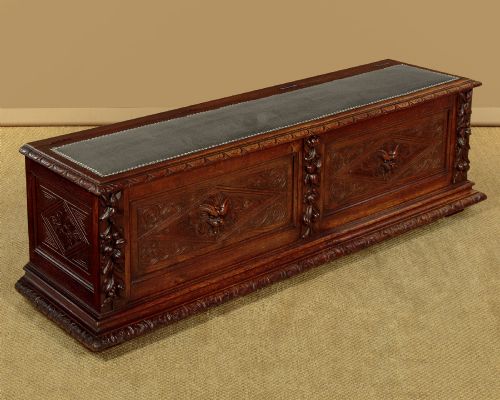
A cheerful Green Man face peers out from carved woodwork, keeping watch over stray boots and hallway umbrellas.
Distinguishing quality in oak storage benches
Quality rests in the integrity of the timber, the depth and crispness of the hand carving, and the survival of original structural elements like hinged lids and base boards. Early vernacular pieces derive their appeal from honest patination and simple proportions.
Revival and later pieces depend on the ambition of the joinery and the execution of detailed motifs such as linenfold panels, figural carvings, or high canopy tops. Alterations to lift-up lids or replaced base timbers alter the integrity of the original construction.
The Antique Oak Bench Storage Glossary
- Box settle
- A wooden bench featuring a high back and a enclosed box base accessed via a lift-up seat. This form provided draught protection by the hearth alongside concealed storage for blankets or clothing.
- Monks bench
- A multifunctional furniture item featuring a hinged backrest that folds down flat to form a table top over a box base. These pieces accommodated compact living spaces in historic homes.
- Hall bench
- A narrow seating piece positioned in entranceways for changing footwear or receiving callers. They frequently incorporate umbrella stands, coat hooks, or boot storage wells.
- Vernacular
- Furniture made by local regional craftsmen using traditional regional styles and readily available local woods rather than following strict high-style metropolitan fashions.
- Patina
- The surface sheen and mellow colour developed on wood over decades of handling, polishing, and exposure to light.
Antique Oak Bench Storage: Frequently Asked Questions
How were these benches used historically?
Historic households utilised box settles near open hearths to shield occupants from cold draughts. The internal box stored textiles, dried provisions, or family belongings.
In entrance halls, smaller benches served as practical spots for removing boots and outerwear. Their sturdy construction supported heavy daily use across generations.
How do I care for antique oak furniture?
Maintain antique oak by applying a traditional beeswax polish sparingly to nourish the dry timber. Avoid placing the bench near direct heat sources or strong sunlight to prevent warping.
Dust surfaces regularly with a soft dry cloth. Allow the natural patina to develop without aggressive cleaning agents.
How can I tell the period of an oak bench?
Examine the construction marks, joint types, and timber movement visible on the underside and interior panels. Hand-pegged joints and irregular hand-sawn boards often indicate earlier 18th-century or 17th-century vernacular origins.
Later Victorian and Edwardian revival pieces display machine-cut elements alongside deeper, more ornate decorative carving styles such as Jacobean Revival motifs.